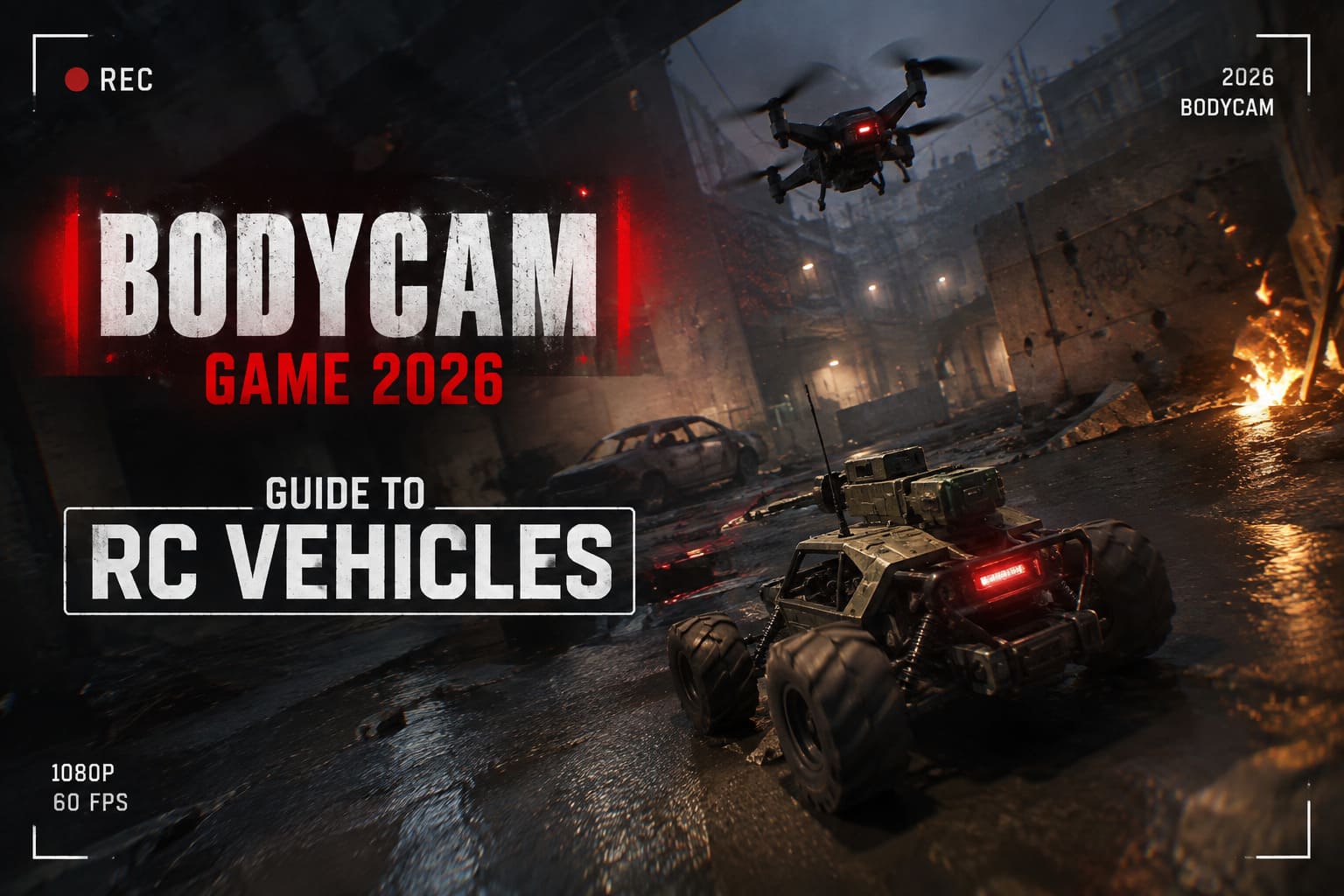
Bodycam Game 2026: Guide to Explosive FPV Drones and RC Vehicles
The Locked and Loaded update for Bodycam has changed the way I look at this game. Before v0.8, most matches were about patience, sound, positioning, and knowing when not to move. That hasn’t disappeared, but now there is another question constantly sitting in the back of my mind:
“What if I just send a tiny explosive drone through that window?”
And honestly, that’s exactly the kind of ridiculous tactical problem I wanted from Bodycam.
Reissad Studio’s latest update adds controllable FPV explosive drones and remote-controlled vehicles, and they aren’t just throwaway gadgets. They introduce an entirely different layer of reconnaissance, ambushes, counter-play, and squad coordination. After playing around with them, I think they might be some of the most interesting additions the game has received so far.
The important part is that these tools don’t magically make you safe. Quite the opposite. When you’re looking through the tactical tablet, your actual character is still standing somewhere in the map, completely vulnerable.
That’s where things get interesting.
Why the New Drones Change Bodycam
Bodycam has always been unusually good at making you feel exposed. You don’t get the comfortable information overload that many competitive shooters provide. You can’t casually check half a dozen indicators and instantly understand the battlefield.
The new remote gadgets fit that philosophy surprisingly well.
The tactical tablet lets you operate your drone or RC vehicle while remaining physically present somewhere in the environment. That creates a genuine risk-versus-reward decision.
You might have the perfect angle on an enemy position, but if you park your character somewhere stupid while flying, another player can simply walk around the corner and shoot you.
I’ve already found myself thinking about where to hide before deploying a drone, rather than immediately thinking about where the drone should go.
That is a small change, but it completely alters how you approach these gadgets.
| Gadget | Best Use | Biggest Advantage | Biggest Weakness |
|---|---|---|---|
| FPV Drone | Recon & explosive attacks | Vertical movement and speed | Easy to destroy if spotted |
| RC Vehicle | Clearing rooms & defensive positions | Low profile and ground access | Limited by terrain |
| FPV Acro Mode | Aggressive strikes | Extremely unpredictable movement | Difficult to control |
| Casual Drone Mode | Scouting & beginners | Automatic stabilization | Less maneuverable |
FPV Drones: Casual Mode Is Actually Worth Using
Let’s get one thing out of the way: don’t feel embarrassed about using Casual Mode.
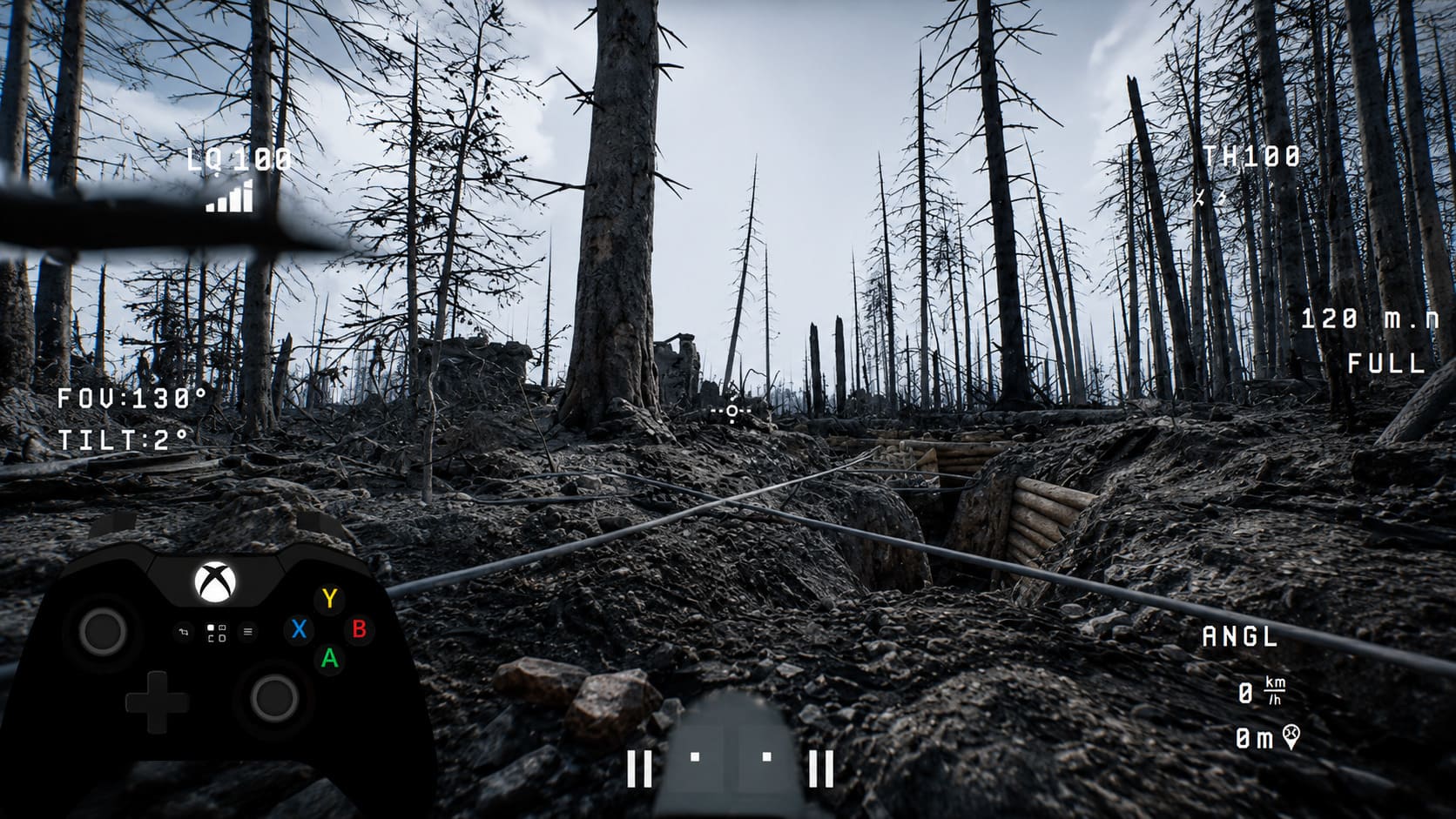
I initially expected the stabilized flight mode to be something you would immediately abandon once you understood the controls. Instead, I’ve found it useful for situations where I care more about information than fancy flying.
Casual Mode keeps the drone stabilized, which makes it much easier to perform basic scouting. You can get around corners, check suspicious rooms, and position the drone without constantly fighting its movement.
For players who aren’t familiar with FPV drones, this should absolutely be the starting point.
The biggest mistake you can make is trying to learn advanced flight mechanics in the middle of a competitive match while your teammates are yelling at you because the bomb site is being taken.
Practice first. Experiment second. Try to become a stunt pilot later.
Acro Mode Is Where Things Get Completely Wild
Now we get to the fun stuff.
Full Manual, or Acro Mode, completely changes the personality of the FPV drone.
There is no automatic stabilization holding your hand. If you push the drone forward and don’t compensate for the movement, it keeps going. You have to understand momentum and actively correct your flight.
At first, it feels horrible.
Then something clicks.
Once you start getting comfortable, Acro Mode becomes incredibly aggressive. You can cut around corners, fly through awkward gaps, change direction quickly and approach an enemy from an angle they probably aren’t expecting.
The first time you successfully fly around an obstacle, enter a room from an unusual direction and land an explosive attack, you immediately understand why the developers added this control scheme.
It isn’t simply a stronger version of Casual Mode.
It’s a completely different skill ceiling.
And yes, you’re going to crash. A lot.
That’s part of learning it.
Don’t Ignore Drone Settings
One of the less flashy additions is also one of the more important ones: flight tuning.
If you’re serious about using FPV drones regularly, spend some time adjusting your control rates and throttle behavior.
Higher sensitivity can make rapid turns and aggressive maneuvers easier, but it can also make small corrections incredibly twitchy. Lower sensitivity feels slower, but it can be much more comfortable when you’re trying to make precise movements.
I strongly recommend having at least two profiles:
- Aggressive Profile: Higher sensitivity for fast attacks and close-range maneuvers.
- Precision Profile: Lower sensitivity for scouting and controlled movement.
You don’t need to copy somebody else’s settings from Reddit or a YouTube video blindly. What works for one player’s controller can feel terrible for another.
The Shooting Range HUB is the perfect place to experiment.
Spend ten minutes there before deciding that Acro Mode is impossible.
The RC Car Might Be More Useful Than You Think
The FPV drone gets all the attention because, well, it’s an explosive flying camera.
But I wouldn’t sleep on the RC vehicle.
The little ground-based machine is especially useful in environments filled with rubble, narrow spaces, dark corners and collapsed structures. It can approach positions from angles that would be uncomfortable or dangerous for a player.
And there’s something psychologically effective about sending a tiny vehicle toward somebody hiding in a room.
They hear it.
They know what it probably means.
Now they have to decide whether to shoot it.
That hesitation can be enough.
You can also use an RC car as a distraction. Send it toward a defensive position while your teammate prepares to push from another direction. If the defender starts firing at the vehicle, you’ve potentially created a brief opening.
It’s not always about getting the explosion. Sometimes the threat itself is enough.
The Best Strategy I’ve Found: Drone + Entry Player
The most effective combination I’ve experimented with so far is simple.
One player operates the drone while another prepares to enter.
The drone operator shouldn’t be standing in the middle of a hallway trying to pilot. Find somewhere reasonably protected first. Once you’re hidden, bring up the tactical tablet and start scouting.
The drone searches.
The operator communicates.
The entry player waits.
Once the enemy’s location is confirmed, the drone can make the attack while the second player prepares to exploit the confusion.
This creates a classic hunter-killer setup, but Bodycam’s realism makes it much more stressful than it sounds on paper.
The drone pilot has limited awareness of what’s happening around their actual body. The entry player has to trust the information being provided. And everyone has to communicate quickly.
If the drone misses, don’t panic.
If the enemy destroys it, you still gained information.
If the explosion works, the entry player should already be moving.
That last part is critical.
Body Bomb Is Where These Gadgets Get Really Interesting
Objective modes are probably where I expect the drone meta to become the most annoying — and I mean that as a compliment.
Imagine planting the bomb and then leaving an explosive RC car somewhere near the likely defuse route.
You don’t necessarily need to drive it immediately.
You can wait.
Meanwhile, an FPV drone can act as a mobile observation tool, watching a bomb site from an unusual angle.
When the defenders begin their retake, suddenly your team has another layer of information.
This creates some nasty psychological pressure because the opposing team has to wonder:
“Is there a drone here?”
“Is that sound coming from an RC car?”
“Do I shoot it or keep defusing?”
That’s exactly the kind of tension that makes Bodycam work.
But Drones Are Not Invincible
If you’re reading this because drones are destroying your matches, don’t worry. There are effective ways to fight them.
The most important counter is also the simplest:
Listen.
The FPV drone produces a distinctive motor sound, and the closer it gets, the harder it becomes to ignore. RC vehicles also produce recognizable movement sounds depending on the surface.
This is one of those situations where good headphones can genuinely make a difference.
Don’t immediately spin around when you hear something.
Instead, try to determine the direction.
Then get ready.
Shoot the Gadget, Not the Panic
Remote vehicles aren’t tanks.
They’re small, vulnerable targets.
If you see an incoming drone, resist the temptation to wildly spray the ceiling while running backward. Stop, aim, and try to put accurate shots into it.
That’s easier said than done, especially when an Acro-mode drone is coming toward you at full speed.
This is where weapons with high rates of fire can be particularly useful.
Shotguns can also make sense because their spread gives you a little more room for error against a fast-moving target.
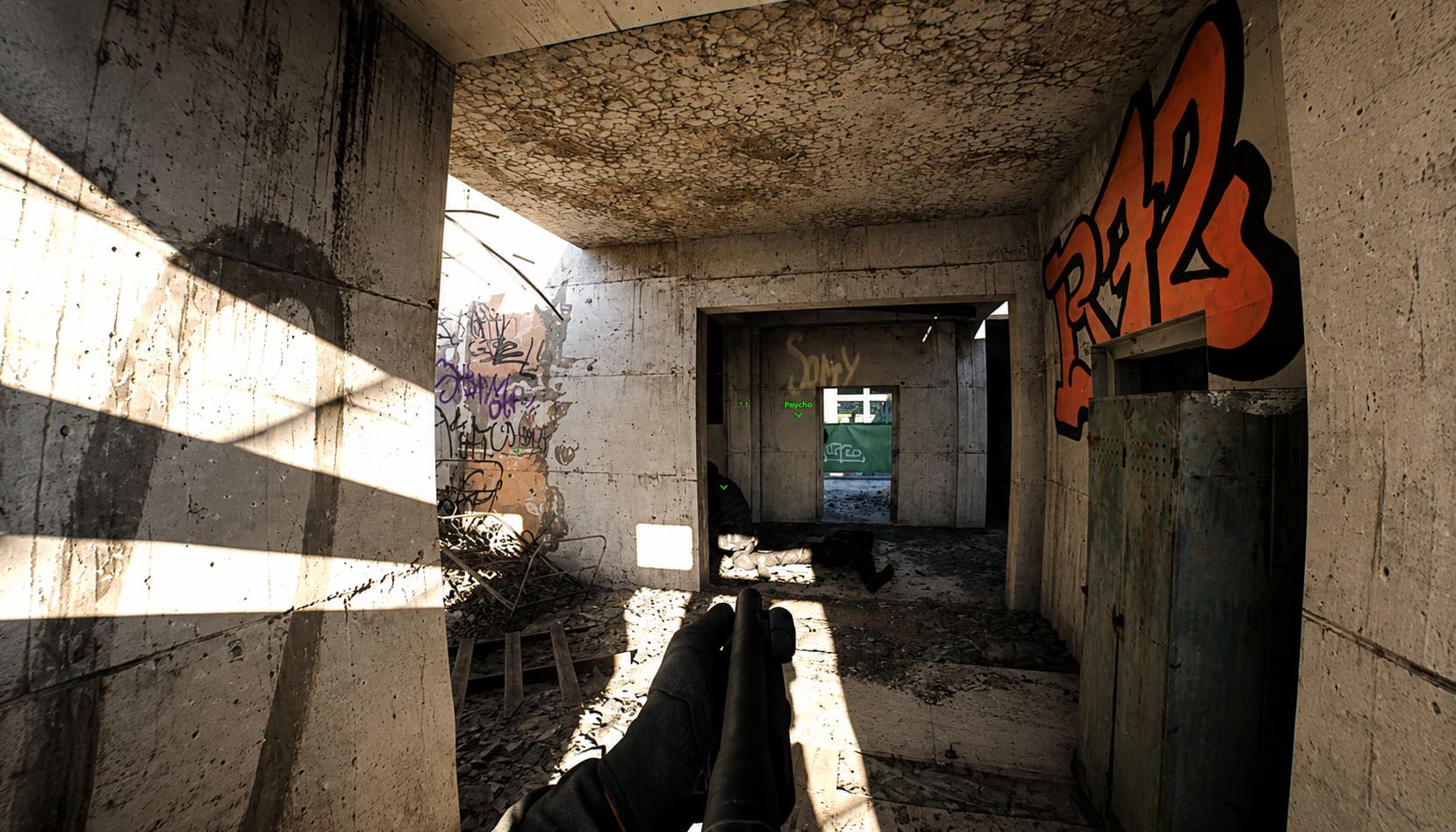
The R12 automatic shotgun, for example, can be an appealing choice when the enemy team is constantly throwing remote gadgets at you.
Bodycam Locked and Loaded Update Changelog: Patch v0.8 Breakdown
My Biggest Advice: Don’t Become Gadget-Obsessed
There’s one trap I’ve already noticed with the Locked and Loaded update.
It’s incredibly easy to become obsessed with the new toys.
You get an FPV drone.
You immediately want to fly it.
You see an enemy.
You want to explode them.
But sometimes the best decision is still to simply use your rifle.
Bodycam hasn’t stopped being a gunfight simulator just because it now has remote explosives.
A drone should create an advantage, not replace basic tactics.
Use it to gather information. Force movement. Break a defensive position. Create an opening for your teammate.
Then go back to doing what Bodycam does best.
Final Thoughts: Bodycam Just Got a Lot More Dangerous
After spending time with the Locked and Loaded update, I think the FPV drones and RC vehicles are more than a gimmick.
They add another layer to a game that already rewards awareness and communication. The most interesting part isn’t actually the explosion. It’s everything that happens before it.
Where do you hide?
Who operates the drone?
Who watches the operator?
Who pushes after the attack?
Who listens for the enemy’s counter-drone?
Those decisions make the gadgets feel like part of the tactical sandbox rather than simple killstreak toys.
And if you’re completely new to the system, my advice is straightforward: start with Casual Mode, learn the tablet, practice Acro Mode in the Shooting Range HUB, and don’t be afraid to crash dozens of drones while learning.
Once you get comfortable, start experimenting with squad tactics.
Because the first time your teammate calls out an enemy position, you send an FPV drone around a corner, and the other team suddenly realizes what’s coming…
Yeah.
That’s Bodycam at its most chaotic — and I’m here for it.