Big Walk 2026 Guide: All Items, Tools, and Locations List
When I first loaded into Big Walk, I expected another quirky game full of funny moments. After all, it’s made by the same developers who gave us Untitled Goose Game. What I didn’t expect was how quickly it would become one of those multiplayer games where simple communication is more important than collecting powerful loot.
There are no glowing quest markers pointing you in the right direction. No minimap telling everyone where to go. No giant arrow floating above your objective. Instead, you’re dropped onto a huge island with your friends and told, in the most indirect way possible, to figure things out together.
Personally, I think that’s exactly what makes Big Walk special.
After several long sessions wandering through forests, climbing hills, getting completely lost, and laughing because one friend somehow managed to throw our only binoculars into the ocean, I started keeping notes about every important item we discovered.
This guide combines my own experience with observations from the growing player community to help you understand what every major tool does, why it’s worth carrying, and where you can usually find it.
Why Items Matter More Than You Think
Unlike most cooperative games, Big Walk doesn’t reward players with stronger weapons or better armor.
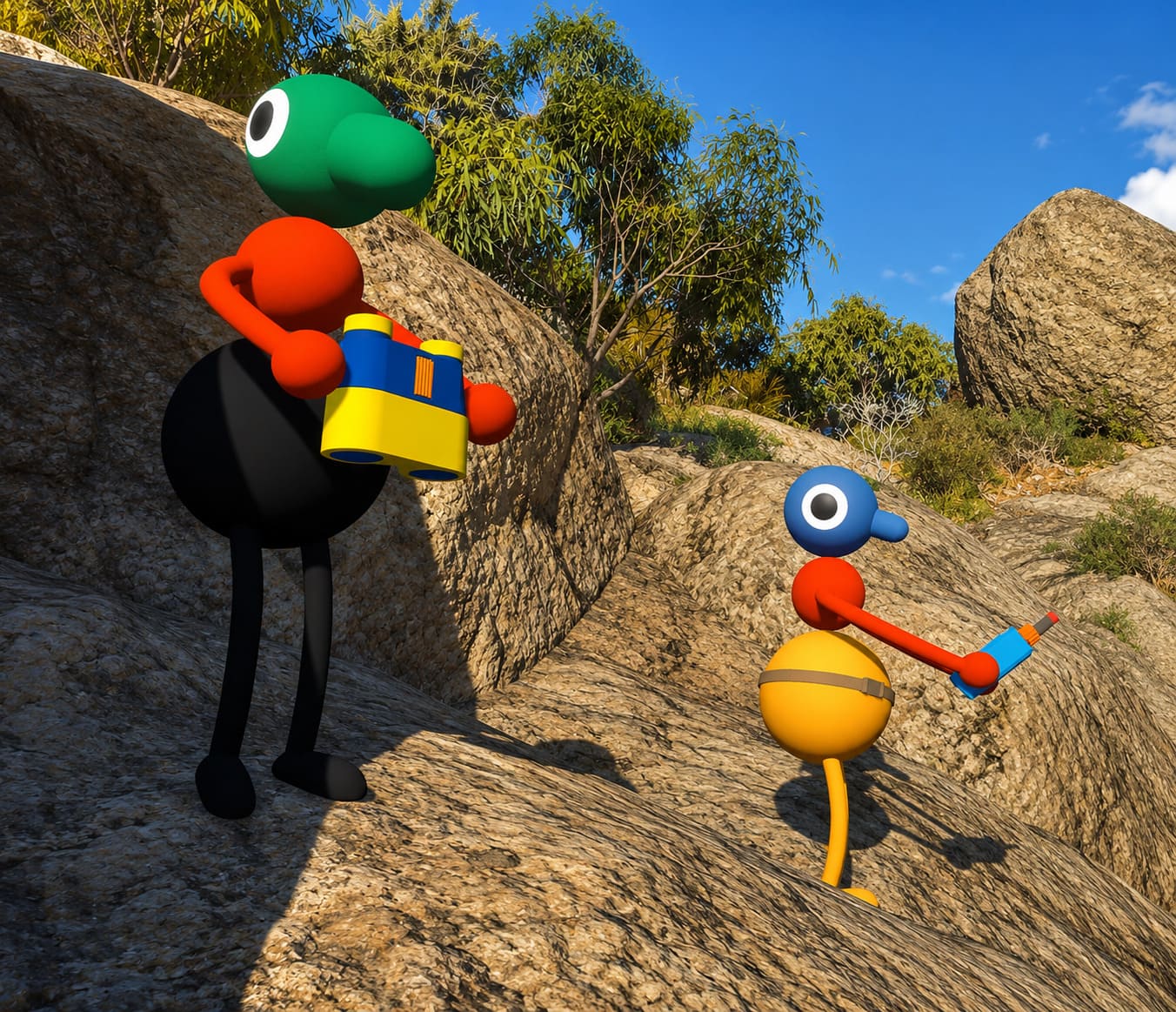
Instead, progression comes from information.
The right tool often saves far more time than running across the island looking for someone who wandered off five minutes earlier.
The biggest lesson my group learned was simple:
Communication is the strongest “equipment” in Big Walk.
Everything else supports that idea.
Essential Navigation Equipment
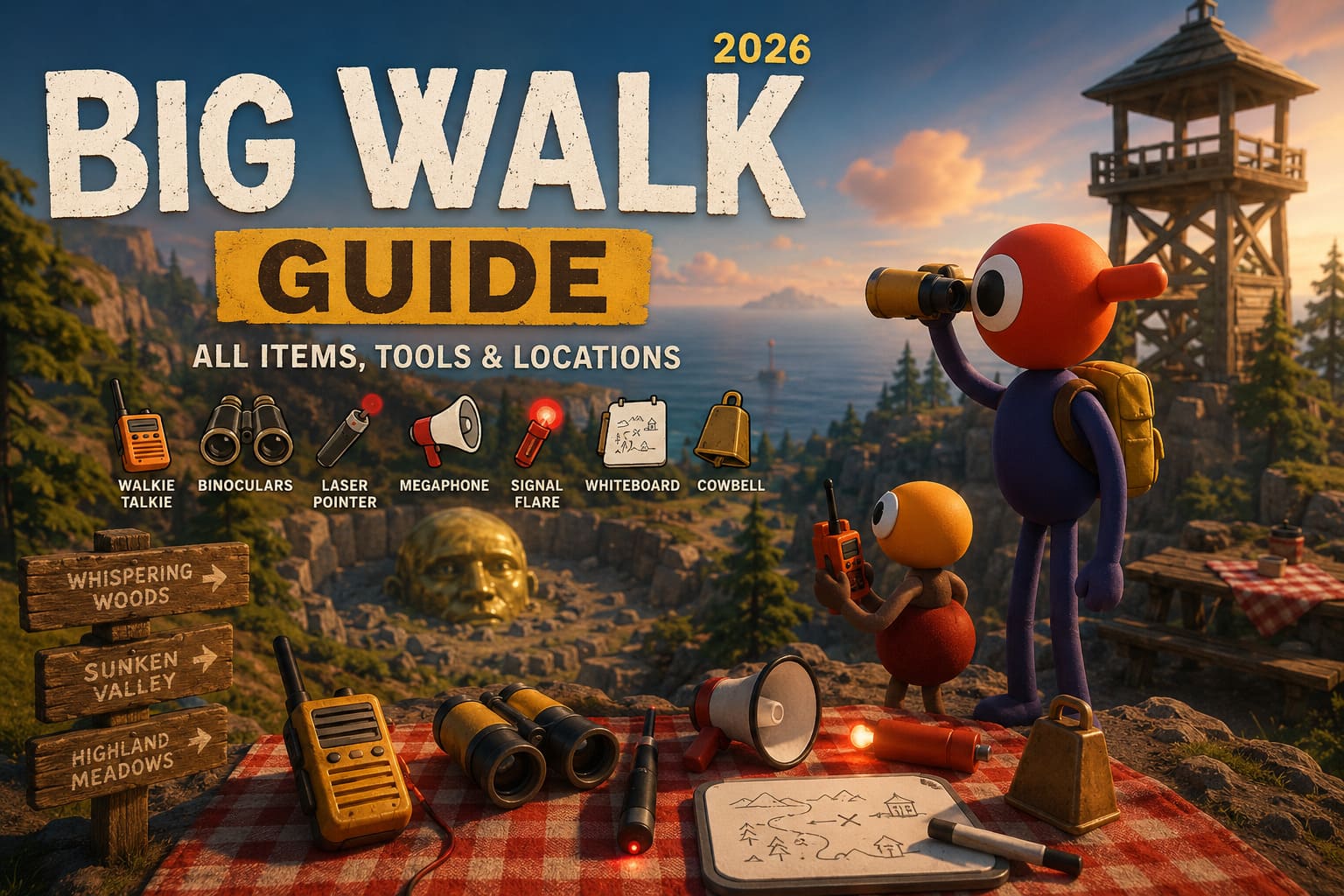
These are the first items every group should grab before leaving the starting area.
| Item | Main Purpose | Where to Find It |
|---|---|---|
| Walkie-Talkie | Long-distance communication | Starting Gymnasium |
| Binoculars | Spot distant landmarks and puzzles | Coastal Lookout Tower |
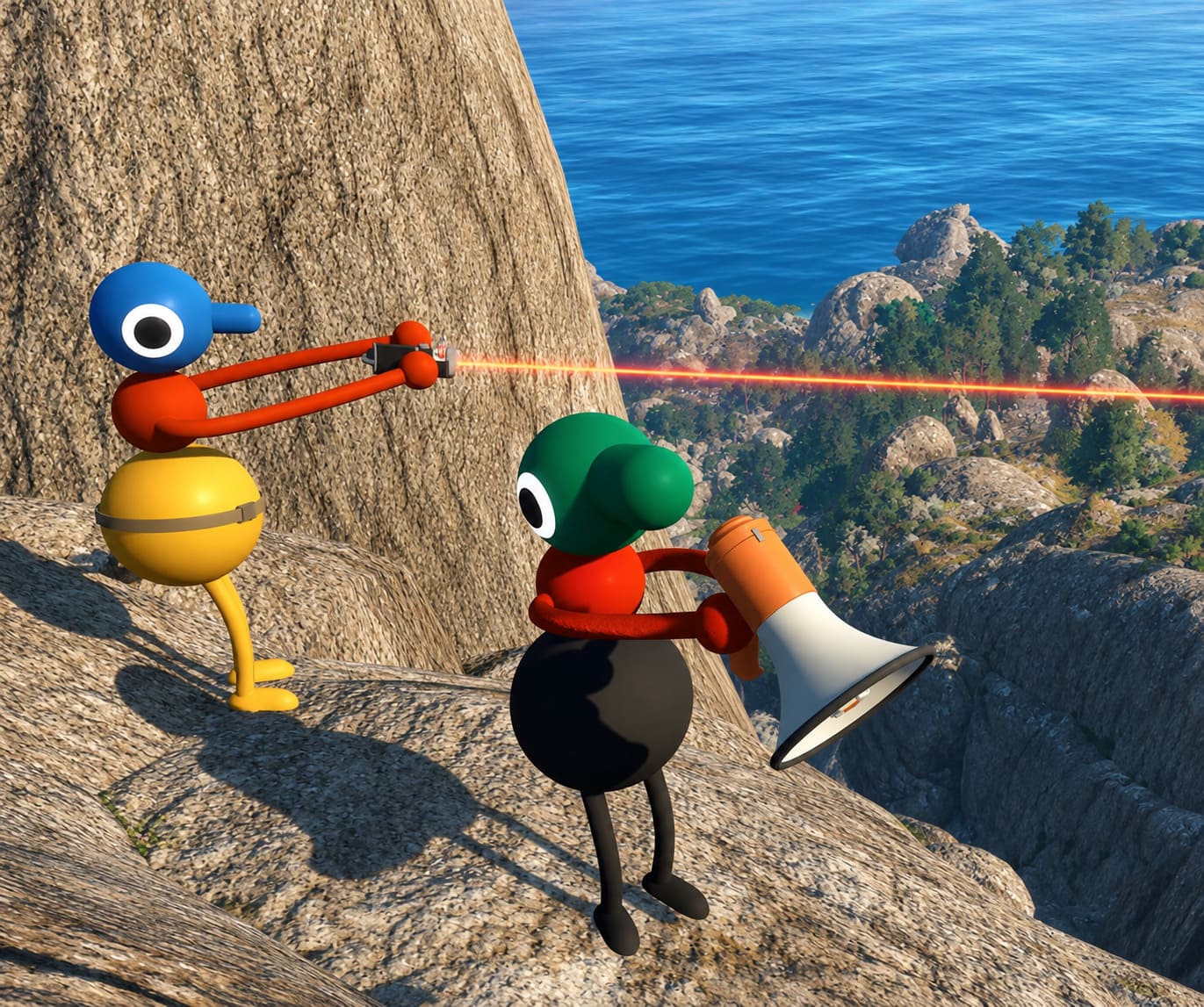
| Laser Pointer | Point out objectives from afar | Forked Path storage crate |
| Megaphone | Extend your natural voice range | Southern Campsite |
Walkie-Talkies Are Basically Mandatory
If there’s one item I refuse to leave behind, it’s the Walkie-Talkie.
Big Walk’s proximity voice system is fantastic because conversations naturally fade as players separate. The downside is that people inevitably split up.
Someone always says:
“I’ll just check over this hill.”
Ten minutes later nobody knows where they went.
That’s where the radio becomes priceless.
Instead of blindly searching the woods, you can simply ask where they are and regroup without wasting half your play session.
Location
You’ll find several Walkie-Talkies inside the Starting Gymnasium, sitting on benches near the exit.
My advice?
Everyone should grab one before leaving.
Binoculars Save Hours of Walking
The island is surprisingly vertical.
Many puzzles span cliffs, valleys, or elevated platforms that are difficult to understand from ground level.
That’s why the Binoculars quickly became one of my favorite tools.
Rather than hiking halfway across the map just to check whether a switch has moved, one player can stay on a hill and observe everything from a distance.
They’re also incredibly useful for spotting recognizable landmarks after your group gets separated.
Location
Head north from the arrival beach until you reach the Coastal Lookout Tower.
Climb to the highest platform and you’ll usually find the binoculars waiting there.
Laser Pointer Makes Teamwork Easier
Trying to describe something with only words isn’t always easy.
“Look at the tree.”
“What tree?”
“The one beside the rock.”
“Which rock?”
Five minutes later everyone is still confused.
The Laser Pointer completely solves this problem.
Instead of describing directions, simply point.
It seems like a small feature, but during puzzle-solving it becomes one of the most useful communication tools available.
Location
Look inside the storage crate near the Forked Path Junction, close to the entrance of the Whispering Woods.
The Megaphone Is Surprisingly Useful
At first I assumed the Megaphone was mostly a joke item.
It definitely creates hilarious moments.
But after several longer sessions, I realized it’s genuinely practical.
If someone forgot a radio—or accidentally dropped it somewhere—you can still project your voice across open areas.
The echo carries much farther than normal speech.
Location
You’ll find it resting on a picnic table inside the Southern Campsite.
Mid-Game Exploration Tools
Once your group reaches the deeper regions of the island, navigation becomes much more challenging.
These tools help organize larger teams.
| Tool | Best Use | Region |
|---|---|---|
| Signal Flare | Emergency beacon | Weather Station |
| Whiteboard | Puzzle planning | Research Tent |
| Cowbell | Audio tracking | Highland Meadows |
Signal Flares
Nighttime completely changes how Big Walk feels.
Trails disappear.
Trees begin looking identical.
Even experienced players lose their sense of direction.
That’s where Signal Flares become incredibly valuable.
Launching one instantly creates a bright visual landmark that everyone can see from enormous distances.
Whenever someone in our group got lost, firing a flare became our universal “meet here” signal.
Location
Inside the supply lockers at the abandoned Weather Station.
Portable Whiteboards
This might be the most unexpectedly brilliant item in the entire game.
Instead of solving every puzzle through voice chat alone, your team can actually sketch diagrams, write clues, or leave notes behind.
It sounds simple.
In practice, it’s surprisingly effective.
Several of the more complicated environmental puzzles became much easier once we started drawing possible solutions instead of trying to explain them verbally.
Location
Inside the Research Tent overlooking Sunken Valley.
Cowbells
Yes…
They’re ridiculous.
They’re also incredibly useful.
Attach one to a teammate and you’ll always know roughly where they are, even in thick fog or dense forest.
The constant ringing can honestly become annoying—but I’d rather hear a noisy teammate than lose them somewhere in the mountains.
Location
Near the old windmill in the Highland Meadows.
Interactive Objects Worth Investigating
Not every object exists simply to help navigation.
Some seem tied directly to environmental mysteries.
The Massive Golden Head
Few objects have generated as much discussion among players as the enormous Golden Head hidden underground.
It isn’t something one player can casually pick up.
Instead, multiple people have to physically push or roll it together.
That alone immediately tells you it’s important.
Moving it onto specific structures appears to trigger changes elsewhere across the island.
I won’t spoil every discovery, but if your group enjoys experimentation, this should become one of your main objectives.
Location
Hidden inside the Echoing Caverns beneath the central limestone sinkholes.
Lanterns and Torches
Darkness changes everything.
Cliffs become difficult to see.
Paths disappear.
Even familiar routes suddenly feel dangerous.
Lanterns create a safe pocket of visibility around whoever is carrying them, making nighttime exploration dramatically easier.
Our group usually spreads several lanterns throughout the line instead of having one player carry every light source.
Locations
- Outside the Starting Gymnasium
- Around campfires near the central Crossroads
Iron Keys
Several locked gates throughout the island require these heavy keys.
Finding them isn’t difficult once you know where to search, but they’re easy to overlook during your first playthrough.
Location
Behind the Twin Waterfalls.
Swim through the waterfall and search the shallow rock alcove for the hidden lockbox.
Big Walk Steam Walkthrough: Gameplay Guide, Puzzle Solutions, and Multiplayer Secrets (2026)
My Favorite Multiplayer Tips
After spending dozens of hours exploring with different groups, these habits consistently made every session smoother.
- Never leave the starting area without communication equipment.
- Travel in pairs whenever possible.
- Use major landmarks instead of vague directions.
- Carry at least one light source before sunset.
- Don’t ignore “useless” items—many become valuable later.
- Experiment with gestures alongside voice chat.
The biggest mistake I see new players make is assuming every item has only one purpose.
Big Walk constantly rewards creativity.
Sometimes the funniest solution is also the correct one.
How to Host a 12-Player Server in Big Walk: 2026 Multiplayer Guide
Complete Item Overview
| Item | Primary Function | Recommended Priority |
|---|---|---|
| Walkie-Talkie | Team communication | ★★★★★ |
| Binoculars | Long-distance scouting | ★★★★★ |
| Laser Pointer | Visual coordination | ★★★★☆ |
| Megaphone | Voice amplification | ★★★★☆ |
| Signal Flare | Emergency regrouping | ★★★★★ |
| Whiteboard | Puzzle solving | ★★★★☆ |
| Cowbell | Audio tracking | ★★★☆☆ |
| Lantern | Night exploration | ★★★★★ |
| Iron Key | Unlock progression | ★★★★★ |
| Golden Head | Environmental mystery | ★★★★★ |
Final Thoughts
What impressed me most about Big Walk isn’t its size or its visuals—although both are excellent.
It’s the way the game quietly encourages players to depend on one another.
Instead of chasing objectives, you’re constantly sharing information, pointing at distant landmarks, helping someone who got lost, or laughing because somebody accidentally kicked an important tool off a cliff.
Very few modern multiplayer games trust players enough to create their own stories, but Big Walk does exactly that.
If you’re approaching the island for the first time, don’t rush through it. Pick up every tool, experiment with every strange object, and don’t be afraid to wander off the obvious path. Some of the best moments my group experienced came from taking a wrong turn and discovering something we weren’t even looking for.
For me, that’s the real charm of Big Walk. It’s less about reaching a destination and more about the conversations, discoveries, and unforgettable moments that happen along the way.