Big Walk Beginner’s Guide: Tips, Tricks, and Mechanics to Survive the Island
There are co-op games that constantly throw enemies, timers, and loot at you, and then there’s Big Walk. After spending time with House House’s newest adventure, one thing became obvious almost immediately: this game rewards communication far more than quick reflexes. If you’re expecting another survival sandbox or action-heavy multiplayer experience, you’ll probably be surprised by how different this feels.
Instead of chasing gear or defeating bosses, you’re simply exploring a huge island with your friends, solving environmental puzzles, and trying not to lose each other along the way. It sounds simple on paper, but once you step into the world, you’ll realize just how easy it is to wander off in the wrong direction.
If you’re starting your first adventure, these are the mechanics and habits that made my own sessions much smoother. Some lessons were learned the easy way, while others came after watching teammates accidentally launch important puzzle items into places nobody wanted to climb.
Why Big Walk Feels Different From Most Co-op Games
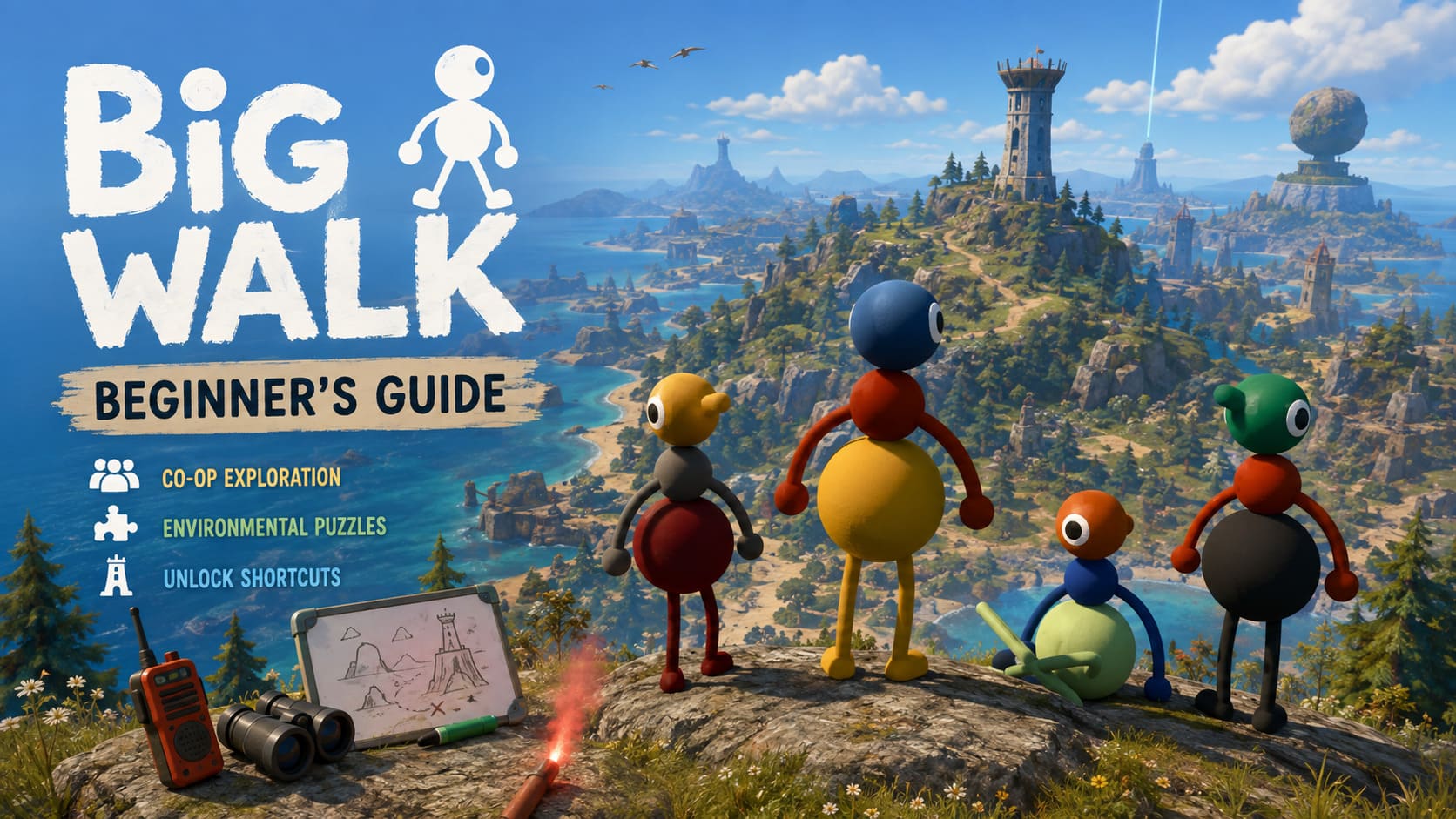
One of my favorite things about Big Walk is that it trusts players. There are almost no interface elements pulling your attention away from the environment. No minimap. No glowing quest arrows. No endless checklist sitting in the corner of the screen.
At first, that can feel uncomfortable. Modern games usually tell us exactly where to go next. Here, you need to look around, recognize landmarks, remember paths, and actually pay attention to your surroundings.
That slower pace quickly becomes one of the game’s greatest strengths.
Your overall objective is straightforward. Across the island you’ll discover enormous towers connected to regional puzzle areas. Solving these challenges rewards unique fruit-shaped trophies that can be returned to the towers, gradually unlocking new shortcuts that make traveling across the island much easier.
The clever part is that puzzles adapt to the number of people in your lobby. A puzzle completed by two players may require completely different coordination when tackled by ten or twelve.
Communication Is More Important Than Skill
If I could give only one piece of advice to new players, it would be this:
Don’t join Discord for your first playthrough.
Normally I’d recommend external voice chat in almost every multiplayer game, but Big Walk is built around its own communication system. Using outside voice chat removes a huge part of what makes the experience memorable.
The game’s proximity voice system changes everything.
- Your voice fades naturally as teammates move farther away.
- Large rocks, walls, and hills block sound, making conversations quieter or muffled.
- Caves create realistic echoes that actually affect how voices travel.
- Certain puzzle sections completely separate communication, forcing teams to rely on observation instead of talking.
Those moments create surprisingly funny situations. More than once our group spent several minutes shouting names into the wilderness before realizing someone had simply walked around the opposite side of a mountain.
Learn to Read Body Language
Once voice communication disappears, gestures become incredibly valuable.
At first, waving your arms around feels silly.
Twenty minutes later, you’ll be pointing at clues, signaling teammates to stop, directing people toward hidden paths, or frantically trying to explain that somebody missed an important switch.
The animation system is expressive enough that players naturally invent their own communication style.
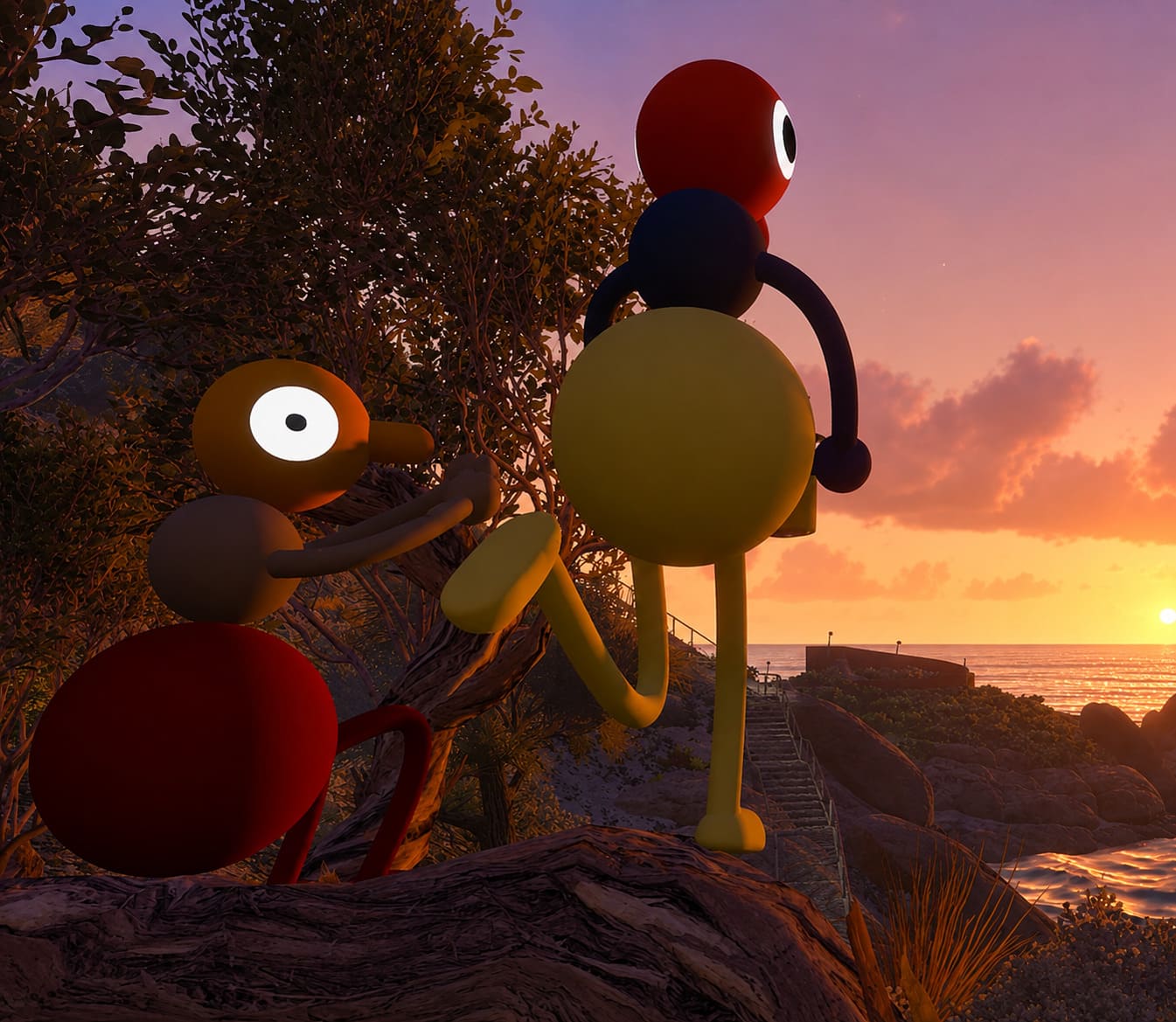
Some useful habits include:
- Point toward objectives instead of repeatedly describing directions.
- Wave both arms to grab attention from long distances.
- Crouch repeatedly as a simple “yes” signal.
- Stay visible whenever possible if your team is spread across different elevations.
It’s amazing how quickly your group starts understanding each other without saying a word.
The Tools You’ll Use Most Often
Big Walk doesn’t overwhelm players with dozens of gadgets. Instead, every tool has a clear purpose and becomes surprisingly useful in different situations.
| Tool | Best Use | Personal Advice |
|---|---|---|
| Walkie-Talkie | Long-distance communication | Always make sure every separated group has at least one. |
| Laser Pointer | Marking clues and puzzle elements | Excellent for guiding teammates without needing long explanations. |
| Binoculars | Scouting terrain | Great for spotting landmarks before everyone commits to a route. |
| Megaphone | Large group coordination | Very useful when several players become scattered. |
| Flare | Emergency location marker | Probably the fastest way to reunite after someone gets lost. |
| Whiteboard | Planning routes and leaving notes | More useful than expected during longer puzzle sessions. |
I underestimated the whiteboards before playing. After several hours, they became one of our favorite tools because nobody remembered every clue we’d already discovered.
Respect the Kick Button
This sounds like a joke.
It isn’t.
One dedicated kick button might be responsible for more accidental disasters than every puzzle combined.
Yes, punting random objects across the landscape is entertaining.
Unfortunately, the game doesn’t stop you from kicking extremely important puzzle objects into rivers, cliffs, bushes, or places that become frustrating to reach again.
My group learned this lesson after someone enthusiastically launched a required trophy down a steep hill. Everyone laughed for about thirty seconds before realizing we actually had to retrieve it.
My recommendation is simple:
If an object looks important, don’t kick it unless the puzzle clearly expects you to.
Staying Together Is Harder Than You Think
Without a minimap, even experienced players can become separated within minutes.
Dense forests, winding hills, and similar-looking trails make orientation surprisingly difficult.
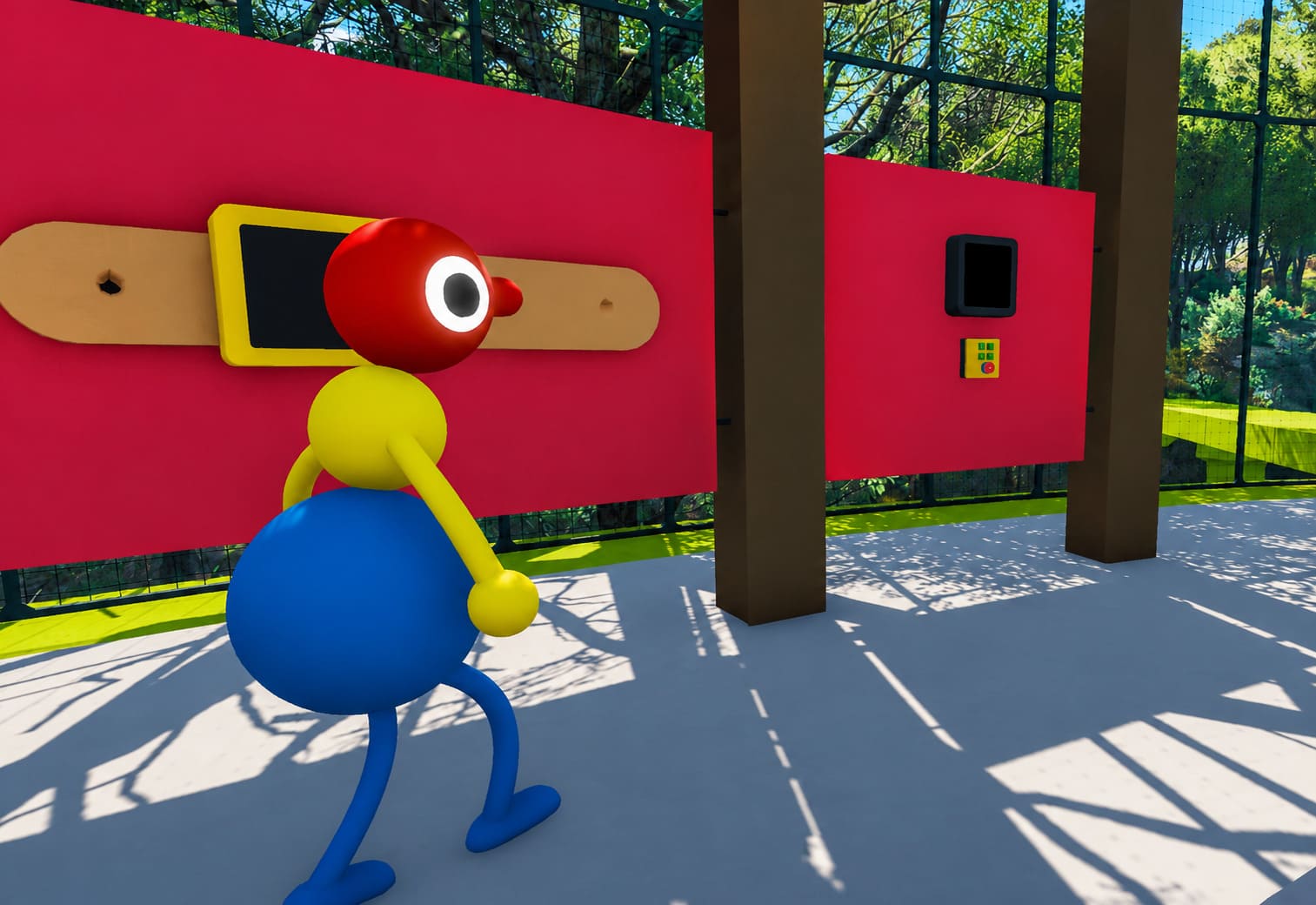
Some habits made a noticeable difference during our sessions:
- Never let someone explore alone unless they have a communication device.
- Agree on recognizable landmarks before splitting into smaller groups.
- Check behind you regularly to confirm everyone is still following.
- Stop occasionally instead of constantly running forward.
Oddly enough, moving a little slower usually saves time because your group spends less effort searching for missing teammates.
Use the Environment as Your Map
Since the game doesn’t provide traditional navigation tools, the landscape itself becomes your compass.
Pay attention to:
- tower locations
- unusual rock formations
- distinctive trees
- rivers
- large cliffs
- open valleys
When communicating over the radio, saying “I’m near the giant leaning tree” is infinitely more helpful than “I’m somewhere east.”
Over time you’ll naturally memorize the island without ever opening a map.
Don’t Rush Through the Tutorial
Normally I’m guilty of skipping tutorials whenever possible.
Big Walk was one of the rare exceptions where slowing down actually paid off.
The opening training area introduces movement, item interaction, carrying mechanics, gestures, and several small physics systems that become important later.
Nothing here feels overly complicated, but understanding those basics early prevents plenty of confusion once you’re exploring the main island with friends.
Big Walk Steam Walkthrough: Gameplay Guide, Puzzle Solutions, and Multiplayer Secrets (2026)
Sometimes the Best Solution Is Taking a Break
One thing I genuinely appreciate is that Big Walk never pressures players with countdown timers or constant danger.
If your group gets stuck, there’s no punishment for stepping away from the puzzle.
Some of our best moments happened when everyone simply sat on a hill, watched the sunset, joked over proximity chat, and returned to the puzzle five minutes later with fresh ideas.
That relaxed rhythm gives the game a personality that’s becoming surprisingly rare.
Final Thoughts
Big Walk isn’t trying to compete with survival games or fast-paced multiplayer shooters. Instead, it builds memorable stories through small moments of cooperation, accidental chaos, and genuine exploration.
The more you embrace its slower pace, the more rewarding the adventure becomes. Talk to your teammates, pay attention to the landscape, experiment with the tools, and don’t worry if your group occasionally gets hopelessly lost. Honestly, those unexpected detours often become the funniest memories you’ll take away from the island.
Most importantly, remember one golden rule that every new player eventually learns:
If your friend is carrying an important puzzle item, maybe don’t encourage them to test how far the kick button can launch it.