Spellcasters Chronicles vs Smite: Full Stone Shaman Abilities Guide
Gods, Titans, and the Future of MOBAs: Why Smite Finally Has a Real Challenger
The MOBA genre has been stuck in a familiar loop for years, but things are starting to shift. For the longest time, Smite owned the third-person battleground space. If you wanted mythological gods throwing lightning bolts in over-the-shoulder combat, there was simply no alternative.
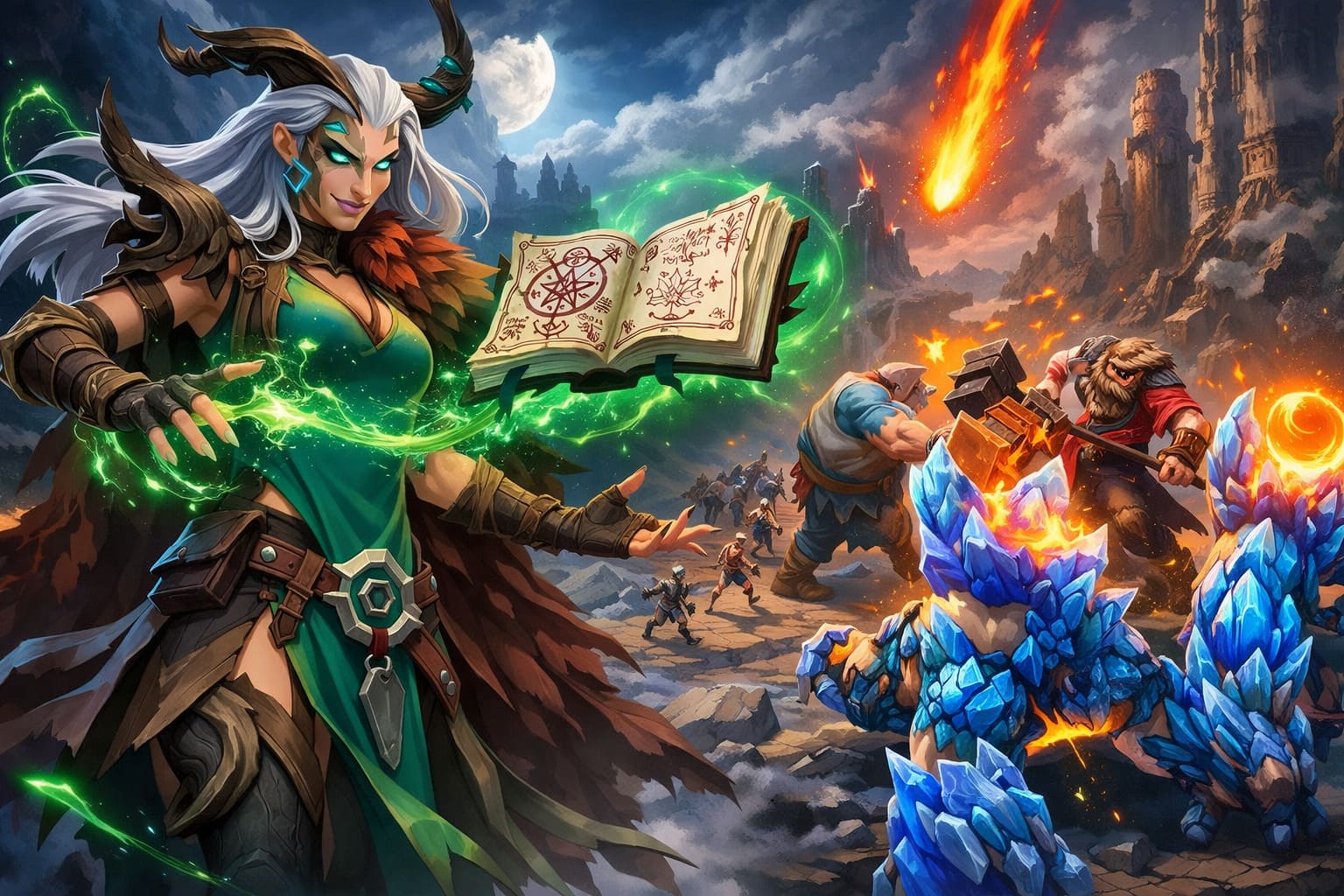
Now, Spellcasters Chronicles is stepping into the arena with a very different philosophy—and honestly, as a long-time MOBA addict, I’m both excited and a little nervous.
This isn’t just another “Smite clone.” It feels like the genre is being bent, twisted, and maybe even reinvented.
Gods vs. Architects: A Genre Identity Crisis (In a Good Way)
Smite is pure competitive adrenaline. You lock in a god from global mythology and jump into lane like a warrior entering a sacred duel. Every ability matters. Every missed skill shot hurts your pride. You’re not managing a war—you are the weapon.
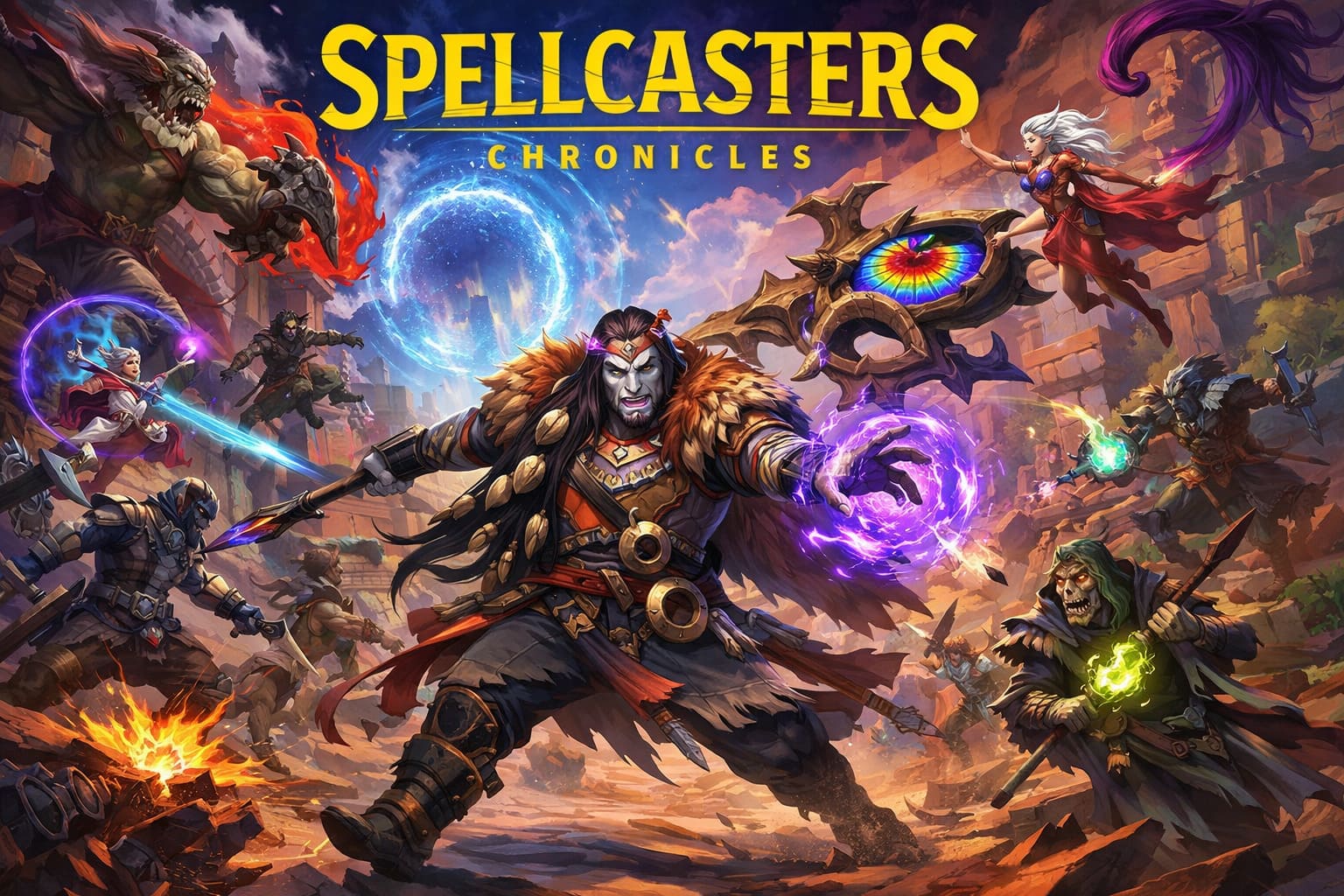
Spellcasters Chronicles, on the other hand, flips the perspective. You don’t just fight. You orchestrate. You summon skyscraper-sized Titans, deploy creatures, and reshape the battlefield. Instead of feeling like a gladiator, you feel like a battlefield commander pulling invisible strings.
- Smite: Direct combat, twitch reactions, lane control.
- Spellcasters Chronicles: Macro strategy, summons, environmental chaos.
And that shift alone could redefine what a third-person MOBA even means.
Action vs. Strategy: Mechanical Skill or Tactical Mastery?
One of the reasons Smite built such a loyal fanbase is its mechanical intensity. Basic attacks are skill shots. Positioning decides team fights. Timing defensive relics like beads can save or lose a match in seconds. It scratches that competitive itch in a way few games do.
Spellcasters Chronicles seems less obsessed with individual outplays and more focused on large-scale impact. Instead of clutch 1v3 moments, you’re summoning colossal entities that dominate the map. It feels closer to blending MOBA with RTS and even a hint of auto-battler philosophy.
| Feature | Smite | Spellcasters Chronicles |
|---|---|---|
| Core Focus | Player Skill & Reflexes | Strategic Summoning & Control |
| Combat Style | Direct, Skill-Based | Indirect, Macro-Oriented |
| Match Feel | Competitive Arena | Fantasy War Simulation |
| Learning Curve | High (Items & 120+ Gods) | Unknown, Likely Strategy-Heavy |
If you live for clutch plays and esports energy, Smite still looks unbeatable. But if you enjoy thinking three steps ahead and watching your summoned Titan flatten a lane? That’s a different kind of satisfaction.
Visual Identity: Myth Arena vs. Living Fantasy World
Visually, Smite has matured beautifully over the years. Its stylized mythological mash-up—where Zeus can brawl with Cthulhu and King Arthur—should feel ridiculous, yet it somehow works. Especially with the leap into next-gen visuals, it feels polished and competitive-ready.
Spellcasters Chronicles appears more cinematic and atmospheric. The magic feels heavier. The scale feels larger. Instead of a sport-like arena, it gives off high-fantasy epic vibes, like you’re watching a war unfold rather than playing a match.
That tonal difference might be the real game changer.
Discover more: How to Survive Poppy Playtime Chapter 5: Full Walkthrough and the Shocking Ending Explained
Accessibility and the “Meta” Problem
Let’s be honest: getting into Smite as a new player can feel brutal. Massive god roster. Complex item builds. Meta shifts that make yesterday’s strategy obsolete. It rewards dedication—but it demands it too.
Spellcasters Chronicles might offer a different entry point. By emphasizing summons and battlefield management, it could appeal to players who enjoy strategy games or auto-battlers but still want a third-person perspective. If executed well, it might lower the barrier to entry without sacrificing depth.
So… Which One Wins?
Here’s my honest gamer take: Smite isn’t going anywhere. It has history, esports credibility, and a fiercely loyal community. But Spellcasters Chronicles feels bold. Experimental. Risky in the best way.
- Choose Smite if you crave competitive third-person MOBA combat and mechanical outplays.
- Choose Spellcasters Chronicles if you want spectacle, massive summons, and a strategic evolution of the genre.
The real winner? Us. Because for the first time in years, the third-person MOBA space actually feels competitive again.
Stone Shaman Guide: The Most Underrated Battlefield Controller in Spellcasters Chronicles
Meta Tags: Stone Shaman, Spellcasters Chronicles, RPG Strategy Guide, Battlefield Control, Titan Mountains, Wisdom Build
If you’ve been grinding ranked in Spellcasters Chronicles and you’re tired of watching flashy glass-cannon mages explode the moment someone sneezes on them, let me introduce you to my personal obsession: the Stone Shaman.
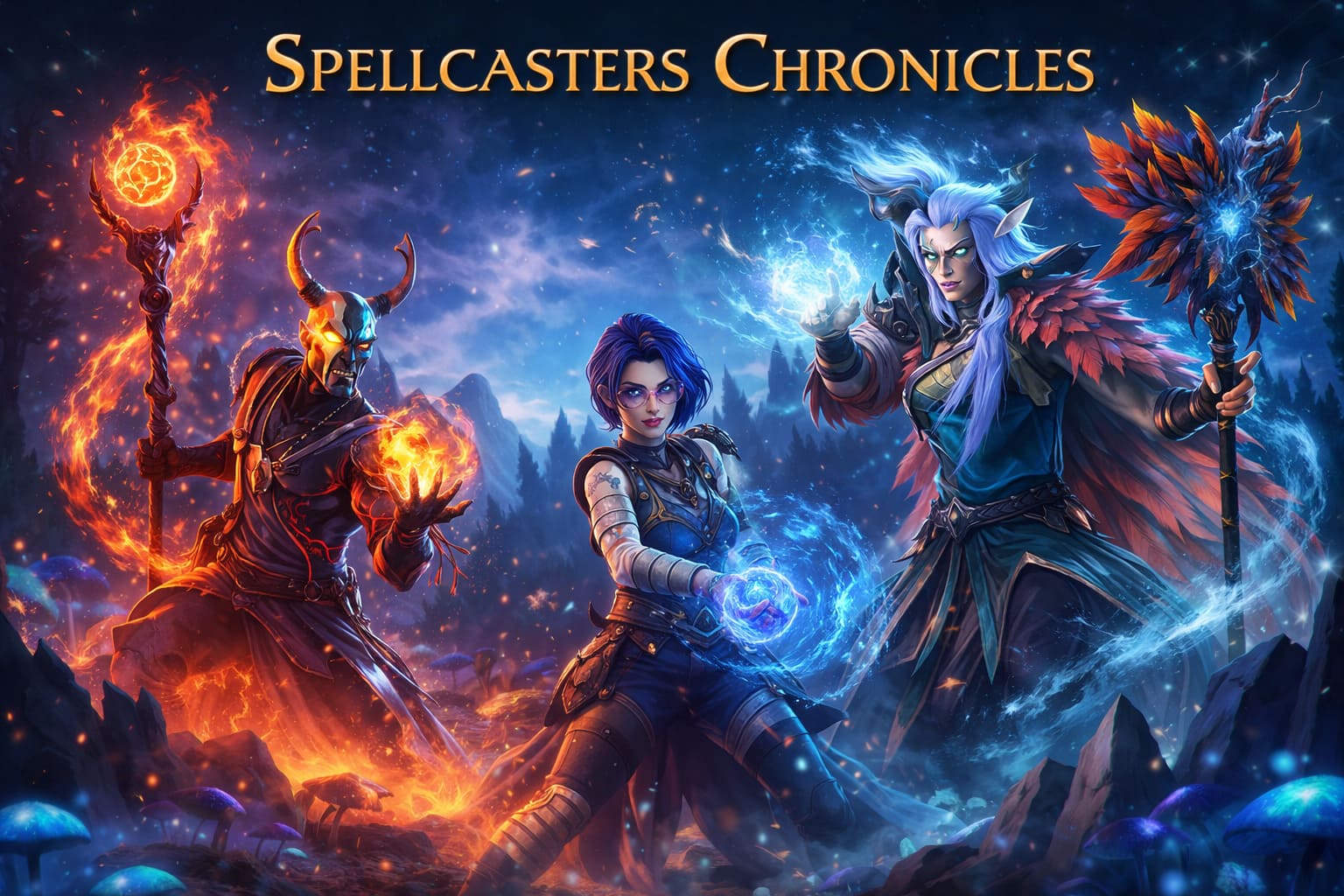
This isn’t a class for highlight-reel chasers. It’s for players who want to control the pace of the fight, bend the map to their will, and quietly carry games through positioning and pure battlefield IQ.
The Stone Shaman isn’t just a tank. He’s a hybrid controller and frontline support who turns terrain into a weapon. While others spam spells, you listen to the earth, anticipate rotations, and punish overextension before it even happens. High Wisdom builds aren’t optional here—they’re the backbone of everything that makes this class oppressive in the right hands.
The Way of the Mountain: How the Stone Shaman Really Wins Games
The core identity of the Stone Shaman revolves around area denial and defensive dominance. You’re not chasing kills—you’re dictating where fights happen. You force enemies into bad angles, shut down flanks, and create safe zones for your backline to unload damage.
- High Wisdom (13+) boosts resistance to magical crowd control and improves reliability of earth-based manipulation.
- Positioning over aggression is the golden rule—your power scales with patience.
- Intent communication with your team makes or breaks advanced plays.
This class rewards foresight. If you enjoy predicting enemy movement rather than reacting to it, the Stone Shaman feels insanely satisfying.
Passive Power: Titan’s Heart
Titan’s Heart is one of the most deceptively strong passives in the current meta. Every time you absorb physical damage, you gain stacks of Hardened Crust.
At max stacks, your next ability becomes instant and costs zero mana. That changes everything in high-pressure fights.
Instead of avoiding poke, you sometimes want to intentionally absorb controlled damage to power spike your next cast. It flips the usual frontline logic on its head. Smart Stone Shaman players use this to launch surprise instant Fissures or emergency Monoliths that completely swing a fight.
Core Ability Breakdown
| Ability | Primary Purpose | Advanced Tip |
|---|---|---|
| Fissure Strike | Disruption & crowd control | Interrupt channeling ultimates and punish grouped enemies |
| Monolith Aegis | Physical barrier & zoning tool | Place in tight corridors to eliminate flanking routes |
| Echoes of the Earth | Anti-stealth detection | Activate before objectives to deny assassin engages |
| Resurrection of Kamazad | AOE burst & summon pressure | Drop behind enemy frontlines to split attention |
Fissure Strike: The Formation Breaker
This is your bread-and-butter tool. Moderate earth damage is nice, but the real value is the Stun or Trip effect. Size-based disruption mechanics mean you can tailor engages depending on who you’re targeting. The real pro move? Holding Fissure specifically to interrupt predictable spell rotations from enemy casters.
Monolith Aegis: The Most Abusable Spell in the Kit
Monolith Aegis is where the Stone Shaman becomes infuriating to play against. This isn’t a shield—it’s a literal object that blocks projectiles and movement. In narrow jungle paths or corridor objectives, this ability can completely invalidate assassin dives and ranged pressure.
But here’s the catch: bad placement can grief your own team. I’ve seen Shamans trap their own carry more often than I’d like to admit. Always communicate your intent before locking down space.
Echoes of the Earth: Hard Counter to Stealth Meta
Stealth-heavy comps are popular for a reason. Echoes of the Earth exists to ruin their day. For four seconds, hidden enemies glow with Tremorsense outlines, turning invisible threats into easy targets. If your team struggles against assassins, this ability alone justifies picking the class.
Ultimate: Resurrection of Kamazad
This is the “oh no” button. A massive Titan-form Earth Elemental erupts from the ground, dealing heavy AOE damage and fighting for 12 seconds. During this window, you gain increased damage at the cost of 20% movement speed. You feel powerful—but slightly burdened, as if channeling something ancient and unstable.
Best usage? Don’t drop it front-to-front. Cast it in a way that splits enemy formation. Force them to either deal with the Titan or ignore it and get punished.
Advanced Mechanics: Action Penalties & Wisdom Scaling
One of the more nuanced systems in Spellcasters Chronicles is the Action Table. Spamming heavy earth magic within six seconds can trigger an Action Penalty, reducing the accuracy of your next Fissure Strike. That means timing matters more than button mashing.
High Wisdom builds mitigate risk and improve saving throws, but no stat can save you from poor sequencing. Play smart. Pace your casts. Let the mountain breathe.
Best Synergies and Counters
The Stone Shaman thrives with long-range damage dealers. By creating controlled “kill boxes,” you allow your backline to operate safely.
- Best Partner: Iron Sorcerer – Metallic projectiles combined with Monolith walls create a brutal frontline fortress.
- Strong Combo: Frost Witch – Slow fields stacked with terrain control feel oppressive.
- Main Counter: Storm Caller – High mobility and wind mechanics bypass or disrupt your setup.
Discover more: Voyager: Across the Unknown – Low Level Fatal Error & Startup Crash Fixes
Final Verdict: Who Should Main Stone Shaman?
If you’re the type of player who enjoys macro strategy, positional dominance, and winning fights before they even start, the Stone Shaman is criminally underrated. He’s not flashy. He won’t top damage charts every game. But when played correctly, he becomes the spiritual anchor of the team—the immovable force that turns chaotic skirmishes into structured victories.
In a meta obsessed with speed and burst, sometimes the strongest move is to stand firm and let the mountain decide who advances.