Iron Nest Heavy Turret Simulator Release Date and Gameplay Breakdown – What Makes This Dieselpunk Simulator So Addictive
When I first came across Iron Nest Heavy Turret Simulator, it didn’t feel like the typical game trying to grab attention with flashy marketing or cinematic spectacle. Instead, it presented something far more restrained and deliberate: a heavy, mechanical simulation experience built around patience, precision, and the feeling of operating a massive war machine from the inside. As someone who enjoys deep simulation games and systems-driven gameplay, it immediately felt like a title designed for players who value immersion over speed.
Over time, the project has evolved from a small indie experiment into one of the most discussed simulation games on Steam. Much of this attention comes from the strong reaction to its demo during Steam Next Fest, where players praised its unusual approach to artillery simulation. It does not attempt to simplify complexity for accessibility; instead, it embraces it fully, which is exactly why it is gaining a dedicated following.
Iron Nest System Requirements: Minimum and Recommended PC Specs Explained
Official Release Window and Development Background
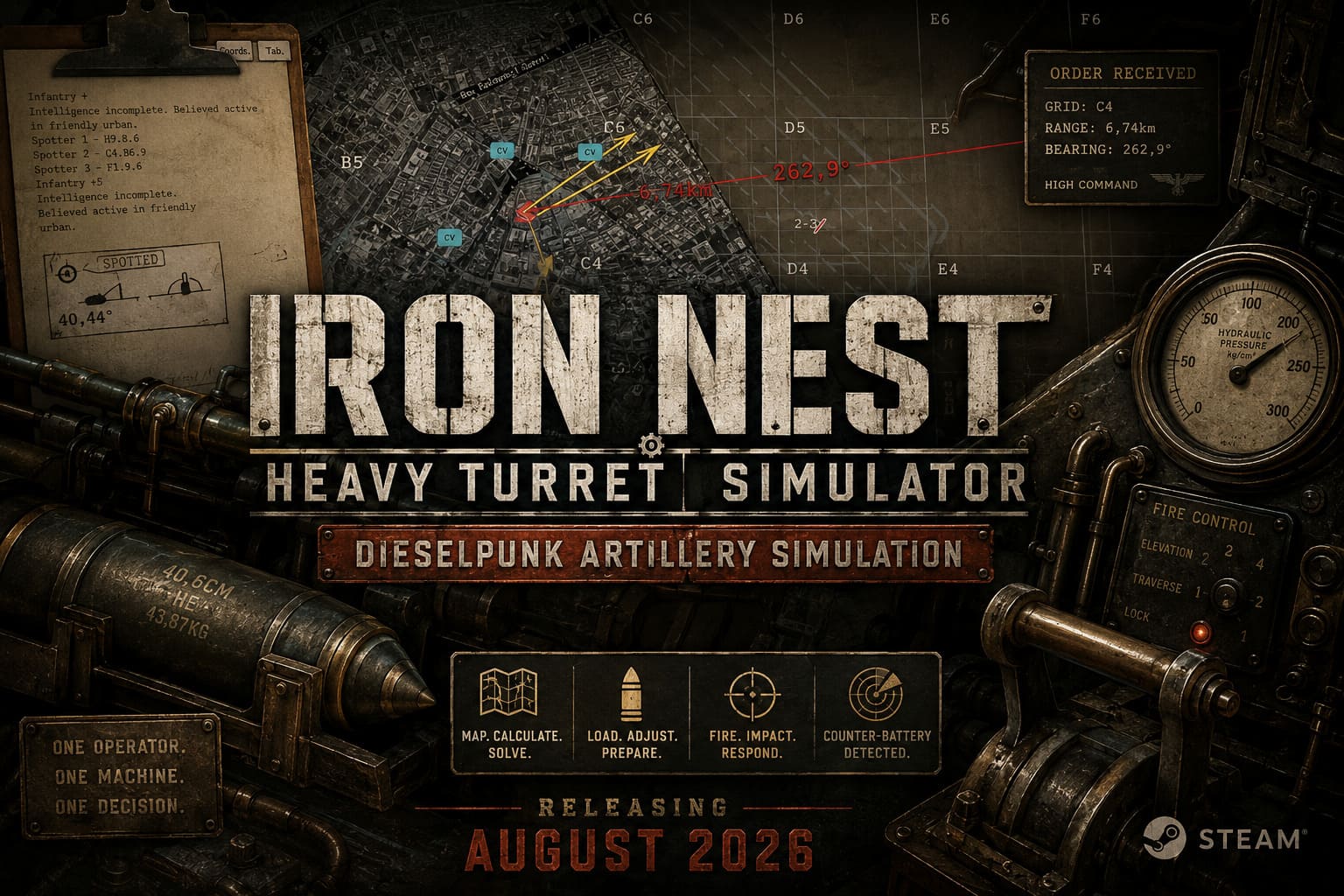
The current expected release window for Iron Nest Heavy Turret Simulator is August 2026, based on developer updates and Steam store information. The project is being developed by a very small team, Nick Nieuwoudt and Dominik Latos, which makes its steady progress even more impressive.
Before the public demo, the developers conducted a smaller testing phase known as Nest Fest. This early version already showed the core philosophy of the game: slow, methodical, and highly mechanical gameplay where every action matters. However, the real turning point came during Steam Next Fest on June 15, 2026, when the demo attracted a large wave of players and generated significant community discussion.
The response was strong enough to briefly overwhelm servers and push the game into trending visibility on Steam. This kind of reaction often determines whether a niche simulation project fades or builds a lasting audience, and in this case, it clearly leaned toward sustained interest.
Gameplay Philosophy: Inside the Machine
What defines Iron Nest Heavy Turret Simulator is not just its setting, but its design philosophy. Instead of focusing on fast combat or instant feedback, the game places the player inside a fully mechanical system where every operation is deliberate and physically grounded.
The player assumes the role of a lone artillery operator inside a massive war machine. There is no traditional battlefield view. Instead, all interaction happens through instruments, gauges, levers, and map-based calculations. This design creates a sense of isolation while also emphasizing responsibility for every decision.
A typical engagement follows a structured operational flow:
- Receiving Orders: Coordinates and instructions arrive with minimal context from High Command.
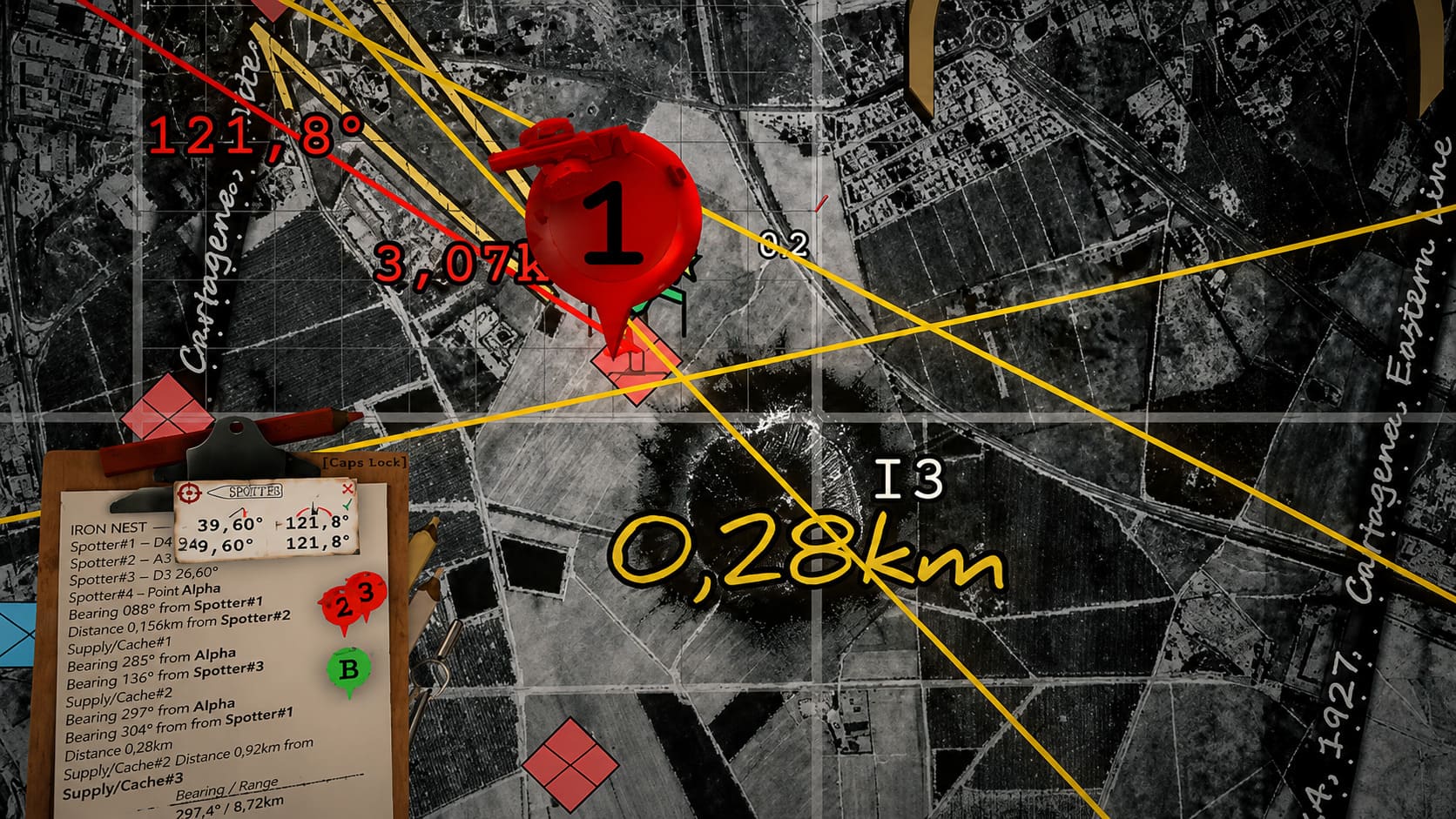
- Manual Calculation: Players use maps, rulers, and tools to calculate firing solutions.
- Mechanical Preparation: Shells are loaded manually, hydraulics are adjusted, and systems are calibrated.
- Execution Phase: After firing, counter-battery systems activate, adding pressure and urgency.
This structure transforms combat into a technical process rather than a reflex-based challenge. Success depends on understanding systems rather than reacting quickly.
Atmosphere and Dieselpunk Identity
The atmosphere of Iron Nest Heavy Turret Simulator is heavily inspired by dieselpunk aesthetics and industrial wartime design. The setting feels like an alternate history version of early 20th-century warfare, where mechanical engineering has become oversized, brutal, and deeply oppressive.
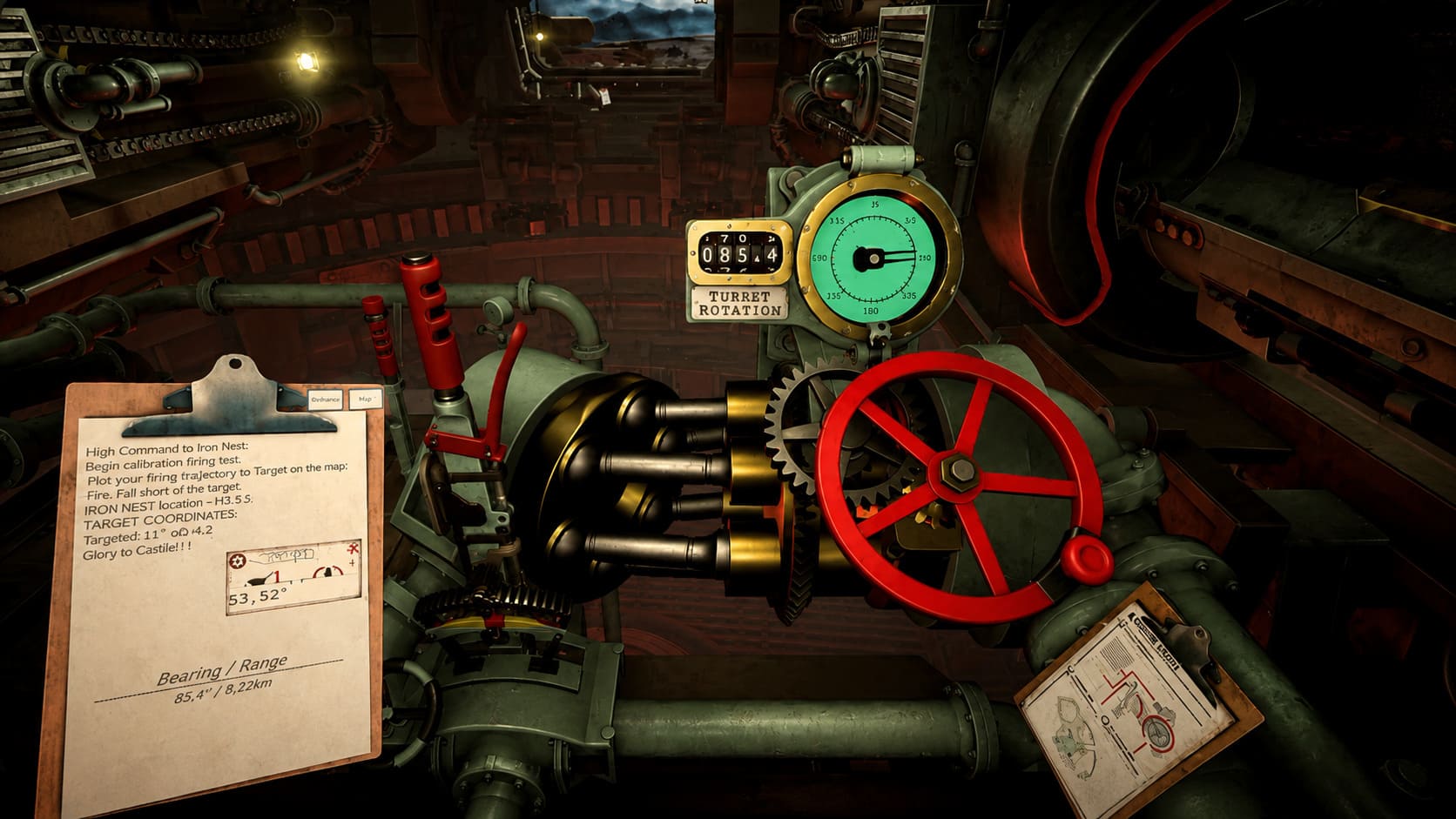
The interior environment of the turret is claustrophobic and dense with detail. Metal surfaces, hydraulic systems, analog instruments, and dim lighting create an environment that feels both functional and uncomfortable. Every component appears to have weight, and every action produces a noticeable mechanical response.
Sound design plays an equally important role. Hydraulic pressure, metal stress, and firing sequences contribute to a constant sense of physical presence. The game does not try to romanticize war; instead, it focuses on machinery, pressure, and the human role within an overwhelming system.
Community Reception and Online Discussion
Community response to Iron Nest Heavy Turret Simulator has been notably positive, especially among simulation-focused audiences. On platforms like Reddit and YouTube, players frequently discuss its unusual depth and commitment to realism in mechanical interaction.
Many creators who specialize in simulation content have highlighted the game’s learning curve as one of its strongest aspects. Instead of relying on tutorials that simplify systems, the game encourages discovery through repetition and experimentation. This creates a sense of achievement when players finally master its mechanics.
Common points of praise include:
- High mechanical immersion without excessive automation
- Strong tactile feedback through systems interaction
- Meaningful tension created by slow processes
- Unique focus on calculation-based gameplay
At the same time, some players find the pacing intentionally slow and demanding. However, even critical opinions often acknowledge that this design choice is deliberate and central to the experience rather than a flaw.
Development Direction and Future Plans
Although the initial release focuses on a single-player experience, the developers have already discussed potential future expansions. One of the most interesting ideas is a standalone multiplayer version that builds on the same mechanical foundation.
This concept would allow multiple players to operate different parts of the same artillery system. One player might handle calculations, another loading, and another targeting and firing. If implemented effectively, this could transform the experience into a cooperative systems simulator where communication becomes essential.
Additional post-launch plans include challenge modes, leaderboards, and expanded strategic systems designed to extend replayability without compromising the core mechanics.
Final Thoughts
Iron Nest Heavy Turret Simulator stands out because it commits fully to its identity. It is not designed for fast action or casual play. Instead, it focuses on precision, patience, and understanding complex mechanical systems from within.
For players who enjoy deep simulation experiences where mastery comes from learning systems rather than reacting quickly, this game has the potential to become a defining entry in its niche. As its August 2026 release approaches, interest continues to grow, and it already feels like a project that could shape expectations for future mechanical simulation games.