The Left Behind Survival Game 2026: PC Requirements, Gameplay Review, and Community Verdict
The zombie survival genre is one of the most difficult spaces for an indie developer to enter. Players have already seen countless abandoned cities, destroyed military bases, endless forests, and ruined American suburbs. Standing out among hundreds of survival games requires something different — a hook strong enough to make players stop scrolling through Steam and actually pay attention.
The Left Behind, developed by Trudex and released in July 2026, manages to do exactly that. After spending time exploring its world, testing its survival mechanics, and watching how the community reacted, I can say this game is a fascinating example of an indie title that understands its limits while still delivering a surprisingly addictive experience.
This is not a massive survival simulator designed to consume thousands of hours like hardcore sandbox games. It is not trying to replace titles focused on deep crafting systems, complex economies, or endless character progression. Instead, The Left Behind focuses on something much more direct: exploration during the day, absolute chaos at night, and surviving just one more wave with your friends.
That simple idea creates a surprisingly tense gameplay loop.
What Is The Left Behind?
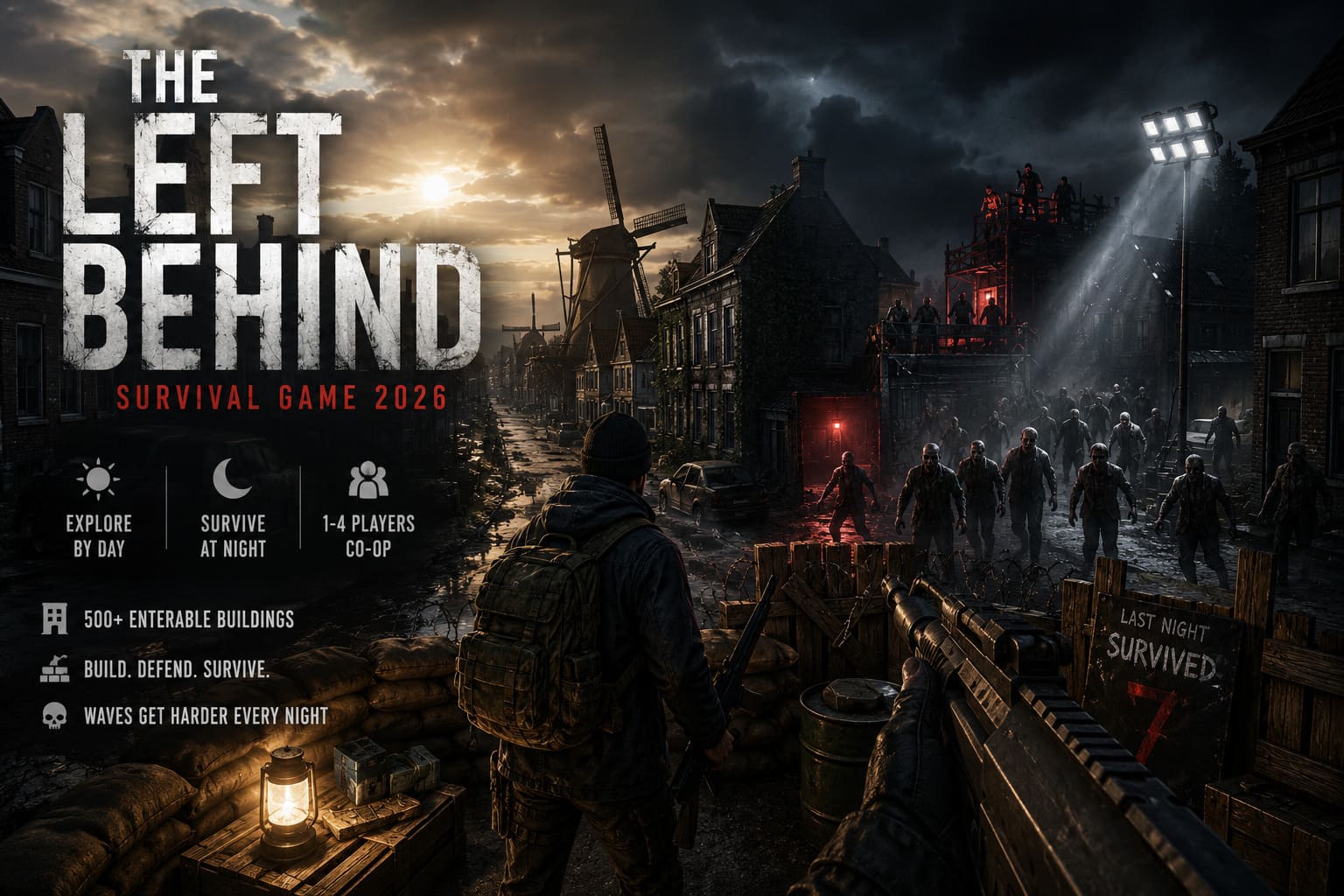
The Left Behind is a solo and 1-4 player cooperative post-apocalyptic survival shooter built around exploration, resource management, and escalating zombie attacks.
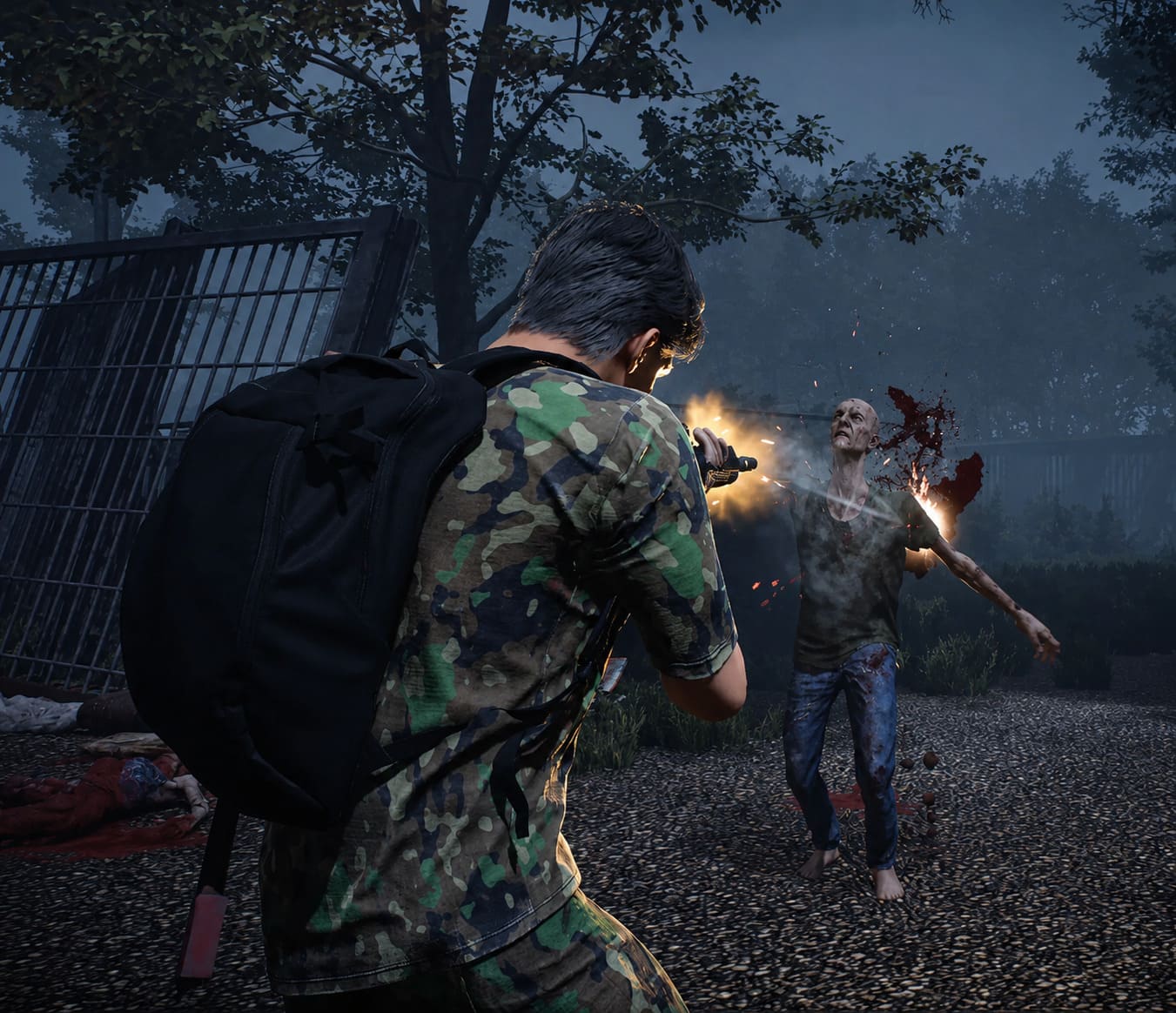
The story itself is intentionally simple. Your character was away from Earth during a catastrophic event. While humanity collapsed below, a mysterious outbreak transformed ordinary people into violent infected creatures. After returning to the planet, you find a world filled with abandoned homes, empty streets, and dangerous infected walkers.
Your mission is straightforward: survive.
The interesting part is not the narrative — it is the setting.
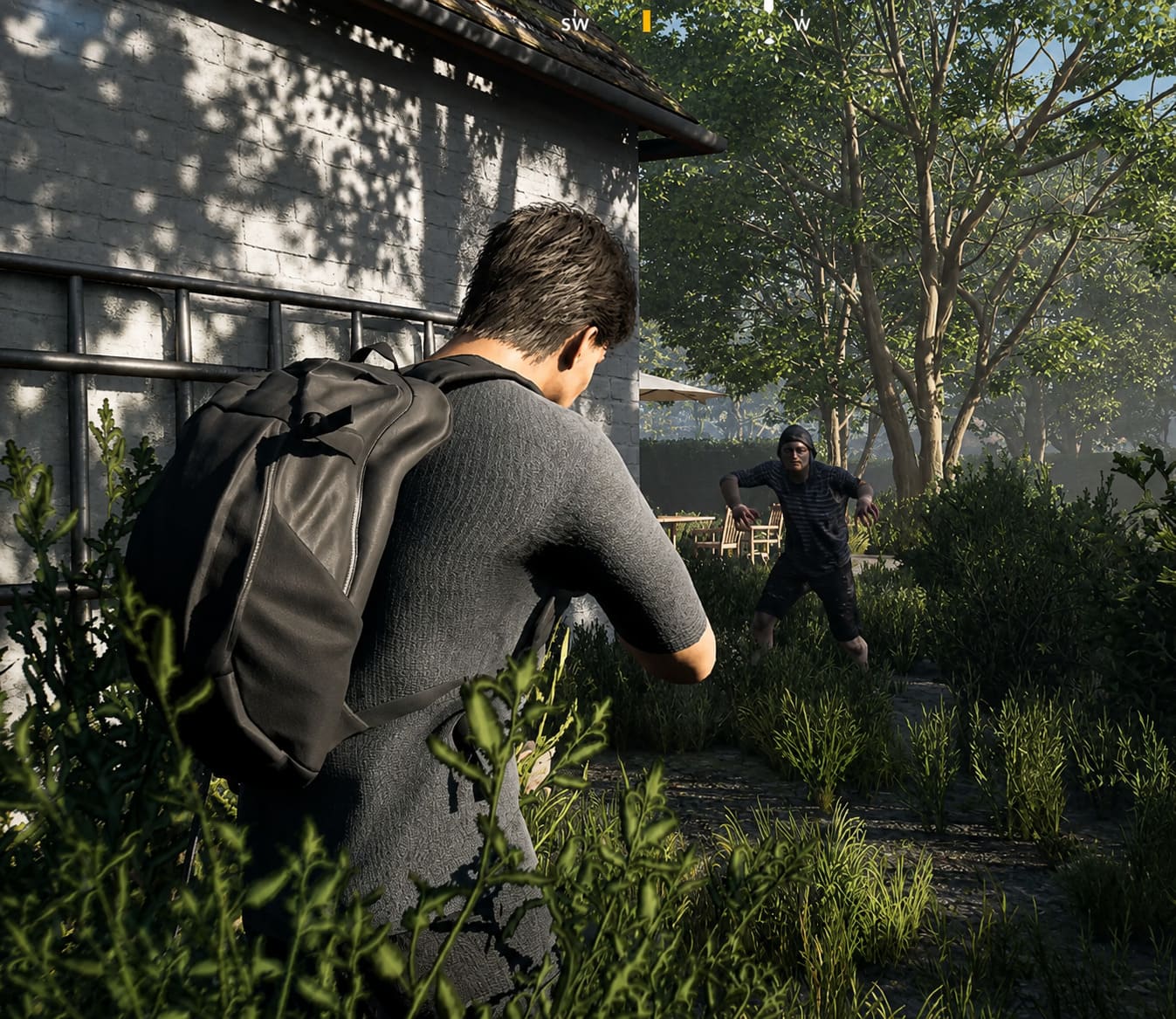
Instead of another fictional American wasteland, Trudex places players inside a handcrafted Dutch environment. The game features recognizable European neighborhoods, rural landscapes, suburban streets, and architecture inspired by the Netherlands.
That decision gives The Left Behind a surprisingly fresh identity.
Walking through empty Dutch houses and abandoned streets creates a completely different feeling compared to the usual zombie apocalypse formula. The environment feels quieter, almost peaceful during the day, which makes the sudden nighttime attacks much more dramatic.
A Survival Game Built Around Two Different Experiences
The strongest part of The Left Behind is its day-and-night structure. The game almost feels like two separate experiences connected together.
During daylight, players become explorers.
At night, they become survivors.
This constant change keeps the gameplay moving and prevents the experience from becoming repetitive too quickly.
| Feature | How It Works |
|---|---|
| Day Exploration | Search buildings, collect supplies, discover new areas |
| Night Survival | Fight increasingly aggressive infected waves |
| Multiplayer | Team up with up to four players |
| Building System | Create barricades and defensive positions |
| Game Modes | Story, Survival, Endless Waves |
Daytime Exploration: Loot Everything Before Darkness Arrives
The biggest selling point of The Left Behind is the claim that every building can be entered.
And yes, this is genuinely one of the coolest ideas in the game.
The world contains more than 500 explorable structures, including houses, shops, and public buildings. You are not simply running past buildings that exist only as decoration. Almost every door represents a potential reward or danger.
That completely changes how you move through the world.
A random house might contain medical supplies that save your team during the next night. An abandoned shop could contain ammunition. Another building might be completely empty, forcing you to waste valuable daylight searching.
The survival mechanics are simple but effective. Players must manage:
- Hunger
- Thirst
- Health
- Ammunition
- Medical supplies
- Weapon resources
The game does not overwhelm players with dozens of complicated crafting systems. Instead, it keeps the focus on movement, exploration, and decision-making.
Do you spend ten more minutes searching a neighborhood for supplies?
Or do you return to your base before the sun disappears?
Those moments create the best tension in The Left Behind.
Nighttime Horde Defense Is Where The Game Comes Alive
When night arrives, the entire mood changes.
The calm streets transform into a battlefield.
The infected become faster, more aggressive, and much more dangerous. The game shifts from survival exploration into an arcade-style zombie shooter where every second matters.
The wave system is the heart of the experience.
Each night becomes harder:
- Larger zombie groups appear
- Enemies deal more damage
- Tracking becomes more aggressive
- Safe positions become harder to maintain
The goal is not necessarily to complete a massive story campaign. The real challenge is seeing how long your team can survive.
This makes The Left Behind especially enjoyable with friends.
A coordinated group feels completely different from playing alone. One player can focus on repairing defenses, another can search for ammunition, while others cover important entrances.
The teamwork creates those classic gaming moments where everything goes wrong at once, everyone is running out of bullets, and somehow the team survives with five seconds remaining.
Those are the moments players remember.
PC Requirements And Performance Expectations
Despite being an indie project, The Left Behind is not completely lightweight. The open environment, large number of accessible interiors, and nighttime AI calculations require modern hardware.
Minimum PC Requirements
| Component | Requirement |
|---|---|
| Operating System | Windows 10 64-bit |
| CPU | Intel Core i5-8400 / AMD Ryzen 3 3300X |
| RAM | 16 GB |
| GPU | NVIDIA GTX 1060 3GB / AMD RX 570 4GB |
| Storage | 14 GB Available Space |
| Network | Broadband Internet Connection |
The developer recommends using an SSD, and I strongly agree with that recommendation. Games with large worlds and constant asset streaming often suffer from annoying loading delays when installed on traditional hard drives.
A mechanical HDD can lead to:
- Longer loading times
- Small performance stutters
- Delayed asset streaming
For a smoother 1080p experience, community testing suggests aiming closer to:
- Intel Core i5-11400 or Ryzen 5 3600
- 16GB dual-channel RAM
- GTX 1660 Super or RX 5600 XT
- NVMe SSD
That setup should provide a much more stable experience during heavy nighttime battles.
Community Reaction: The Good And The Bad
The reaction around The Left Behind has been interesting because players seem divided between appreciating the ambition and criticizing the rough edges.
What Players Love
A Truly Interactive World
The ability to enter almost every building is easily the game’s biggest achievement. Many survival games promise exploration but still rely on locked doors and decorative environments.
The Left Behind actually encourages curiosity.
A Fresh Apocalypse Setting
The Dutch location gives the game personality. The architecture, streets, and landscapes help it stand apart from the typical zombie formula.
Great Co-op Potential
Playing alone works, but the game clearly shines with friends. Coordinating during nighttime attacks creates genuine panic and excitement.
Simple But Addictive Gameplay Loop
The structure is easy to understand:
Explore → Collect → Prepare → Defend → Repeat.
Sometimes simple systems are exactly what make a game fun.
Where The Left Behind Falls Short
The game is ambitious, but it is still an indie project.
The biggest complaint from players is visual variety.
While every building being accessible sounds incredible, many interiors begin to feel repetitive. Players often notice reused furniture, similar room layouts, and environments that lack personality.
The lighting system has also received criticism. During the day, some areas can feel too flat, reducing the atmosphere of the apocalypse.
The infected AI is another weak point.
The enemies are dangerous because of numbers rather than intelligence. Once players understand their movement patterns, encounters can become predictable.
Hardcore survival fans may also feel disappointed.
If you are looking for a deep sandbox experience with permanent bases, complex progression, and hundreds of hours of character development, this probably will not satisfy you.
The Left Behind is closer to a survival arcade experience than a realistic survival simulator.
How to Fix Low FPS and Stuttering in Forsaken Realms: Vahrin’s Call – PC Optimization Guide
Final Verdict: Is The Left Behind Worth Playing In 2026?
After looking at what The Left Behind does well and where it struggles, the answer depends heavily on what type of player you are.
If you enjoy:
- Cooperative zombie games
- Short but intense survival sessions
- Exploring unusual locations
- Fighting increasingly difficult waves
- Playing with friends
then this game deserves attention.
Its biggest strength is that it knows exactly what it wants to be. It does not pretend to be a massive survival masterpiece. Instead, it delivers a focused experience built around tension, teamwork, and that addictive feeling of surviving one more night.
The Left Behind is not perfect. The repetitive interiors, basic AI, and limited long-term progression prevent it from becoming a genre-defining survival game.
But for an indie title, there is a lot to admire here.
The Dutch setting gives it identity. The accessible world creates curiosity. The co-op mechanics create memorable moments.
With continued updates, better visual variety, and expanded end-game systems, The Left Behind could become one of those underrated survival games that slowly builds a loyal community.
For players searching for a fresh zombie experience in 2026, especially with friends, this is definitely a game worth keeping on your radar.