
Phantom Lantern in Lost Castle 2 – A Player’s Deep Dive Into the Most Unusual Weapon Class
The Phantom Lantern in Lost Castle 2 completely changes how you think about combat in roguelite runs. After dozens of hours across Nightmare difficulties and countless “one hit away from victory” wipes, I can honestly say this weapon feels less like a tool and more like a full gameplay system layered on top of the standard combat loop.
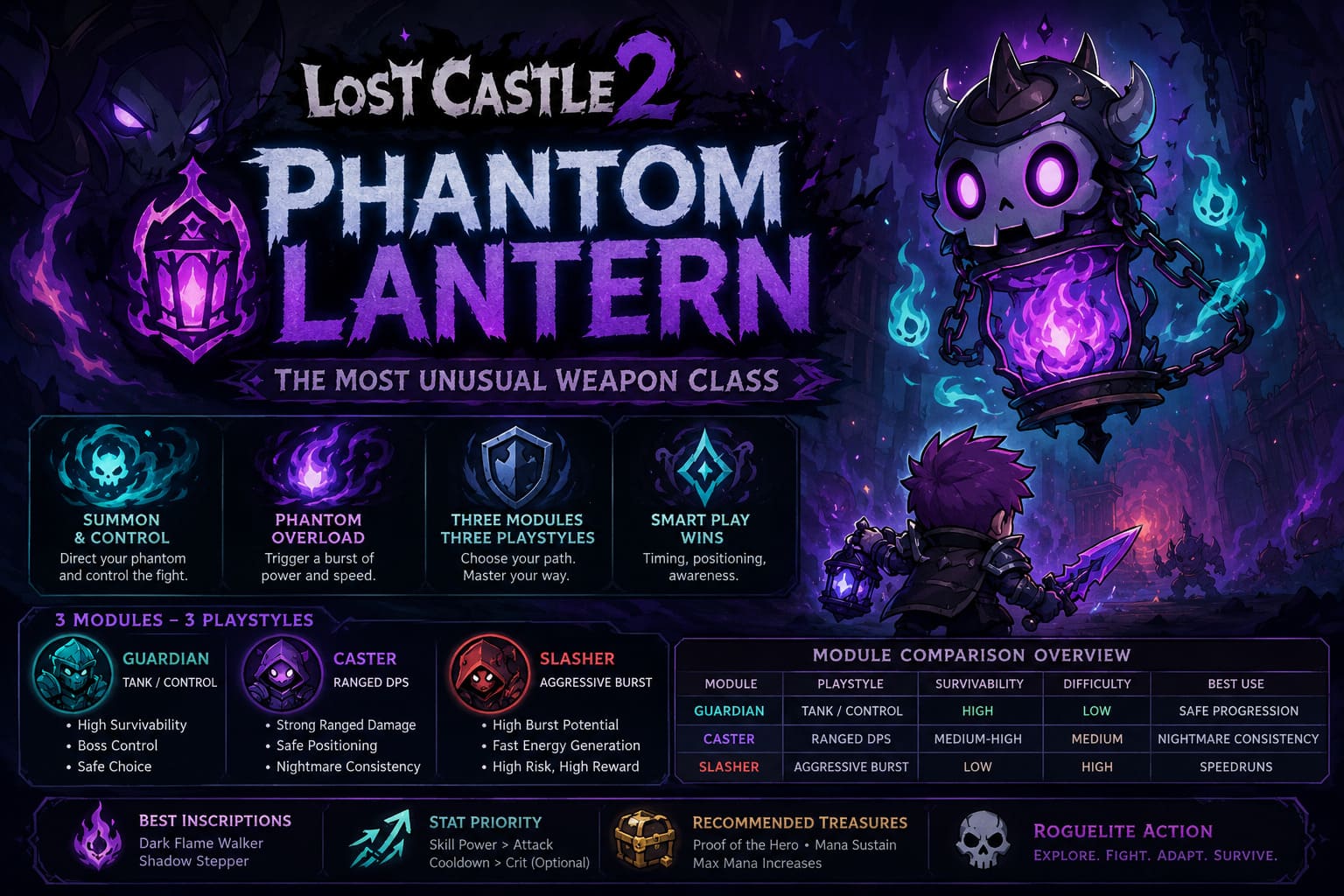
Unlike traditional melee or ranged weapons, the Lantern pushes you into a summoner-style control role where your success depends less on raw mechanics and more on timing, positioning, and awareness. It’s powerful, but only if you actually understand what it’s asking you to do.
Lost Castle 2 Ethereal Nightmare 4-5 Guide: Real Endgame Survival Tips From Experience
Why the Phantom Lantern Feels So Different
Most weapons in roguelites follow a simple rule: scale damage, dodge better, repeat. The Phantom Lantern ignores that completely.
Instead of focusing on your character’s direct damage output, you’re essentially managing an AI-driven combat companion that does most of the fighting for you—if you keep it alive.
Core Gameplay Shift
Once you equip the Lantern, your role becomes closer to a battlefield controller than a front-line fighter. You are constantly:
- Positioning your phantom for optimal damage
- Managing aggro indirectly through summons
- Timing recalls to avoid AoE wipes
- Balancing offense and survival windows
This is not a “comfort weapon.” It punishes sloppy play harder than most melee builds, but rewards smart positioning more than almost anything else in the game.
Core Mechanics – How the Lantern Actually Works
The Lantern revolves around two main systems that define its entire playstyle.
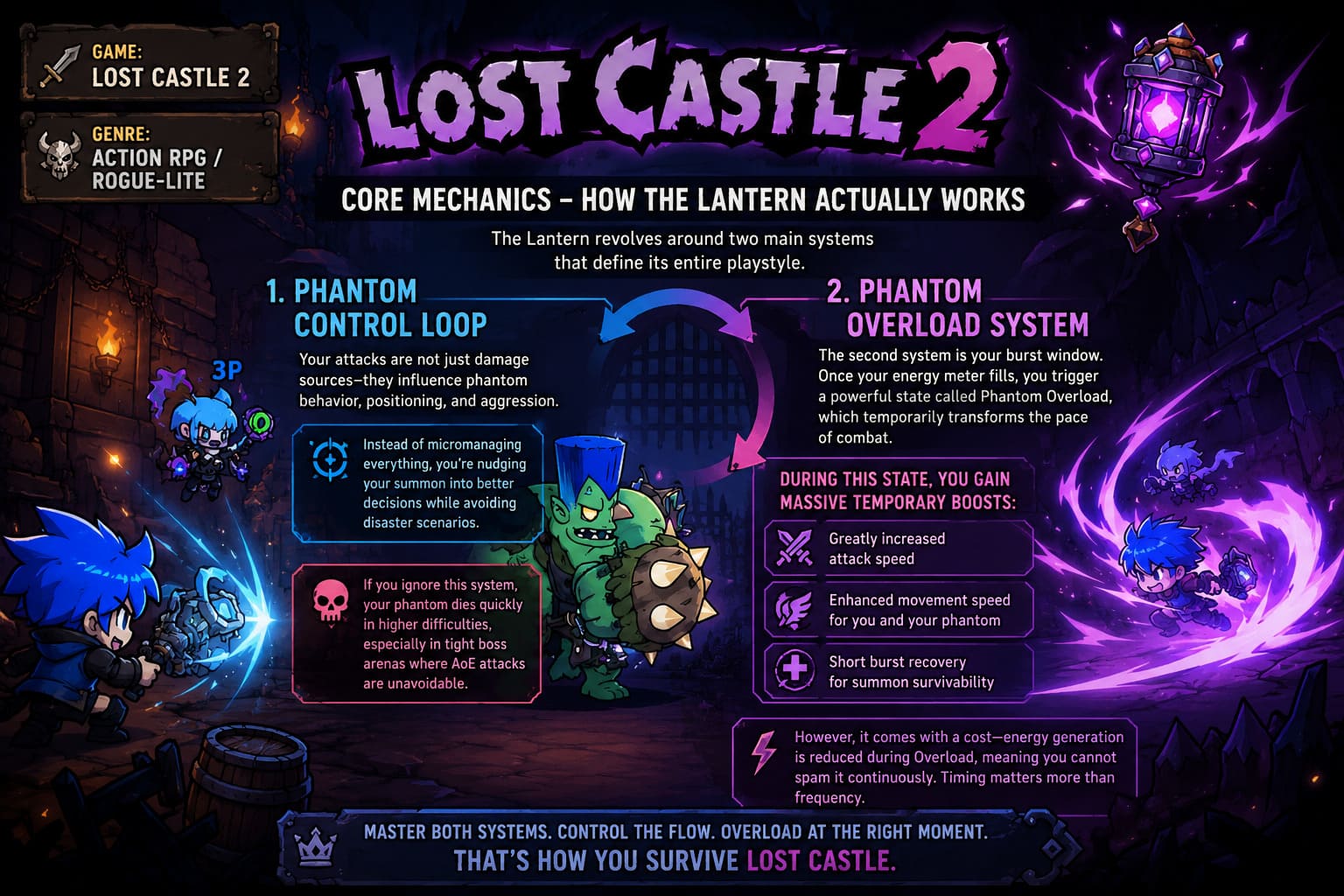
1. Phantom Control Loop
Your attacks are not just damage sources—they influence phantom behavior, positioning, and aggression. Instead of micromanaging everything, you’re nudging your summon into better decisions while avoiding disaster scenarios.
If you ignore this system, your phantom dies quickly in higher difficulties, especially in tight boss arenas where AoE attacks are unavoidable.
2. Phantom Overload System
The second system is your burst window. Once your energy meter fills, you trigger a powerful state called Phantom Overload, which temporarily transforms the pace of combat.
During this state, you gain massive temporary boosts:
- Greatly increased attack speed
- Enhanced movement speed for you and your phantom
- Short burst recovery for summon survivability
However, it comes with a cost—energy generation is reduced during Overload, meaning you cannot spam it continuously. Timing matters more than frequency.
Phantom Modules – Three Completely Different Playstyles
The Lantern isn’t a single weapon path. It branches into three distinct modules, each with its own identity and difficulty curve.
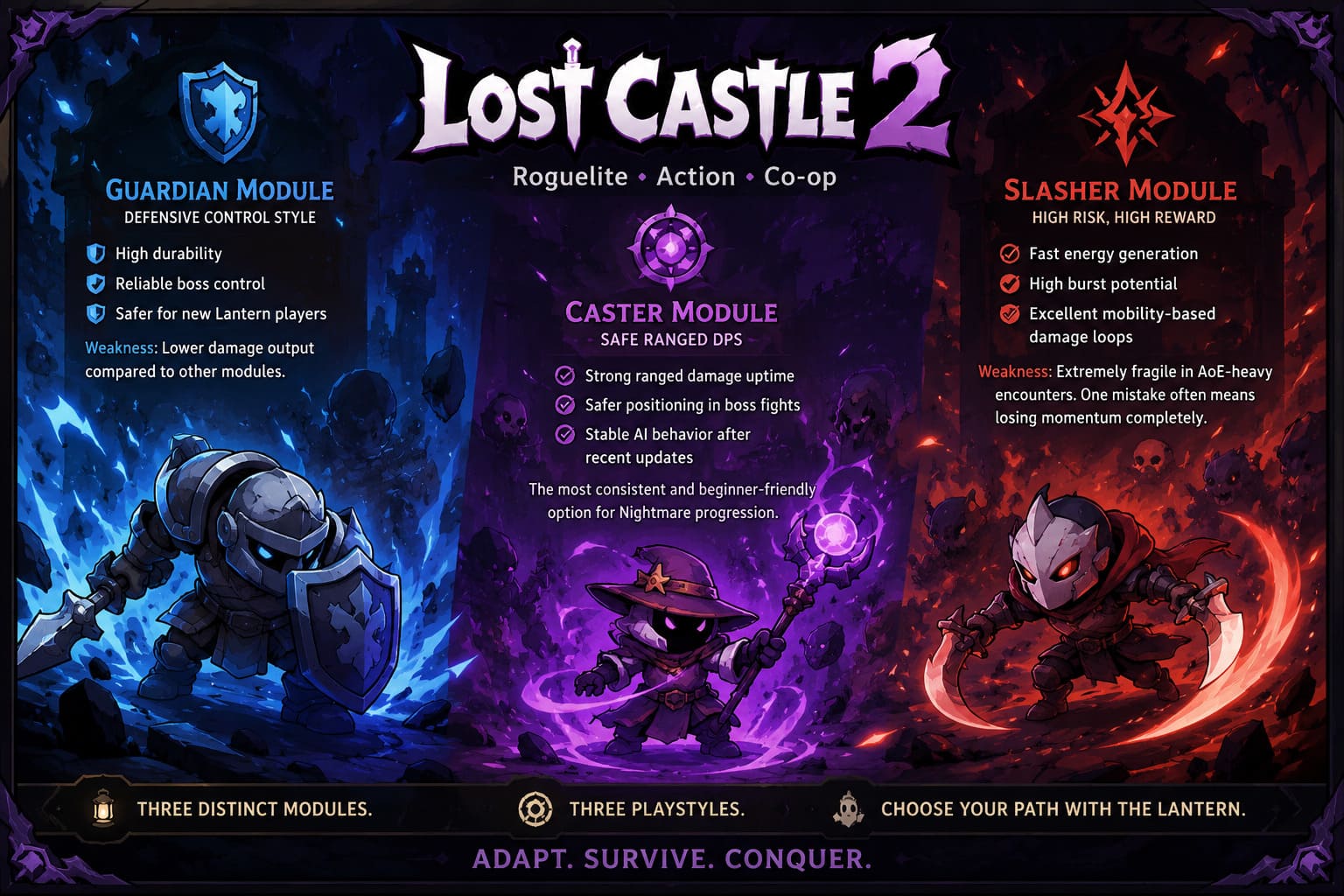
Guardian Module – Defensive Control Style
The Guardian module focuses on survivability and frontline control. It turns your phantom into a tank that absorbs pressure and holds enemy attention.
Strengths:
- High durability
- Reliable boss control
- Safer for new Lantern players
Weakness: Lower damage output compared to other modules, especially in speed-focused builds.
Caster Module – Safe Ranged DPS
This is the most consistent and beginner-friendly option for Nightmare progression.
Strengths:
- Strong ranged damage uptime
- Safer positioning in boss fights
- Stable AI behavior after recent updates
In practice, this is the module I ended up clearing the most consistent runs with, especially when fights became chaotic.
Slasher Module – High Risk, High Reward
This module is for aggressive players who like fast clears and don’t mind risk.
Strengths:
- Fast energy generation
- High burst potential
- Excellent mobility-based damage loops
Weakness: Extremely fragile in AoE-heavy encounters. One mistake often means losing momentum completely.
Module Comparison Overview
| Module | Playstyle | Survivability | Difficulty | Best Use |
|---|---|---|---|---|
| Guardian | Tank / Control | High | Low | Safe progression |
| Caster | Ranged DPS | Medium-High | Medium | Nightmare consistency |
| Slasher | Aggressive Burst | Low | High | Speedruns |
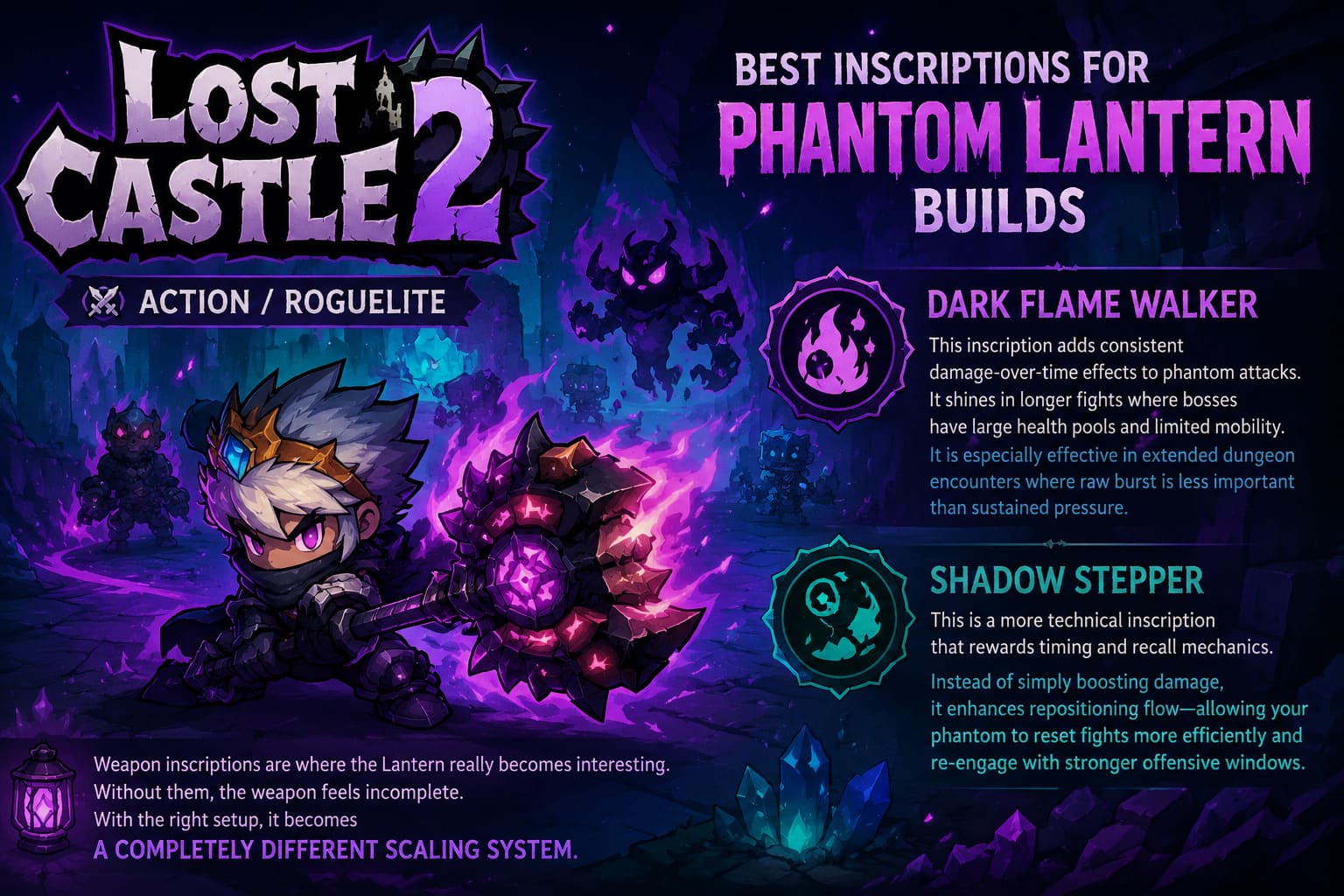
Best Inscriptions for Phantom Lantern Builds
Weapon inscriptions are where the Lantern really becomes interesting. Without them, the weapon feels incomplete. With the right setup, it becomes a completely different scaling system.
Dark Flame Walker
This inscription adds consistent damage-over-time effects to phantom attacks. It shines in longer fights where bosses have large health pools and limited mobility.
It is especially effective in extended dungeon encounters where raw burst is less important than sustained pressure.
Shadow Stepper
This is a more technical inscription that rewards timing and recall mechanics.
Instead of simply boosting damage, it enhances repositioning flow—allowing your phantom to reset fights more efficiently and re-engage with stronger offensive windows.
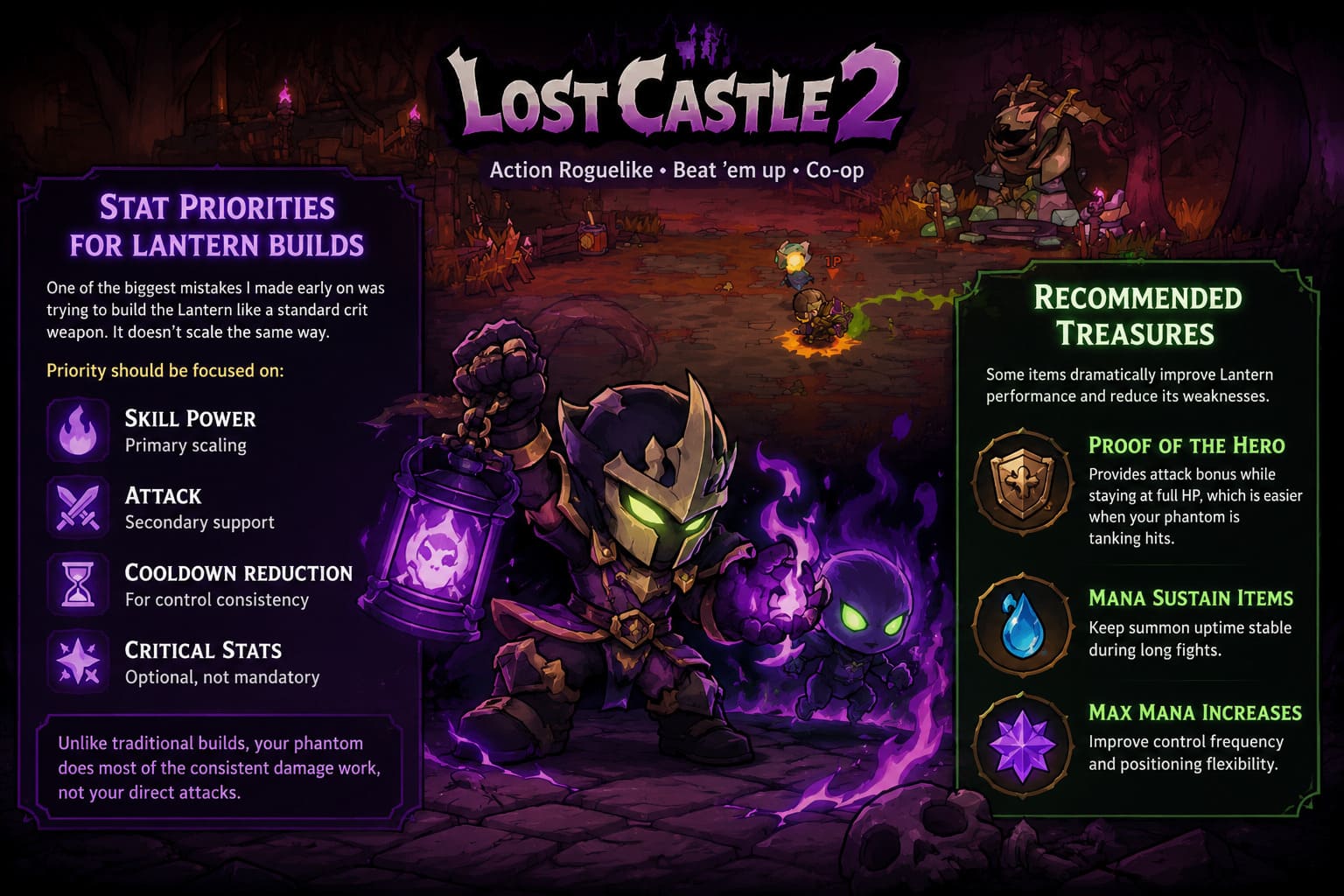
Stat Priorities for Lantern Builds
One of the biggest mistakes I made early on was trying to build the Lantern like a standard crit weapon. It doesn’t scale the same way.
Priority should be focused on:
- Skill Power (primary scaling)
- Attack (secondary support)
- Cooldown reduction (for control consistency)
- Critical stats (optional, not mandatory)
Unlike traditional builds, your phantom does most of the consistent damage work, not your direct attacks.
Recommended Treasures
Some items dramatically improve Lantern performance and reduce its weaknesses.
- Proof of the Hero – Provides attack bonus while staying at full HP, which is easier when your phantom is tanking hits.
- Mana sustain items – Keep summon uptime stable during long fights.
- Max mana increases – Improve control frequency and positioning flexibility.
Final Thoughts – Is It Worth Using?
The Phantom Lantern in Lost Castle 2 is not a beginner-friendly weapon, but it is one of the most creatively designed systems in the game. It forces you to think differently—not just about combat, but about control, timing, and risk management.
If you’re coming from traditional melee or ranged builds, expect a learning curve. But once it clicks, it feels like you’re playing an entirely different version of the game.
It’s not the safest weapon. It’s not the fastest. But it might be the most interesting one available right now.


