Gothic 1 Remake Ore Farming Guide: Fastest Ways to Get Rich in 2026
There is something special about the economy in Gothic 1 Remake. Most RPGs throw gold coins at you until money stops mattering, but here every piece of Magical Ore feels valuable. Every weapon upgrade, every armor purchase, every training session with a master fighter costs ore, and during the first chapters you constantly feel poor.
After spending dozens of hours exploring the Valley of Mines and experimenting with different routes, I realized that not every farming method is worth the time. Some are surprisingly efficient, others are fun for role-playing, and a few almost feel like the developers accidentally left them in the game.
This is the collection of methods that gave me the best results without turning the game into a boring grind.
Why Ore Is More Important Than Everything Else
Unlike traditional fantasy RPGs, Gothic’s entire progression revolves around a single resource.
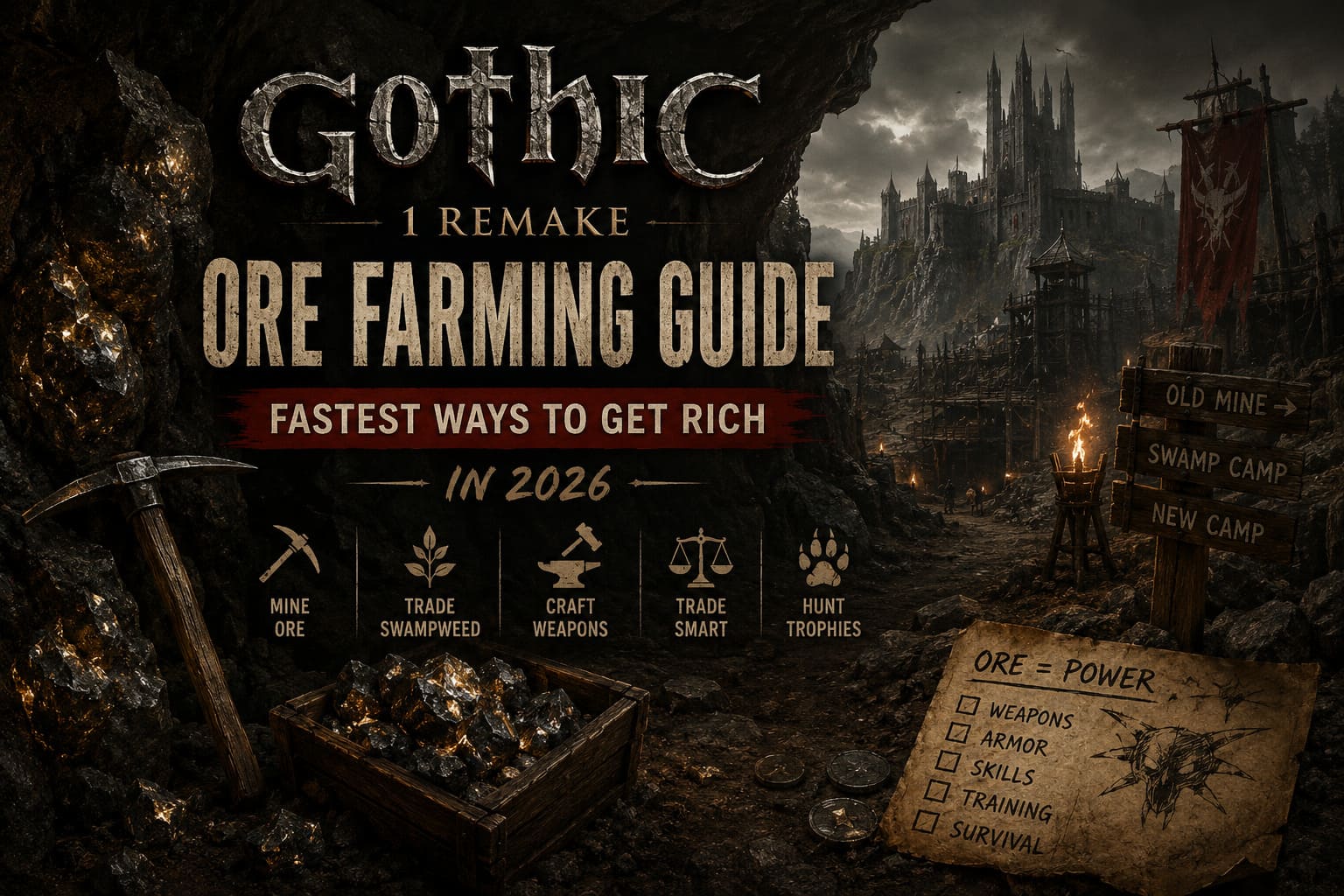
Ore allows you to:
- Buy better weapons
- Purchase stronger armor
- Pay trainers for Strength, Dexterity, and combat skills
- Trade with almost every merchant in the Colony
Running out of ore early means slower progression, weaker equipment, and much tougher fights.
Because of that, I always try to build a decent reserve before moving too far into the story.
1. Mining the Old Mine Is Still My Favorite Strategy
If I had to recommend only one farming route, this would be it.
The Old Mine contains several ore veins positioned close together, making repeated mining surprisingly efficient.
The process is simple:
- Find or loot a pickaxe.
- Travel to the Old Mine.
- Mine every glowing ore deposit.
- Repeat the route after refreshing the area.
One little trick that speeds everything up is canceling the long mining animation right after the pickaxe connects with the wall. You still receive the ore while saving several seconds every swing.
It may not sound impressive, but over dozens of repetitions those saved seconds become hundreds of extra ore nuggets.
Pros
- Safe farming
- Very consistent income
- No expensive equipment required
Cons
- Can become repetitive
- Requires frequent area resets for maximum efficiency
2. Swampweed Trading Is Surprisingly Profitable
I honestly ignored this mechanic during my first playthrough.
Big mistake.
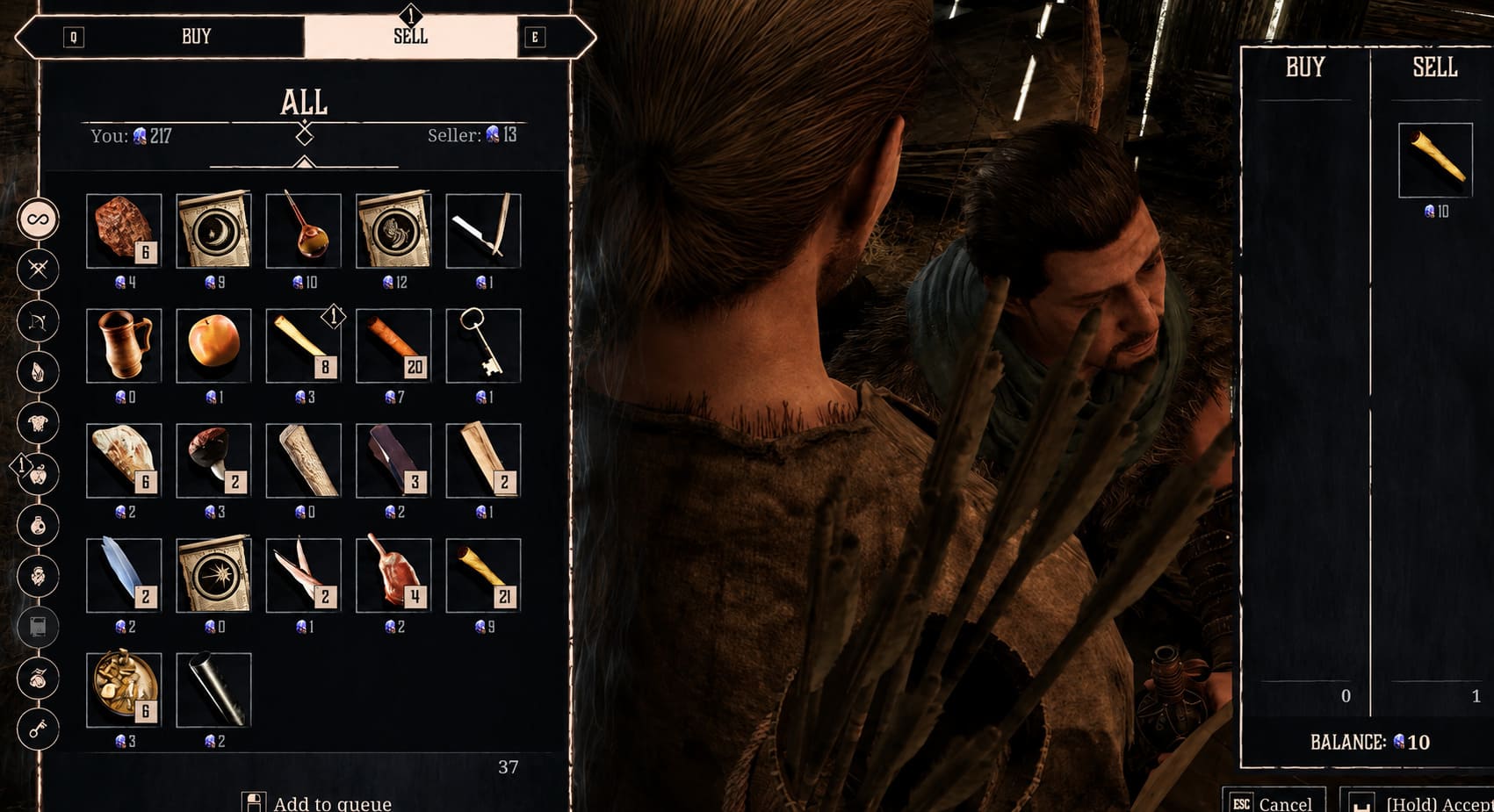
The Swamp Camp produces Swampweed while many characters in the New Camp are more than willing to pay good ore for it.
Buying low and selling high creates one of the easiest trading loops in the early game.
What makes this strategy fun is that it actually feels like something that belongs in Gothic’s rough prison society. You’re not saving kingdoms—you’re simply taking advantage of supply and demand.
A good run usually looks like this:
- Visit the Swamp Camp
- Purchase or collect available Swampweed
- Travel to the New Camp
- Sell everything to interested buyers
- Repeat after inventories refresh
The profit isn’t as explosive as pure mining, but it feels much more immersive.
3. Blacksmithing Is Slow but Reliable
Crafting isn’t the fastest way to become rich, but it is one of the safest.
Buying raw materials, forging swords, and selling finished weapons creates a steady profit without fighting dangerous monsters.
The crafting loop is satisfying because every step is interactive:
- Heat the metal
- Shape the blade
- Cool it
- Sharpen the weapon
After a while you start recognizing the rhythm and can produce swords surprisingly quickly.
Players who enjoy peaceful progression instead of constant combat will probably appreciate this method the most.
4. Trading Before Combat Can Double Your Profits
One mechanic that surprised me is how unconscious NPCs keep many of the items you previously sold them.
The basic idea is simple:
- Sell unwanted loot
- Receive ore
- Defeat the NPC
- Recover the sold items
If done carefully, you effectively keep both the ore and much of your inventory.
Of course, this approach carries risks. Attacking the wrong person in front of guards can quickly turn an entire camp hostile, so I only recommend trying it if you’re confident in combat and understand the consequences.
It definitely feels like a classic Gothic moment where the game gives players unexpected freedom.
5. Hunting Pays More Than Most New Players Expect
Many beginners make one common mistake.
They kill animals, collect meat, and immediately sell everything.
That leaves a lot of ore on the table.
Investing Learning Points into hunting skills dramatically increases the value of every expedition.
Useful abilities include:
- Skinning
- Tooth Extraction
- Claw Harvesting
Instead of returning with a few pieces of meat, you come back carrying valuable trophies that merchants happily buy.
Another small habit that always helps:
Cook every piece of raw meat before selling it or using it.
It takes almost no effort and increases its usefulness considerably.
Early Exploration Tips That Save Ore
Sometimes earning ore isn’t as effective as simply avoiding unnecessary spending.
During my first hours I always follow a similar route.
Check the Starting Area Carefully
Hidden containers often contain weapons or useful supplies that eliminate the need for early purchases.
Search Abandoned Carts
Many small ore piles are easy to miss if you’re running toward the Old Camp.
Don’t Rush Into Buying Armor
Several quests and NPC interactions reward equipment for free, allowing you to spend your ore on combat training instead.
These little decisions might save hundreds of ore before Chapter 2 even begins.
Comparison of the Best Farming Methods
| Method | Profit Potential | Difficulty | My Rating |
|---|---|---|---|
| Old Mine Mining | Very High | Easy | ★★★★★ |
| Swampweed Trading | High | Easy | ★★★★☆ |
| Blacksmith Crafting | Medium | Easy | ★★★★☆ |
| Merchant Exploits | High | Hard | ★★★☆☆ |
| Hunting & Trophies | Medium | Medium | ★★★★☆ |
The Strategy I Personally Prefer
If someone asked me how to prepare for the middle chapters without wasting hours grinding, I would combine several methods instead of repeating only one.
My usual routine looks like this:
Morning
- Mine ore veins
- Sell collected resources
Exploration
- Hunt every Scavenger, Molerat, and Wolf I encounter
- Collect every trophy
Camp Visit
- Trade Swampweed
- Forge a few weapons if materials are available
This rotation keeps gameplay fresh while constantly increasing my ore reserves.
More importantly, it still feels like playing Gothic instead of turning the game into an endless farming simulator.
Gothic 1 Remake: How to Reset NPC Aggro and Hostility Guide (2026)
Final Thoughts
One of the reasons I love Gothic 1 Remake is that getting rich never feels completely straightforward. The world rewards curiosity, experimentation, and a little bit of greed.
Some players will spend hours clearing mines, others will become expert traders, and some will make their fortune through hunting or crafting. That’s exactly what makes the economy interesting.
Gothic 1 Remake PC Optimization Guide: Best Settings for 60 FPS on Mid-Range Hardware
For me, the Old Mine route remains the strongest overall strategy, while Swampweed trading adds variety and hunting provides a steady side income during exploration. Mixing all three approaches creates a constant flow of ore without making the game repetitive.
If you’re preparing for tougher enemies and expensive training sessions later in the story, building a healthy ore reserve early is one of the smartest decisions you can make—and it makes the entire journey through the Valley of Mines much more enjoyable.