Romestead Crafting Progression and Biome Guide (2026)
I’ve played pretty much every survival crafting game that exploded on Steam over the last few years. Some were brilliant for 20 hours and then completely fell apart. Others copied the same formula: punch trees, build boxes, fight bosses, repeat. So when I first booted up Romestead, I honestly expected another “pretty good indie survival game” that I’d forget about a week later.
Instead, this thing completely consumed my evenings.
Somehow, Romestead takes the atmosphere of a dying Roman Empire, mixes it with settlement management, Soulslike combat, automation systems, and zombie survival, and turns it into one of the most addictive progression loops I’ve played in years. It feels like Valheim, Core Keeper, and RimWorld had a weird Roman baby — and I mean that in the best way possible.
What really surprised me is how smart the progression feels. Every biome matters. Every resource unlock changes how your town operates. You’re not just crafting stronger swords for bigger damage numbers — you’re slowly rebuilding civilization while undead monsters try to erase you every night.
Here’s my personal progression breakdown after spending way too many hours surviving the apocalypse in Romestead.
Why Romestead’s Progression Feels Different
Most survival games throw a giant crafting tree at you and say “good luck.” Romestead is more structured, but without feeling linear or restrictive.
The gameplay loop usually goes like this:
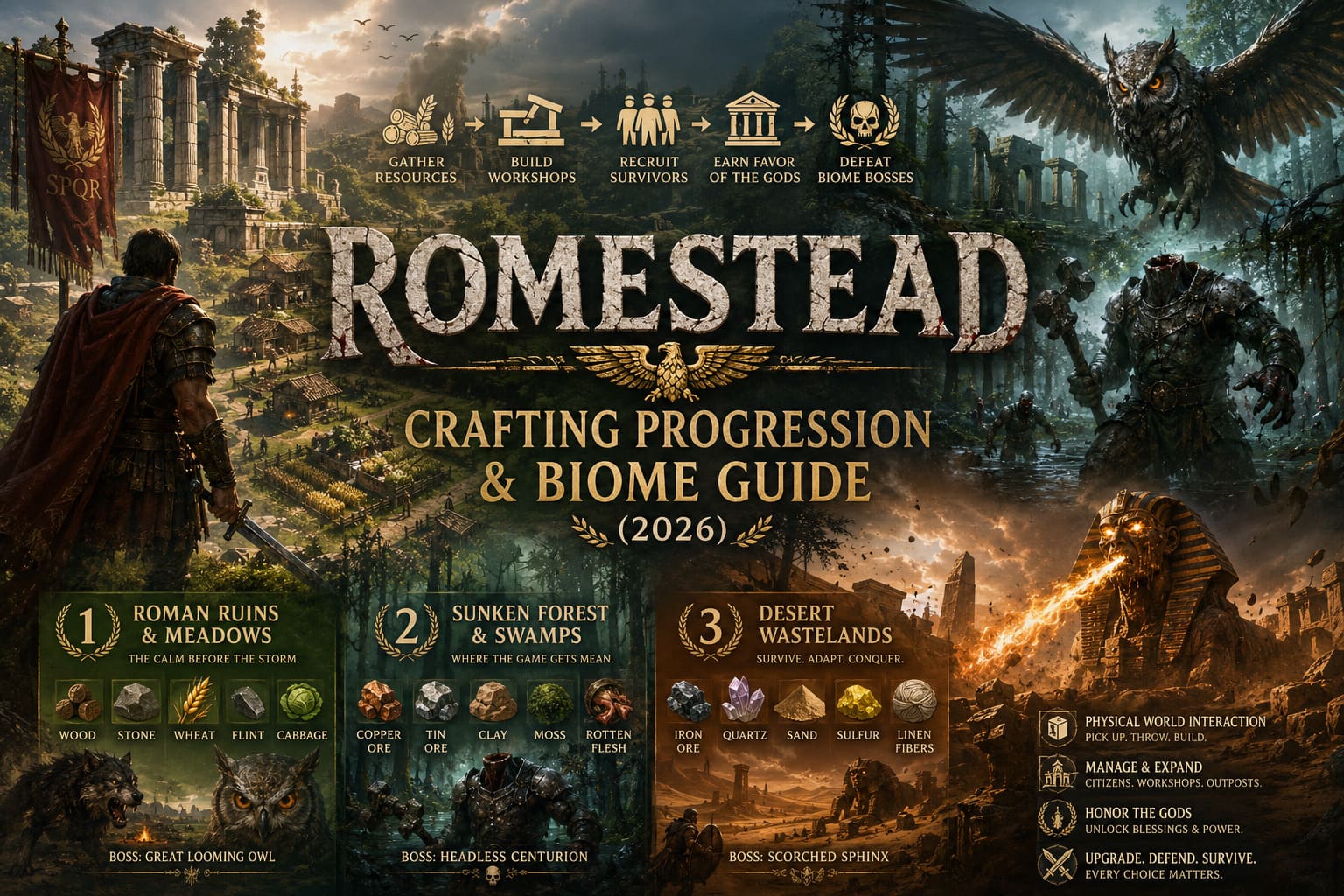
- Explore a dangerous biome
- Gather local resources
- Unlock specialized workshops
- Recruit survivors
- Restore favor with Roman gods
- Defeat the biome boss
- Advance to the next technology tier
The cool part is how interconnected everything becomes later on. Farming supports citizens. Citizens operate workshops. Workshops produce offerings for gods. Gods unlock buffs and advanced recipes. Those recipes help you survive tougher biomes.
It creates this satisfying “one more upgrade” addiction loop that survival fans absolutely love.
And honestly? The settlement management ended up being my favorite part.
Biome 1 – Roman Ruins and Meadows
The Calm Before Everything Goes Horribly Wrong
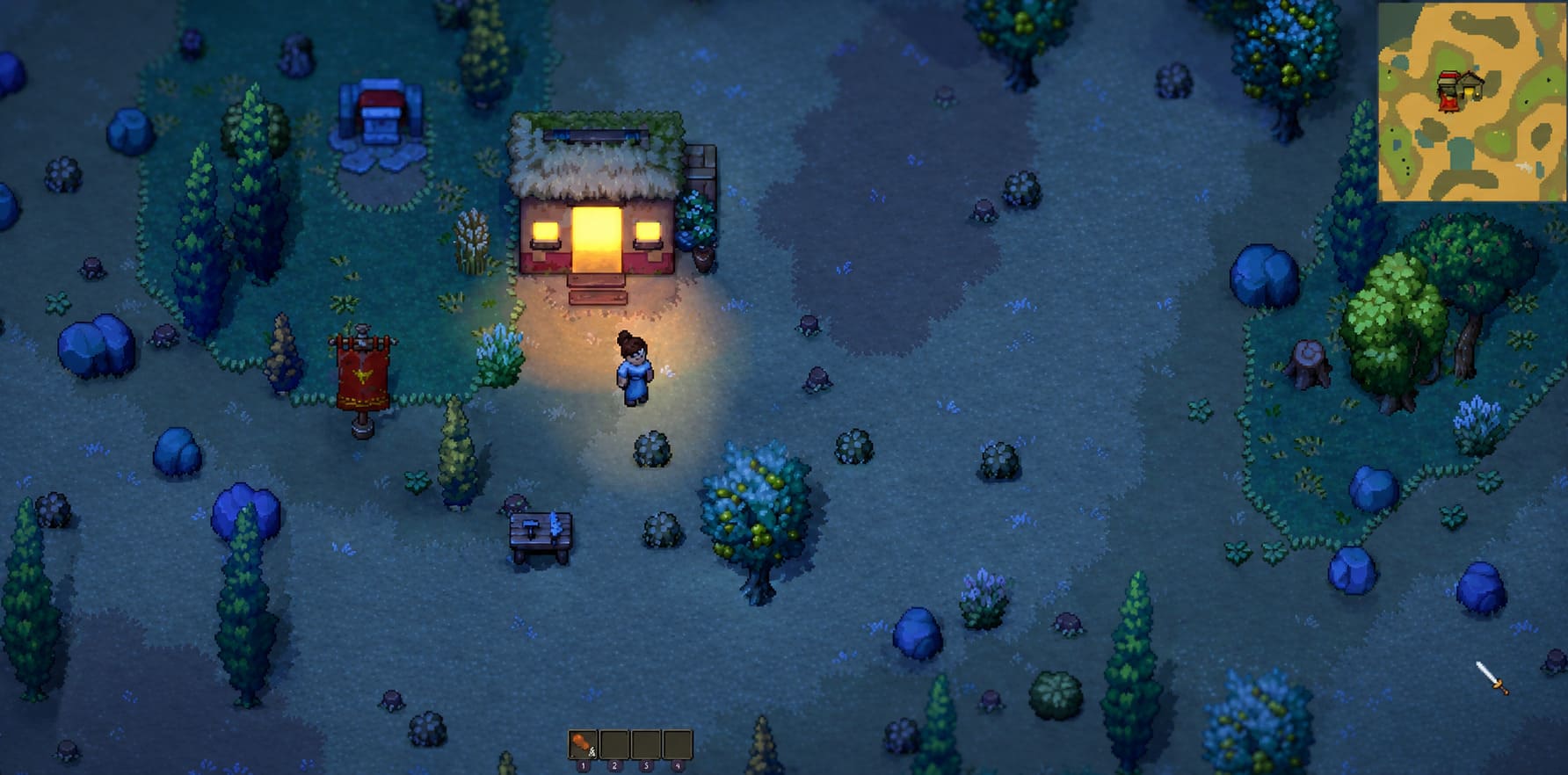
The starting biome looks deceptively peaceful. Green hills, broken marble temples, abandoned roads — it almost feels relaxing during the daytime.
Then night comes.
The first undead raids are genuinely tense because your defenses are basically sticks and optimism.
Early Priorities
Your first few hours should focus on securing:
- Flint
- Wood
- Stone
- Wheat seeds
- Cabbage seeds
The moment I realized food consumption was constant for settlers, I stopped treating farming like an optional side activity. New players massively underestimate this system.
Start farming immediately.
Seriously. Your refugees eat through supplies faster than expected, and low happiness becomes a nightmare later.
Essential Early Crafting
Your first major milestones are:
| Structure | Why It Matters |
|---|---|
| Campfire | Basic survival and cooking |
| Workbench | Unlocks starter tools |
| Carpenter Workshop | Defensive structures and settlement upgrades |
| Small Farm | Long-term survival |
The Flint Axe and Flint Pickaxe are obvious priorities, but the basic Gladius honestly carried me longer than expected.
Combat early on feels simple until you meet the first real boss.
The Great Looming Owl Is Way Harder Than It Looks
This boss was my first “oh, this game actually expects timing and positioning” moment.
The Great Owl fight changes completely halfway through:
- Phase 1 is mostly dodge timing
- Phase 2 becomes chaotic projectile spam
The wind attacks can absolutely destroy careless players.
My biggest advice? Clear surrounding wolves before attempting the fight. Nothing is worse than recovering your dropped gear while random wildlife joins the battle.
Defeating the owl finally unlocks metal progression, and that’s when Romestead starts opening up in a huge way.
Biome 2 – Sunken Forest and Swamps
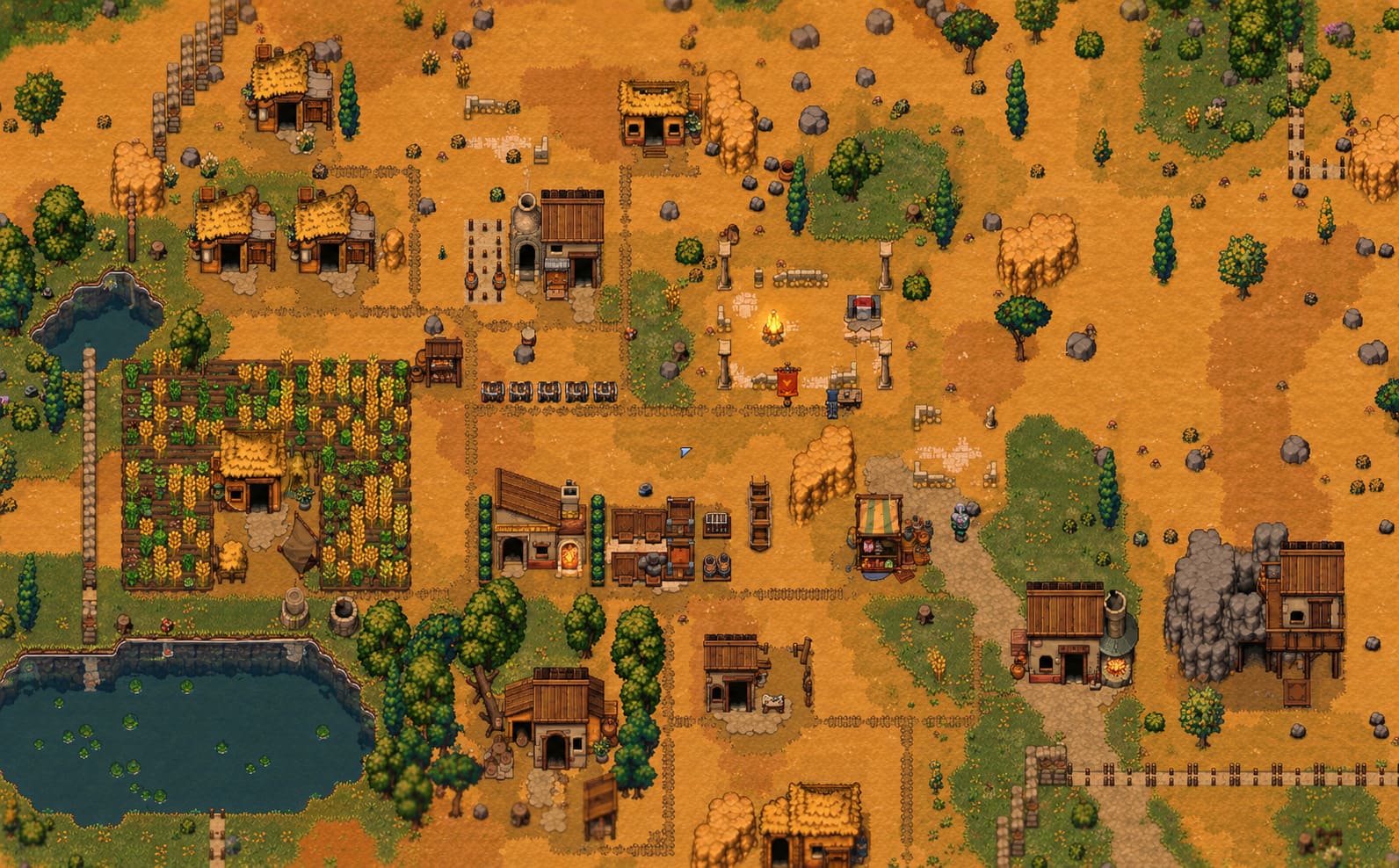
Where the Game Gets Mean
The swamp biome is where Romestead stops feeling cozy.
Movement slows down constantly, visibility gets worse, and some bushes literally turn into monsters when you walk near them. I hate those things.
Nighttime is even worse because Bloater zombies explode into poison clouds after death. The first time this happened to me, I panicked and accidentally rolled deeper into the swamp water while poisoned.
Classic survival game experience.
Important Resources Here
You’ll spend most of your time farming:
- Copper Ore
- Tin Ore
- Clay
- Moss
- Rotten Flesh
Bronze becomes the centerpiece of progression here, and unlocking proper smelting feels incredibly rewarding.
The Throwing Mechanic Is Weirdly Genius
One thing that makes Romestead stand out is physical item interaction.
Heavy resources aren’t just icons in your inventory.
You literally pick up ore and throw it into smelters.
At first, I thought it was just a gimmick. After several hours, I realized it actually makes automation feel more physical and immersive. Tossing stacks of copper into a furnace while zombies attack your walls somehow creates chaotic moments that feel uniquely “Romestead.”
It also leads to hilarious accidental combat situations where you panic-throw rocks at enemies.
And yes, it works surprisingly well.
Bronze Gear Changes Everything
Once you forge Bronze equipment, progression speeds up dramatically.
The biggest unlocks for me were:
- Bronze Axe
- Bronze Pickaxe
- Pottery Station
- Bottles for brewing
A lot of players ignore consumables early, but stamina regeneration becomes incredibly important in later fights.
The Brewery ended up being one of my most-used production buildings.
The Headless Centurion Is Pure Chaos
This boss is absolutely terrifying the first time you encounter it.
The giant undead brute literally grabs random objects from the environment and throws them at you as improvised weapons. Sometimes it rips apart your defenses while doing it.
This was the moment I realized defensive planning actually matters in Romestead.
Simple tricks helped a lot:
- Funnel the boss through narrow paths
- Use elevated bow positions
- Place traps before engaging
- Don’t rely on weak wooden walls
The reward unlocks Tier 3 progression, which introduces iron technology and the brutal desert biome.
Biome 3 – Desert Wastelands
The Difficulty Spike Is Real
The desert biome is where casual players will probably quit.
Heat drains stamina constantly, enemies become significantly more aggressive, and resource management suddenly becomes much more demanding.
But visually? This area is incredible.
Ancient ruins buried beneath dunes give the biome a haunting atmosphere that reminds me of classic dark fantasy RPGs.
Key Desert Resources
Here’s what matters most:
| Resource | Main Purpose |
|---|---|
| Iron Ore | Advanced weapons and armor |
| Quartz | Glass production |
| Sand | Glassworks crafting |
| Sulfur | Explosives and advanced crafting |
| Linen Fibers | Heat-resistant gear |
The Blacksmith workshop becomes mandatory here.
Without iron-tier gear, enemies hit like trucks.
Logistics Become the Real Endgame
This is where Romestead secretly transforms into a colony-management game.
Transport carts, secondary outposts, and production chains become essential.
I actually loved this transition.
Instead of endlessly grinding resources yourself, you slowly create systems that keep your settlement alive automatically. Watching workers move supplies between outposts while your city expands genuinely feels rewarding.
It scratches the same brain itch as automation games without becoming overly complicated.
The Scorched Sphinx Is Peak Romestead
The desert boss is easily my favorite fight so far.
The dungeon itself mixes:
- Puzzle-solving
- Trap navigation
- Enemy waves
- Environmental hazards
And then the Sphinx starts launching fire beams across the arena while throwing giant rocks at your face.
It feels cinematic in a way most indie survival games never achieve.
One thing I strongly recommend before this fight:
Invest in Neptune blessings.
The water-based defensive buffs help enormously against fire attacks.
Is 007 First Light on Xbox Game Pass? What You Need to Know (2026)
Final Thoughts – Why Romestead Could Become the Next Big Survival Hit
I honestly didn’t expect Romestead to hook me this hard.
The game still has Early Access rough edges, sure. Pathfinding occasionally bugs out, inventory management can feel clunky, and some balancing definitely needs work.
But the foundation is ridiculously strong.
The combination of:
- Roman mythology
- Survival crafting
- Town automation
- Physics-based gameplay
- Soulslike combat
- Procedural exploration
…creates something that genuinely feels fresh in a genre overloaded with copycats.
Most importantly, progression always feels meaningful.
Every new biome changes how you play. Every crafting station matters. Every boss unlock feels earned.
That’s rare.
If the developers continue updating content and polishing systems, I genuinely think Romestead could become one of the defining survival RPGs of this generation.