Stranger Than Heaven on Game Pass: RGG’s Most Ambitious Leap Yet
I’ve played enough games over the years to recognize when a studio is trying to step out of its comfort zone—and when it might actually succeed.
After watching the reveal of Stranger Than Heaven, the new project from Ryu Ga Gotoku Studio (RGG Studio), I can honestly say this feels like one of those rare moments where ambition, risk, and identity collide in a meaningful way.
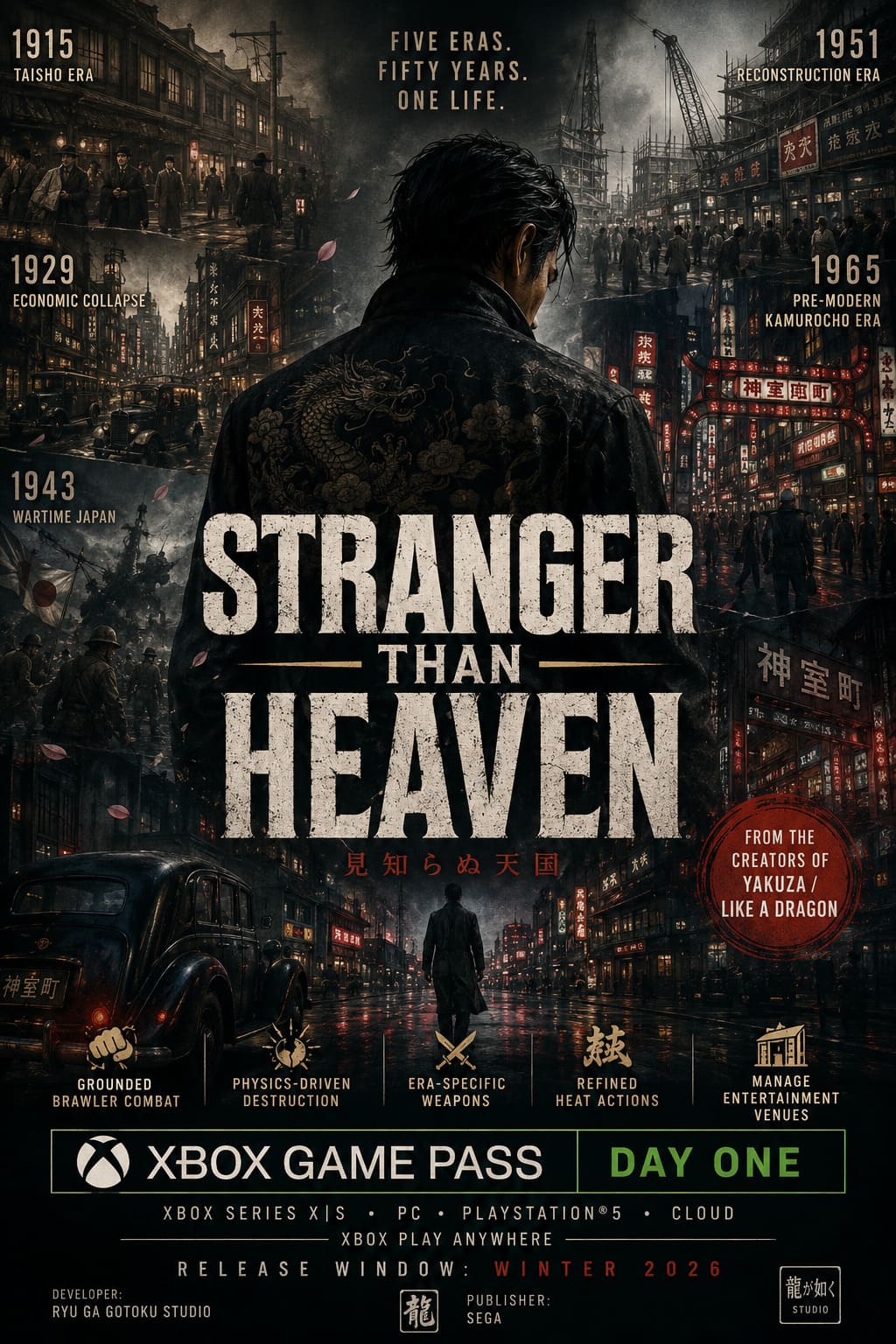
And yes, the biggest headline everyone is talking about is real: it’s coming to Xbox Game Pass on Day One.
But the more I dug into the details—setting, structure, combat direction—the more I realized this isn’t just “another RGG game.” It feels like the studio is trying to redefine what it even means to make a Yakuza-style narrative.
Weapon Upgrade & Crafting Guide for Stranger Than Heaven
Day One on Xbox Game Pass: A Bigger Deal Than It Looks
Let’s get the obvious part out of the way first. Stranger Than Heaven launching Day One on Xbox Game Pass is huge. Not just for players, but for how Microsoft continues to position Game Pass as the “Netflix of AAA launches.”
From my perspective as someone who has watched subscription services evolve, this is one of those deals that quietly reshapes expectations. A brand-new RGG Studio IP—historically a premium, narrative-heavy experience—being available instantly without a $70 entry barrier changes how many people will even try it.
That alone could define its success.
Release Window: Winter 2026 (But Don’t Bet Your Calendar Yet)
The game is currently set for a Winter 2026 release window, which in industry terms is vague enough to mean anything from late December to early 2027.
If I had to read between the lines, I’d say:
- – Late 2026 is the optimistic scenario
- – Early 2027 is the “we need polish” scenario
- – Fans will argue about both endlessly anyway
What’s clear is that this isn’t a rushed release. RGG Studio games tend to arrive when they’re ready, not when marketing demands it.
Platforms: No One Left Behind (Mostly)
Stranger Than Heaven is not locked into a single ecosystem. It is confirmed for multiple platforms, which is a smart move considering RGG’s expanding audience.
Platforms include:
- – Xbox Series X|S
- – PC (Steam and Microsoft Store)
- – PlayStation 5
- – Cloud streaming via Game Pass
The inclusion of Xbox Play Anywhere is another strong quality-of-life feature, letting players switch between console and PC seamlessly.
The Big Idea: Five Eras, One Life
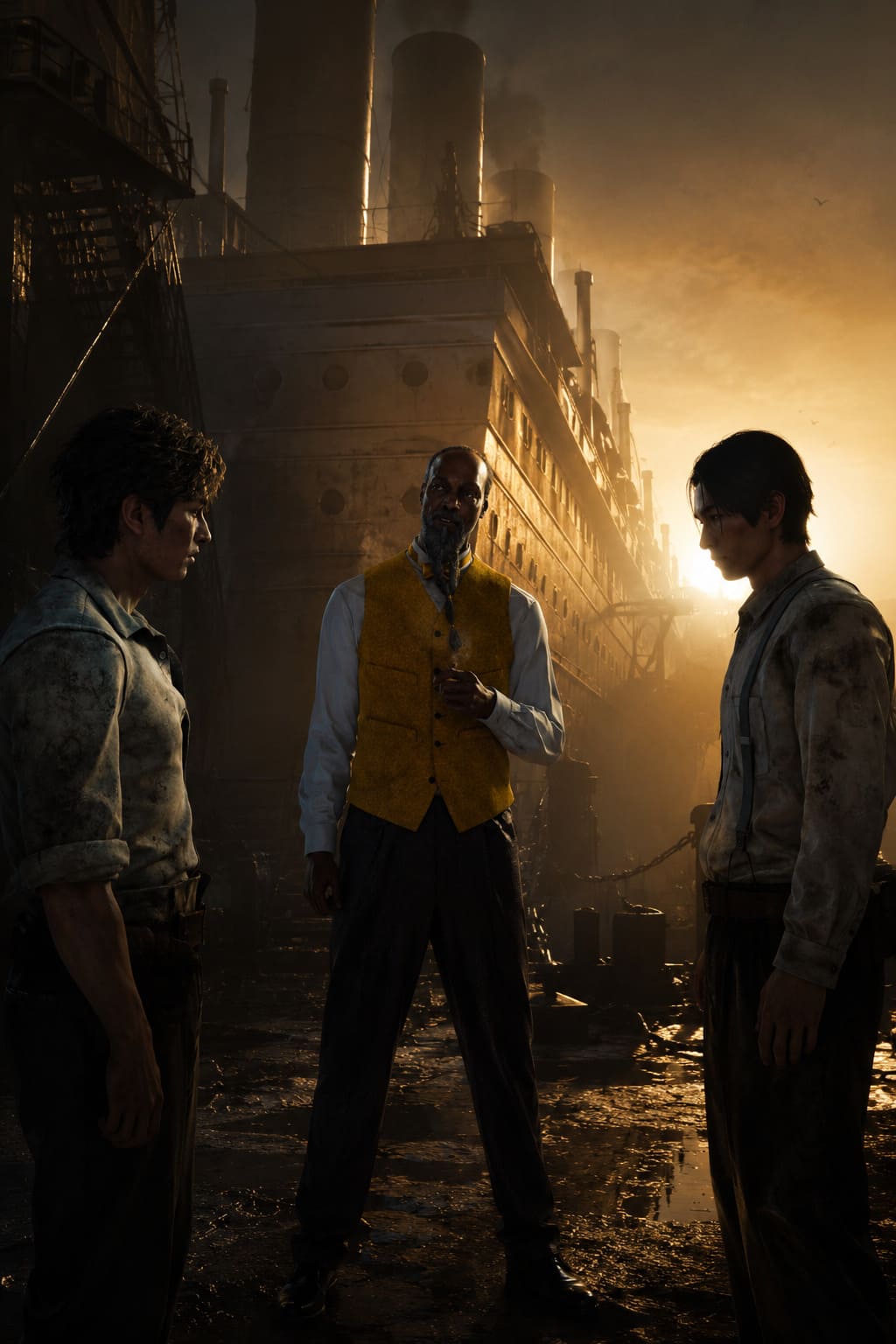
This is where Stranger Than Heaven starts to separate itself from traditional RGG structure. Instead of focusing on one city or timeframe, the game spans five historical eras across 50 years.
The Five Eras
1. 1915 – Taisho Era Origins: Crime is raw, unstructured, and survival-driven.
2. 1929 – Economic Collapse Era: Desperation defines every interaction.
3. 1943 – Wartime Japan: A politically sensitive and rarely explored setting in gaming.
4. 1951 – Reconstruction Era: External influence reshapes society.
5. 1965 – Pre-modern Kamurocho Era: A direct connection to familiar franchise mythology.
What impressed me most is the confidence behind this structure. Most studios struggle to tell a coherent story across a single timeline. RGG is attempting five.
Gameplay: Familiar DNA, Sharper Edges
If you’ve played RGG titles before, you’ll recognize the foundation. But Stranger Than Heaven clearly leans toward a more grounded combat identity.
Core Gameplay Shifts
- – More realistic, weighty melee combat
- – Environmental destruction tied to physics interactions
- – Era-specific weapon systems that affect gameplay style
- – Refined Heat Action system with less exaggeration
The big question is whether this makes combat deeper or slower. RGG has always balanced stylish chaos with clarity, and that balance will be tested here.
Management Systems: Classic RGG Identity
Even with a darker tone, RGG Studio continues its tradition of mixing serious drama with business simulation systems.
Players will manage entertainment venues depending on the era, including:
- – Theaters
- – Clubs
- – Music venues
This contrast between crime drama and management gameplay is part of what makes RGG games feel unique.
Quick Overview
| Category | Details |
|---|---|
| Developer | Ryu Ga Gotoku Studio |
| Publisher | Sega |
| Subscription | Xbox Game Pass Day One |
| Platforms | Xbox, PS5, PC, Cloud |
| Structure | Five eras across 50 years |
| Combat Style | Grounded brawler system |
| Setting Focus | Historical Japan and Kamurocho origins |
Community Reaction: Excitement Meets Debate
The reaction across gaming communities has been intense. Fans are excited, but also cautious about execution.
Common discussions include:
- – Comparisons to Yakuza 0 as a spiritual successor
- – Concerns about handling WWII-era storytelling
- – Theories linking the story to existing franchise lore
- – Speculation about hidden organizations and narrative twists
As always with RGG, theory crafting has already become part of the experience.
My Take: Ambition Is Not the Risk—Execution Is
Stranger Than Heaven is not risky because of its ideas. RGG Studio has always embraced bold concepts.
The real challenge is maintaining emotional and narrative consistency across five eras without losing player investment.
That’s extremely difficult to pull off, even for experienced studios.
Still, I’d rather see a studio attempt something ambitious than play it safe. RGG has earned enough trust to justify that risk.
Why Game Pass Changes Everything
Being on Xbox Game Pass Day One fundamentally changes how this game will be received.
- – More players will try it without financial hesitation
- – Word-of-mouth will matter more than marketing
- – Risk of disappointment is reduced for players
This might be the ideal launch model for a narrative-heavy experimental project like this.
Final Thoughts
Stranger Than Heaven feels like RGG Studio pushing its identity into a larger, more ambitious space. It’s bigger in timeline, broader in scope, and more experimental in structure than anything they’ve done before.
Whether it succeeds or struggles will depend entirely on execution.
But one thing is clear: this is not a safe project.
And in today’s industry, that alone makes it worth watching.
If RGG pulls this off, Stranger Than Heaven won’t just be another entry in their catalog—it could become one of their defining achievements.