First-Person Mode Debate: Is Project Macondo Changing Too Much?
If you’ve spent as many hours in co-op shooters as I have—from the chaotic corridors of Left 4 Dead 2 to the tension-heavy swarms of Deep Rock Galactic—you start to develop a pretty strong intuition about what works and what doesn’t.
That’s exactly why the discussion around Aliens: Fireteam Elite 2 (Project Macondo) and its lack of a first-person mode feels so familiar. It’s not just another feature request—it’s a philosophical split in how players want to experience fear, teamwork, and survival.
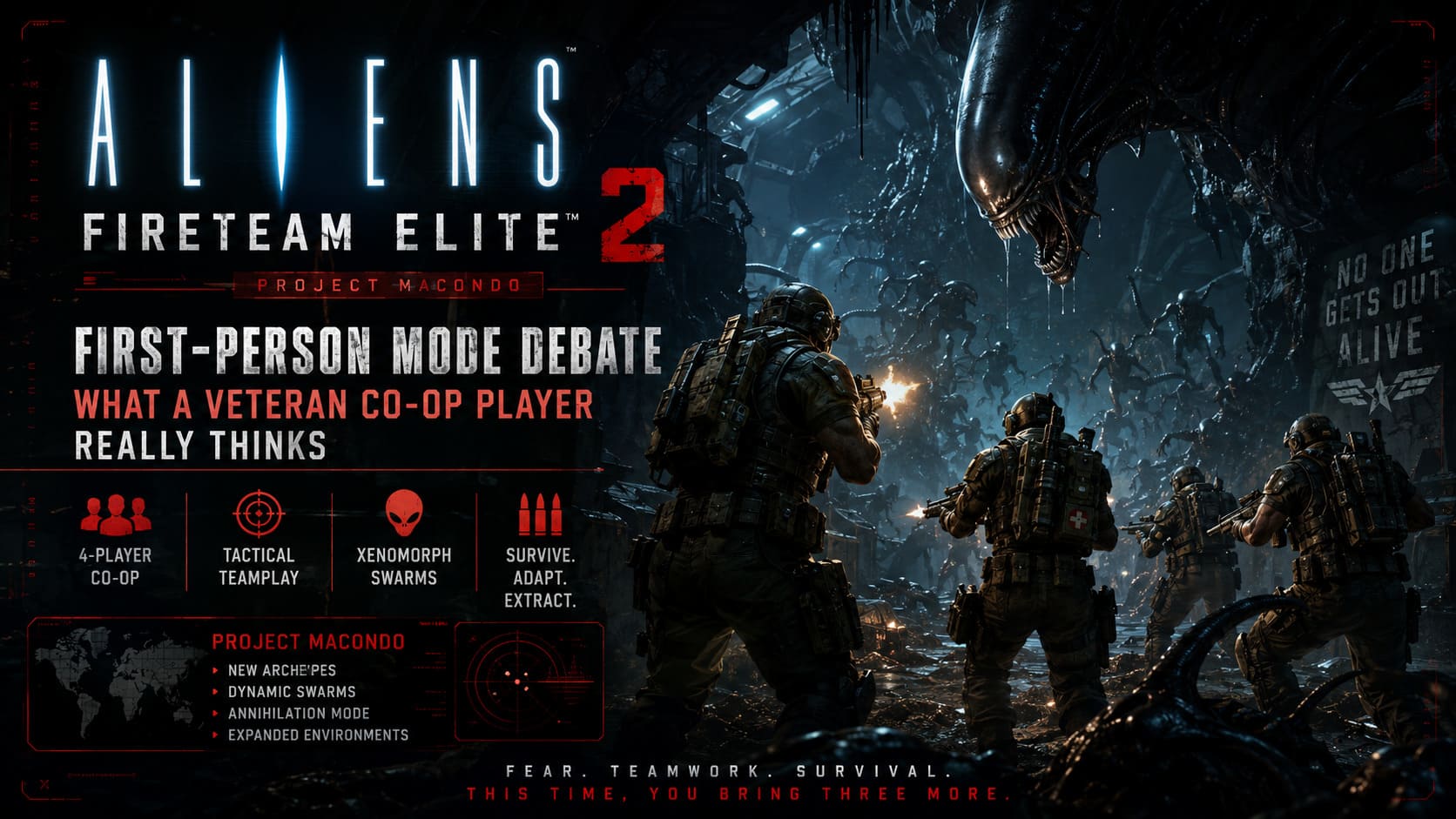
Having gone through the original Aliens: Fireteam Elite more than once with different squads, I can say this clearly: the sequel is making smart design choices, even if they disappoint a loud part of the community.
Tactical Evolution: Aliens Fireteam Elite 2 Cover System Overhaul
The Core Truth: Third-Person Is Not Going Anywhere
Let’s get the biggest confirmation out of the way first. Everything currently known—official statements, internal leaks, and consistent branding—points to one thing: Aliens: Fireteam Elite 2 is built as a third-person co-op survival shooter.
This isn’t a temporary design decision. It’s the foundation of the entire game.
From a veteran player’s perspective, this actually makes sense. The original game already struggled with readability in tight hive corridors. Switching perspectives entirely would mean rebuilding animation systems, enemy encounter design, and even UI logic from scratch. That’s not a “toggle option” change—that’s a full redesign.
Still, the demand for first-person isn’t random. It comes from something deeper: immersion.
Why Players Keep Asking for First-Person
I’ve seen this debate across every Alien game community I’ve been part of, and the arguments repeat for good reason. First-person isn’t just a camera choice—it changes how fear works.
Key reasons fans want first-person:
- Immersion intensity: You don’t “watch” a Xenomorph anymore—you experience it rushing toward your face.
- Horror amplification: Limited peripheral vision makes motion trackers essential instead of optional UI noise.
- Cleaner navigation: No character model blocking tight corridor visibility.
- Franchise expectation: Games like Alien: Isolation set a psychological benchmark.
In third-person, you always have one advantage: awareness. You can see threats before your character logically should. That reduces tension, even if it improves gameplay clarity.
But here’s the catch—Aliens: Fireteam Elite 2 is not trying to be Alien: Isolation. It’s closer to a tactical squad shooter wearing an Alien skin.
Voice Chat Overhaul: What Co-op Players Really Want from the Sequel
My Experience With Third-Person Co-op in Games Like This
As someone who’s played countless squad shooters, I can say third-person has one huge strength that first-person struggles with: team readability.
In chaotic moments—when facehuggers are jumping, flamethrowers are firing, and someone is screaming for ammo—third-person does something important: it keeps everyone spatially aware without verbal communication.
That matters even more now that Fireteam Elite 2 reportedly expands to four-player squads.
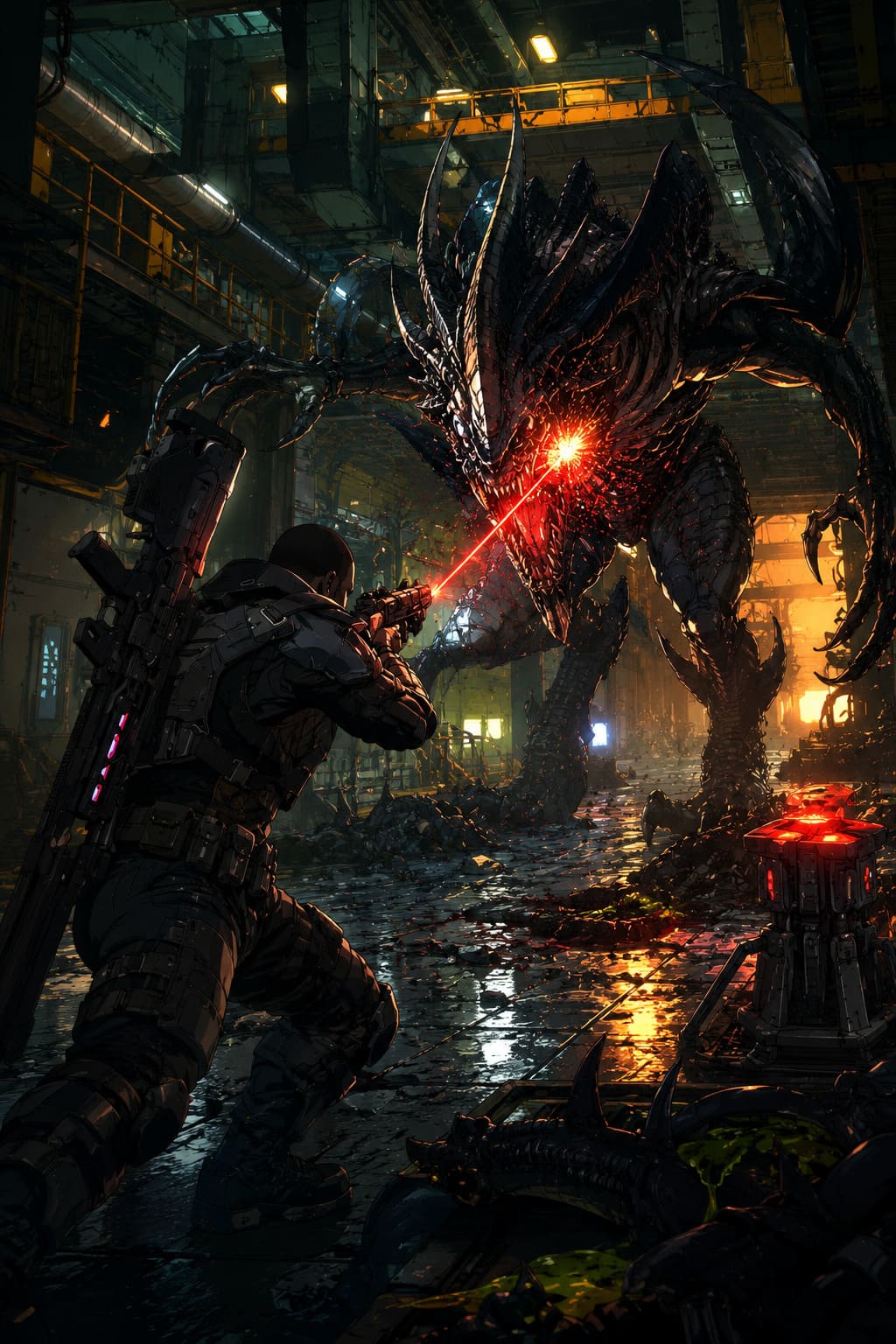
Why the Developers Are Sticking With Third-Person
From a design standpoint, Cold Iron Studios is clearly leaning into consistency and identity rather than experimentation.
Here’s what the sequel is reportedly focusing on:
- Fixed character archetypes instead of full customization
- More animation-driven combat abilities
- Heavier emphasis on team roles
- Expanded environmental interactions
- Larger, more dynamic swarm encounters
All of these systems benefit from a visible character model.
If you design a unique melee execution or a signature class ability, third-person ensures the player actually sees it instead of hiding it behind a weapon view.
New Systems That Influence Camera Design
One of the most interesting shifts in Project Macondo is the move toward preset archetypes instead of fully customizable marines. Each role reportedly has a distinct identity:
- Swift
- Deadly
- Silent
- Commander
- Ranger
This means animations, silhouettes, and team recognition matter more than ever.
There’s also the new “Annihilation Mode”, a dynamic horde system with evolving objectives. These modes thrive on fast situational awareness, not restricted vision.
Where First-Person Actually Would Work
I’m not against the idea entirely. In fact, a hybrid system would be ideal—if it were done properly.
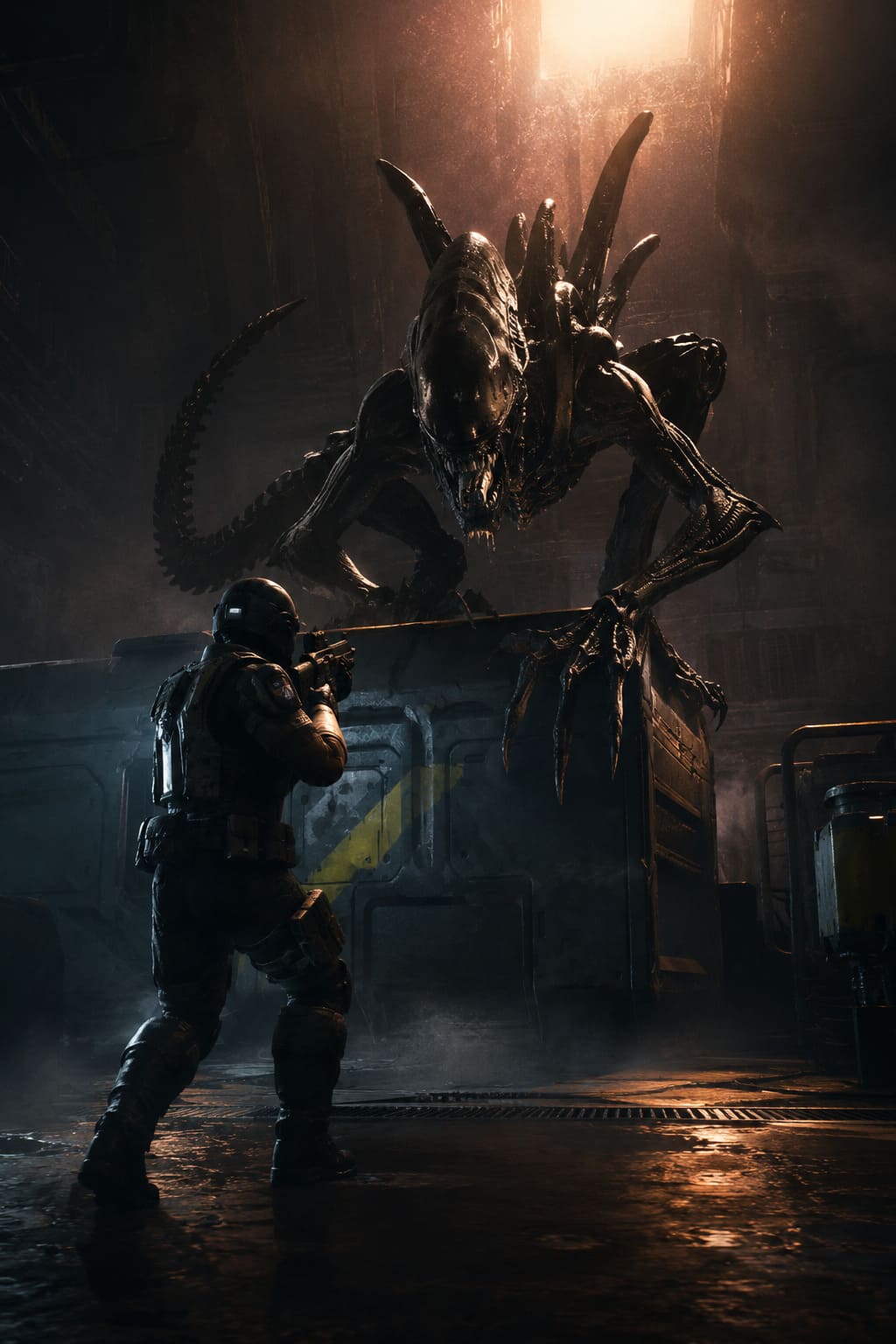
Possible useful implementations:
- Scoped aiming for precision weapons
- Optional aim-down-sight immersive toggle
- Stealth-focused segments
- VR adaptation support via mods
But a full-time perspective shift would change the identity of the game too much.
The Reality of 4-Player Co-op Design
Adding a fourth player does not just mean more chaos. It increases complexity across every system:
- More overlapping fire zones
- More blocked sightlines
- Higher risk of friendly interference
- Increased audio clutter
- More visual confusion in tight corridors
Third-person helps manage this visually. First-person would amplify it.
Perspective Comparison Table
| Perspective | Co-Op Focus | Immersion Level | Tactical Clarity |
|---|---|---|---|
| Third-Person | Strong | Medium | High |
| First-Person | Moderate | Very High | Low |
Final Thoughts From a Long-Time Co-op Player
After years of playing squad-based shooters, I’ve learned something simple: no perspective is universally better. It always depends on what the game is trying to achieve.
Aliens: Fireteam Elite 2 is clearly not trying to be a horror simulator. It’s aiming for structured, tactical survival combat with strong team readability and cinematic presentation.
So, will there be a first-person mode? Realistically: no, not officially at launch.
But should there be one? Only as an optional layer, not the core identity.
If you go into Project Macondo expecting Alien: Isolation, you’ll probably be disappointed. If you go in expecting a refined, expanded co-op swarm shooter, it might end up being exactly what the franchise needed.
And in the end, what really matters in these games isn’t the camera—it’s whether your squad survives that final extraction with barely anything left in the magazine.