Soulmask: Shifting Sands Lore Explained — Ancient Gods, Alien Tech, and the Mystery of Omanra
When Soulmask finally hit its full 1.0 release alongside the Shifting Sands expansion, I expected more of what Early Access had already delivered: tribal politics, mask progression, and a solid survival loop. What I didn’t expect was a full-blown sci-fi narrative twist that turns the entire game into something much closer to classic space-driven storytelling, but filtered through a brutal sandbox where you still need to worry about thirst, heat, and getting wiped out by enemies in seconds.
After spending dozens of hours exploring dunes, digging through ruins, and piecing together scattered lore logs, I can confidently say this expansion transforms the entire experience. Shifting Sands is where Soulmask stops feeling like just another survival game and becomes something far more ambitious.
The “Gods” Aren’t Gods — And That Changes Everything
At first glance, the desert expansion leans heavily into Ancient Egypt aesthetics: pyramids, solar symbols, divine imagery. It feels mystical and familiar at the same time. But the deeper you go, the more that illusion falls apart.
This isn’t mythology. It’s misunderstood technology.
The so-called gods are actually the Aethelgard, an advanced extraterrestrial or interdimensional race that arrived on Earth thousands of years ago. They weren’t traditional conquerors, but they also weren’t saviors. They were engineers and scientists who saw humanity as a resource rather than a civilization.
Instead of wiping humans out, they repurposed them. Entire populations became part of a biological system used to maintain terraforming infrastructure. The desert we now explore was once a thriving center of that system before everything collapsed.
The Soulmask System: Immortality Gone Wrong
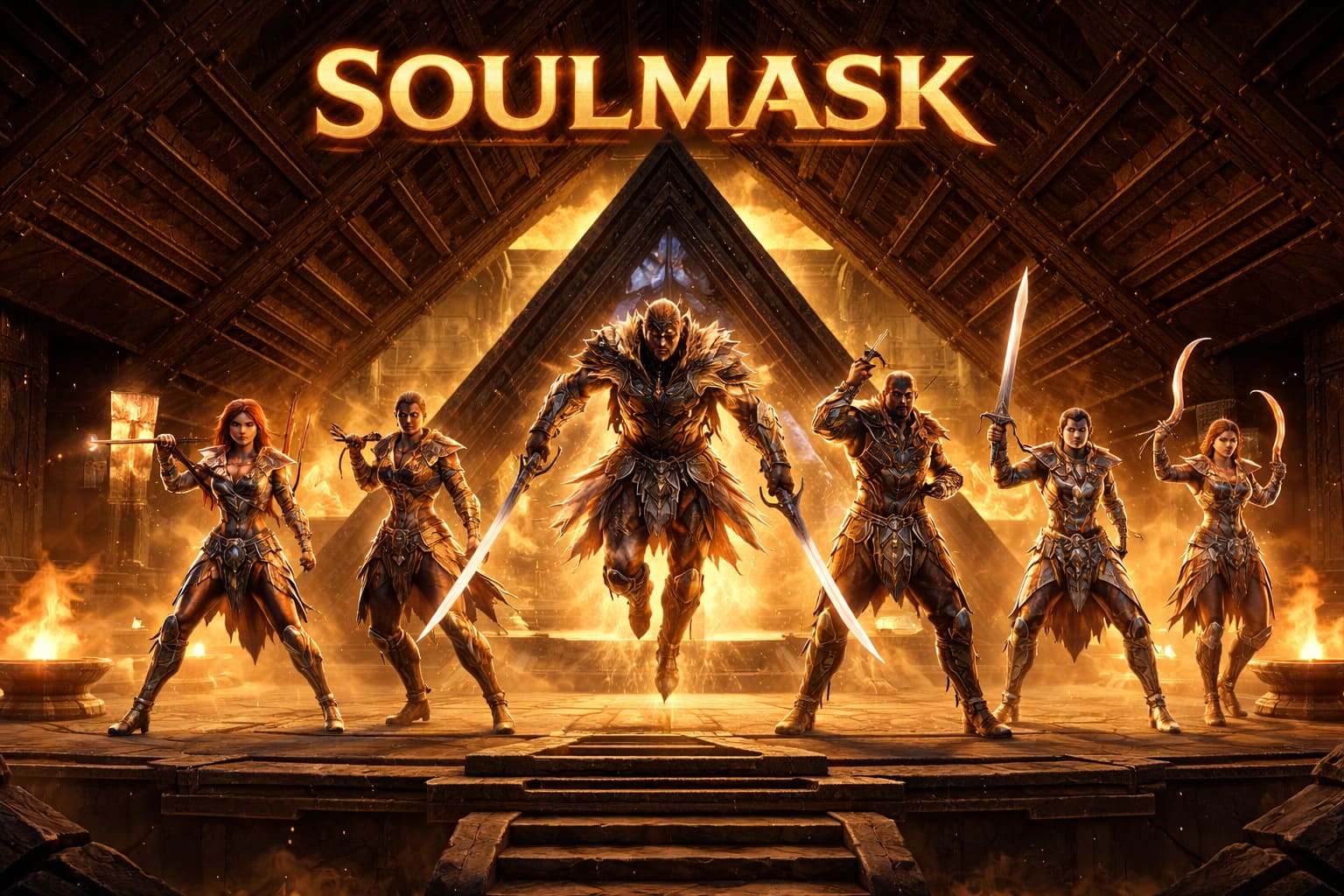
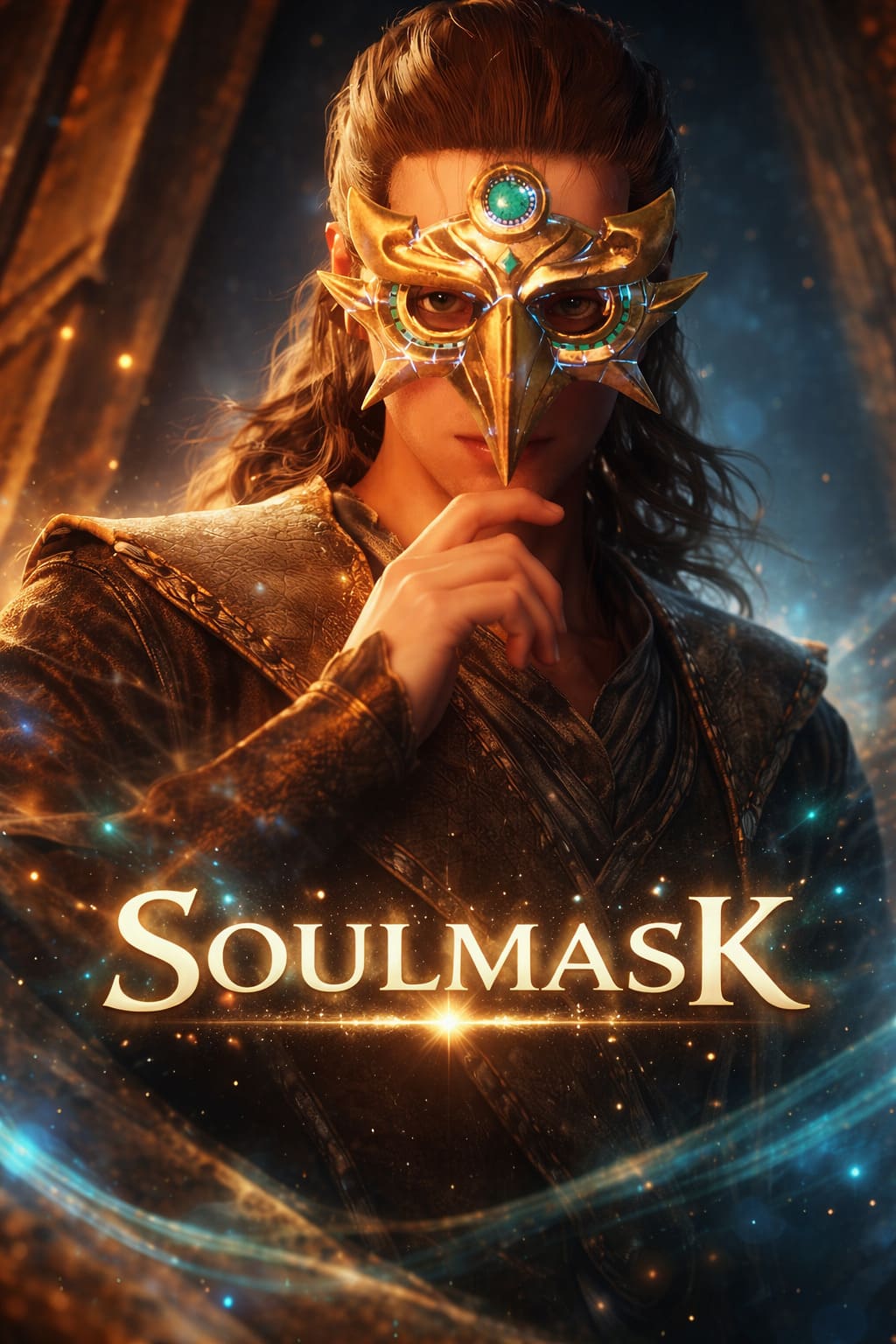
The masks are the core mechanic of the game, but they also represent its biggest lore reveal. What looks like a gameplay convenience is actually a deeply unsettling piece of technology.
The masks function as portable consciousness storage devices. Your character is not entirely human, but rather a biological vessel designed to host a transferable mind. Death is not permanent because consciousness can simply be reloaded into a new or repaired body.
This system allowed the Aethelgard to achieve a form of immortality, but it came with consequences. Over time, the stored minds began to degrade, leading to instability, madness, and fragmentation. Many of the powerful enemies you encounter are not villains in the traditional sense, but corrupted remnants of once-intelligent beings.
Samson Game Crashing on Timnah Boss Fight: Comprehensive Fix & Performance Guide (2026)
The Four Masks Are Functional Roles, Not Divine Powers
The expansion introduces four major masks tied to figures inspired by Egyptian mythology, but each one represents a technical role within the Aethelgard system rather than a supernatural entity.
| Mask | Identity | Function | Gameplay Connection |
|---|---|---|---|
| Anubis | Judge of the Dead | Consciousness sorting and processing | Resurrection mechanics |
| Horus | Sky Sovereign | Aerial fleet command and orbital systems | Flight abilities |
| Sobek | Tide Bringer | Water infrastructure and terraforming | Hydro manipulation |
| Amun-Ra | Solar Core | Central AI reactor system | Endgame control and energy systems |
Every ability tied to these masks has a logical explanation within the game’s sci-fi framework. Nothing is mystical. Everything is tied to advanced systems that the player is gradually learning to control.
Omanra: The Hidden Architect Behind Everything
Throughout the story, the name Omanra appears repeatedly in logs, dialogue, and hidden locations. At first, it feels like another mysterious figure, but eventually the truth becomes clear.
Omanra is the original creator of the mask system, effectively the primary administrator of the entire network. Unlike the rest of the Aethelgard, Omanra recognized that the system was becoming unstable and that the pursuit of immortality was corrupting everything it touched.
In response, Omanra triggered a global reset protocol that led to the collapse of the Aethelgard presence on Earth. The ruins, the broken systems, and the fragmented consciousnesses scattered across the world are all consequences of that decision.
The player’s journey can be interpreted as part of a recovery protocol designed by Omanra. Every corrupted entity you defeat is another piece of the system being cleaned and stabilized.
Airships and the Evidence of a Lost Exodus
The introduction of modular airships adds more than just mobility. It reinforces the idea that the world is filled with remnants of a once-functioning advanced civilization.
These ships are not new inventions. They are reconstructed versions of Aethelgard transport technology, powered by rare materials found deep within the desert. Scattered wreckage across the map suggests that many attempts to escape the planet failed during the so-called Great Departure.
The result is a landscape filled with abandoned machinery, broken infrastructure, and silent evidence of a civilization that left in a hurry and did not look back.
The Tribes: Survivors of a Broken System
The human factions in Shifting Sands are not just gameplay elements. They are descendants of those who lived under Aethelgard control, and their beliefs reflect that history.
- Solar Cult: A group that worships the Amun-Ra system as a divine force, believing that sacrifice and devotion can restore the lost golden age.
- Sand-Walkers: A more grounded faction that uses ancient technology pragmatically, without attaching religious meaning to it.
These groups highlight the long-term impact of the Aethelgard presence. Even after their disappearance, their influence continues to shape human behavior and belief systems.
The Ending Choice: Power or Freedom
The final moments of the expansion present a choice that defines the future of the world.
One option allows you to integrate with the system and effectively become a new overseer, continuing the cycle of control and technological dominance. The other option involves destroying the central system, removing access to resurrection and forcing humanity to survive without reliance on alien infrastructure.
Both choices carry weight, but they represent fundamentally different philosophies. One embraces power and continuity, while the other prioritizes independence and uncertainty.
Why Shifting Sands Stands Out
What makes this expansion exceptional is how tightly it connects gameplay mechanics with narrative context. Every system has a purpose, and every mechanic has a story behind it.
- Respawning is explained through consciousness transfer
- Abilities are tied to technological interfaces
- Exploration reveals the history of a fallen civilization
This level of integration creates a world that feels cohesive and intentional rather than randomly assembled.
Final Thoughts
Shifting Sands elevates Soulmask into something far more memorable than a standard survival game. It blends exploration, storytelling, and mechanics into a unified experience that rewards curiosity and attention to detail.
At its core, the expansion explores a simple but powerful idea: what happens when a civilization pushes technology too far and loses control of it. The answer is written across the desert in ruins, broken systems, and the echoes of those who came before.
For players willing to look beyond the surface, Soulmask offers not just survival, but a story worth uncovering piece by piece.