Witcher 3 Remastered Serpentine Gear Guide: Locations, Stats, and Crafting Strategies
If you’re starting The Witcher 3: Wild Hunt Remastered and wondering what gear is actually worth chasing in the opening hours, don’t overthink it. The Serpentine swords, also known as the Viper School Gear, are one of the few early-game upgrades that feel genuinely worthwhile rather than just being another temporary stat bump.
White Orchard isn’t a huge region, but it does a good job of teaching you how quickly Geralt can go from confident monster hunter to dead man walking. The default weapons are serviceable for the first few encounters, yet they start looking pretty miserable once stronger bandits, wraiths, and the Royal Griffin enter the picture.
That’s where the Viper School weapons come in.
The Serpentine Steel Sword and Serpentine Silver Sword are available extremely early, require relatively manageable crafting materials, and can make the first stretch of the game noticeably easier. More importantly, getting them doesn’t require grinding through a massive quest chain.
In my opinion, that’s exactly what good early-game gear should do: reward exploration without making you spend half your playthrough preparing for it.
Why the Viper School Gear Is Worth Getting Early
The Viper School has always had a slightly different identity from the other Witcher schools. Its equipment is associated with speed, precision, stealth, and poison rather than simply throwing heavier armor and bigger numbers at the player.

That theme carries nicely into the early swords.
The two weapons are designed for completely different jobs:
| Weapon | Main Use | Notable Bonuses |
|---|---|---|
| Serpentine Steel Sword | Humans, bandits, animals | Poison Chance, Bonus XP |
| Serpentine Silver Sword | Monsters and specters | Poison Chance, Aard Intensity, Bonus XP |
The biggest reason I like these swords is simple: you can get them before White Orchard becomes irrelevant. A lot of Witcher gear becomes exciting only after you’ve already replaced half your equipment with random loot. The Viper swords arrive early enough to actually matter.
And on higher difficulties, that matters even more.
Serpentine Steel Sword Location
The Steel Sword diagram is found at the Amavet Fortress ruins, on the eastern side of White Orchard.
The area is occupied by bandits, so don’t expect to stroll in and grab the diagram without a fight. You’ll encounter several enemies around level six, including a tougher leader who can punish careless attacks.
The safest approach is to reach the ruins from the southwestern slope. A collapsed section of the fortress wall provides access to the upper area. Once inside, clear the bandits before searching the rear portion of the tower.
The important chest is located near the outer wall.
Inside you’ll find the Diagram: Serpentine Steel Sword, along with an interrogation report that provides additional context for the Viper School treasure hunt.
Serpentine Steel Sword Stats
The Steel Sword is intended for enemies that aren’t affected by silver weapons, particularly human opponents and ordinary wildlife.
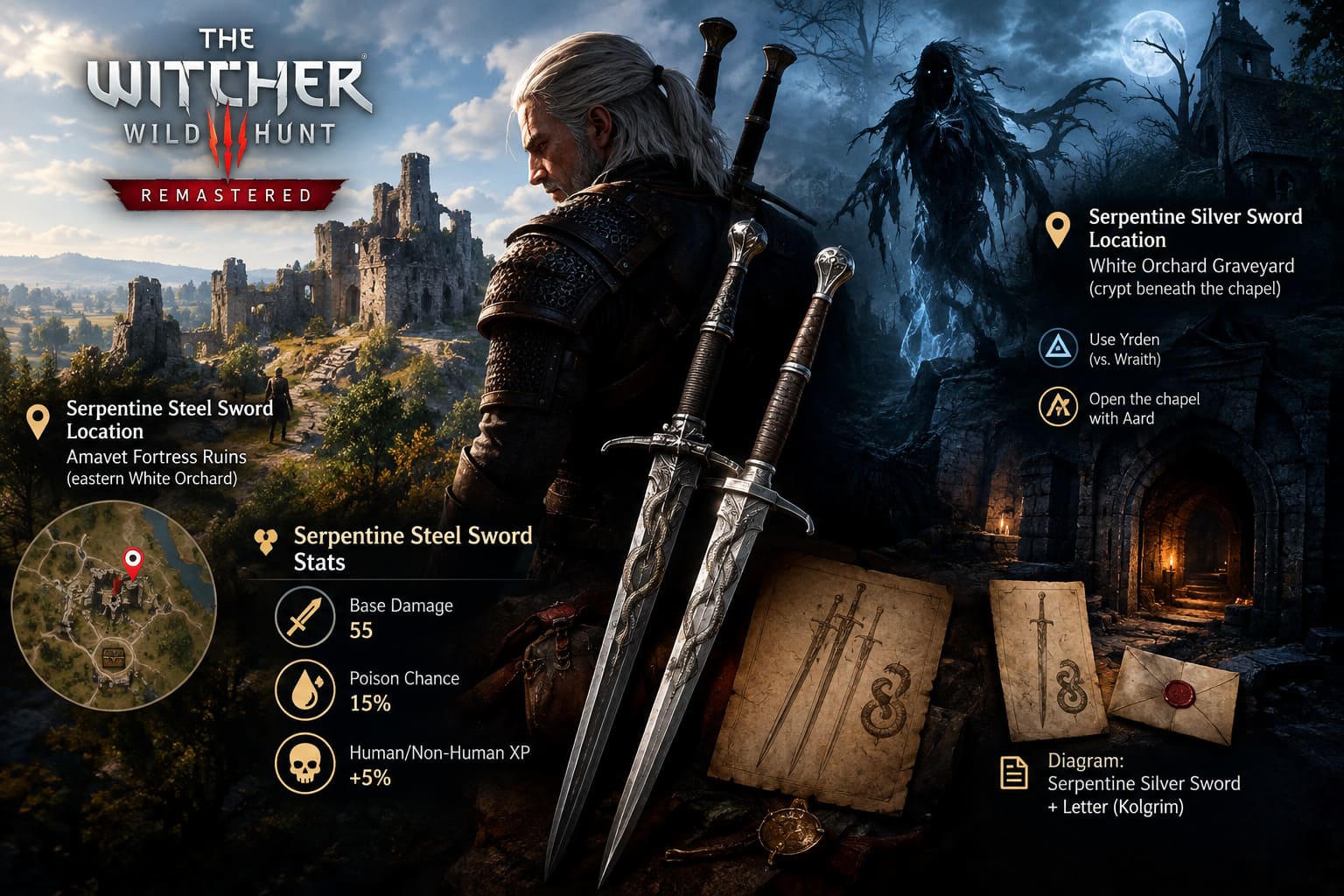
| Stat | Value |
|---|---|
| Base Damage | 55 |
| Poison Chance | 15% |
| Human/Non-Human XP | +5% |
The 15% poison chance is the part that makes the weapon interesting. Poison isn’t just cosmetic damage. Against enemies with larger health pools, damage-over-time effects can save you from having to stand there trading blows for ages.
That’s particularly useful against tougher bandits.
Personally, I wouldn’t build an entire character around the Steel Sword’s poison effect this early, but I’d absolutely take advantage of it. White Orchard gives you plenty of opportunities to fight groups of enemies, and anything that shortens those encounters is welcome.
Serpentine Silver Sword Location
The second diagram is hidden at the White Orchard Graveyard, inside the crypt beneath the chapel.
This one is a little more dangerous.
A level seven Wraith guards the area, and this is one of those early Witcher 3 encounters where the game quietly asks whether you’ve actually been paying attention to your Signs.
You should be using Yrden.
Without it, specters are considerably more annoying to fight because of their resistance and evasive behavior. Yrden forces the Wraith into a state where Geralt can reliably punish it with silver attacks.
After fighting the Wraith above ground, you’ll eventually have to follow it into the crypt.
The chapel entrance can be opened using Aard, giving you access to the underground area. Once inside, prepare for another encounter with the Wraith in a much tighter space.
That second fight is more dangerous than it looks. Don’t spam attacks. Drop Yrden, wait for an opening, dodge its attacks, and punish it when it becomes vulnerable.
After the Wraith is defeated, search the skeletal remains deeper inside the crypt.
That’s where you’ll find the Diagram: Serpentine Silver Sword and a letter connected to Kolgrim, the Viper School Witcher whose story gives this treasure hunt much more personality than a simple loot marker ever could.
Serpentine Silver Sword Stats
The Silver Sword is arguably the more important of the two during the White Orchard story.
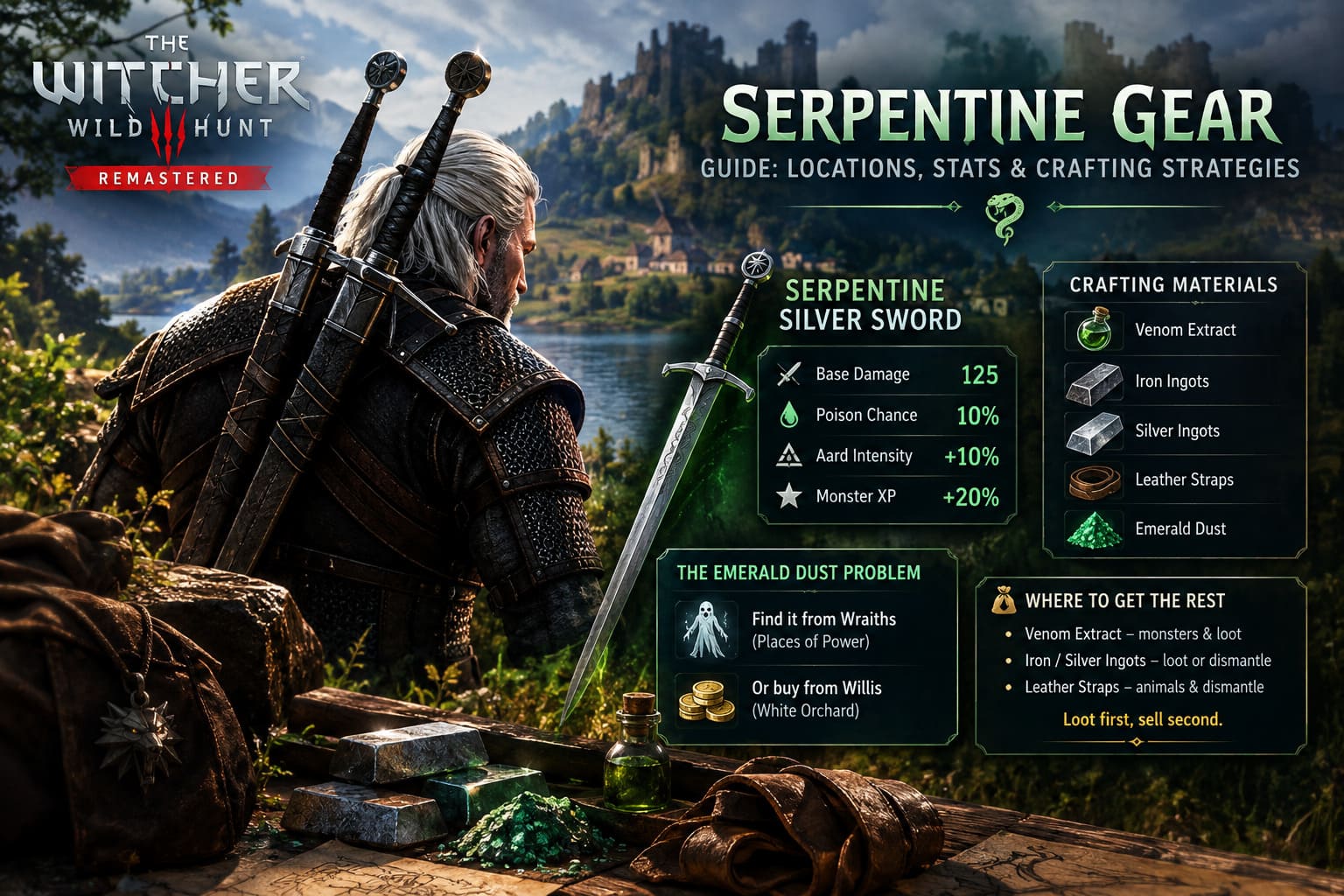
| Stat | Value |
|---|---|
| Base Damage | 125 |
| Poison Chance | 10% |
| Aard Intensity | +10% |
| Monster XP | +20% |
The +10% Aard intensity is a particularly nice bonus in the early game.
Aard is already useful for controlling enemies and creating openings, so getting extra intensity on a weapon you’re going to use against monsters makes the sword feel more useful than its raw damage number suggests.
The 20% monster experience bonus is also valuable. Early levels come quickly, but every bit of additional experience helps when you’re trying to unlock important abilities before moving into Velen.
Crafting the Viper School Swords
Finding the diagrams is only half the job. Geralt still needs the materials and a blacksmith capable of turning those diagrams into actual weapons.
For both swords combined, you’ll need a collection of basic and slightly rarer components.
The major materials include:
- Venom Extract
- Iron Ingots
- Silver Ingots
- Leather Straps
- Emerald Dust
The Emerald Dust Problem
Emerald Dust is one of those early-game materials that can make you stop and check your inventory three times because, naturally, you don’t have enough.
One option is to obtain it from enemies associated with the Places of Power around White Orchard. Wraith encounters can provide useful alchemical and crafting materials, making these locations worth exploring anyway.
The other option is purchasing Emerald Dust from a merchant such as Willis, the dwarf blacksmith in White Orchard.
The problem is the price.
If you’re still poor, spending hundreds of crowns on crafting dust can feel painful. I would explore first and buy materials only when necessary. White Orchard has plenty of loot, and the game rewards players who actually search buildings, abandoned camps, and containers instead of sprinting directly between quest objectives.
That’s one of the easiest ways to build up your early-game wallet without doing repetitive grinding.
Where to Find the Other Materials
The remaining ingredients are much less troublesome.
Venom Extract can come from dismantling appropriate monster materials and from certain loot sources. Killing monsters while exploring White Orchard naturally gives you opportunities to build up a supply.
Iron and Silver Ingots can be obtained from loot or produced through dismantling unwanted equipment. Don’t automatically sell every piece of junk equipment you find. Sometimes dismantling a useless weapon is more valuable than getting a handful of crowns from a merchant.
Leather Straps are similarly easy to acquire through exploration and dismantling animal hides.
The general rule is simple: loot first, sell second.
The Witcher 3 throws a ridiculous amount of junk at you, and some of it is surprisingly useful once you start crafting seriously.
Getting the Swords Crafted
Once you have both diagrams and the necessary components, you’ll need a blacksmith.
The obvious choice in White Orchard is Willis.
Unfortunately, his forge isn’t operational when you first encounter him. You’ll need to complete the Twisted Firestarter side quest, track down the person responsible for the fire, and resolve the situation.
Afterward, Willis can return to his work.
Open the crafting menu, go to weapons, locate the Serpentine sword recipes, and craft them if you’ve collected everything required.
It’s a small investment, but it’s one of those upgrades that pays off immediately.
Best Early-Game Skills for Viper Gear
The Viper swords naturally encourage a playstyle based around poison and aggressive combat.
If you want to lean into that identity, Alchemy is the obvious place to start.
Skills that improve your oils, poisons, and other alchemical effects can make the sword’s innate poison chance more meaningful. The exact build you choose depends on difficulty and personal playstyle, but combining swordplay with alchemy is one of the more natural ways to get additional value from the Viper theme.
You can also invest into Aard-related Sign abilities if you enjoy controlling fights rather than simply trading attacks.
A practical early-game setup can look something like this:
| Focus | Why It Helps |
|---|---|
| Fast Attacks | Reliable damage against most targets |
| Alchemy | Improves poison and oil synergy |
| Aard | Creates openings and controls enemies |
| Yrden | Essential against specters |
| Adrenaline/Combat Skills | Adds more consistency during difficult fights |
I wouldn’t go overboard trying to create a perfect build in White Orchard. The game gives you plenty of time to experiment later. The important thing is to build around what you actually use.
How Long Will the Serpentine Swords Last?
This is where expectations need to stay realistic.
The Viper swords are early-game weapons, not permanent equipment.
They can carry you comfortably through White Orchard and remain useful as you begin moving into Velen, but eventually their fixed stats will stop competing with better weapons.
That’s completely fine.
The mistake is treating early Witcher gear as something you have to keep forever. Its real value is giving you a strong foundation while you’re still building Geralt’s character and learning the game.
Later, you’ll move toward other Witcher School sets depending on your preferred playstyle.
The Viper School itself also returns in Hearts of Stone, where Geralt can obtain higher-level Viper equipment, including the iconic Viper Venomous swords.
That makes the early Serpentine gear feel like more than just disposable equipment. There’s a nice thematic connection between Kolgrim’s unfinished story in White Orchard and the later Viper-related equipment.
How to Fix The Witcher 3 Remastered Cross Save & Cloud Sync Errors (2026 Guide)
Viper Gear vs. Random Loot
One thing that makes the Serpentine swords particularly satisfying is that they aren’t dependent on luck.
Random loot can occasionally produce something better on paper, but Witcher gear gives you a known target.
You know where the diagram is.
You know what you’re collecting.
You know what you’re crafting.
That makes exploration feel meaningful rather than leaving your equipment progression entirely to whatever happens to fall out of the next chest.
And honestly, that’s one of the reasons I still recommend grabbing these swords whenever I replay the opening section. They feel earned.
Best The Witcher 3 Remastered Steam Deck Optimized Settings (2026 Guide)
Final Verdict: Should You Get the Serpentine Gear?
Absolutely make the trip if you’re already exploring White Orchard.
The Serpentine Steel Sword gives Geralt an early poison-focused weapon with useful bonus experience, while the Serpentine Silver Sword provides strong monster damage, poison potential, Aard intensity, and an experience bonus against monsters.
More importantly, obtaining both swords teaches you several systems that become increasingly important later:
- Exploring beyond the main quest.
- Reading documents and following environmental clues.
- Using Signs intelligently.
- Dismantling equipment for crafting materials.
- Understanding the difference between steel and silver weapons.
- Investing in gear rather than relying entirely on random loot.
The Viper School set isn’t the most complicated gear hunt in The Witcher 3 Remastered, and that’s exactly why it’s so good for the opening hours.
Clear the fortress. Deal with the Wraith. Search the crypt. Gather your materials. Get the diagrams forged.
Then go make that Griffin’s life miserable.
For an early-game Witcher 3 gear upgrade, that’s a pretty solid afternoon’s work.