Fishing in Nivalis Nights: Verified Sourcing Mechanics and Restaurant Economy Guide
Nivalis Nights is the kind of game that immediately appeals to anyone who enjoys games where the small details of everyday life matter just as much as the main progression system. Developed by ION LANDS and published by 505 Games, the game takes the neon-soaked city introduced through Cloudpunk and shifts the perspective toward restaurants, nightlife, exploration, business management, and simply living in a strange cyberpunk city. Instead of spending all your time flying through the skyline, you get much closer to street level, where food, money, customers, apartments, boats, and rival businesses become part of the routine.
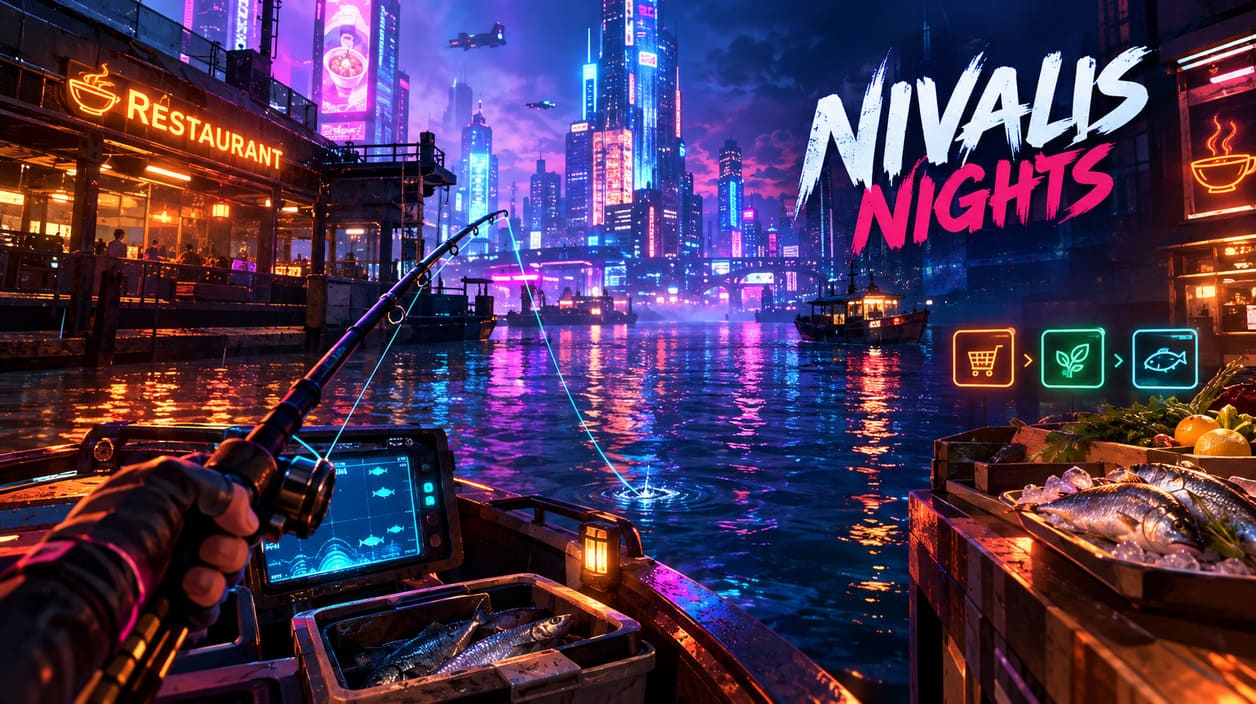
What caught my attention most is how the game connects activities that could easily have been separate systems. Fishing isn’t presented as some random minigame added because every modern sandbox supposedly needs one. It has a practical connection to the restaurant economy through the game’s buy, grow, or catch approach to obtaining ingredients. That makes fishing interesting from both sides: it can be a relaxing activity when you want to slow down, but it can also become part of the way you run a profitable food business.
Nivalis Nights City Guide Map Layout, Districts, and Transit Mechanics
Why Fishing Matters in Nivalis Nights
If you’ve played a lot of management games, you probably know the problem with gathering systems. Sometimes they exist only to pad out the game, forcing you to collect resources simply because the developer needs another progression loop. Nivalis Nights appears to be taking a more integrated approach. Restaurants need ingredients, ingredients cost money or effort, and players get different ways to keep those kitchens supplied.
The game’s culinary systems reportedly include more than 240 ingredients and around 190 meals, giving the restaurant side of the sandbox plenty of room to experiment. That immediately makes resource acquisition more meaningful. You aren’t just collecting fish because a quest told you to; you’re potentially collecting something that can eventually become part of a menu, a source of savings, or another piece of your business strategy.
| Sourcing Method | How It Works | Main Advantage |
|---|---|---|
| Buy | Purchase ingredients through commercial suppliers and vendors. | Convenient and predictable when money isn’t a problem. |
| Grow | Produce agricultural ingredients through greenhouse facilities. | Creates a more independent source of selected ingredients. |
| Catch | Use your boat and fishing equipment to harvest aquatic resources. | Turns exploration and time into ingredients instead of direct purchases. |
For me, this three-way structure is one of the more interesting ideas in Nivalis Nights. It gives the player an actual reason to think about where their food comes from. If you’re constantly spending money on everything, your restaurant might still work, but you’re playing a very different economic game from someone willing to spend evenings on the water gathering their own supplies.
Your Boat Is More Than Transportation
The boat is central to the fishing system because Nivalis isn’t built like a traditional fishing game where you walk down to one obvious pier and start casting. The city has extensive canals and waterways, and your personal watercraft gives you access to areas that aren’t necessarily convenient to reach on foot. That makes boating part of exploration rather than simply a loading screen between the restaurant and fishing minigame.
I particularly like the idea of having to position the boat before fishing. It sounds like a small thing, but movement and location can make a gathering system feel much more connected to its environment. Instead of pressing a button in a fixed location, you’re actually taking the boat out, finding a suitable stretch of water, stopping, and then switching your attention to the fishing itself.
It also fits the visual identity of Nivalis extremely well. The city is all towering architecture, glowing signs, rain-soaked surfaces, and dense layers of urban life. Being down on the water beneath that enormous skyline creates a completely different mood. After spending hours dealing with customers, menus, prices, employees, and business problems, sitting in a boat beneath the neon lights sounds like exactly the kind of slower-paced activity a game like this needs.
How the Buy, Grow, or Catch System Changes Business
The most important thing to understand about fishing is that it shouldn’t be viewed in isolation. Catch is one part of a larger economic system. Buying ingredients is obviously the easiest approach when your cash flow is strong. Growing gives you another form of independence, while fishing lets you obtain aquatic resources personally instead of relying completely on commercial suppliers.
That creates an interesting relationship between time and money. A wealthy restaurant owner might prefer to purchase everything and spend their evenings elsewhere. A newer business with limited funds could have a much stronger incentive to gather ingredients personally. Neither approach needs to be universally correct, and that’s exactly what I want from a management sandbox: different players should be able to arrive at different routines without feeling like they’re ignoring half the game.
There is also a nice role-playing element here. Imagine finishing a busy shift, checking the restaurant’s inventory, noticing that you’re running low on a useful seafood ingredient, and deciding to take the boat out rather than immediately buying another shipment. That’s a tiny decision, but it makes the business feel more like something you’re actually running instead of a collection of menus and spreadsheets.
Fishing Mechanics Should Feel Physical
One detail that makes the fishing system especially interesting is the use of physically simulated fish behavior. According to the information available ahead of launch, fishing is intended to involve casting, managing line tension, and physically bringing the catch toward the boat rather than reducing the entire process to a simple progress bar.
As someone who has played plenty of fishing minigames across RPGs and open-world games, this distinction matters. A bad fishing system can become something you tolerate for five minutes before never touching it again. A good one can become the activity you accidentally spend an entire evening doing. The difference usually comes down to whether the player feels like they’re actually interacting with the catch rather than watching an animation finish.
There are still details that need to be established through the actual release and subsequent player testing. The full species catalog, differences between fishing locations, the effect of weather and the day/night cycle, and the progression of rods or other equipment are areas where the real depth of the system will become clearer. I would also be interested in seeing whether rare catches have meaningful consequences for cooking and restaurant progression rather than simply existing as collectibles.
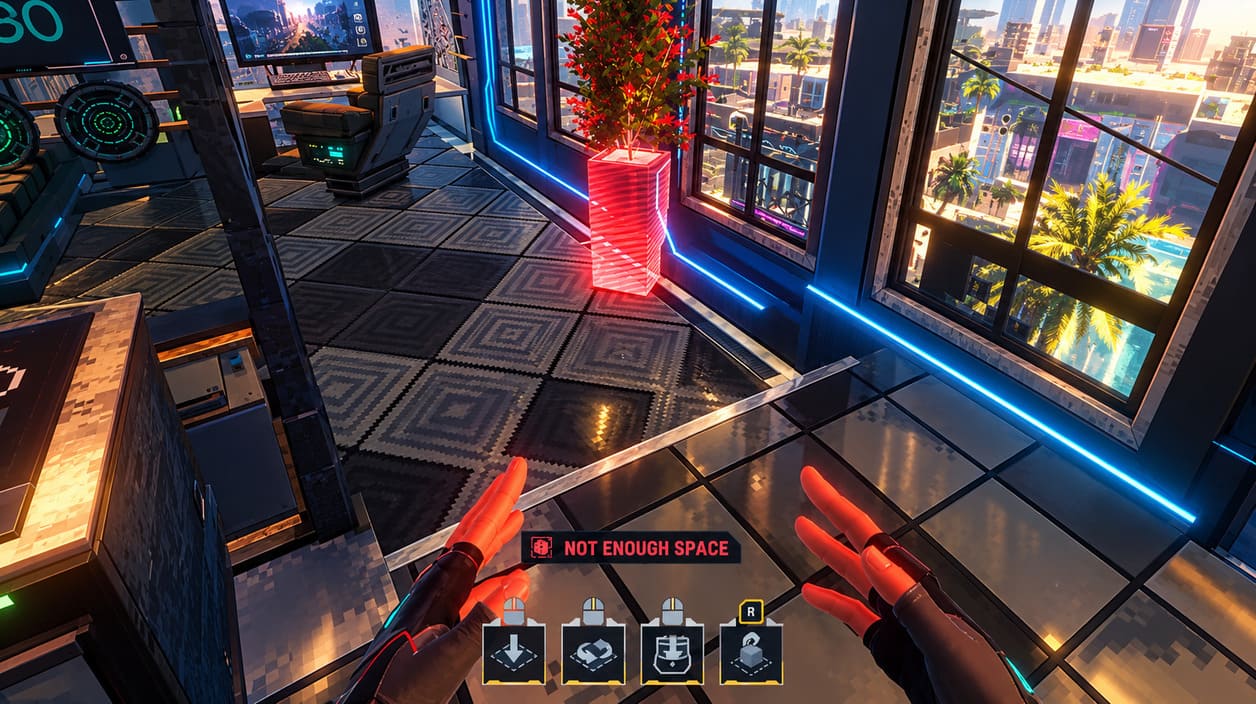
The Nighttime Side of Nivalis
Fishing becomes even more interesting when you look at the broader structure of the city. Nivalis Nights isn’t only about running restaurants during business hours. The city changes after dark, and players have to deal with rivalries, corporate pressure, security forces, and opportunities to interfere with competing businesses.
That gives the player an unusual choice between two very different nighttime routines. You can take your boat out and fish beneath the city’s neon glow, using the quiet time to gather ingredients and decompress. Or you can spend those same hours getting involved in the more aggressive side of the sandbox, including actions against competing businesses and their operations.
That contrast is one of the things I find most appealing about the concept. Plenty of games tell you that you’re building a business, but then give you only one obvious activity loop. Here, the city seems designed around competing lifestyles. One player might become obsessed with optimizing restaurant supply chains, another might focus on decorating apartments and expanding their venues, while someone else could spend huge portions of their time exploring the waterways and collecting resources.
Fishing as a Relaxation System
Not every mechanic needs to be about optimization, though. This is where fishing could become especially valuable. Nivalis Nights has plenty of potentially stressful systems, from managing businesses and customers to dealing with the darker elements of the city. Having an activity where you can simply sit on the water and wait for a bite gives the overall experience some breathing room.
I’ve always appreciated games that understand the value of downtime. In Stardew Valley, fishing can become a surprisingly addictive part of the daily routine. In games such as Red Dead Redemption 2, fishing works because it lets you temporarily stop worrying about missions and simply exist in the world. Nivalis Nights seems to be chasing a similar feeling, but with a distinctly cyberpunk atmosphere and a much stronger connection to business management.
The combination of rain, reflections, industrial architecture, canals, and glowing advertisements could make these moments particularly memorable. If the ambient sound design is strong, I can easily imagine fishing becoming one of those activities players initially try because it is useful, only to eventually do it because they genuinely enjoy being out there.
What Players Should Watch After Launch
The September 29, 2026 launch should answer many questions that pre-release information cannot fully settle. The basic concept is clear, but the long-term value of fishing will depend heavily on how much variety is actually hidden beneath the surface.
- Fish variety: Different species and rarity levels could give players reasons to revisit different waterways.
- Location differences: Distinct fishing areas would make exploration more meaningful.
- Weather and time: Dynamic conditions could make the system feel less predictable.
- Equipment progression: Better rods, tackle, or boats could provide a satisfying reason to keep fishing.
- Cooking rewards: Rare catches could become particularly valuable if they connect to special dishes or restaurant progression.
These are the details that will determine whether fishing is a genuinely deep part of Nivalis Nights or simply a pleasant side activity with some economic benefits. Personally, I’m hoping for the former. A system doesn’t need to be enormous to be good, but it should give the player enough variation that fishing still feels worthwhile after the novelty wears off.
Is Fishing Worth Building Your Restaurant Around?
I wouldn’t approach fishing as something that automatically replaces every other sourcing method. The strength of the system is that it exists alongside buying and growing, giving you another option rather than dictating a single optimal routine. If your restaurant becomes successful enough, spending every night personally collecting ingredients might eventually be inefficient, but that’s part of the fun of a management sandbox.
Early on, however, catching your own resources could be particularly attractive. When every purchase cuts into your available cash, turning your free time into inventory has obvious value. Later, the same activity could become less about necessity and more about chasing unusual ingredients, exploring new waterways, or simply taking a break from the business side of the game.
That’s ultimately how I want fishing to work in Nivalis Nights. It shouldn’t feel like a chore that the game forces on you. It should be a system you can lean into when it fits your playstyle, whether you’re a hardcore optimizer looking for another way to control expenses or the kind of player who just wants to take a small boat through a rain-soaked cyberpunk city and see what bites.
Final Thoughts
The fishing system in Nivalis Nights has a lot more potential than its description might initially suggest. It connects directly to the restaurant economy, gives the boat a genuine purpose, encourages exploration of the city’s waterways, and provides a slower rhythm between the more demanding management and rivalry systems. The buy, grow, or catch structure is particularly promising because it makes resource gathering part of the business rather than an isolated minigame.
There are still unanswered questions, especially around fish variety, equipment upgrades, environmental effects, and the eventual rewards for rare catches. Those details will matter once players have enough time with the finished game to test the systems properly. But even before launch, I like the direction: Nivalis Nights seems to understand that a believable cyberpunk city isn’t just about neon skyscrapers and dramatic stories. Sometimes it’s about closing the restaurant, taking a boat into the rain, dropping a line into the dark water, and deciding what kind of night you actually want to have.
Nivalis Nights is scheduled to launch on September 29, 2026, and fishing is shaping up to be one of those deceptively simple mechanics that could become a surprisingly important part of the wider experience. Whether you use it to protect your restaurant’s margins, search for unusual ingredients, explore the canals, or simply escape the noise of the city for a while, the waterways give Nivalis another layer of personality. For me, that’s exactly the kind of secondary system that can make a sandbox stick in your memory long after the main progression stops feeling new.