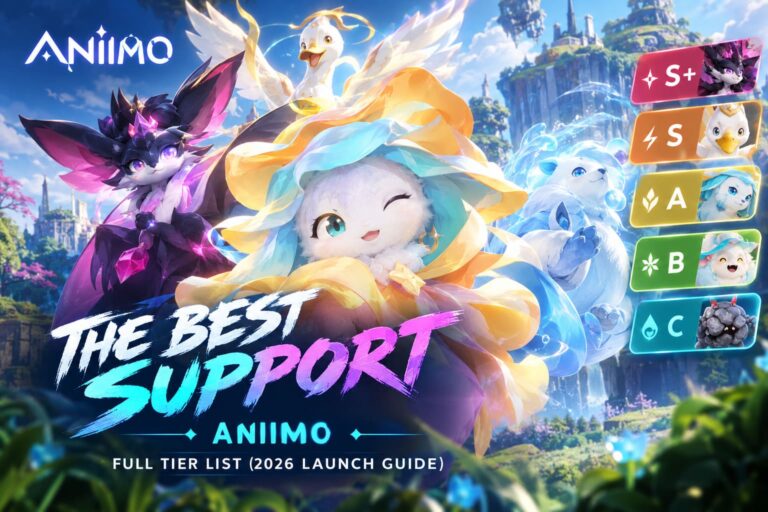
Aniimo Monetization & Cosmetics Review 2026: Pay-to-Win or Fair F2P?
When I first jumped into Aniimo after its September 16, 2026 launch, I had the exact same question that probably crossed the mind of every creature-collector veteran: where’s the catch?
The game throws you into the pastel-colored continent of Idyll as a Pathfinder, surrounds you with adorable creatures, gives you a beautiful open world to explore, and then casually reminds you that this is a free-to-play live-service game.
That combination always makes me nervous.
I’ve played enough F2P games to know how this story usually goes. The opening hours are generous, the shop looks harmless, and everything feels wonderfully player-friendly. Then you hit the endgame, stamina starts disappearing, upgrade materials suddenly take forever to farm, and the cash shop somehow has the exact shortcut you were wishing for five minutes earlier.
Aniimo is more complicated than that.
The game launched to enormous interest, reportedly reaching more than 127,000 peak concurrent players on Steam within its first 12 hours. At the same time, its Steam reception landed in the Mixed territory, while Reddit discussions and YouTube comments quickly turned into arguments over whether Aniimo has one of the more reasonable F2P models in the genre or whether its problems simply take longer to become obvious.
After digging into the game’s monetization structure, cosmetics, progression systems, premium currency, and endgame loops, my takeaway is pretty straightforward: Aniimo is not a traditional pay-to-win disaster, but it absolutely isn’t a completely innocent F2P playground either.
There is a genuinely good game underneath the monetization. The problem is how aggressively the economy starts respecting—or testing—your time once you move beyond the honeymoon period.
How Aniimo Actually Makes Its Money
Aniimo doesn’t use the classic character-banner formula that players have become accustomed to in games such as Genshin Impact or Honkai: Star Rail.
There aren’t endless randomized character pulls dominating the front page of the store. Instead, Pawprint Studio has built a more layered live-service economy that feels closer to a combination of Warframe-style monetization and MMO-lite progression systems.
The game’s economy revolves around three major pillars:
- Monthly Pass: Premium currency, daily rewards and quality-of-life benefits.
- Companion Handbook: Free and premium Battle Pass progression.
- Cash Shop: Cosmetics, vanity items and progression bundles.
| Monetization System | What You Get | Main Concern |
|---|---|---|
| Monthly Pass | Premium currency, daily rewards and QoL benefits | Encourages regular spending |
| Companion Handbook | Free and premium Battle Pass progression | Limited-time seasonal rewards |
| Cash Shop | Cosmetics, vanity items and progression bundles | Pay-for-convenience pressure |
The Monthly Pass is designed as the predictable recurring purchase. You receive a steady supply of premium currency alongside quality-of-life benefits. One particularly interesting perk lets you save missed daily rewards for up to five days, which is genuinely useful for players who don’t have the time—or patience—to log in every single day.
Then there’s the Companion Handbook, essentially Aniimo’s Battle Pass. Each season lasts around 42 days and contains both free and Advanced premium tracks. Depending on the season, players can earn outfits, upgrade resources and even exclusive creature variants.
Finally, you have the Cash Shop, which uses premium Diamonds for direct purchases. This is where you’ll find cosmetic bundles, RV customization options and various progression shortcuts.
And honestly? At first glance, it doesn’t look terrible.
Community discussions around launch frequently pointed out that buying the Monthly Pass, Battle Pass and several cosmetic options could put you somewhere around the $50 range, giving a paying player access to a huge portion of the game’s premium content.
The important word there is access.
The real monetization question doesn’t appear until you start asking how much time the free player has to spend compared with someone willing to open their wallet.
Cosmetics Are Probably Aniimo’s Strongest Monetization Feature
I’ll give Pawprint Studio credit here: Aniimo’s fashion game is seriously good.
If you’re the kind of player who spends an embarrassing amount of time standing in front of a character customization screen, you’ll probably have a field day.
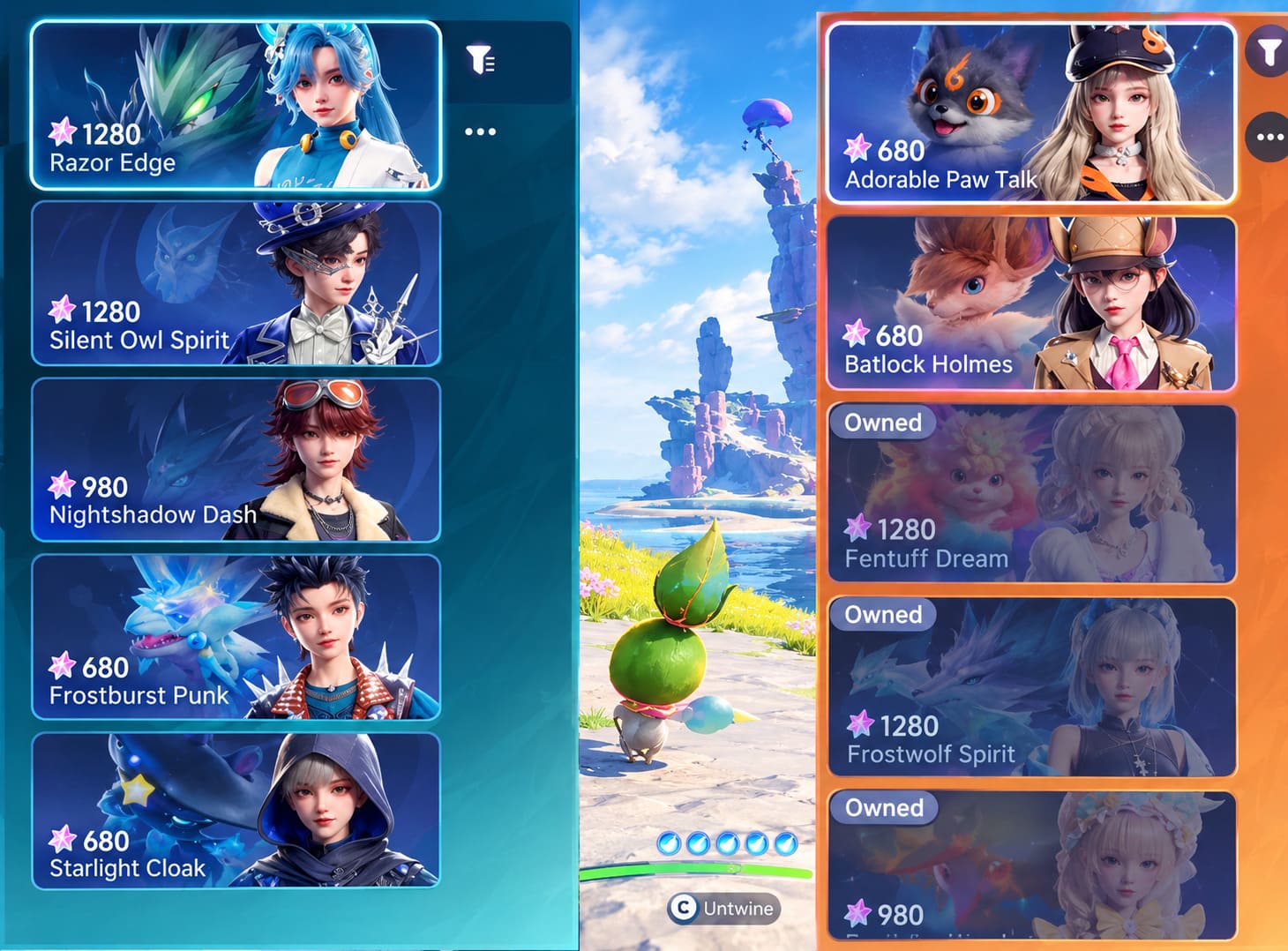
You aren’t limited to dressing your human Pathfinder. Your collected Aniimo companions can also be customized, and the game offers everything from polished fantasy armor to deliberately ridiculous outfits.
The modular approach is especially nice.
Instead of treating every cosmetic as one giant locked outfit, Aniimo allows players to mix different pieces together. Tops, bottoms and accessories can be combined across character models, including male and female options.
That’s the kind of system I actually like spending money on because you’re buying creative freedom, not a statistical advantage.
Even better, not every good-looking item sits behind the cash shop.
Exploration and progression can unlock cosmetics naturally. Completing open-world objectives and filling out the Aniilog can reward players with free customization options. Certain Aniimo accessories, including things such as the Ember Pup attire, can be earned simply by playing.
That’s important.
A F2P game feels much healthier when the free player can still build a character that looks fantastic without having to turn into a walking advertisement for the premium store.
Before launch, there were also rumors that Aniimo would rely on a more aggressive cosmetic gacha system featuring randomized legendary rerolls. Those concerns became particularly relevant because players had already seen similar monetization strategies become increasingly common elsewhere.
Instead, Pawprint Studio moved away from that direction and removed the gacha-related labeling from the Steam page.
That means the basic philosophy is simple: see the skin you like, pay the listed price, and get the skin.
No spinning a virtual wheel ten times hoping RNG finally stops laughing at you.
For cosmetics, that’s a huge positive.
Where Things Get Messy: Pay-to-Progress
Here’s where my enthusiasm drops a notch.
Aniimo isn’t traditional pay-to-win in the sense that someone can swipe a credit card and immediately become an unbeatable PvP monster. But saying that means the monetization is completely fair would also be misleading.
The better description is pay-to-progress or pay-for-convenience.
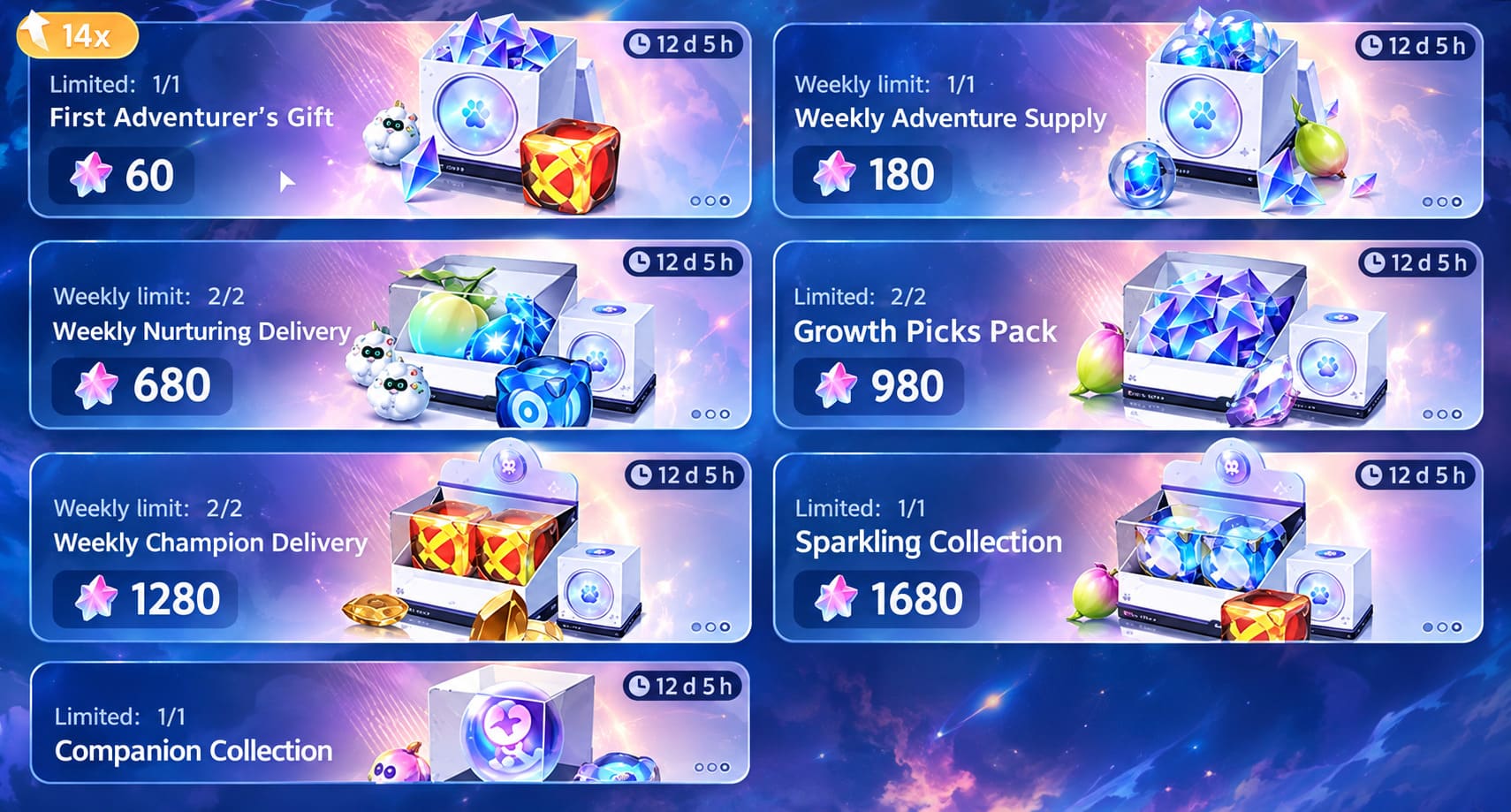
Items such as Shining Pods, upgrade bundles, stamina-replenishing resources and higher-tier catching materials become increasingly important when you’re trying to optimize your roster.
Catching ordinary Aniimo and building your Homeland doesn’t require spending money. That’s perfectly playable without touching the shop.
The problem starts when you stop playing casually.
If you’re chasing optimized builds, high-end creatures and better gear, the amount of time required to acquire everything through normal gameplay can become substantial. Premium catching cubes and similar bundles can cost significant amounts, with some individual offers reaching more than $20.
That’s where the F2P experience starts feeling less comfortable.
The question isn’t simply:
“Can I get this without paying?”
The more important question is:
“How much longer will it take me if I don’t pay?”
That distinction matters enormously in a live-service game.
Players participating in PvEvP activities such as Operation: Egg Heist, as well as late-game battle simulations, can use purchased resources to bypass some of the restrictions surrounding stamina and progression. That doesn’t automatically mean paying players are guaranteed victory, but it can allow them to reach high-tier gear and optimized creature statistics considerably faster.
For someone casually wandering around Idyll, this probably won’t matter much.
For a completionist staring at a maxed-out creature roster at 2 AM while calculating another week of farming?
Yeah. That’s where the shop starts looking very tempting.
The Iris Event Raised Some Serious Questions
The most uncomfortable part of Aniimo’s monetization history is the controversy surrounding the legendary Aniimo Iris during testing.
Pawprint Studio had publicly pushed back against the idea that Aniimo would become a gacha-driven game. Yet the Iris event created a system that, at least from a player’s perspective, felt remarkably close to one.
Players couldn’t simply stumble across Iris while exploring Idyll.
Instead, they had to participate in a specific rift event using Crevice Beacons. The basic loop involved defeating the encounter and repeatedly throwing Aniipods at a stationary target in an attempt to secure the creature.
The problem wasn’t simply that the event was repetitive.
It was the combination of low free-to-play drop rates and an unattractive pity structure.
Players could reportedly need as many as 30 repeated runs before reaching a guaranteed catch through the event’s currency system.
That’s the sort of design that immediately makes veteran F2P players suspicious.
Because once you introduce a limited event, a repetitive acquisition loop and a premium alternative for skipping some of that grind, the psychological effect starts looking very familiar—even if the system technically isn’t a traditional gacha.
Pawprint Studio addressed the criticism during a community Q&A, explaining that paid options were intended as an alternative route for players who simply wanted to skip the grind.
I understand the argument.
Some people have money but very little free time. Others have plenty of time and absolutely no interest in spending money. Giving both groups different ways to reach the same destination isn’t inherently bad.
The danger comes when the free route becomes so tedious that the paid route starts feeling less like an option and more like the intended solution.
Is Aniimo Actually Pay-to-Win?
I’d avoid calling Aniimo a straight-up pay-to-win game based on the systems described here.
There is an important distinction between buying victory and buying time.
Aniimo’s current monetization leans much harder toward the second category.
| Player Type | F2P Experience | Main Pressure |
|---|---|---|
| Casual Explorer | Very manageable | Little need to spend |
| Cosmetic Collector | Good free options, premium extras available | Fashion spending |
| Creature Collector | Playable but increasingly grindy | Catching resources |
| Completionist | Heavy time commitment | Resource farming |
| Endgame Optimizer | Significant grind | Stamina and upgrade shortcuts |
That distinction is actually one of the most interesting things about Aniimo.
If your goal is simply to explore Idyll, collect creatures, customize your Pathfinder and build a cozy RV campsite, you can have a very good time without spending anything.
The game doesn’t constantly scream BUY THIS NOW every time you open a menu.
But once you decide that you want to optimize everything, the economic design becomes much harder to ignore.
The Real Cost of Aniimo Isn’t Always Money
This is the part I think gets lost whenever people argue about F2P monetization.
A game can technically let you earn everything without paying and still create pressure through time-gated progression.
That’s exactly why Aniimo’s model deserves scrutiny.
Imagine two players.
Player A spends nothing but plays several hours every day.
Player B buys premium resources and only has a few hours each week.
Both can theoretically reach the same destination.
The difference is that Player B is effectively purchasing back some of their limited gaming time.
From one perspective, that’s reasonable. From another, it’s a monetization system built around making the grind uncomfortable enough that the shortcut looks attractive.
Neither interpretation completely explains the experience by itself.
And that’s why Aniimo sits in such an awkward middle ground.
Final Thoughts: A Great Creature-Collector With a Monetization Asterisk
After looking at the whole system, I don’t think Aniimo deserves to be dismissed as some soulless cash-grab.
There’s too much genuinely good stuff here.
The world of Idyll is beautiful, creature collection is satisfying, the combat has more action than the cozy presentation initially suggests, and the customization system gives players plenty of room to make their Pathfinder and companions feel personal.
Most importantly, the game doesn’t appear to rely on randomized character gacha as its primary business model.
That’s a major difference.
For a casual player, Aniimo can absolutely function as a free-to-play game without demanding your credit card. Explore the world, complete your Aniilog, build your campsite, collect creatures and take things at your own pace.
The story changes when you become an endgame completionist.
If you’re chasing perfectly optimized creatures, maximum stats, high-tier equipment and every possible reward, the grind becomes much more significant. Premium purchases can reduce that friction, and that’s exactly where the monetization begins to feel less like harmless convenience and more like a deliberate pressure point.
So my biggest advice to anyone starting Aniimo in 2026 is simple:
Don’t let the game convince you that you need to keep up.
The cosmetic system is one of the better parts of the economy because you can clearly see what you’re buying. The progression shop is more complicated because you’re effectively paying to reduce time investment.
For me, that’s the line worth watching.
Aniimo is a generous-looking F2P creature collector with a surprisingly strong cosmetic system and a much more questionable endgame economy. It isn’t the nightmare gacha machine some players feared before launch, but neither is it completely free from the monetization tricks that have become standard in modern live-service games.
Enjoy Idyll. Collect your Aniimo. Build the ridiculous RV of your dreams.
And if the shop starts whispering that you need another $20 bundle because your free-to-play progression isn’t moving fast enough, remember that the grind is part of the game—and your wallet doesn’t owe the game anything.