The 33 Days Till Extraction AI Art Controversy Explained: Three Whales Studio Faces Player Backlash
There is something strangely frustrating about 33 Days till Extraction. From what I have seen of the game so far, Three Whales Studio clearly knows how to build an interesting tactical shooter. The ruined sci-fi world looks harsh, the combat has weight, the survival mechanics have potential, and the idea of resurrecting dead squadmates and enemies with tech-necromancy is exactly the kind of weird system that can make a game memorable. Yet right now, a completely different part of the game is getting most of the attention: its alleged use of AI-generated artwork.
I have played enough indie games over the years to know that budget limitations are nothing new. Some of my favorite games have had ugly menus, questionable animations, reused assets and character portraits that looked like they were made at two in the morning. That alone does not bother me. What bothers me here is the apparent gap between the quality of the actual game world and some of its 2D presentation. When a game can give me impressive environments and convincing combat effects but then throws a bizarre-looking character portrait into the recruitment screen, the difference becomes impossible to ignore.
33 Days Till Extraction: Has Three Whales Studio Abandoned Age of Water?
What Is 33 Days till Extraction?
For anyone who has not been following the game, 33 Days till Extraction is a top-down sci-fi action RPG shooter from Three Whales Studio, the team previously associated with Age of Water in partnership with Gaijin Entertainment. The premise immediately caught my attention because it does not sound like another straightforward extraction shooter. You play as a stranded death-chaplain on a devastated planet, and you have exactly 33 days to prepare for an extraction.
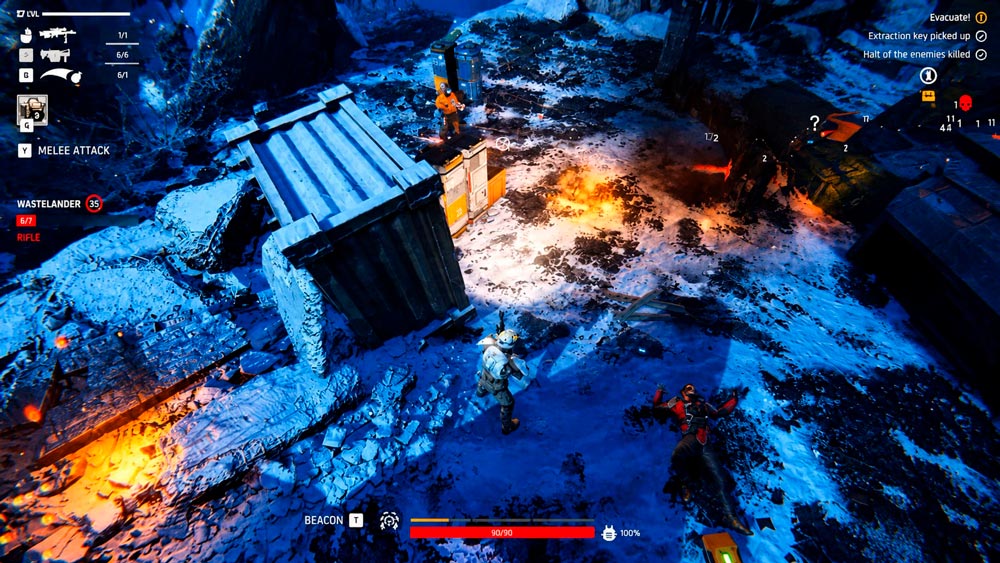
That countdown is more than just a story gimmick. During the campaign, players have to develop a hidden bunker, improve their equipment, recruit and manage fighters, collect resources and survive increasingly dangerous encounters. Daytime brings elite patrols, while nighttime opens up opportunities to explore procedural areas and hunt for useful loot. It is a mixture of base management, tactical combat, survival and RPG progression that could become surprisingly addictive if all of those systems work together.
The most unusual mechanic is easily the game’s tech-necromancy. Dead characters and enemies are not necessarily finished business. You can resurrect fallen units and turn them into temporary allies, which creates some interesting tactical possibilities. A difficult fight can potentially become easier because the enemy you just killed is now standing beside you. That is the kind of mechanic I would rather see in an experimental indie game than another generic crafting system.
The Game World Looks Better Than Its Portraits
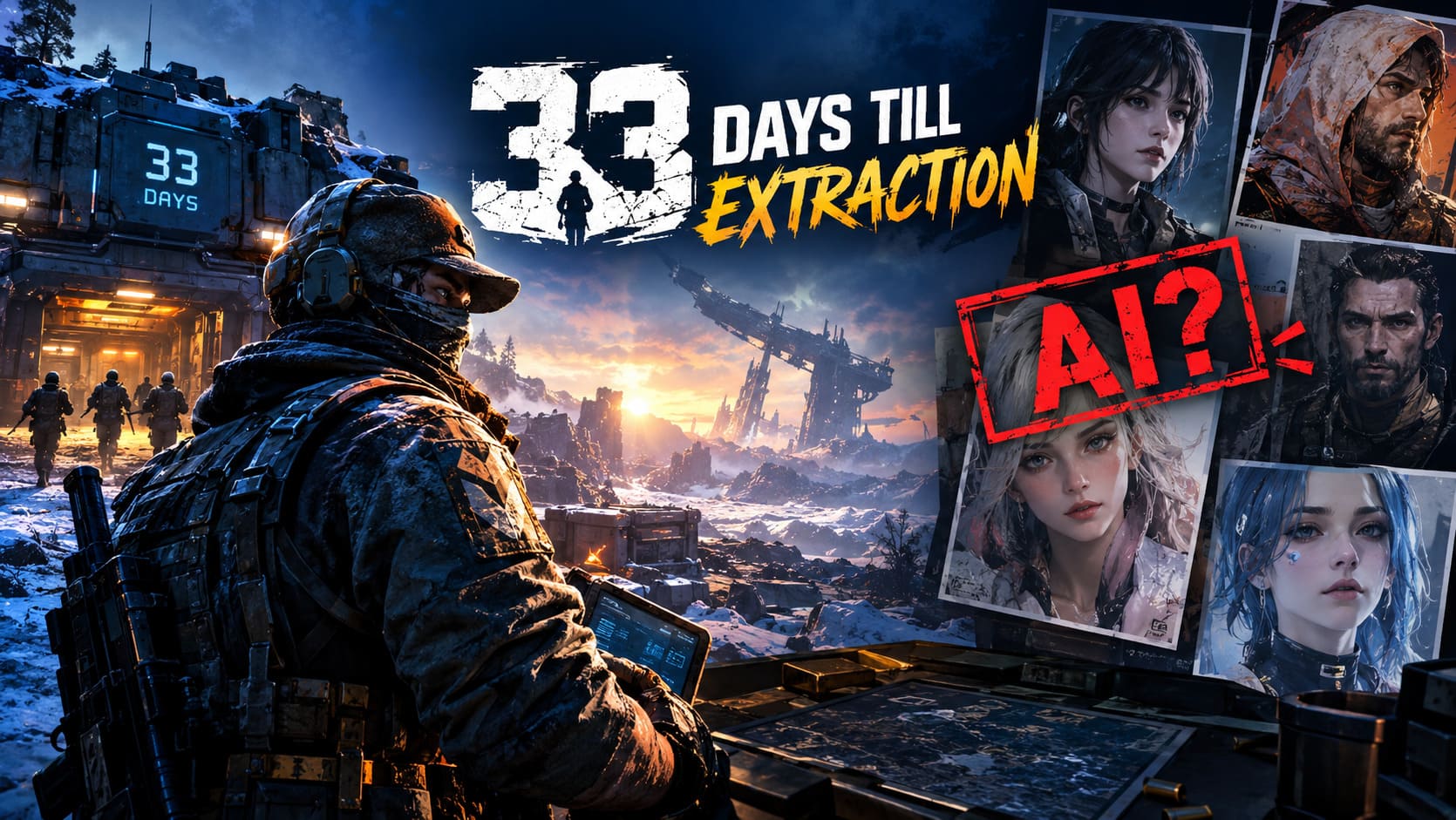
This is where the current controversy becomes especially awkward for Three Whales Studio. The public demo gave players a chance to see the game’s environments, combat effects, weapons and general presentation, and quite a few of those elements looked genuinely promising. The 3D side of the game has atmosphere, particularly when the ruined sci-fi setting starts feeling like a place that has been abandoned by civilization rather than just another collection of dark corridors.
Then you open a character menu.
That is where the visual consistency starts falling apart. Players have been pointing toward the game’s portraits and certain UI elements, arguing that they have the recognizable characteristics associated with generative AI artwork. Some portraits reportedly contain strange clothing details, inconsistent lighting and backgrounds that do not quite make visual sense. None of those things automatically prove that AI was used, of course, but once players started looking closely, the discussion spread extremely quickly.
Personally, I understand why this has become such a big deal. A slightly ugly texture on a wall is easy to ignore. A character portrait that is supposed to represent one of the people you are recruiting into your squad is different. Those images are part of the game’s personality. If I am supposed to care about a mercenary, remember their traits and use them repeatedly in dangerous missions, I want that character to feel like an actual character rather than an image that was generated in a few seconds.
Why Players Are So Suspicious of the 2D Artwork
The debate did not really start because someone simply disliked the art style. Players began comparing the portraits with the rest of the game and noticing how different they felt. The 3D environments have one visual language, while some of the 2D artwork appears to belong to something else entirely. That inconsistency has made people question how the assets were produced.
There is also a broader problem here: gamers have become much better at spotting AI-generated imagery. A few years ago, many people would have looked at a strange hand or an impossible piece of clothing and simply assumed the artist made a mistake. Now, after seeing thousands of generated images, players immediately recognize certain patterns.
- Odd clothing and armor details that do not seem physically connected.
- Inconsistent lighting between a character and their background.
- Unclear or distorted background objects that appear to melt into one another.
- Small visual inconsistencies in equipment, facial features and accessories.
None of these details is definitive proof by itself. That distinction matters. Internet communities can be very confident about identifying AI artwork while still getting things wrong. But when enough players independently raise the same concern, a developer should probably address the question directly rather than hoping the discussion disappears.
The Bigger Problem Is Transparency
This is the part of the controversy that I find more important than whether somebody personally likes or hates AI art. If generative tools were used during development, players want to know how they were used. Was AI responsible for finished character portraits? Was it used for concept exploration? Were temporary assets generated during development and later replaced? Was it limited to background elements or UI experiments?
Those are completely different situations, and lumping them all together does not help anyone. A small indie team using an AI-generated placeholder during early development is not necessarily the same thing as shipping a finished commercial game filled with generated artwork. The problem starts when nobody clearly explains where the line is.
The absence of an obvious AI disclosure on the game’s Steam storefront became another major talking point among players. That immediately changed the conversation from ‘I don’t like these portraits’ to ‘What exactly happened here?’ Once that question enters the discussion, developers have to deal with it seriously because players are no longer judging only the quality of the artwork. They are judging the studio’s honesty.
Why This Matters More for an Indie Game
Big publishers can sometimes survive an ugly controversy because their marketing budgets are enormous and their games already have millions of potential customers. Indie studios do not have that luxury. A smaller game can depend heavily on Steam visibility, YouTube coverage, Reddit discussions, recommendation lists and word of mouth. One controversy can therefore have a much bigger impact than it would on an established AAA franchise.
That is especially unfortunate in this case because 33 Days till Extraction actually has a hook. The 33-day survival countdown is interesting. The bunker progression could create a nice long-term objective. The combination of procedural missions and squad management sounds promising, and the tech-necromancy system is weird enough to make the game stand apart from dozens of other tactical shooters.
Instead of discussing those mechanics, however, much of the community conversation has turned into an argument about portraits and AI. That is not where a developer wants attention to go immediately before an Early Access launch.
The AI Debate Is Bigger Than This One Game
It would be easy to look at the situation and say this is simply another internet outrage cycle. I do not think that is entirely fair. The gaming community has been arguing about generative AI for years now, and there is a legitimate concern among artists that cheap automated image generation could reduce opportunities for human illustrators. Independent games have traditionally been one of the places where artists can establish their own visual identity, so players are understandably protective of that space.
At the same time, I do not think every use of AI automatically makes a game worthless. Development is complicated, and smaller studios have limited time and money. If a team uses an AI tool privately to brainstorm a rough concept before giving the idea to a human artist, I personally do not put that in the same category as replacing finished artwork with generated images.
The difference is intent, execution and transparency. If the final product looks worse because a studio used generated assets instead of commissioning an artist, players have every right to criticize that decision. And if the studio clearly explains what happened, at least the audience has enough information to decide whether it matters to them.
What Three Whales Studio Could Do Next
The easiest way out of this situation would be to communicate clearly. Three Whales Studio does not necessarily need to win over every person who dislikes AI. That is probably impossible at this point. What the studio needs to do is explain exactly what tools were used, where they were used and whether the disputed portraits are going to remain in the final game.
Replacing questionable portraits during Early Access could also make a meaningful difference. Early Access is supposed to be a development period, and this is precisely the kind of feedback that can lead to improvements. If the studio brings in professional illustrators and gradually replaces the controversial assets with a consistent art direction, the current criticism could eventually become a story about how the developers listened to their audience.
There is another possibility, though, and it is the one I would hate to see. If the studio refuses to address the issue while continuing to use questionable assets, players will probably keep digging. Once the internet starts looking for evidence, every strange portrait, icon or background becomes another piece of the puzzle. That can turn a manageable complaint into a much bigger reputation problem.
Should You Still Be Interested in 33 Days till Extraction?
Despite everything surrounding the AI controversy, I would not write the game off yet. From a gameplay perspective, there is enough here to make me curious about the Early Access version. The combination of tactical shooting, survival management, procedural missions, base development and resurrectable units sounds far more ambitious than the average indie extraction project.
But I would also keep my expectations under control. The visual inconsistency is a legitimate concern, especially if the character portraits are a major part of squad management. I want the world, characters and UI to feel as though they belong to the same game. If the studio fixes that problem and explains the AI situation honestly, I could easily see myself giving 33 Days till Extraction a serious chance.
The September 17 Launch Could Decide Everything
With the Steam Early Access launch scheduled for September 17, 2026, Three Whales Studio does not have much room for a communication failure. Players are already watching closely, and the controversy has created a spotlight that the game probably never wanted. The first major response from the developers could therefore matter almost as much as the game itself.
What happens next will depend on whether the studio treats the criticism as an attack or as useful feedback. Personally, I would much rather see them come out and say exactly what happened, acknowledge any mistakes and explain what will change during Early Access. That would not magically make everyone happy, but it would at least give players something solid to judge.
33 Days till Extraction has an interesting game hiding underneath this controversy. That is probably the most frustrating part of the entire situation. I would rather be talking about clever bunker upgrades, ridiculous undead squad tactics and the best way to survive those 33 days than arguing about whether a character portrait was generated by a machine. Three Whales Studio still has a chance to steer the conversation back toward the game, but the studio needs to act quickly and, above all, be honest with the people who are considering buying it.
For me, the AI debate is not automatically a reason to avoid the game. It is a reason to pay closer attention. If the developers clean up the artwork, clarify their production process and keep improving the surprisingly interesting gameplay systems, 33 Days till Extraction could still turn into one of those strange indie games that catches people completely off guard. If they ignore the criticism, however, the AI controversy may end up being remembered more clearly than the game itself.