Valheim Deep North Secret Trade Items: Trader Inventory Upgrades and Hidden 1.0 Mechanics
The Deep North is supposed to be the final test for anyone who has made it this far in Valheim. The environment is brutal, resources are harder to reach, and simply walking across the frozen landscape can become a problem when every step costs stamina and every mistake can turn into a very long corpse run.
What makes the endgame especially interesting, however, is that not every important reward is sitting inside a chest in the Deep North. Some of the most useful upgrades are tied to Valheim’s existing trading system. Instead of finding a brand-new merchant somewhere in the snow, players can return to familiar faces and spend the wealth collected during their late-game adventures on upgrades that make the final stages considerably more manageable.
That is actually one of my favorite parts of the system. After spending hours fighting through dangerous biomes, discovering that some of your best quality-of-life upgrades are still connected to an old merchant gives the world a nice sense of continuity. You are not abandoning everything you learned earlier in the game just because you reached the final biome.
So, if you are wondering where the Valheim Deep North secret trade items are located, what unlocks the higher-tier merchant inventory, and where your gold is best spent, this guide breaks down the entire progression loop.
Is There a Secret Trader Hidden in the Deep North?
This is probably the first thing worth clearing up. Despite what you might expect from the final biome, there is no reason to spend hours wandering through snowstorms looking for a mysterious shopkeeper buried somewhere between the frozen forests and ancient ruins.
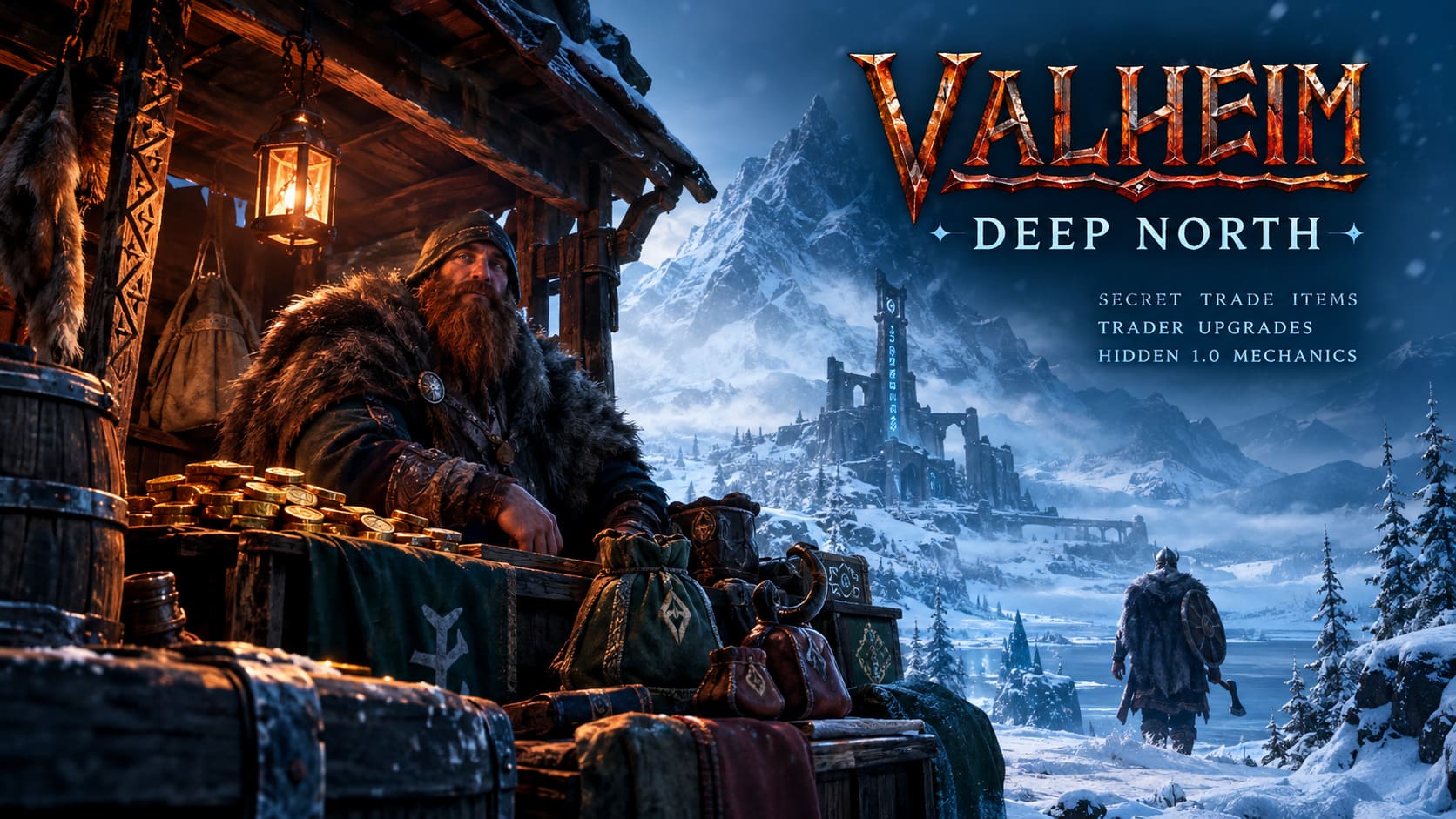
The important merchants remain part of the existing world. Their inventories become increasingly valuable as your character progresses, which means the Deep North economy is less about finding a new shop and more about returning to merchants you already know.
| Merchant | Location | Main Purpose |
|---|---|---|
| Haldor | Black Forest | Equipment, carrying upgrades, utility items |
| Hildir | Meadows | Clothing, cosmetics, special quests |
| Bog Witch | Swamp | Potions, ingredients, specialized food items |
Haldor is the merchant you should care about most for Deep North progression. His shop is particularly important once your character starts dealing with enormous amounts of materials. Ore, crafting components, food ingredients and building resources have a nasty habit of filling your inventory at exactly the wrong moment.
Once you discover a merchant’s location, I strongly recommend connecting the area to your transportation network. A portal near Haldor can save an absurd amount of time, especially when you are repeatedly returning to spend accumulated gold.
How Deep North Trader Progression Works
The interesting part of Valheim’s merchant system is that simply having enough coins does not necessarily mean every useful item is immediately available. Progression through the world matters.
Late-game merchant upgrades are connected to major progression milestones. That means your character cannot simply spend the first pile of gold they find and suddenly jump several stages ahead of the intended progression.
The two inventory upgrades are particularly important if you are preparing for the Deep North.
- Deeper Pockets: Provides a major increase to your available inventory space and becomes extremely useful once crafting materials start piling up.
- Wider Pockets: Expands your inventory even further and is one of those upgrades that sounds optional until you actually play without it again.
Personally, I consider inventory expansion one of the most valuable forms of progression in a survival game. New weapons are exciting, but having enough room to actually carry the resources you find is something you appreciate during every single expedition.
Haldor’s Most Important Endgame Items
Haldor’s inventory remains relevant well beyond the early game. Once you reach the later biomes, gold that once seemed like something you could casually spend becomes a resource worth deliberately farming.
| Item | Approximate Cost | Why It Matters |
|---|---|---|
| Deeper Pockets Pouch | 1,000 Coins | Increases inventory capacity |
| Wider Pockets Pouch | 2,000 Coins | Adds substantial additional storage space |
| Megingjord | 950 Coins | Greatly increases carrying capacity |
| Dvergr Circlet | 620 Coins | Provides a convenient light source |
Megingjord deserves special attention. The Deep North is exactly the sort of environment where increased carrying capacity stops being a luxury and becomes a practical necessity. If you are mining, gathering construction materials, collecting trophies and transporting crafting resources during the same expedition, the extra weight capacity can make a huge difference.
The Dvergr Circlet is more situational, but I still like having one available. Exploring dark structures while keeping both hands available is considerably more comfortable than constantly swapping between a torch and your actual weapon.
Where to Get the Gold for Deep North Trading
Buying everything from Haldor is easy in theory. The annoying part is having enough money when you actually need the upgrades.
The best approach is to treat valuable loot as a dedicated source of trading income instead of automatically dumping every treasure into your storage chest.
Amber, rubies, pearls and other valuable items can become a surprisingly healthy source of income when you are already exploring dangerous areas for progression materials. Dungeon runs are especially useful because you can combine gold farming with exploration rather than making a separate trip just to become richer.
I prefer this approach because it keeps the economy feeling connected to normal gameplay. You are not standing in one location performing some repetitive gold exploit. You are exploring, fighting, looting and gradually turning that adventure into useful upgrades.
Deep North Resources You Should Watch For
The final biome is not just about finding another stack of ore. The environment introduces new resources and crafting opportunities that encourage you to establish a proper foothold instead of treating the region as a quick sightseeing trip.
| Resource | General Use |
|---|---|
| Lingonberries | Food and high-tier cooking recipes |
| Kale | Advanced food production |
| Lettuce | High-end stamina-focused meals |
| Tasers | Advanced cooking ingredients |
| Ice Blocks | Specialized construction |
The biggest change is the feeling that the Deep North has its own resource economy rather than simply being another place where you gather familiar materials. Frozen forests, snow-covered plains and ancient structures all contribute to a more specialized endgame loop.
Morcala Towers and the New Crafting Loop
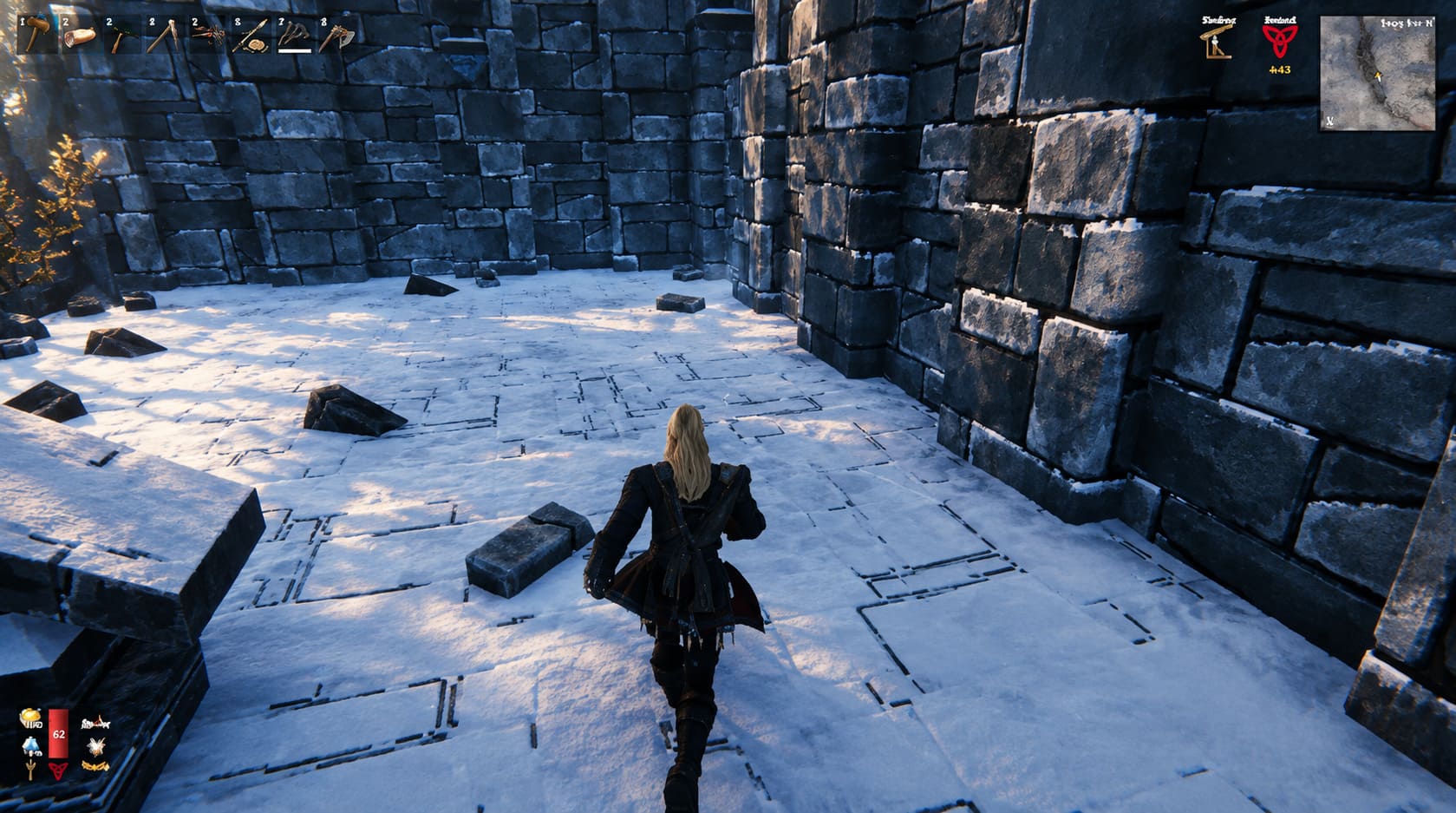
One of the more interesting additions to the Deep North progression is the focus on ancient structures such as the Morcala towers. These locations are not just decorative ruins. They become important destinations for players searching for valuable loot, crafting components and special molds.
The mold system adds another layer to late-game crafting. Instead of simply collecting an ore and throwing it into the same familiar production chain, certain equipment requires specialized mold casings and access to the Frost Foundry.
For me, this is exactly the kind of system a final biome should have. By this point in the game, simply giving players another metal and another sword recipe would feel predictable. A new crafting process gives exploration a reason to continue even after your character is already extremely powerful.
Preparing for the Deep North
Do not underestimate the environment. The Deep North is not a place where you want to arrive with whatever equipment happened to be sitting in your inventory.
Your preparation should include strong food, reliable transportation, a portal network and equipment appropriate for the biome. The difference between arriving prepared and arriving casually can be enormous.
Essential Preparation Checklist
- Build a secure foothold near the biome border.
- Connect the area to your main portal network.
- Carry enough food and stamina-focused meals.
- Bring equipment capable of handling the biome’s strongest enemies.
- Prepare storage before beginning large-scale resource gathering.
- Keep spare materials available for emergency structures.
A small base near the edge of the Deep North is one of the best decisions you can make. You do not need a massive fortress immediately. A protected portal, work area, storage and basic defensive setup are enough to turn the biome from a dangerous expedition into a manageable operating zone.
The Snow Shovel and Traversing Deep Snow
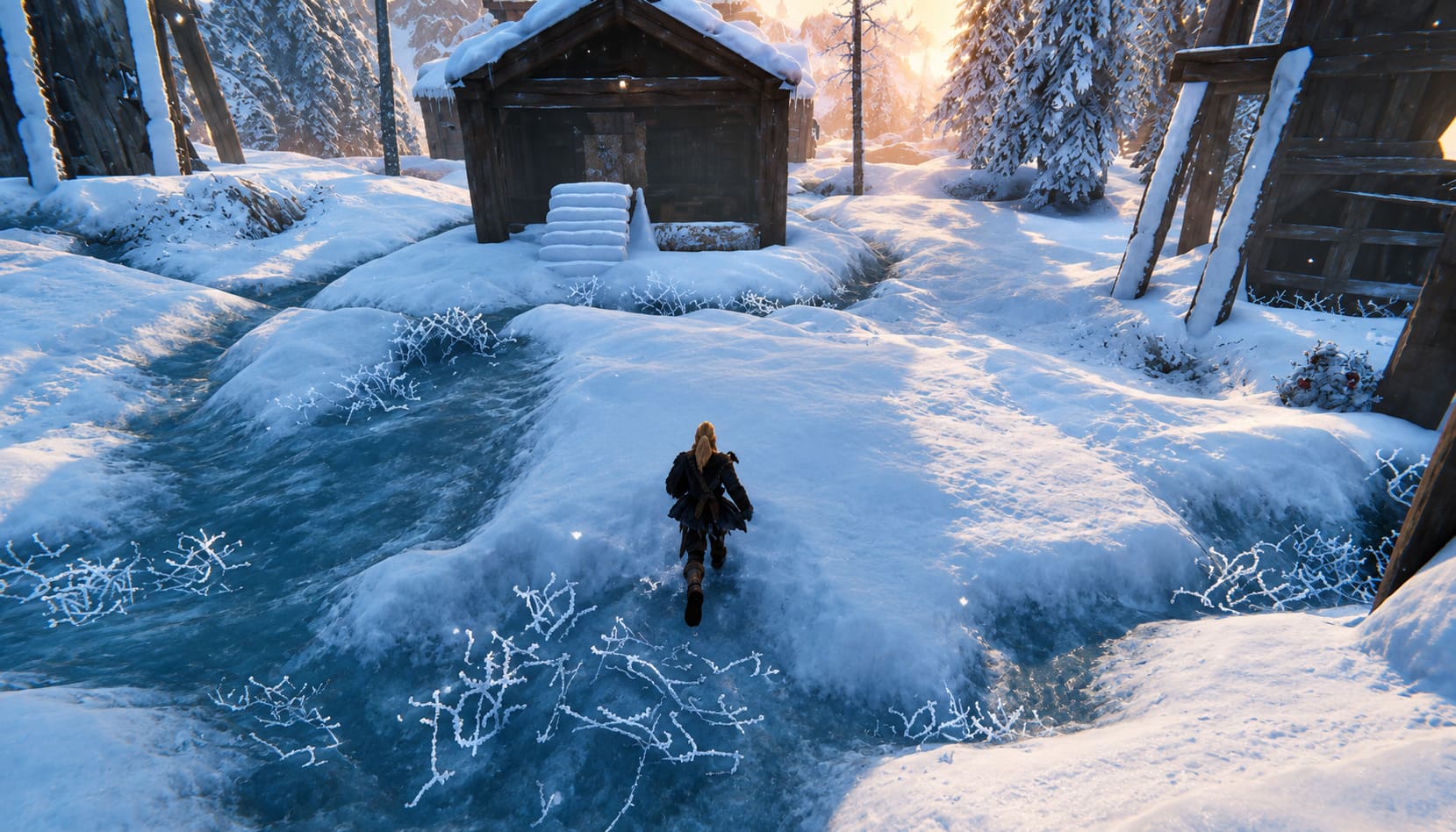
One of the most interesting survival mechanics in the Deep North is the effect of deep snow on movement. Getting slowed down while carrying heavy resources is already frustrating; having your stamina drained at the same time can turn a normal trip into a genuine survival problem.
The Snow Shovel is therefore much more than a novelty tool. It gives you a way to actively manipulate the environment and create safer paths through areas where deep snow would otherwise slow down every expedition.
That becomes particularly useful around your base. Clearing frequently traveled routes can make repeated resource runs significantly less painful.
Why the Grappling Hook Is So Useful
Vertical terrain becomes another major obstacle in the Deep North. Cliffs, ruins and elevated structures can make traditional movement surprisingly inefficient.
The Grappling Hook changes that completely. Being able to pull yourself toward difficult terrain gives you another option when the normal route is blocked or simply takes too long.
I would not call it mandatory for every player, but once you become comfortable with it, going back to normal traversal feels unnecessarily slow. It is one of those tools that becomes more valuable the better you understand the terrain.
Choosing the Right Deep North Armor
Late-game armor choices should match the way you actually play. There is no universal answer because different builds benefit from different strengths.
- Protector Armor: Best suited for players who prefer heavy defense and direct combat.
- Vanguard Armor: A balanced choice for players who want mobility without completely sacrificing protection.
- Robes of the Caller: Designed around magic and Eitr-focused gameplay.
- Lox Fur Armor: A more specialized option for stealth-oriented approaches.
The Robes of the Caller are particularly interesting for magic builds. Pairing a dedicated mage-oriented armor set with a Spirit Caller Staff creates a completely different combat rhythm compared with simply walking into every encounter wearing the heaviest armor available.
My Favorite Way to Handle Deep North Trading
If I were starting a fresh endgame character, I would not wait until my inventory became unbearable before investing in merchant upgrades. I would build the trading economy into my normal progression.
First, I would establish a safe base close to the Deep North. Then I would connect it to Haldor with a permanent portal. After that, every serious dungeon expedition would have two goals: progression and valuables.
That is the part I really like about this system. Your gold does not feel like a completely separate currency minigame. It comes from the same adventures that provide the materials you need for crafting and survival.
Once enough coins accumulate, return to Haldor, buy the inventory upgrade, and go back into the wilderness. The difference is immediately noticeable because you can stay out longer before having to return home.
Best Valheim Steam Deck OLED Settings for Stable 45 FPS (2026 Optimization Guide)
Best Deep North Trading Priorities
| Priority | Upgrade | Reason |
|---|---|---|
| 1 | Inventory Expansion | Improves almost every expedition |
| 2 | Megingjord | Excellent for heavy resource hauling |
| 3 | Dvergr Circlet | Useful for dark areas and exploration |
| 4 | Additional Trading Items | Purchase according to your build |
For most players, I would put inventory space ahead of flashy purchases. It may not sound exciting, but there is nothing worse than finding something valuable halfway through a dangerous expedition and realizing your inventory is completely full.
How to Transfer Valheim Worlds from Xbox to Steam (2026 Complete Guide)
Final Thoughts on Valheim’s Deep North Economy
The Deep North works best when you stop thinking of it as a completely isolated endgame zone. Its progression is connected to everything that came before it. The merchants you discovered earlier still matter. The gold you collected in previous adventures still matters. The equipment and infrastructure you built throughout your journey suddenly become tools for surviving the final stretch.
And honestly, I prefer that approach. A new secret trader hidden in a random snowy cave might have been fun, but continuing to use Haldor, Hildir and the Bog Witch makes the world feel more coherent.
If you are preparing for the final biome, do not waste your time searching every frozen valley for a mysterious shop. Build your trading network, stockpile valuable loot, upgrade your carrying capacity and keep a portal connected to Haldor. The Deep North is already dangerous enough without making your logistics harder than they need to be.
The final biome should test your combat skills, preparation and knowledge of Valheim’s systems. With the right merchant upgrades and a sensible resource loop, you can spend less time running back home with an overloaded inventory and more time actually exploring the frozen frontier.
That is ultimately the secret to the Deep North economy: the best rewards are not always hidden in the snow. Sometimes, they are waiting for you back at the merchant you met hours ago.