Warlord Awaji Guide: How to Recruit Warriors and Upgrade Soldiers Fast
There’s something surprisingly satisfying about building an army in Warlord: Awaji. Not because the game simply throws a bigger number of soldiers at you, but because your troops actually start to feel like your troops.
That distinction matters.
In a lot of strategy games, losing ten units is basically a minor inconvenience. You click a button, wait a few seconds, and replace them. Warlord: Awaji takes a much more personal approach. Your warriors have names, individual combat histories, kills, experience, and — most importantly — a nasty habit of becoming valuable right when you least want to lose them.
That changes the way I approach recruitment completely.
Instead of thinking, “How quickly can I get a huge army?”, I think, “How quickly can I build a small force that keeps getting better?”
If you’re trying to figure out how to recruit warriors in Warlord: Awaji, how the XP system works, or which soldiers are actually worth protecting, here’s how I’d approach the whole process.
The Real Starting Point: Your War Camp
The first thing to understand is that recruitment isn’t just a menu you open whenever you need another batch of bodies.
You need a functioning War Camp, and where you place that camp can make a surprisingly big difference.
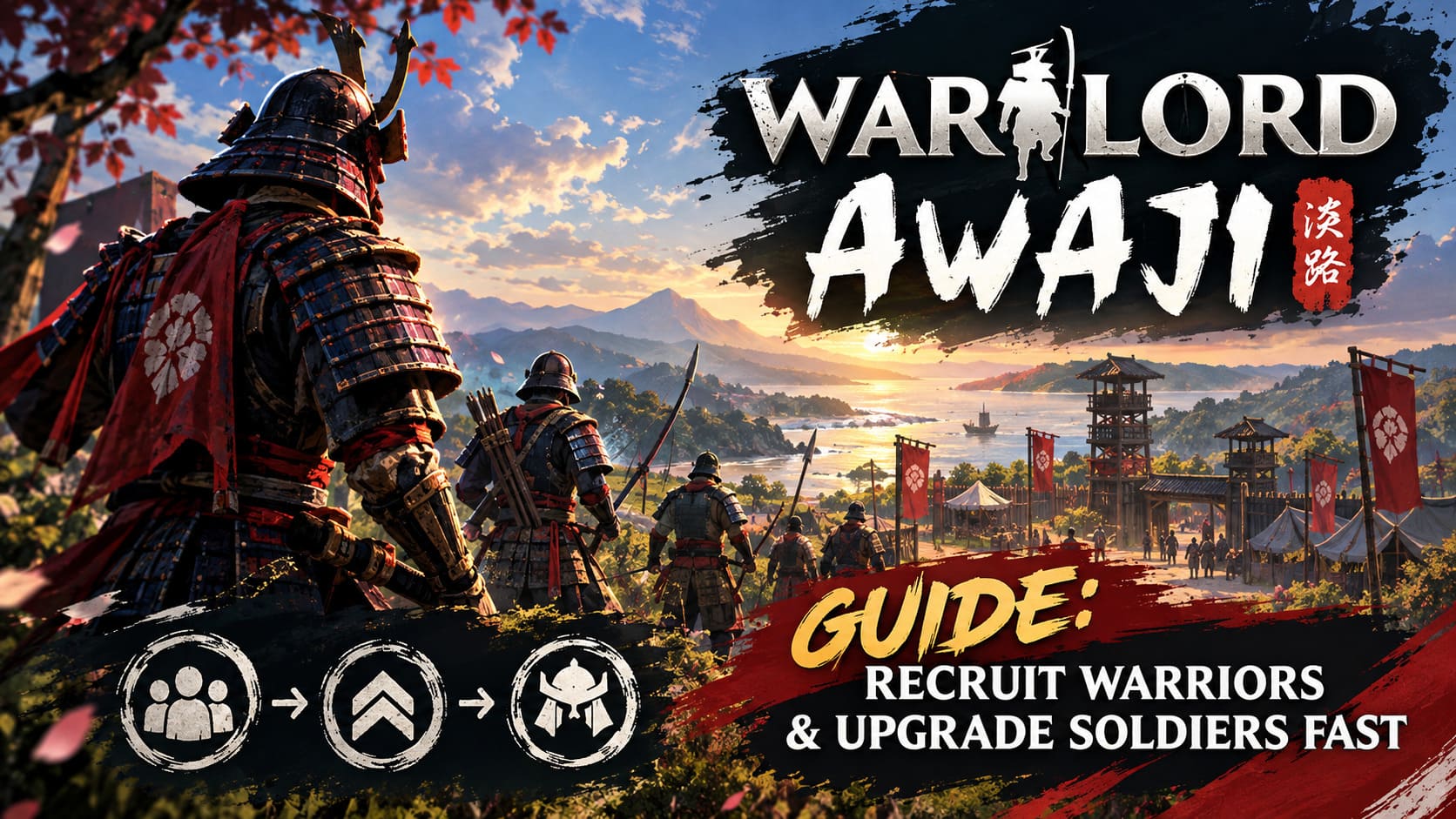
The temptation is to throw one down wherever you happen to be standing. I’d resist that.
A good camp should ideally be:
- Relatively easy to defend
- Close enough to settlements and useful territory
- Far enough from major enemy strongholds
- Conveniently positioned for your next few operations
Remember that you’re going back there to manage your army, replenish losses, and deal with your roster. A camp that is technically safe but located miles away from everything useful can become a logistical headache.
Why the Roster Tent Matters
Inside the camp, the Roster Tent becomes your army-management headquarters.
This is where the game stops feeling like a straightforward action game and starts revealing its strategy layer.
You can keep track of your soldiers, monitor their progression, and manage the next stage of your force. And because individual warriors matter, I recommend getting into the habit of checking the roster regularly.
Don’t wait until half your army is dead.
By then, you’ve probably already lost soldiers who could have become some of your best fighters.
Recruitment Is More Than Just Having Enough Resources
One of the easiest mistakes to make is treating recruitment as a simple resource check.
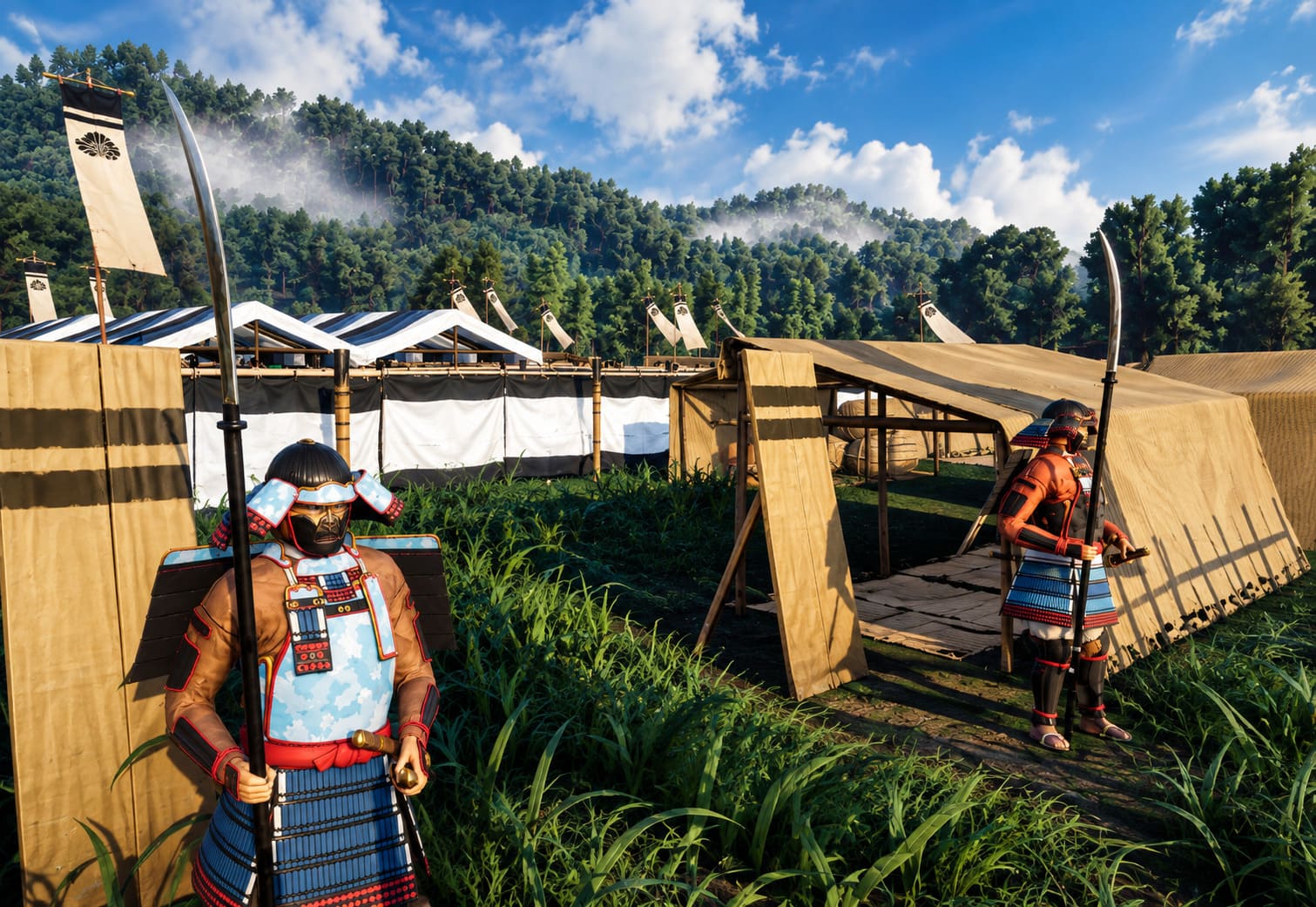
Resources matter, obviously, but your overall campaign momentum matters too.
Fighting successfully, taking territory, defeating patrols, and expanding your influence all contribute to making your force more credible. The stronger your position becomes, the more attractive your banner is to better warriors.
That creates an interesting progression loop:
Win battles → gain influence and territory → improve your position → attract better recruits → build a stronger army → take on tougher enemies.
It’s a pretty classic strategy-game loop, but Warlord: Awaji makes it feel much more physical because you’re personally moving through the world rather than managing everything from a distant overhead interface.
Don’t Recruit Just Because You Can
This is probably my biggest piece of advice.
A larger army isn’t automatically a better army.
Early on, I’d rather have a manageable group of soldiers who can survive several engagements than constantly replace huge numbers of disposable recruits.
Every replacement costs resources and, more importantly, interrupts your progression.
A veteran who has survived multiple battles is simply more valuable than a fresh recruit who hasn’t seen combat.
How Soldier XP Actually Changes Your Army
The individual XP system is one of the most interesting parts of Warlord: Awaji’s army management.
Your soldiers don’t just magically become better because you upgraded your headquarters. Their experience comes from actually participating in the campaign.
Combat is obviously important.
If your soldiers are involved in fights and contribute to kills, they’re gaining valuable experience. But survival and continued service matter too. The longer a useful warrior remains part of your force, the more valuable that soldier can become.
And this is where things get slightly addictive.
You start recognizing certain names.
One recruit survives a messy ambush. Then he survives another fight. Eventually he’s one of the soldiers you instinctively look for when you’re assembling your frontline.
That’s the moment the roster system starts working.
You’re no longer commanding “Unit 17.”
You’re protecting that guy who has somehow survived six battles.
When Should You Upgrade Your Soldiers?
Once warriors accumulate enough experience to qualify for advancement, it’s time to head back to your camp and start thinking about upgrades.
This is where I’d avoid another common mistake: don’t automatically upgrade everyone as soon as possible.
Your resources are limited, and not every soldier needs the same investment.
A frontline fighter who consistently survives close combat may be worth prioritizing. A promising ranged specialist might deserve better equipment because keeping them alive can provide enormous value from behind the main line.
Think about your army as a collection of roles rather than one giant group.
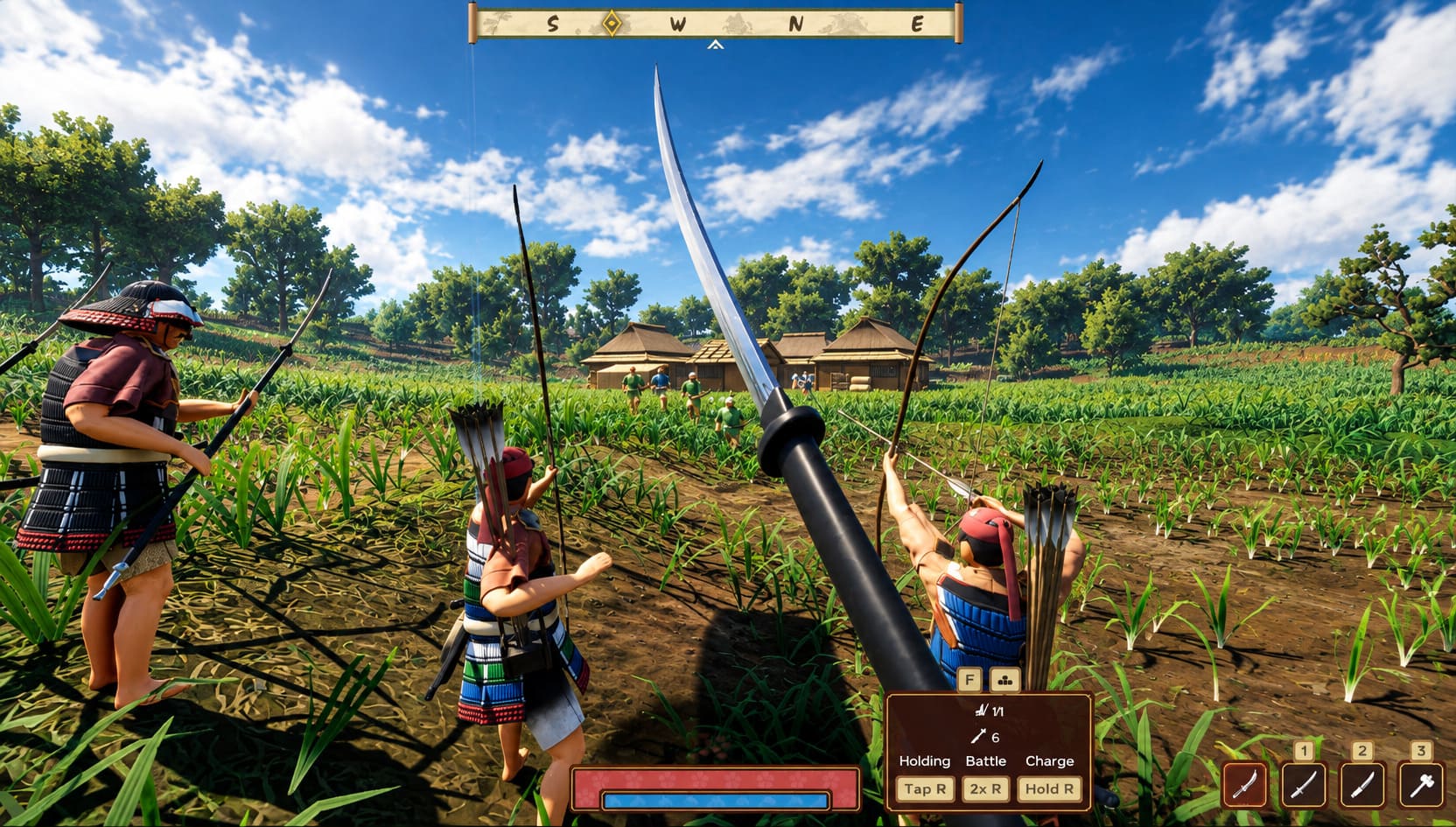
| Role | Main Strength | Best Use |
|---|---|---|
| Melee Infantry | Holding ground | Frontline and chokepoints |
| Archers | Ranged pressure | Hills, walls, defensive positions |
| Cavalry | Mobility | Flanking and pursuit |
| Veterans | Reliability | Difficult engagements |
| Elite Retainers | High combat value | Critical battles |
The exact composition will depend on your campaign, but this approach makes upgrades much easier to prioritize.
Elite Warriors Are Worth Protecting
Here’s where I think the game’s progression becomes particularly interesting.
A high-level veteran isn’t just another stronger soldier. They’re an investment.
Once you’ve got warriors approaching elite status, throwing them into every fight becomes increasingly questionable.
Sure, having your best soldiers on the battlefield makes winning easier. But if you’re constantly exposing them to unnecessary risks, eventually you’ll pay for it.
I’d rather use veteran troops to break a dangerous section of the enemy formation than waste them fighting a battle I could have won with lower-tier troops.
That’s especially important during sieges and situations where you’re badly outnumbered.
Your elite soldiers should be the scalpel, not the entire hammer.
The Three Unit Types I Rely On Most
1. Melee Infantry
These guys are the foundation of your army.
They’re particularly useful when you need to hold a narrow approach, protect archers, or prevent enemy troops from reaching a vulnerable position.
Early in the campaign, I’d invest heavily in a dependable melee core.
They might not be the most glamorous troops, but a formation that refuses to collapse is worth its weight in gold.
2. Archers
Archers become incredibly useful once you start paying attention to terrain.
Don’t just leave them standing behind your infantry wherever there’s space.
Put them somewhere with a clear field of fire.
Elevated terrain, defensive positions, camp walls, and other advantageous locations can turn ranged troops from background support into one of the most important elements of your formation.
A good archer position can soften an enemy force before your melee troops even make contact.
3. Cavalry
Cavalry is where things get fun.
They’re not simply another damage-dealing unit. Their biggest advantage is mobility.
Use them to attack exposed sides, chase routed enemies, disrupt vulnerable formations, or exploit gaps created by your infantry.
The mistake is sending cavalry directly into the strongest part of an enemy formation.
That’s not tactical genius. That’s donating expensive soldiers to the enemy.
Protect Your Veterans During Sieges
Sieges are where I would be especially careful with experienced warriors.
When attacking a fortified position, the enemy usually has plenty of opportunities to punish your troops before they can reach the objective.
This is exactly why lower-tier recruits can still have an important role.
I know the phrase “put the weak guys in front” sounds brutal, but there is some logic to it.
Fresh recruits can absorb some of the initial pressure while your experienced soldiers wait for a better opportunity to engage. Once the enemy formation starts breaking apart, that’s when your veterans can become much more aggressive.
Don’t confuse bravery with throwing away your best troops.
A smart commander knows when to commit.
Your War Camp Is Also Your Safety Net
There’s another reason I wouldn’t place camps randomly.
A well-positioned War Camp gives you somewhere to fall back when the campaign suddenly goes sideways.
And believe me, it will.
You can start a battle thinking you’ve got everything under control and suddenly find yourself facing a much larger force than expected.
If your camp is nearby, retreating isn’t necessarily a failure.
It can be a tactical reset.
Use defensive structures and narrow approaches to make the enemy fight on your terms. Put ranged units where they can safely fire. Keep your strongest melee warriors ready to respond when the enemy reaches the critical point.
There is absolutely no shame in making the enemy attack your fortifications instead of fighting them in the open.
Don’t Forget to Rest Your Army
One of the least exciting parts of army management is also one of the easiest to ignore: recovery.
After a brutal battle, it can be tempting to immediately continue marching toward the next objective.
I’d avoid doing that unless you have a very good reason.
A damaged army is much more likely to lose the next fight, and losing a veteran because you couldn’t be bothered to recover is one of those mistakes that feels awful afterward.
Use your camp as a recovery point whenever possible.
Let wounded soldiers recover, reorganize your formation, check the roster, and decide what your next move actually is.
Sometimes the best strategic decision is simply not fighting today.
My Preferred Army-Building Strategy
If I were starting a fresh Warlord: Awaji campaign, I’d keep the progression relatively simple.
Early game:
Build a reliable War Camp, recruit enough troops to establish a stable frontline, and focus on keeping those soldiers alive.
Mid game:
Start identifying your reliable veterans. Upgrade the soldiers who consistently survive and contribute rather than spending everything equally.
Later game:
Build around your strongest veterans and specialized units. Use archers intelligently, cavalry for mobility, and elite retainers for the battles where their experience really matters.
Most importantly, I’d stop thinking about casualties as a simple number.
If you lose ten generic recruits, that’s unfortunate.
If you lose the veteran who has been with you for half the campaign, that’s a completely different problem.
Warlord Awaji System Requirements: Full PC Specs, Download Size, and Hardware Optimization Guide
Final Thoughts: Build a Retinue, Not a Meat Grinder
That’s ultimately what I like about the recruitment and progression system in Warlord: Awaji.
The game gives you plenty of reasons to think about your army as something more than a collection of disposable units.
Your recruits start weak. They survive battles. They gain experience. Some become dependable veterans. A few can eventually become elite soldiers that you genuinely don’t want to lose.
That creates a much more personal progression system than the usual “upgrade barracks, unlock bigger unit” formula.
So if you’re struggling with Warlord: Awaji recruitment and soldier upgrades, don’t obsess over building the largest possible army immediately.
Build a survivable army.
Place your War Camps intelligently. Keep an eye on your roster. Give promising warriors room to develop. Use fresh recruits where the risks are highest, and protect your experienced soldiers when the battle doesn’t justify gambling with them.
And when one of your lowly recruits somehow turns into an absolute monster after surviving battle after battle?
That’s the soldier you remember.
For me, that’s where Warlord: Awaji’s army system becomes genuinely compelling. You’re not just conquering Awaji.
You’re slowly building a retinue of warriors with their own little histories — and trying very hard not to get them all killed.