Exit Ways Co-Op Vs PvEvP Mode Differences: Ultimate Survival Guide
If there is one thing I have learned from playing a lot of survival and extraction games, it is that the same game can feel completely different depending on who—or what—you are fighting. Exit Ways, developed and published by ASKES, is a good example of that idea. On paper, its Co-Op and PvEvP modes share most of the same foundations, but once you actually spend time playing them, the difference in atmosphere and decision-making becomes huge.
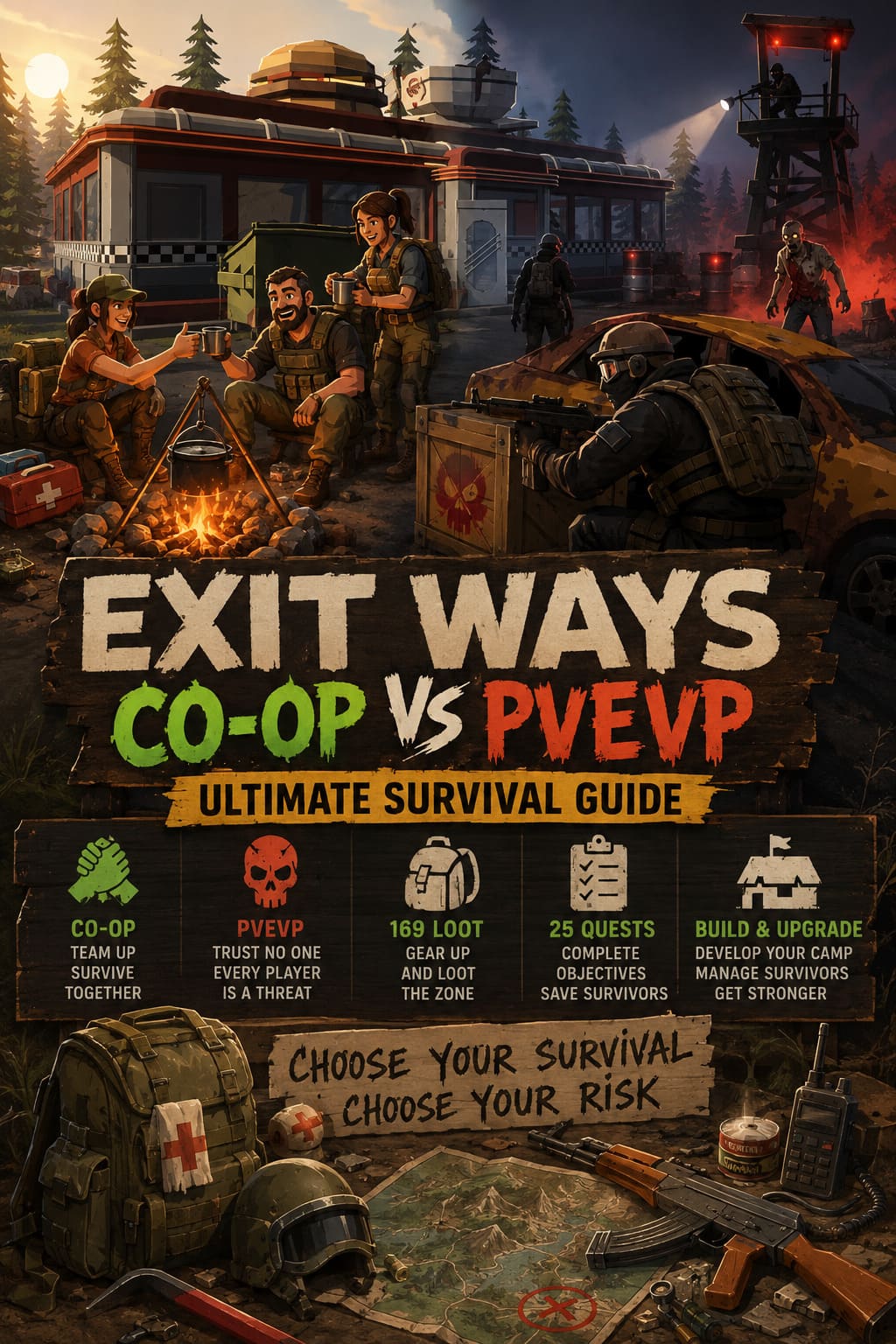
Exit Ways mixes survival horror, extraction gameplay, crafting, base development, and community management into one post-apocalyptic package. There are 169 loot items, 25 quests, 3 main maps, 9 enemy types, and a selection of structures you can construct and improve at your camp. Those systems remain important regardless of the mode you choose, but the way you approach them changes dramatically.
For me, the biggest question is not simply which mode is ‘better.’ It is what kind of survival experience you want from Exit Ways. Co-Op gives you room to breathe and learn, while PvEvP constantly reminds you that another player may be watching your every move.
Exit Ways Controller Support on PC Steam: Complete Setup and Troubleshooting Guide
Co-Op Mode: The More Relaxed Way to Survive
Co-Op is probably where I would recommend most new players start. It lets you experience the core survival loop without adding another layer of uncertainty in the form of hostile players.
You and your teammates enter contaminated areas, search buildings for useful resources, fight infected enemies, rescue survivors, complete quests, and eventually make your way back to safety. The infected can still make things surprisingly uncomfortable, especially when you get careless, but their behavior is something you can gradually learn.
That predictability is actually one of Co-Op’s biggest strengths.
After spending enough time on the maps, you begin to understand where enemies are likely to appear, which locations are worth searching, and when it is smarter to leave rather than greedily search one more building. You can make mistakes without constantly wondering whether another player is about to punish you for them.
For players who enjoy the survival and management side of the game, this makes a huge difference.
Your camp becomes more than just a place to dump your loot. It is where you manage survivors, work on crafting, improve your equipment, and gradually build a stronger foundation. I particularly like this aspect because it gives successful expeditions a purpose beyond simply extracting with better weapons.
Why Co-Op Works So Well for Beginners
Co-Op is also an excellent learning environment. Instead of trying to understand the maps while simultaneously worrying about enemy players, you can concentrate on the systems that actually make Exit Ways different from a standard zombie shooter.
It gives you time to learn:
- Map layouts and important locations
- Quest objectives and progression
- Loot routes and resource management
- Enemy behavior and combat patterns
- Crafting and camp development
- How much equipment you should risk taking into a raid
Personally, I would rather learn these fundamentals in Co-Op than discover them while being chased by a geared squad in PvEvP. There is nothing wrong with playing cautiously when you are still figuring out a game.
PvEvP Mode: When Every Raid Becomes a Gamble
PvEvP changes the mood almost immediately.
The infected are still there, but they are no longer necessarily the biggest danger. Other players become an unpredictable part of the environment, and that changes practically every decision you make.
A building that looks safe may contain another squad. Gunfire in the distance might mean that someone is fighting infected—or it might mean another team has just spotted your group. Even reaching an extraction point does not necessarily mean you are safe.
This is where Exit Ways starts feeling much more like a traditional high-stakes extraction shooter.
Every sound matters. Every movement can reveal your position. Every extra piece of loot can become a reason to stay longer than you should.
That last part is something I have experienced in plenty of extraction games. You start a raid thinking you will grab a few useful items and leave. Then you find something rare, convince yourself that one more building is worth checking, and suddenly your safe extraction has turned into a desperate fight for survival.
PvEvP is designed around exactly that kind of tension.
The Biggest Difference: You Cannot Predict Human Players
AI enemies can be dangerous, but eventually you learn them. Human players are different.
A player might attack immediately, avoid you entirely, follow your squad without being noticed, or wait near an extraction area for the perfect opportunity. Even when another team appears to be harmless, you cannot know what they are thinking.
That psychological element is what makes PvEvP so much more intense than Co-Op.
In Co-Op, your attention is primarily focused on the game world. In PvEvP, part of your attention is always focused on the players who might be somewhere nearby.
That changes how you move through the map. You may avoid obvious routes, stop sprinting when you hear distant footsteps, choose a different extraction point, or leave valuable loot behind because carrying it is not worth the risk.
For me, that is where PvEvP becomes genuinely interesting rather than simply more difficult.
Exit Ways Co-Op vs PvEvP: Main Differences
| Feature | Co-Op | PvEvP |
|---|---|---|
| Main Threat | Infected and environment | Infected plus hostile players |
| Gameplay Pace | More controlled | Unpredictable and tense |
| Progression | Steady and reliable | Faster but much riskier |
| Map Learning | Easier | More complicated under pressure |
| Social Experience | Cooperation-focused | Competitive and suspicious |
| Loot Risk | Relatively manageable | Potentially very high |
| Best For | Beginners and PvE players | Experienced extraction players |
The important thing is that the underlying progression systems do not suddenly become a completely different game. You are still collecting resources, completing objectives, rescuing survivors, crafting equipment, and developing your community.
What changes is the pressure surrounding those activities.
Risk vs Reward: The Real PvEvP Trade-Off
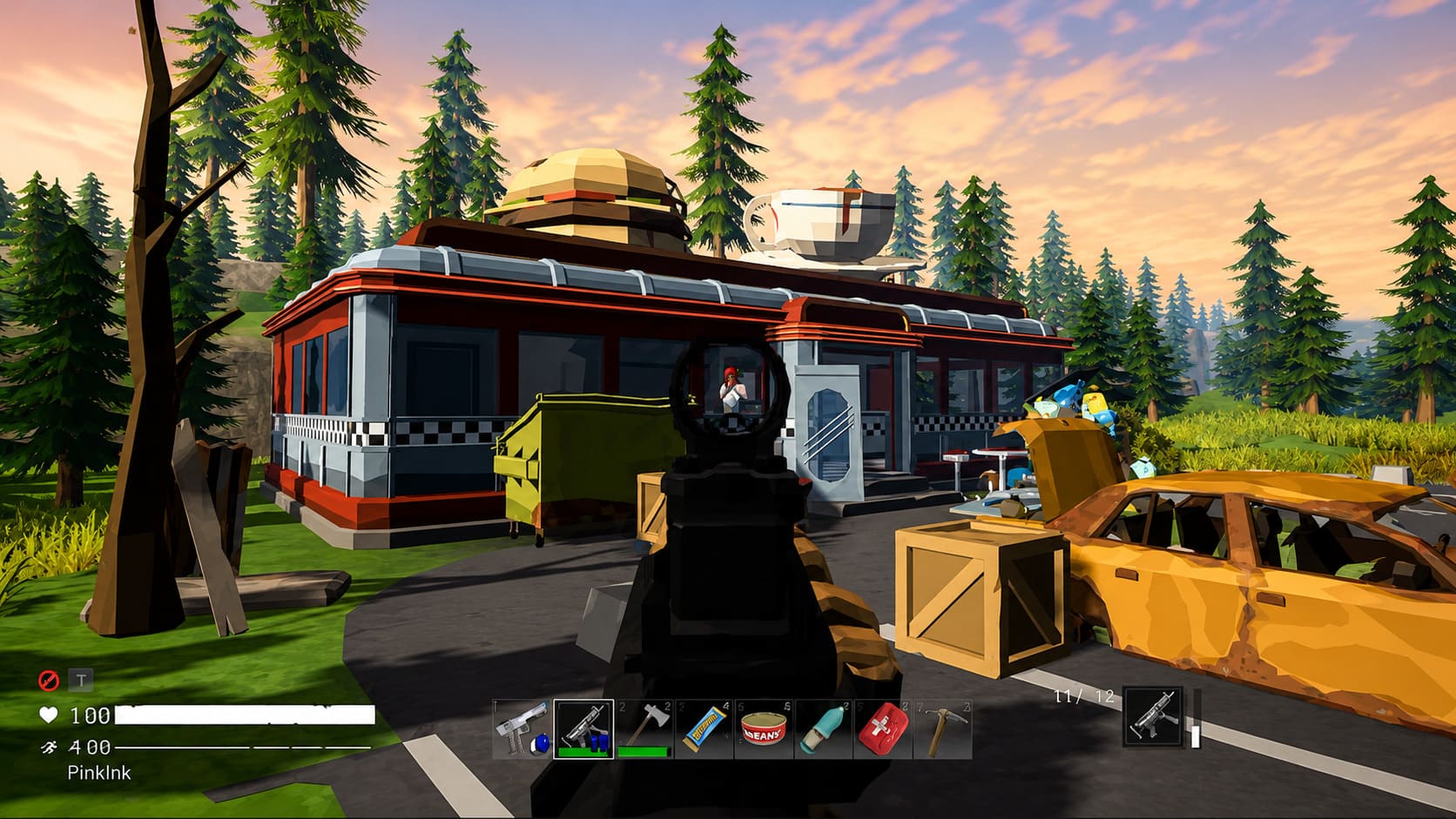
If Co-Op is about consistent progress, PvEvP is about gambling with that progress for the possibility of a much bigger payoff.
In Co-Op, a successful raid generally means you return with resources and continue developing your camp. It might not be spectacular, but it is dependable. Over time, that consistency adds up.
PvEvP can potentially accelerate your progression because defeating another player can give you access to equipment and resources that would otherwise require considerable time to acquire. The downside is obvious: you can lose the gear you brought with you, along with everything you collected during the raid.
That creates a completely different emotional experience.
Finding a rare item in Co-Op feels rewarding. Finding the same item in PvEvP can feel dangerous because now you have something worth protecting. The longer you survive, the more valuable your inventory becomes—and the more nervous you can become about extraction.
Base Building Feels Different Depending on the Mode
One of the more interesting aspects of Exit Ways is that the camp remains important in both modes, even though the surrounding gameplay changes.
In Co-Op, I see the base as a long-term project. You can focus on improving your crafting options, managing survivors, and making steady upgrades without constantly feeling like you need to keep up with another player’s equipment.
PvEvP gives those same upgrades more urgency.
A better-developed camp means better preparation for dangerous raids, while improved crafting and equipment can make the difference when you encounter another squad. Instead of simply being a comfortable progression system, your base starts feeling like the infrastructure supporting your competitive survival.
Which Exit Ways Mode Should You Choose?
There is no universal answer, and I think that is actually one of the game’s better design choices.
Choose Co-Op If…
Co-Op is the better starting point if you:
- Prefer PvE survival games over competitive shooters
- Want to explore the maps without constant player ambushes
- Enjoy crafting, quests, and community management
- Are new to extraction-style gameplay
- Want more predictable progression
- Usually play with friends and value cooperation
It is also the mode I would choose when I simply want to relax and enjoy the atmosphere. Survival games do not always need to be stressful to be entertaining.
Choose PvEvP If…
PvEvP makes more sense if you:
- Enjoy high-risk extraction shooters
- Like fighting other players as much as fighting AI
- Are comfortable losing valuable equipment
- Enjoy reading enemy movements and predicting ambushes
- Want a more competitive experience
- Prefer adrenaline over predictable progression
You should also be prepared for frustration. PvEvP can produce those fantastic gaming moments where you escape with seconds to spare, but it can just as easily produce the opposite situation where you lose everything because of one bad decision.
That is part of the appeal—and part of the punishment.
My Recommendation for New Exit Ways Players
If you are completely new to Exit Ways, I would start with Co-Op before touching serious PvEvP sessions.
Not because PvEvP is worse, but because understanding the fundamentals first gives you a much better chance of enjoying the competitive mode later. Learn the maps, experiment with crafting, understand the infected, figure out which resources matter, and get comfortable with extraction routes.
Once those things become second nature, move into PvEvP.
At that point, you are no longer thinking, ‘Where am I supposed to go?’ Instead, your brain can focus on more important questions: Was that gunshot close? Is someone following us? Should we extract now? Is this loot worth the risk?
That is when PvEvP starts to show its real potential.
Final Verdict: Two Different Flavors of Survival
Exit Ways does not really make you choose between two versions of the same experience. It gives you two different interpretations of survival.
Co-Op is about learning, cooperation, exploration, and gradually building something better. PvEvP takes those same systems and puts them under enormous pressure by adding human opponents who can be just as unpredictable as the apocalypse itself.
After playing plenty of survival games and extraction shooters, I think this approach works particularly well for players who do not all want the same kind of challenge. Some evenings, I would rather explore a contaminated building with friends, collect resources, and return to camp knowing exactly what I accomplished. Other times, the idea of risking everything for one incredible extraction is much more appealing.
If you are new, start with Co-Op. If you eventually find yourself wanting more tension, move into PvEvP.
And if Exit Ways manages to keep both sides of that experience balanced, it could have a surprisingly strong place among the survival extraction games of 2026.