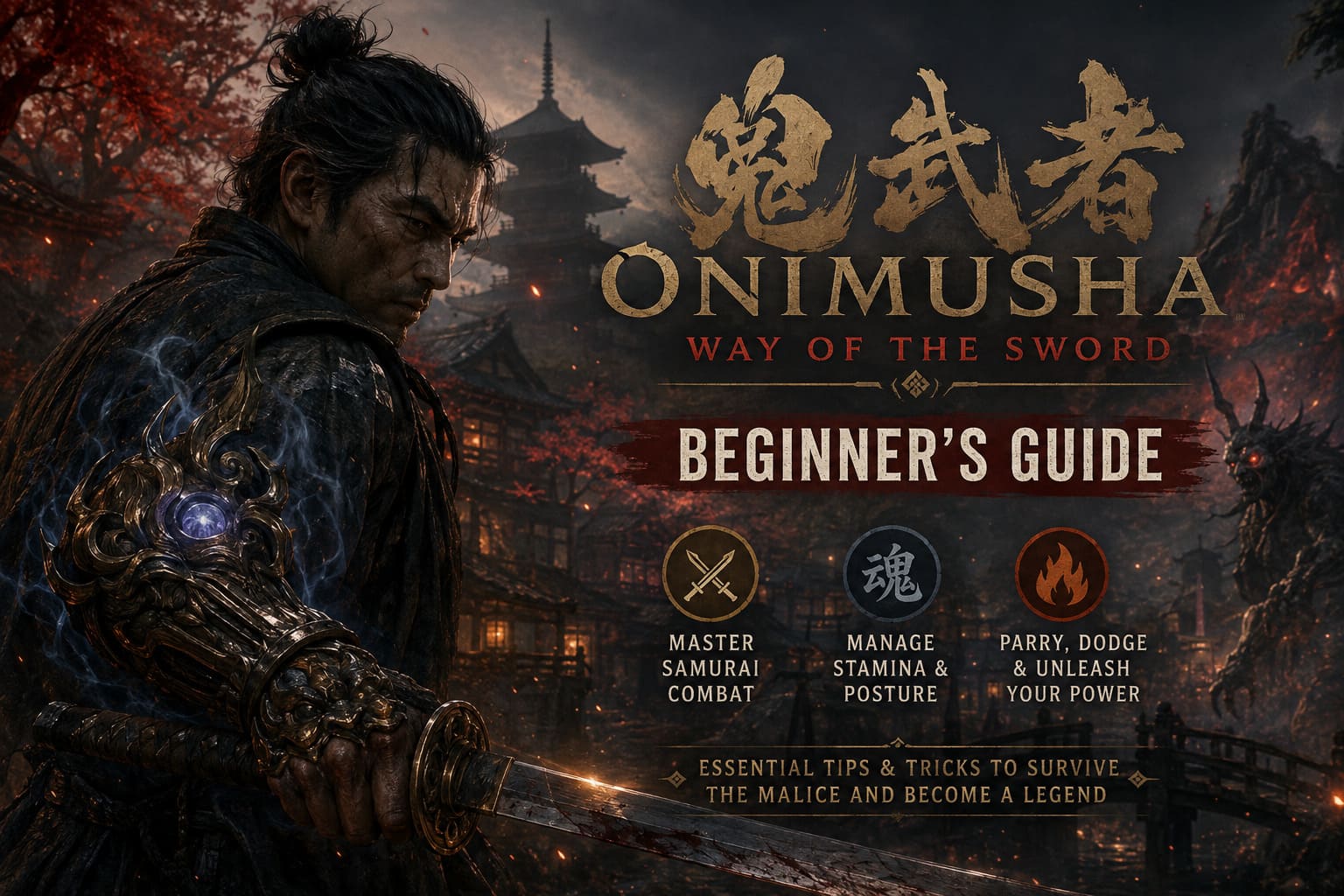
Onimusha: Way of the Sword Beginner’s Guide – Essential Tips and Tricks to Master Capcom’s Samurai Action RPG
There are games where you can simply mash your way through the opening hours, learn the systems later, and still have a good time. Onimusha: Way of the Sword is not really one of them. Capcom’s return to the classic samurai action series expects you to pay attention from the very beginning.
That is something I actually like.
Set in a dark, supernatural version of early Edo-period Kyoto, the game puts you in control of Miyamoto Musashi, a legendary swordsman brought to life with the likeness of the iconic actor Toshiro Mifune. The setting is beautiful, but Kyoto is anything but peaceful. The mysterious Malice has infected the land, and Genma demons are everywhere.
What makes Way of the Sword particularly interesting is the way its combat combines aggressive swordplay with careful defensive timing. You can absolutely play aggressively, but the game constantly reminds you that one bad defensive decision can be more expensive than three good attacks.
After spending time with the game’s mechanics, these are the beginner tips I would give to anyone starting their first playthrough.
Start With Story Mode If You Are New to Precision Combat
The first important decision is your difficulty or gameplay mode. Onimusha: Way of the Sword gives you two main options: Story Mode and Action Mode.
| Mode | Best For | Main Difference |
|---|---|---|
| Story Mode | Beginners | More forgiving combat and wider timing windows |
| Action Mode | Experienced players | Faster, harsher combat with stricter timing |
Story Mode isn’t something you should feel embarrassed about choosing. If this is your first Onimusha game, or you simply aren’t comfortable with parries and precision counters, it gives you room to learn.
Enemy attacks are less punishing, while the timing windows for defensive mechanics are more forgiving. That makes it much easier to learn enemy patterns instead of repeatedly dying while trying to understand what went wrong.
Action Mode is where I would eventually recommend heading if you really want to master the combat. Enemies hit harder, attack more aggressively, and demand much more accurate reactions.
My personal recommendation? Play Story Mode first if the combat feels unfamiliar. Once you understand stamina, parries, Reflex Dodges, and Issen attacks, the tougher experience becomes much more enjoyable.
Pick a Control Layout That Matches Your Brain
The control scheme sounds like a small detail, but it can have a surprisingly big impact on combat.
The game provides two main layouts: Aggressive and Defensive.
The Aggressive layout makes offensive actions immediately accessible, which works nicely if your instinct is to stay close to enemies and maintain pressure.
The Defensive layout places defensive commands in positions that make them easier to access while keeping your thumbs available for movement. For a game where positioning and split-second reactions matter, I personally find this approach more natural.
Don’t be afraid to experiment during the opening sections. The best control scheme isn’t necessarily the one that looks fastest on paper; it’s the one that lets your fingers react without thinking.
Stamina Is More Important Than Your Health Bar
This is probably the biggest beginner lesson.
Your health bar is obviously important, but your stamina and posture management can determine whether you survive an encounter at all.
Blocking, attacking guarded enemies, and performing certain heavy actions consume stamina. If you completely exhaust the meter, Musashi enters a vulnerable broken-posture state.
And that’s exactly when the game loves to punish you.
The mistake I see new players making is holding the block button permanently. It feels safe, but it isn’t. Continuous guarding puts enormous pressure on your stamina and prevents you from recovering efficiently.
Instead, think of combat as a rhythm:
Attack → defend → release guard → recover → counterattack.
When there is a gap in an enemy’s offense, lower your weapon and allow your stamina to recover. You don’t need to be attacking every second.
Even better, remember that enemies have their own stamina systems. If you pressure a guarded Genma long enough, its posture can begin to crack. That’s your opportunity to turn defense into offense.
Don’t Treat Blocking as Your Main Defense
The defensive mechanics in Way of the Sword are deliberately different, and learning when to use each one is one of the fastest ways to improve.
Blocking
Blocking is reliable, but expensive.
It can save you from ordinary attacks, especially when you aren’t confident about the timing. The problem is that repeated blocks drain stamina quickly.
Think of blocking as a safety net rather than your primary strategy.
Dodging
Dodging is ideal for attacks that are difficult or impossible to block, particularly heavy attacks and grabs.
It also lets you reposition around enemies. A well-timed dodge can turn an incoming attack into an opportunity to reach an enemy’s exposed side.
The biggest mistake is panic dodging. Rolling repeatedly might make you feel safe, but it can leave you vulnerable once the animation finishes.
Parrying
This is where Onimusha starts becoming really satisfying.
A perfectly timed deflect can negate incoming pressure, stagger an opponent, and help build your Blazing Gauge.
Once you begin recognizing attack animations instead of reacting randomly, parrying becomes much more reliable.
I would strongly recommend practicing against weaker enemies rather than trying to learn it for the first time during a boss fight.
Reflex Dodge Is Worth Learning Early
Once you understand ordinary dodging, start paying attention to Reflex Dodge.
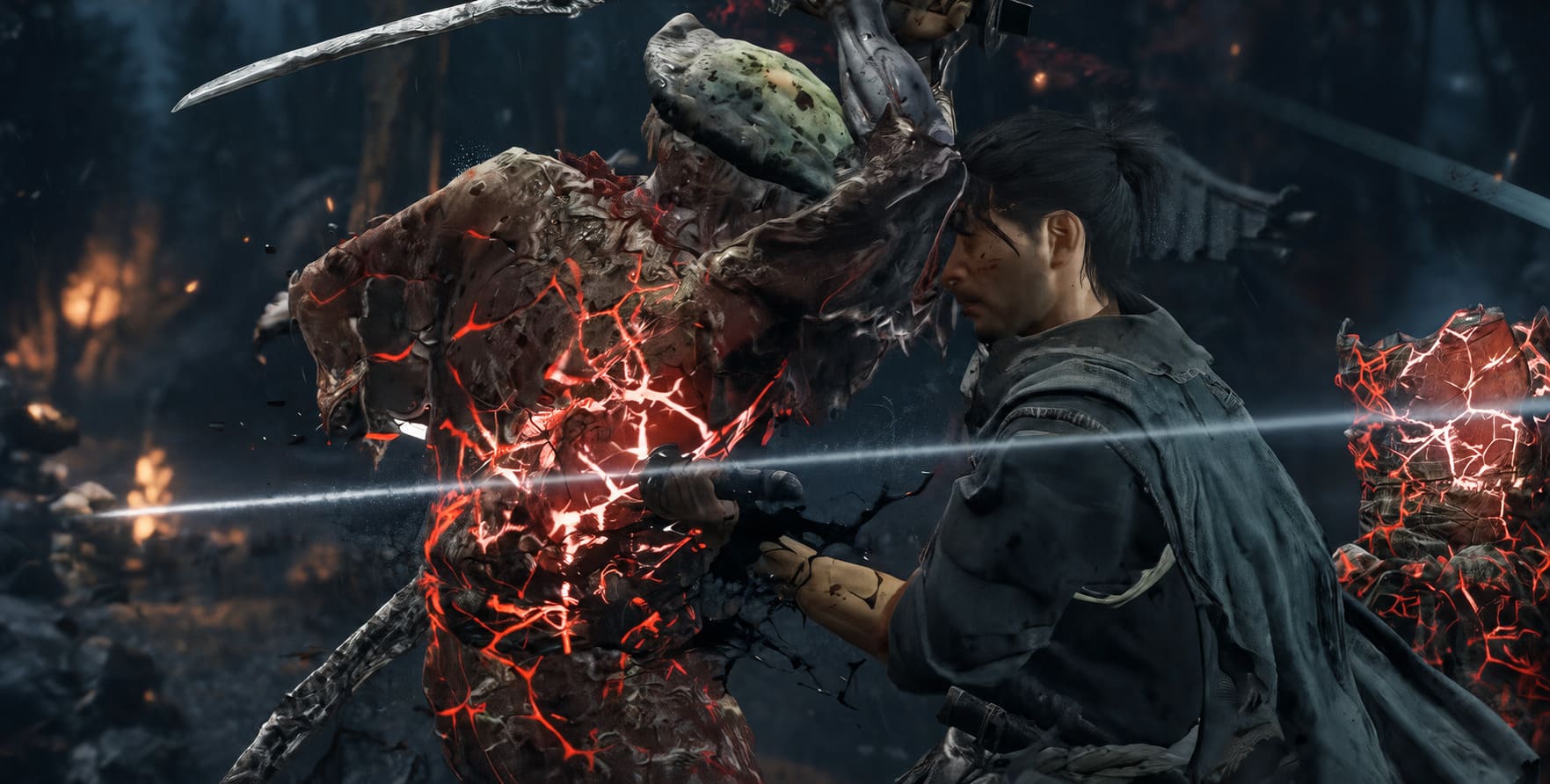
The idea is simple: dodge an incoming attack with extremely precise timing. When you get it right, the game gives you a brief slowdown effect that creates a powerful offensive opportunity.
From there, you can perform a Reflex Combo.
Against weaker Genma, this can lead to devastating executions. Against tougher enemies, it can still produce significant damage and help you break through their defenses.
This is one of those mechanics that initially feels impossible and then suddenly clicks.
My advice is to stop thinking of it as a button reaction. Watch the enemy’s attack animation. Learn the moment when the weapon actually commits to the strike. Your dodge should respond to that movement rather than the first visual cue.
Build Your Blazing Gauge Through Good Defense
The Blazing Gauge is another system you should learn to exploit rather than simply activate whenever it becomes available.
Successful defensive play helps charge the gauge, and when it is full, Musashi can empower his blade with fire.
The enhanced state isn’t just visually cool. It significantly improves your offensive potential and allows attacks to pressure enemy defenses more effectively.
I prefer saving this resource for elite enemies and difficult boss phases rather than wasting it on ordinary Genma.
If you are already dominating a group of weak enemies, there is little reason to burn your strongest temporary advantage.
Issen Is Risky, But It Changes Everything
The classic Issen mechanic is one of the defining features of Onimusha, and Way of the Sword continues that tradition.
A normal Issen requires extremely precise timing, essentially attacking at the final moment before an enemy strike connects.
It is incredibly risky.
Miss the timing and you can take the hit. Get it right, though, and the reward can be spectacular.
Then there is Break Issen, which becomes available when an enemy’s posture or stamina reaches its critical point. This creates another reason to pay attention to enemy stamina instead of blindly attacking their health bar.
The important lesson is that Issen isn’t just a fancy finishing move. It is part of the game’s overall combat loop.
Learn the enemy’s rhythm, manage stamina, recognize the opening, and then punish it.
Absorb Souls Whenever You Get a Safe Moment
The Oni Gauntlet is more than a cool-looking piece of supernatural equipment. It is central to progression.
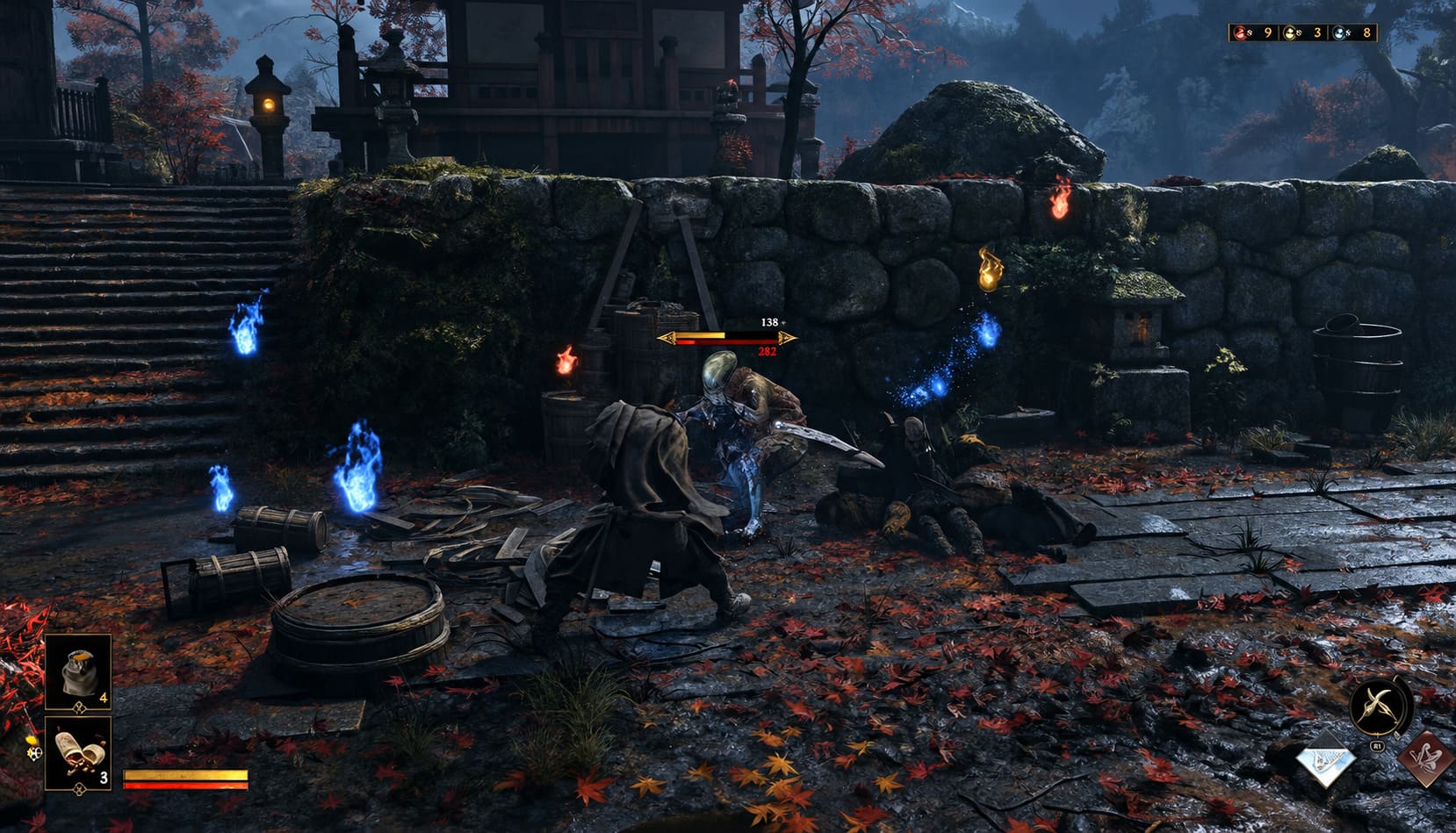
Enemies release different colored souls when damaged or defeated, and you need to actively absorb them.
| Soul | Main Purpose |
|---|---|
| Red Souls | Upgrades and progression |
| Blue Souls | Restores Oni Magic |
| Yellow Souls | Restores health |
Red Souls deserve special attention. They are important for improving your equipment and combat abilities, so leaving them behind can slow your progression.
One beginner mistake is becoming so focused on the fight that they forget about the glowing resources floating around the battlefield.
Don’t do that.
After creating a safe opening, take a second to absorb nearby souls. You don’t need to stand there collecting everything while an enemy is attacking, but you also shouldn’t casually walk away from valuable resources.
Explore Even Though the Game Feels Linear
At first glance, Way of the Sword can feel like a straightforward action game. However, its environments contain plenty of reasons to pay attention.
You will encounter areas that cannot immediately be fully explored because you don’t yet possess the necessary abilities or tools.
That means backtracking is actually worthwhile.
When you acquire new Oni abilities or weapons, remember locations that previously seemed inaccessible. Returning later can reveal additional chests, upgrades, defensive items, and other useful rewards.
This is especially important if you enjoy getting stronger before difficult encounters.
The Oni Bow Is More Useful Than It Looks
Don’t treat the Oni Bow as nothing more than a ranged weapon.
It can also interact with the environment.
While exploring, look for suspicious structures, glowing objects, ropes, crystals, or other environmental elements that appear deliberately positioned. Shooting them can open paths, drop objects, or expose areas that weren’t immediately accessible.
This is one of my favorite little details because it rewards curiosity.
If something looks slightly out of place, shoot it.
You may discover that the environment is practically asking you to interact with it.
How I Would Approach the Sasaki Ganryu Fight
Sasaki Ganryu is the kind of opponent that exposes bad habits very quickly.
He is fast, has excellent reach thanks to his nodachi, and can punish players who rely too heavily on blocking.
The worst thing you can do is sit there and absorb his entire combo behind your guard.
Instead, treat his attacks as a sequence of opportunities.
When he begins a multi-hit attack, avoid trying to block everything. Use a combination of defensive techniques, looking for the moment when you can regain control.
His red-flashing attacks are especially important because they demand a different response. Don’t attempt to block them. Look for the correct dodge timing and use the resulting opening to reposition.
When his stamina begins to crack, that’s when you should become aggressive.
Push the advantage, look for your Break Issen opportunity, and don’t allow him to comfortably reset the fight.
The battle becomes much easier once you stop trying to overpower Ganryu and instead start treating it like a duel.
How to Fix Onimusha Way of the Sword Crashing, Black Screen, and Not Loading on PC
My Beginner Combat Routine
If I had to reduce the entire combat system to one practical routine, it would look something like this:
- Watch the enemy before attacking.
- Use short offensive strings instead of endlessly mashing.
- Block only when you need a safe answer.
- Learn enemy attack timings and start practicing parries.
- Use Reflex Dodge against attacks you can reliably read.
- Watch enemy stamina and punish posture breaks.
- Absorb souls whenever the battlefield gives you breathing room.
- Save powerful temporary abilities for dangerous targets.
The biggest improvement comes from slowing down mentally.
You don’t necessarily need faster reactions. You need better recognition.
Once you recognize what an enemy is about to do, the supposedly impossible timing suddenly becomes manageable.
How to Fix Onimusha: Way of the Sword Black Screen on Launch and Crashing Issues
Final Thoughts: Learn the Sword, Don’t Fight the Game
The thing I appreciate most about Onimusha: Way of the Sword is that it rewards players for actually learning its systems.
You can certainly make mistakes and brute-force some encounters, but eventually the game asks you to understand stamina, defensive timing, positioning, Issen opportunities, and resource management.
And when everything finally clicks, the combat feels fantastic.
My biggest piece of advice is simple: don’t rush to become aggressive before you understand defense. Learn how enemies move. Learn when to lower your guard. Practice parries against ordinary Genma. Experiment with Reflex Dodges. Pay attention to posture.
Once those habits become natural, Musashi stops feeling like a character you’re controlling and starts feeling like a swordsman you’re actually directing.
That is when Onimusha: Way of the Sword really comes alive.
For beginners, the game may initially seem brutally demanding. But give its mechanics some time. The difficulty is not just there to punish you—it is there to teach you how to fight.