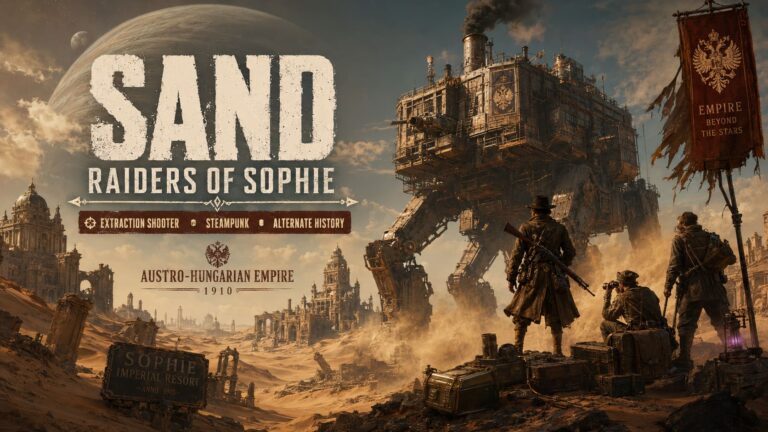
Why You Can’t See Everything in One Playthrough of The Blood of Dawnwalker
I’ve sunk way too many hours into RPGs that promise “freedom” and then quietly funnel you into the same outcomes. So when The Blood of Dawnwalker started showing up in previews with its strict time systems and brutal consequences, I paid attention. Not because it sounds gimmicky, but because it sounds like the kind of game that actually respects replayability instead of faking it.
And yeah — this one doesn’t let you see everything in a single run. Not even close.
This isn’t just a “multiple endings” situation. It’s a full structural design philosophy: you are supposed to miss content. The game actively punishes completionist thinking in the best way possible — by making it mathematically impossible to brute-force everything in one timeline.
Let’s break down why The Blood of Dawnwalker becomes a permanent “second playthrough required” RPG the moment you step into Vale Sangora.
The Core Design Trap: You Are Always Running Out of Something
At the center of everything is Coen’s cursed existence — human by day, vampire by night — and a world that simply refuses to wait for you.
The game doesn’t just track time. It charges you for it.
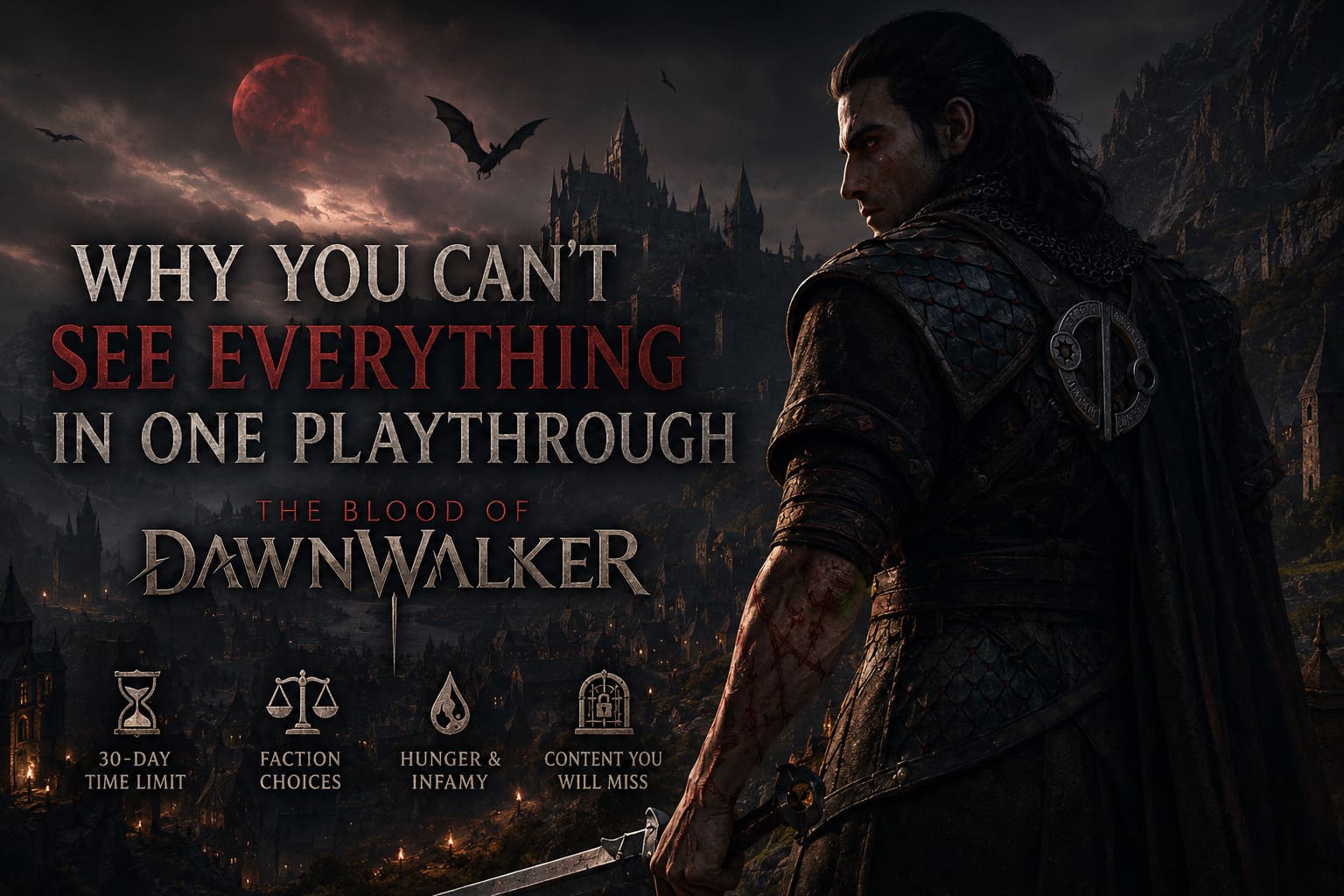
Every major decision consumes a chunk of a strict 30-day / 30-night cycle. Once it’s gone, it’s gone. No grinding, no extension, no artificial padding. That alone would already force prioritization, but Rebel Wolves goes further — they stack systems on top of it that actively collide with each other.
You’re not choosing what to do. You’re choosing what to lose.
1. The 30-Day Pressure Cooker (Time Is a Currency, Not a Background System)
Most RPGs treat time like decoration. Days pass, NPCs mention it, but nothing really changes unless the script says so.
Here? Time is a hard budget.
- Every major quest costs time
- Exploration can still be “free,” but progress is not
- Major narrative arcs consume multiple days instantly
- Some opportunities permanently vanish after time is spent elsewhere
Before accepting any mission, the game literally tells you: “This will cost X hours/days.”
That UI choice alone changes everything.
You start thinking like a strategist, not a hero. Suddenly helping a village isn’t just “good content” — it’s potentially sacrificing an entire faction arc three regions away.
2. Factions That Don’t Share Your Story
Vale Sangora is split into two collapsing powers:
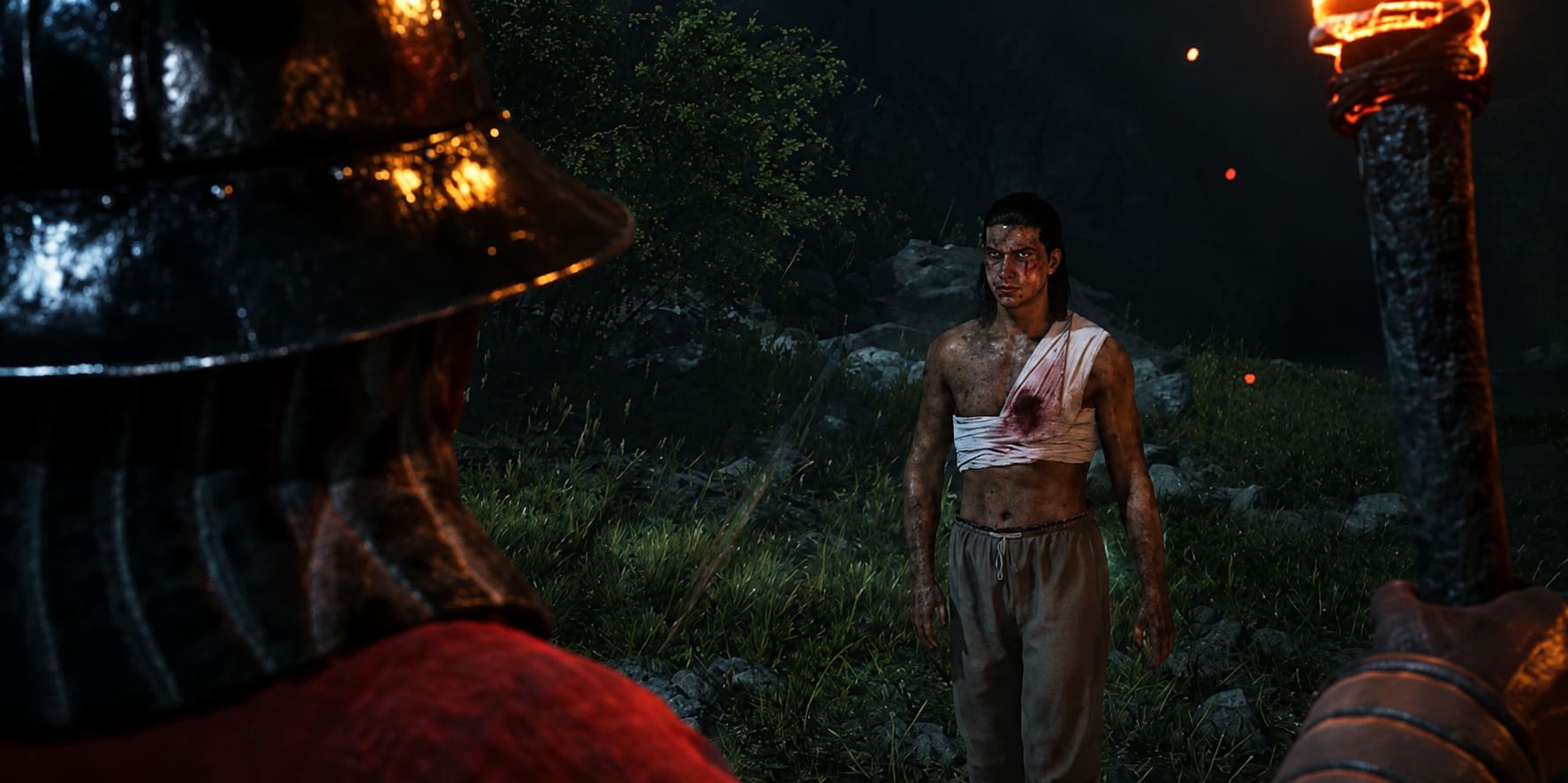
- The Vampire Court under Brenis
- The Human Resistance barely holding reality together
And here’s the brutal part: you can’t be friends with both.
Aligning with one doesn’t just change dialogue or rewards. It removes entire questlines from existence.
What gets locked depending on your choice:
- Entire faction strongholds
- Unique boss fights
- Political storyline branches
- Companion recruitment paths
- Ending variations tied to faction survival
It’s not “branching narrative.” It’s narrative elimination.
You don’t pick a side and see different flavors of content — you permanently erase half the game world.
3. Hunger System: The Most Dangerous UI Bar in the Game
The vampire mechanic isn’t just combat flavor. It’s a narrative landmine.
Coen’s hunger system influences:
- Combat buffs and vampiric abilities
- Dialogue stability during cutscenes
- NPC survival during interactions
- Long-term world state through Infamy
If you ignore hunger management, things go sideways fast.
I’ve seen systems like this before, but Dawnwalker makes it personal. If Coen loses control, he doesn’t just “fail a check.” He kills people. Important people.
And they stay dead.
No reload fixes your mistake in-world. The game remembers.
That’s where most RPGs would stop being fun. Here it somehow becomes more tense instead.
4. Infamy System: You Are What the World Thinks You Are
This isn’t just reputation points.
Infamy reshapes Vale Sangora daily.
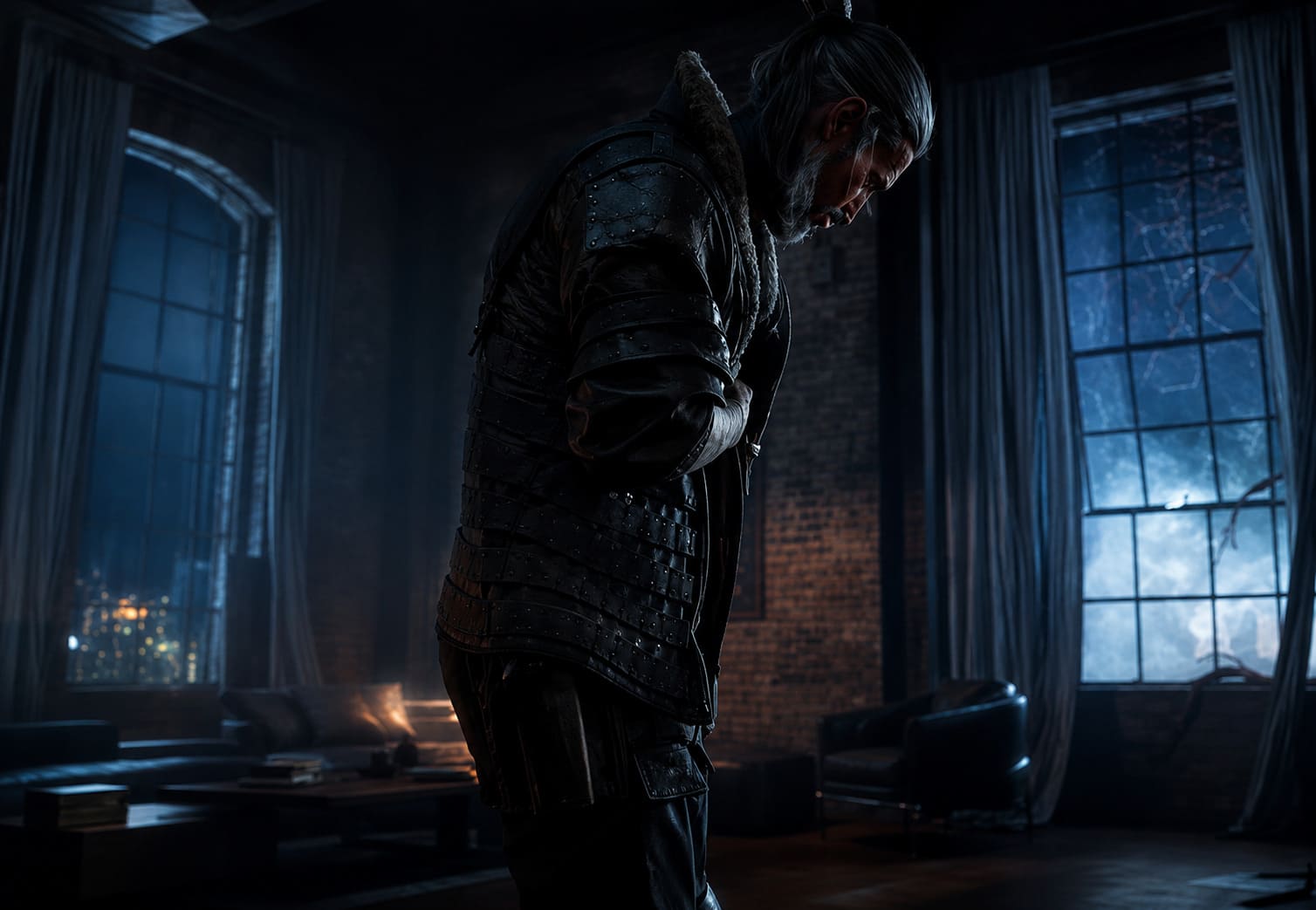
High Infamy leads to:
- Lockdown towns
- Hostile patrol spawns
- Restricted merchant access
- Vampire hunter escalation events
Low Infamy gives you:
- Normal social quests
- Stable trading economy
- Side content accessibility
And the kicker: it evolves constantly based on your actions. Not just big story choices — even repeated behavior shifts world response.
System Breakdown Table
| Mechanic | Player Effect | Consequence |
|---|---|---|
| Time Budget (30 Days) | Limits all major actions | Locks questlines permanently |
| Faction Alignment | Forces political choice | Removes opposing faction content |
| Hunger System | Powers vampire abilities | Can kill NPCs permanently |
| Infamy System | Tracks behavior reputation | Changes world hostility daily |
| Early Ending Access | Allows skipping final boss | Cuts 90% of content |
| Failure State | No game over screen | World evolves into failure narrative |
5. “You Can Just End the Game Early” Energy
One of the most wild design choices is that you can basically walk into the final boss immediately after the intro.
No gatekeeping. No artificial locks.
If you want to throw Coen into Brenis’s castle underpowered and underprepared — go ahead.
You’ll almost certainly die.
Or you’ll trigger one of the most absurd “early endings” imaginable.
That alone completely breaks traditional RPG structure. There’s no illusion of progression safety. The world doesn’t protect you from yourself.
6. Failure Isn’t Game Over — It’s a Branch
This is where The Blood of Dawnwalker gets dangerous in a design sense.
If you fail the 30-day objective, the game doesn’t shut down.
It adapts.
- Your family’s fate changes
- Political power shifts solidify
- New ending paths unlock
- Previously unavailable narrative outcomes appear
In most RPGs, failure is a reload screen.
Here it’s just… another storyline.
Honestly, that’s the part that sticks with me the most. It turns inefficiency into content.
The Blood of Dawnwalker Efficiency Path Walkthrough: 30-Day Strategy Guide
Why You Will Need Multiple Playthroughs (No Matter What You Do)
Even if you try to “optimize” your run, the game fights you:
- You can’t experience both factions
- You can’t maintain perfect hunger control while maximizing vampiric power
- You can’t complete all side quests before time expires
- You can’t see every ending without intentionally failing different objectives
This isn’t replayability as marketing fluff.
It’s enforced structure.
The Blood of Dawnwalker Strategy Guide: 30-Day Time Skip Mechanics and Boss Skip Tactics Explained
Final Thoughts: A Game That Refuses to Be Exhausted in One Sitting
I’ve played RPGs that pretend choices matter. I’ve played RPGs that stretch content thin to simulate depth.
The Blood of Dawnwalker doesn’t do either.
It just says:
“Pick your version of this world. You don’t get them all.”
And honestly? That hits harder than any “100-hour content promise.”
You don’t finish Vale Sangora. You interpret it through multiple lives of Coen.
And yeah — you’ll come back. Not because the game tells you to.
Because you’ll know you missed something real.