Is GRAIN ROT Worth It? Review, Gameplay Walkthrough, and US Community Impressions (2026)
When another co-op extraction horror game appears on Steam, my first reaction is usually, “Here we go again.” Over the last few years we’ve seen dozens of titles inspired by Lethal Company, Content Warning, and R.E.P.O. Some copied the formula almost scene for scene, while others added one or two new mechanics that weren’t enough to make them memorable.
GRAIN ROT surprised me.
It isn’t trying to reinvent the genre from scratch, but it introduces enough clever ideas that I kept finding excuses to queue for “one more run.” The combination of destructive scavenging, persistent base progression, and one of the smartest death systems I’ve seen in a co-op game makes it feel fresh instead of derivative.
Is it perfect? Definitely not.
Is it one of the better indie horror releases of 2026? I honestly think it has a good chance.
What Makes GRAIN ROT Different?
The biggest difference becomes obvious within the first few minutes.
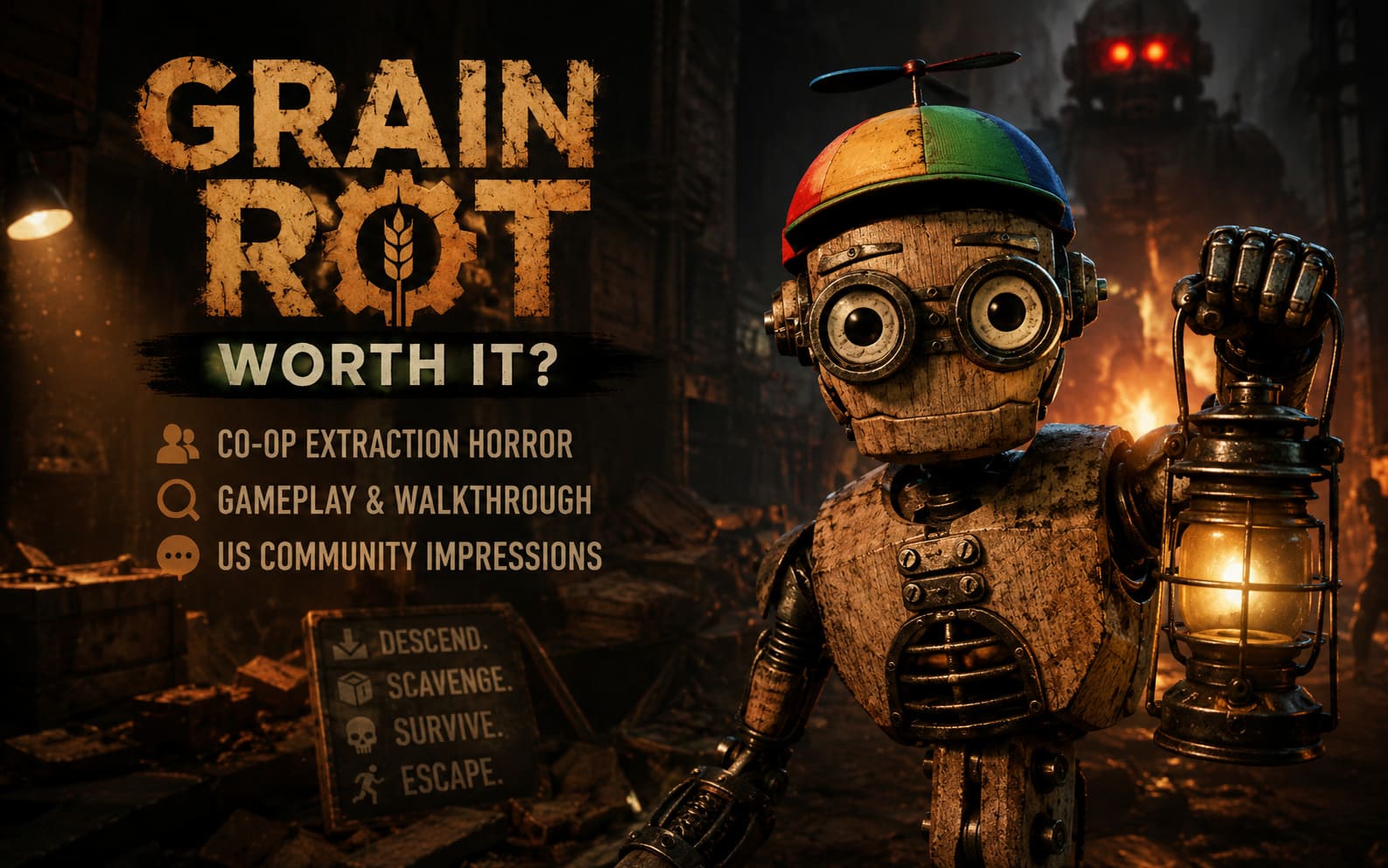
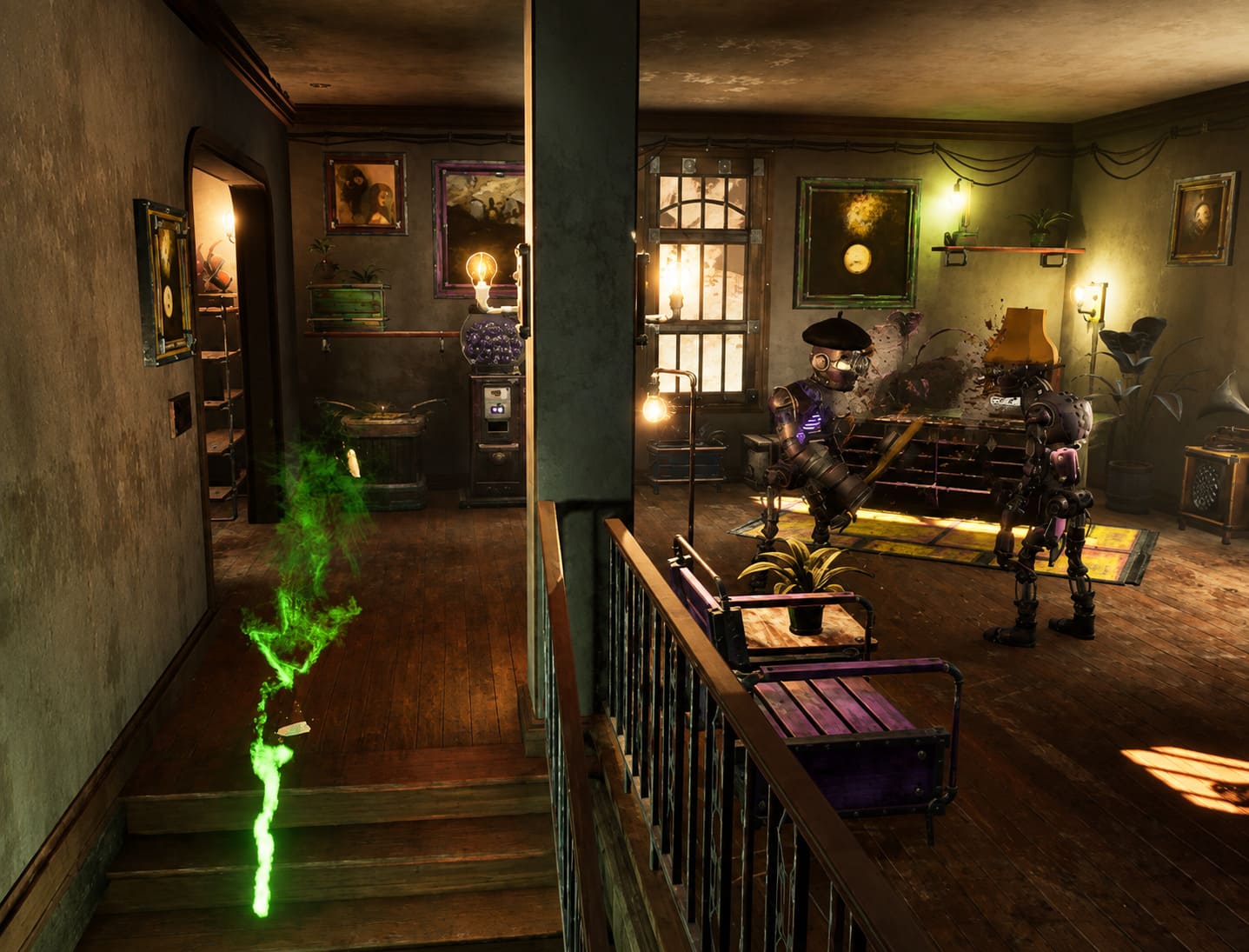
Instead of playing as ordinary survivors, you’re a Living Spark—a mysterious glowing entity that controls fragile wooden vessels. Those bodies are incredibly vulnerable. Fire spreads quickly, heavy enemies smash them apart, and environmental hazards are everywhere.
Normally, dying in extraction games means sitting around watching your friends continue the mission.
Here? Not at all.
When your wooden shell breaks, your Living Spark escapes. You’re still participating instead of staring at a spectator screen. You can scout dangerous corridors, warn teammates about patrols, search for abandoned bodies, and eventually possess another vessel to jump back into the action.
That single mechanic changes the entire rhythm of multiplayer.
I’ve had teammates sacrifice themselves so someone else could recover valuable loot, while another friend floated around as a Spark yelling directions after discovering a shortcut nobody else noticed.
Those moments feel completely organic.
Every Expedition Feels Like Controlled Chaos
The basic gameplay loop is easy to understand but difficult to master.
Each expedition begins with a descent into shifting underground ruins filled with scrap, ancient relics, traps, and corrupted machines waiting to destroy your team.
Your priorities usually become:

- Map safe routes
- Collect valuable materials
- Avoid unnecessary fights
- Escape before everything falls apart
That sounds simple.
It almost never is.
The game constantly creates little disasters that spiral into complete chaos.
One player accidentally lights themselves on fire.
Someone panics and swings a hammer into an explosive heater.
Another teammate gets launched across the room by a trap.
Meanwhile everyone is screaming because a Corrupted enemy suddenly appeared behind the group.
Those unscripted moments are exactly why cooperative horror works so well.
Destruction Isn’t Just for Fun
One thing I appreciated more than expected is how much interaction the environment offers.
You’re encouraged to destroy almost everything.
- Tables
- Doors
- Furniture
- Storage containers
- Machinery
Instead of simply opening boxes and grabbing loot, you’re literally dismantling entire buildings for resources.
Some objects are dramatically more valuable than others.
For example, experienced players quickly learn that heaters can provide a massive amount of scrap if destroyed correctly.
Wait too long?
They explode.
Now your wooden body is burning.
Your teammates are laughing.
Half the room is on fire.
Mission accomplished… sort of.
That balance between greed and survival creates constant tension throughout every expedition.
Sound Design Carries the Horror
Visually, GRAIN ROT isn’t trying to compete with AAA horror games.
Textures are simple.
Character models are intentionally stylized.
Lighting remains fairly minimalist.
Yet somehow the atmosphere works incredibly well.
The reason is audio.
Instead of relying on loud musical stingers every few minutes, the game mostly lets environmental sounds do the work.
You hear:
- distant scraping metal
- echoing footsteps
- burning wood
- mechanical breathing
- unexplained movement somewhere in the darkness
Your imagination fills in the gaps.
Some of my most stressful moments happened before I even saw the monster responsible for the noise.
That’s effective horror.
Combat Is About Survival, Not Heroics
If you’re expecting an action-heavy experience, you’ll probably be disappointed.
Combat exists, but it’s rarely the smartest solution.
Most enemies can technically be defeated.
The question is whether they’re worth fighting.
Many encounters become easier by:
- using environmental traps
- forcing enemies into pits
- breaking floor sections
- distracting patrols
- simply running away
The deeper you descend, the more obvious this philosophy becomes.
Elite enemies don’t care about your confidence.
They’ll flatten your vessel almost instantly if you approach them like a traditional action game.
Learning when not to fight becomes just as important as learning weapon timing.
Base Building Gives Every Run Meaning
One criticism I often have with extraction games is progression.
You collect loot.
Sell loot.
Buy cosmetic decorations.
Repeat.
GRAIN ROT goes further.
Everything you recover contributes toward expanding your Sanctuary Outpost.
Resources unlock new rooms, permanent upgrades, recovery facilities, and various long-term improvements that noticeably affect future expeditions.
That progression loop kept motivating our group.
Even after failed runs, it felt like we were slowly building something larger instead of simply chasing a higher currency total.
Where the Game Struggles
Despite enjoying my time with GRAIN ROT, there are several issues that shouldn’t be ignored.
The biggest one is solo balance.
Playing alone feels dramatically harder than playing with friends.
The Living Spark system is brilliant—but many of its strengths disappear without teammates.
Nobody helps you recover.
Nobody distracts enemies.
Nobody carries backup resources.
Nobody rescues your dropped loot.
The experience immediately becomes much less forgiving.
Another issue is the early progression grind.
Some upgrades require a considerable amount of farming before your base starts feeling genuinely useful.
Veteran groups won’t mind too much.
Casual players may lose patience during the opening hours.
Finally, backup vessels occasionally feel too rare.
Sometimes an unfortunate sequence of events leaves multiple players without realistic recovery opportunities.
When that happens, failure feels more frustrating than exciting.
Quick Breakdown
| Category | My Rating |
|---|---|
| Gameplay | 9/10 |
| Atmosphere | 9/10 |
| Audio Design | 9.5/10 |
| Progression | 8.5/10 |
| Solo Experience | 6.5/10 |
| Multiplayer Fun | 9.5/10 |
Pros and Cons
Pros
- Creative Living Spark mechanic keeps everyone involved.
- Excellent co-op gameplay full of memorable moments.
- Strong replay value through permanent progression.
- Environmental destruction feels satisfying.
- Outstanding sound design builds constant tension.
Cons
- Solo players face a much steeper difficulty curve.
- Opening progression can feel grind-heavy.
- Recovery after early deaths sometimes depends too much on luck.
- Certain elite encounters feel slightly overtuned.
Should You Buy GRAIN ROT?
If you regularly play cooperative games with friends, I’d say yes.
Not because it’s revolutionary.
Not because it replaces every other extraction horror game.
But because it understands what actually makes this genre fun.
The best moments aren’t scripted boss fights or cinematic cutscenes.
They’re the disasters nobody planned.
Watching a teammate accidentally ignite their wooden body.
Everyone desperately carrying loot toward the elevator while monsters chase from every direction.
Floating around as a Living Spark trying to guide your last surviving friend toward an abandoned vessel before the mission collapses.
Those stories become the real reward.
On the other hand, if you’re primarily a solo player, I’d probably recommend waiting a little longer. The foundation is excellent, but the current balance clearly favors coordinated groups, and a few updates could make the solo experience much more enjoyable.
GRAIN ROT Multiplayer Guide: Dropkick Tutorial & Extraction Strategies
Final Verdict
After spending a good amount of time with GRAIN ROT, I came away more impressed than I expected.
It borrows familiar ideas from the growing extraction horror genre, yet manages to build its own identity through smart mechanics rather than gimmicks. The Living Spark system is one of those rare features that immediately makes you wonder why more games haven’t done something similar. Instead of punishing failure with long periods of inactivity, it keeps everyone engaged and turns even disastrous runs into entertaining stories.
The game certainly isn’t flawless. Solo balancing needs attention, early progression could be smoother, and a few mechanics would benefit from additional polish. Still, those issues never overshadowed the core experience for me.
If your group enjoys laughing through complete disasters, making risky decisions for better loot, and surviving by the smallest margin imaginable, GRAIN ROT delivers exactly the kind of unpredictable co-op chaos that keeps people playing long after “just one more run” should have ended. It’s one of the indie horror games I’d happily recommend in 2026, especially if you have two or three friends ready to descend into the ruins with you.