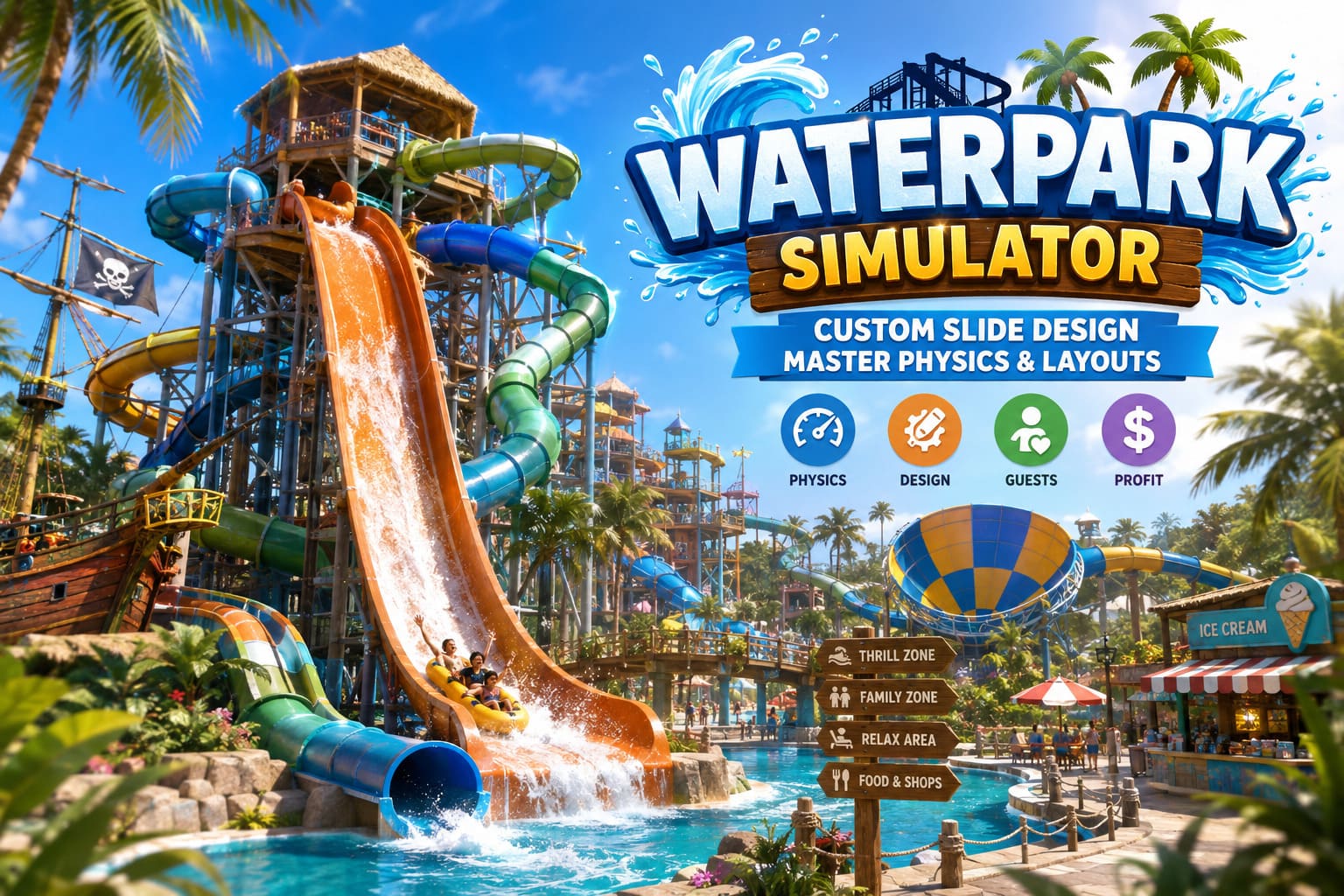
Waterpark Simulator Custom Slide Design Guide: Master Physics & Layouts
When I first unlocked the advanced building tools in Waterpark Simulator, I immediately ignored the pre-made attractions. Sure, they work, but there’s something ridiculously satisfying about watching guests fly through a custom slide that you designed from scratch. It’s also incredibly humbling when that same masterpiece launches half your visitors into the air because you underestimated a single corner.
That’s exactly why custom slides become one of the most rewarding systems in the game. They aren’t just decorative pieces that increase your park value. Every slope, turn, loop, and transition affects guest behavior through the game’s ragdoll physics. Build intelligently, and your attraction becomes the centerpiece of your resort. Build carelessly, and your maintenance crew suddenly has the busiest job in town.
After spending dozens of hours experimenting with layouts, rebuilding broken attractions, and comparing ideas from experienced builders across the community, I realized that successful slide construction isn’t about making the craziest ride possible. It’s about understanding how momentum works and designing around it.
This guide covers the mechanics that actually matter while offering practical construction ideas that helped me build consistently high-rated attractions.
Why Custom Slides Matter More Than Decorations
Many management simulators reward players simply for placing expensive attractions, but Waterpark Simulator asks you to think like an engineer.
Guests react to:
| Feature | Impact on Guests | Impact on Park |
|---|---|---|
| Slide Speed | Excitement and danger | Attraction rating |
| Turn Design | Safety and ride smoothness | Injury risk |
| Theme Integration | Visual appeal | Park prestige |
| Exit Placement | Guest convenience | Food and shop profits |
| Maintenance | Reliability | Overall star rating |
Unlike static rides, every custom structure becomes part of your park’s economy. A great design earns money for hours. A poorly balanced slide constantly drains resources through accidents and repairs.
Start With Gravity, Not Decorations
The biggest mistake I made early on was focusing on aesthetics before physics.
A giant pirate tower looked fantastic…until riders barely had enough speed to finish the course.
Everything begins with elevation.
The higher your starting platform sits, the greater your available momentum throughout the ride. That energy determines whether guests smoothly clear loops, maintain speed through enclosed sections, or simply stall halfway down the attraction.
The trick isn’t making the tallest slide possible.
It’s creating controlled speed.
A steep opening drop should naturally transition into a section that reduces velocity before the first major turn. Without that transition, riders often enter corners much faster than the game expects.
That usually ends badly.
Design Turns That Work With Physics
Fast corners are where most accidents happen.
The ragdoll system constantly pushes riders toward the outside of every curve. If your corner uses flat sections instead of properly banked pieces, guests can literally leave the slide.
I’ve watched entire groups launch into nearby scenery because I underestimated a simple bend.
Some practical rules helped eliminate almost every problem:
- Use banking for every high-speed curve.
- Avoid sudden direction changes after steep drops.
- Increase banking gradually through longer corners.
- Leave small straight sections between complex elements.
Smooth transitions always outperform dramatic ones.
A realistic-looking curve usually performs better than an aggressive ninety-degree turn.
Building Reliable Loops
Loops are probably the most satisfying modules in the entire game.
They’re also surprisingly unforgiving.
Too little speed and guests slide backward.
Too much speed and physics become…creative.
The safest approach is repeatedly using the testing mode before opening the attraction.
Every successful loop follows three basic principles:
| Requirement | Why It Matters |
|---|---|
| Strong entry speed | Clears the top of the loop |
| Stable alignment | Prevents clipping |
| Clean exit section | Restores rider control |
If riders barely reach the highest point, increase the previous drop instead of making the loop smaller.
If they blast through unrealistically fast, add a longer transition before entering the inversion.
Tiny adjustments often solve much bigger problems than rebuilding the entire ride.
Use Snap Tools—But Don’t Depend on Them
The construction system is surprisingly flexible.
Grid snapping makes building much faster, especially for long elevated structures.
Still, there are situations where automatic alignment becomes frustrating.
Pool connections are the biggest example.
Sometimes the final section refuses to connect correctly even though everything appears aligned.
Whenever this happens, I temporarily disable snapping, make a small manual adjustment, reconnect the final piece, and then enable snapping again.
That simple trick has saved me countless rebuilding sessions.
Build Higher Without Fighting the Camera
Anyone who’s built large attractions knows the struggle.
You’re standing twenty meters below your unfinished tower trying to place one tiny segment.
Instead of awkwardly stacking temporary pieces, I started using tall park structures as improvised construction platforms.
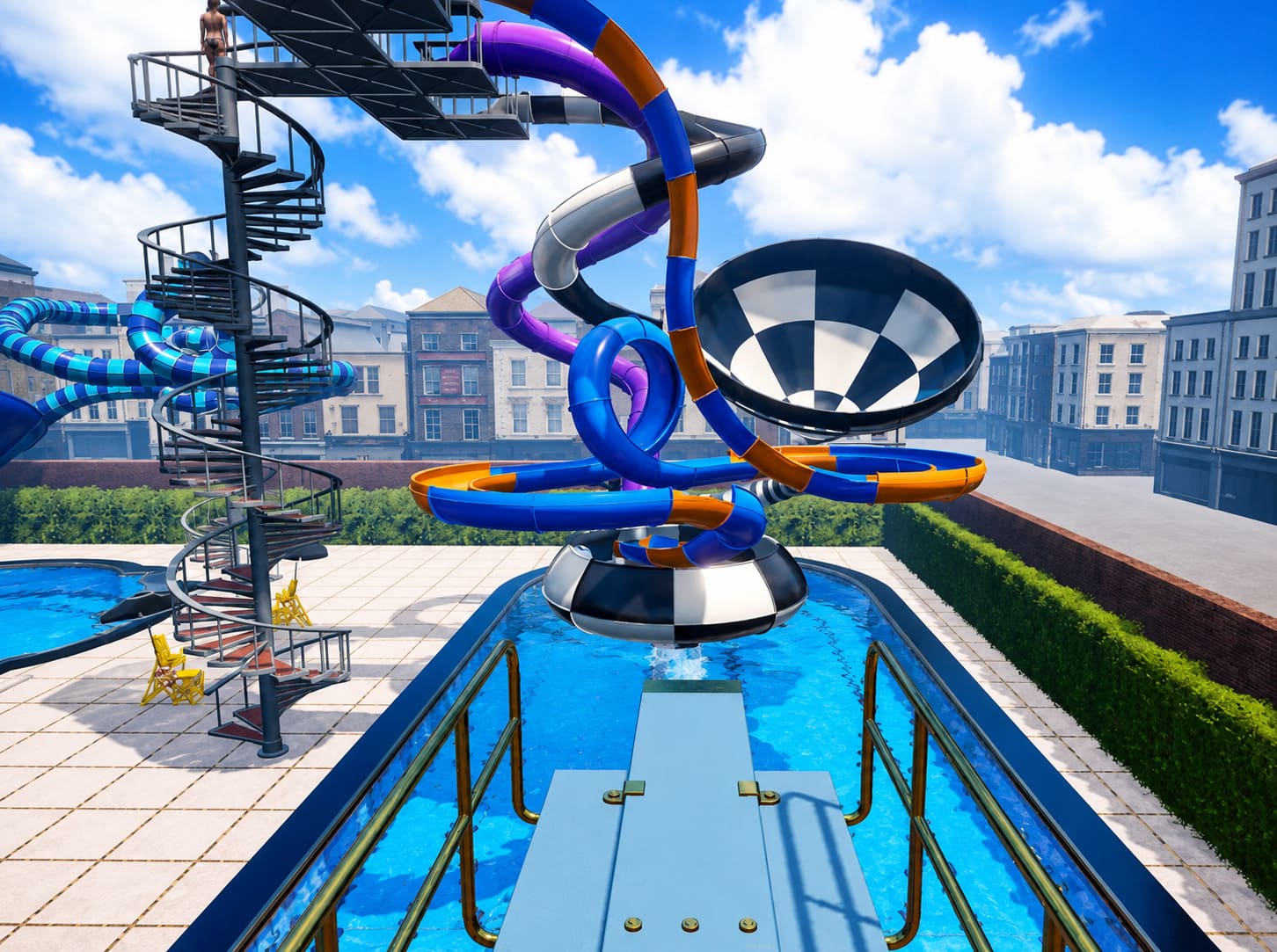
High diving boards work especially well.
They give you a much better viewing angle and make connecting elevated slide sections dramatically easier.
It’s one of those community tricks that seems obvious after someone points it out.
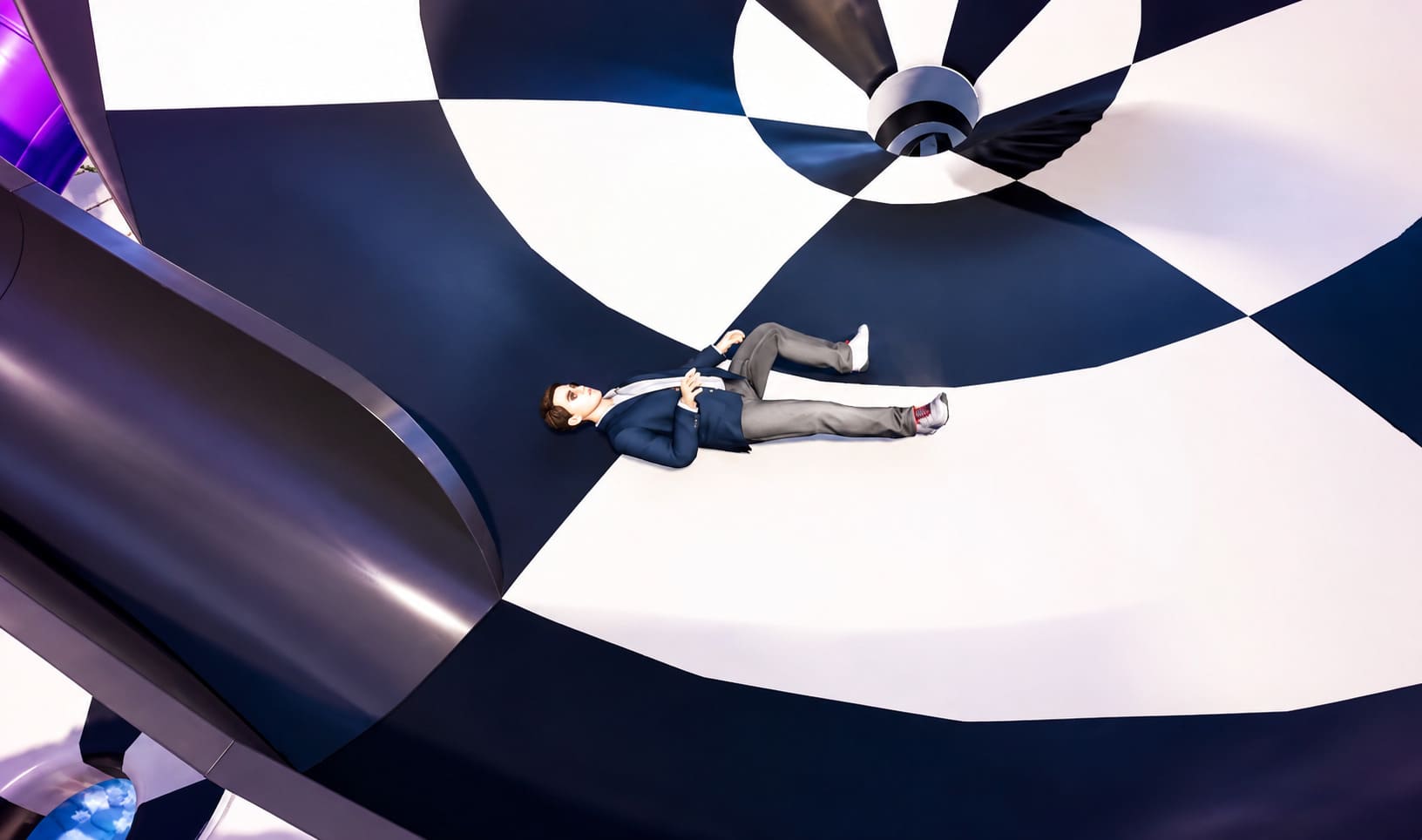
Funnel and Bowl Slides Need More Speed Than You Think
Some specialty modules have very different physics requirements.
Large funnels and toilet bowl attractions look incredible, but they demand serious momentum.
Entering too slowly usually means riders lose energy before completing the spiral.
Before connecting these modules, make sure the approach includes:
- A long downhill section.
- Minimal unnecessary curves.
- Continuous speed preservation.
Straight entries consistently produce the most reliable results.
Themes Make Your Park Feel Alive
The 1.0 update introduced several excellent visual themes that completely change the atmosphere of a resort.
Instead of randomly mixing decorations, I found that building entire districts creates a much stronger impression.
Some combinations work especially well:
| Theme | Decoration Ideas |
|---|---|
| Pirate | Ships, wooden towers, cannons |
| Sea | Coral, sea monsters, shells |
| Aztec | Stone temples, ruins, carved pillars |
When scenery matches nearby attractions, the entire park feels intentionally designed instead of randomly assembled.
Guests seem to appreciate cohesive environments much more than isolated decorative objects.
Don’t Ignore Paint Colors
Painting slides sounded like a cosmetic feature until I actually started using it.
Color dramatically changes how custom attractions stand out across your park.
One approach I’ve grown to like is using contrasting finishes.
For example:
- Bright interior tubes.
- Dark outer shells.
- Matching support beams.
- Accent colors around entrances.
The result looks significantly more polished than leaving everything in default gray.
Organize Your Park Into Zones
A mistake I constantly see is spreading major attractions everywhere.
Large thrill rides naturally attract crowds.
Instead of fighting traffic, embrace it.
Separate your resort into distinct areas:
- Thrill Zone – Large custom slides, loops, funnels, and extreme rides.
- Family Zone – Smaller pools, beginner slides, and children’s attractions.
- Relaxation Area – Benches, fountains, landscaping, and shaded seating.
This layout improves movement while making expansion much easier later in the campaign.
Turn Every Ride Into a Profit Machine
One lesson became obvious after watching guest behavior for a while.
People get hungry immediately after leaving exciting attractions.
That’s free money.
Place food and drink vendors directly beside your busiest exit pools.
My highest-performing areas almost always include:
- Ice cream.
- Soft drinks.
- Lemonade.
- Hot dogs.
- Snack machines.
Guests rarely walk far before buying something, so keeping refreshments within a few steps dramatically improves revenue.
Maintenance Is Just As Important As Construction
Even perfect attractions slowly deteriorate.
The more popular a slide becomes, the more attention it requires.
Ignoring repairs doesn’t just reduce ride availability.
It hurts your entire park’s reputation.
I highly recommend upgrading maintenance equipment as early as possible.
Better cleaning tools and faster repair gear save enormous amounts of time over long sessions.
A small investment quickly pays for itself.
Keep Janitors Working in Shifts
Water naturally creates puddles around busy exits.
Those puddles become slipping hazards surprisingly fast.
Hiring more janitors certainly helps.
Scheduling them properly helps even more.
Avoid sending everyone on break simultaneously.
Instead, stagger work schedules so somebody is always cleaning high-traffic areas.
Continuous maintenance keeps guests happier while preventing unnecessary accidents.
My Favorite Design Formula
After experimenting with dozens of layouts, this structure consistently delivers excellent results:
- Tall starting platform.
- Fast opening drop.
- Straight stabilization section.
- Wide banked turn.
- Loop or funnel centerpiece.
- Gentle exit into splash pool.
It’s simple enough to build consistently while still generating plenty of excitement.
From there, decorations and themes can make every attraction feel completely unique.
Waterpark Simulator Crash on Launch & Black Screen Fix: Complete 2026 Troubleshooting Guide
Final Thoughts
One of the reasons I’ve enjoyed Waterpark Simulator so much is that it rewards experimentation without removing consequences. Every failed design teaches something useful. Every rebuilt corner makes the next attraction smoother, safer, and more profitable.
The temptation is always to chase the wildest layout imaginable, but the best parks I’ve built relied on careful planning instead of chaos. Smart elevation changes, properly banked turns, consistent momentum, and thoughtful guest flow create attractions that aren’t just spectacular—they actually work.
Once you combine solid engineering with themed environments, colorful finishing touches, reliable maintenance, and strategically placed amenities, your custom slides stop being individual rides and become the foundation of a true five-star resort.
Keep testing every layout before opening it, don’t be afraid to rebuild sections that feel awkward, and remember that the smoothest ride is often the one guests will queue for all day long. That’s when your waterpark transforms from a simple collection of pools into a destination players will be proud to show off.