Hell Maiden: The Dante-Inspired Anime Vampire Survivors Clone You Need to Play
Hell Maiden is one of those indie games that immediately looks familiar but quickly proves it has something different to offer. After spending countless hours with roguelikes, bullet heaven titles, and deckbuilding games, I have seen many developers attempt to recreate the success of Vampire Survivors. Some projects simply copy the formula with new characters and weapons, while others actually understand what makes the genre addictive. Hell Maiden, developed and published by AstralShift, belongs to the second group. It takes the endless survival gameplay loop and combines it with tactical card mechanics, anime-inspired visuals, and a surprisingly ambitious story based on Dante Alighieri’s Divine Comedy.
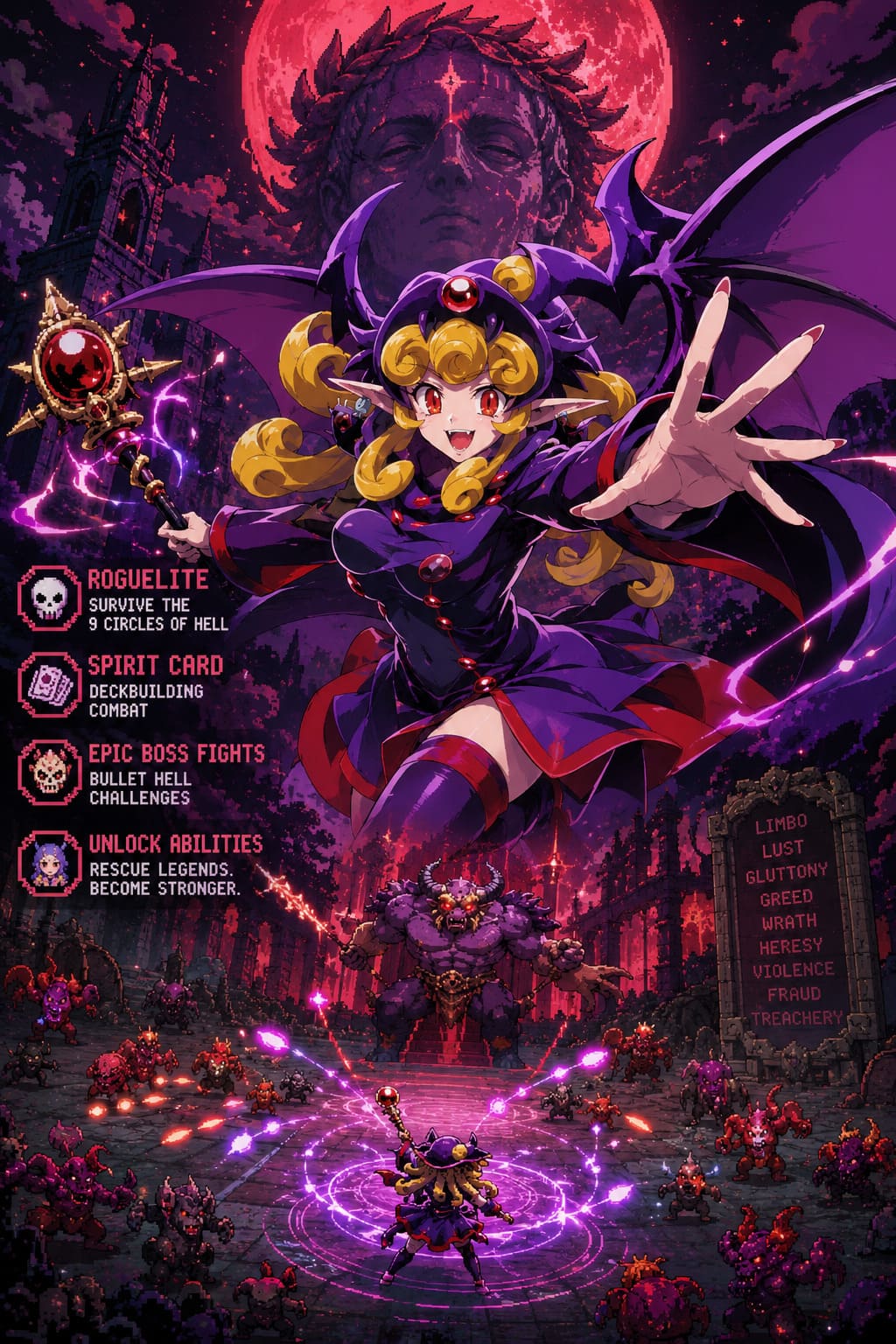
At first glance, Hell Maiden may look like another Vampire Survivors-inspired game where players run around automatically destroying massive enemy waves. However, after playing it, the differences become impossible to ignore. This is not just a passive experience where you pick upgrades and watch numbers increase. The game constantly pushes you to make decisions, rebuild your strategy, and create a powerful combination of abilities. It feels like a creative mix between a bullet heaven game, a roguelike adventure, and a tactical deckbuilder.
7 Best Action Roguelite Games Like Hell Maiden You Need to Play Next
A Magical Girl Anime Version of Dante’s Inferno
The first thing that makes Hell Maiden stand out is its incredible artistic direction. Instead of following the usual dark fantasy style found in many roguelike games, AstralShift takes a completely different approach. The developers reimagine Dante’s journey through Hell with the energy and visual style of a classic 1990s magical girl anime. The colorful pixel art, expressive character designs, smooth animations, and energetic soundtrack create a nostalgic atmosphere that feels inspired by the golden era of anime.
The idea sounds unusual: what if Dante’s journey through the circles of Hell became an anime adventure starring a powerful heroine? Surprisingly, the concept works extremely well. Hell Maiden does not simply make a joke out of the original story. Instead, it creates its own interpretation filled with themes of memory, redemption, identity, and lost love.
Players control a female version of Dante who has already reached Paradiso but suddenly awakens deep within Hell with no memories of what happened. Her goal is to travel through the nine circles of Hell, discover the truth behind her return, and find her beloved Beatrice once again.
During this journey, Dante is guided by Virgil, the famous Roman poet who acts as her companion and mentor. Each area represents a different stage of the afterlife, featuring unique environments, enemy types, and powerful bosses. The adventure begins in Limbo before moving into more dangerous regions such as Lust, where every location feels carefully crafted rather than being just another random arena.
Hell Maiden’s Gameplay Is More Than a Vampire Survivors Clone
The biggest problem with many bullet heaven games is that they eventually become too automatic. After several hours, the experience can turn into simply moving around while your character destroys everything on screen. While that formula can still be enjoyable, it often lacks the deeper decision-making that keeps players invested for the long term.
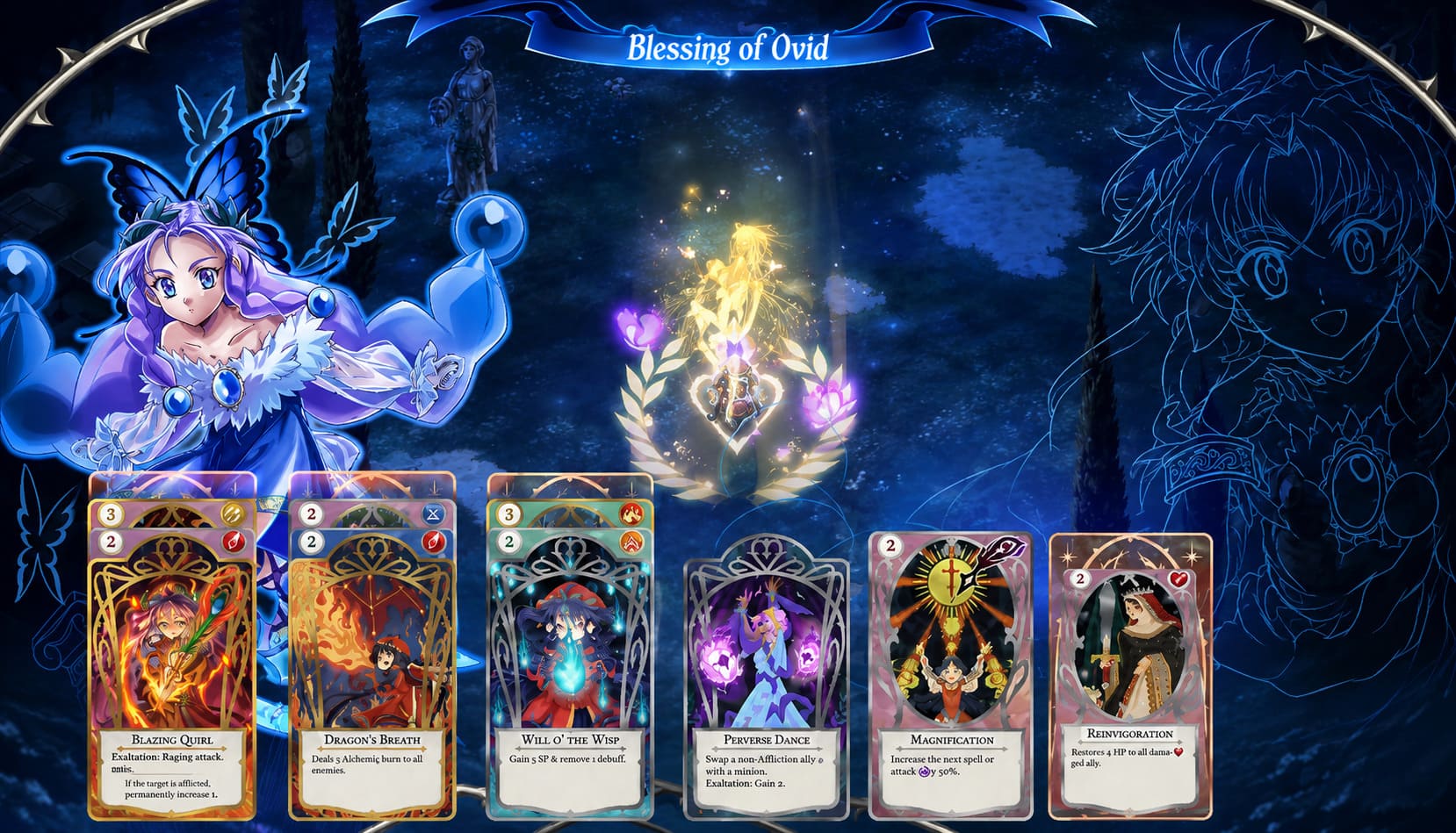
Hell Maiden solves this problem by introducing its unique Spirit Card deckbuilding system. This mechanic completely changes how players approach each run and gives the game its own identity.
Instead of only choosing random upgrades during level-ups, players actively manage their cards throughout every 12-minute battle. These cards are divided into two main categories: Weapon Cards and Mod Cards.
| Card Type | Function |
|---|---|
| Weapon Cards | Provide the main attacks used during combat, including magical abilities, swords, and automatic weapons. |
| Mod Cards | Modify weapons with damage bonuses, elemental effects, special abilities, and additional mechanics. |
The most interesting part of this system is that card placement actually matters. Mod Cards are not simple passive upgrades that increase statistics. Their position affects the weapons they interact with, creating a tactical puzzle during every run.
For example, placing a specific modifier next to a sword card can change the weapon’s performance by increasing damage, adding elemental effects, or improving attack speed. This forces players to constantly think about their current setup and decide whether they should improve their existing build or replace weaker options.

Every Run Feels Like Creating a New Character Build
One of my favorite parts of Hell Maiden is the freedom it gives players during each attempt. Many games in this genre eventually create one dominant strategy that everyone follows. Hell Maiden encourages experimentation because every run can develop into something completely different.
Players can:
- Replace weaker cards and improve their deck during a run.
- Create unique weapon combinations based on different strategies.
- Collect enemy and boss abilities to expand their options.
- Build around damage, defense, elemental effects, or special mechanics.
The ability to steal and use abilities from defeated enemies and bosses is one of the strongest ideas in the game. Instead of receiving only experience points or simple rewards, defeating powerful opponents can directly improve your future combat potential.
This creates a satisfying progression curve. At the beginning of a run, Dante feels vulnerable and surrounded by dangerous enemies. Later, after creating the right combination of cards, she becomes an unstoppable force capable of destroying entire armies. That feeling of transformation is exactly what makes roguelike games so addictive.
Boss Battles Bring a Touhou-Inspired Challenge
Unlike many Vampire Survivors-style games that focus almost entirely on surviving waves, Hell Maiden puts significant effort into its boss encounters. These battles feel much closer to classic bullet hell shooters, especially titles inspired by the legendary Touhou Project series.
The first major boss fight against Minos perfectly demonstrates this approach. Instead of creating a simple enemy with a large health bar, the game introduces dangerous projectile patterns that require careful movement and timing. Players cannot win only by creating a powerful damage build. They also need to understand attack patterns and position themselves correctly.
This design choice gives Hell Maiden a stronger identity compared with many similar games. It rewards both strategic preparation and actual player skill, making victories feel much more satisfying.
Progression, Characters, and Long-Term Replay Value
Even in Early Access, Hell Maiden already offers a surprising amount of content. Players can explore multiple Circles of Hell, discover more than 40 abilities, and unlock permanent upgrades through the rescue of historical figures trapped in Limbo.
Characters such as Homer, Ovid, Horace, and Lucan are not just references hidden in the background. Saving these ancient poets provides new abilities, powerful weapons, and additional progression options that remain available in future attempts.
This combination of storytelling and gameplay progression strongly reminds me of what made games like Hades so successful. The combat itself is addictive, but the characters, world-building, and long-term rewards create a reason to keep returning after every defeat.
Hell Maiden successfully combines several different experiences:
- The endless replayability and fast combat loop of Vampire Survivors.
- The character-driven progression system of Hades.
- The strategic planning of deckbuilding roguelikes.
- The precision movement and challenge of bullet hell shooters.
Final Thoughts: Is Hell Maiden Worth Playing?
After playing many games inspired by Vampire Survivors, I can confidently say that Hell Maiden feels like one of the most creative interpretations of the genre. It does not rely only on bigger enemy waves, higher damage numbers, or flashy effects. Instead, it introduces mechanics that make every decision during a run important.
The anime-inspired style may be what attracts players initially, but the deep card system, flexible builds, and challenging boss battles are what make the game memorable. AstralShift clearly understands that a great roguelike needs more than addictive combat. It needs personality, progression, and a world that players actually want to explore.
For players searching for a fresh Steam or Steam Deck experience, Hell Maiden is absolutely worth checking out. Whether you enjoy anime aesthetics, roguelikes, deckbuilders, or simply want a more strategic alternative to traditional bullet heaven games, this unique journey through Dante’s Hell offers a surprisingly deep and exciting adventure.