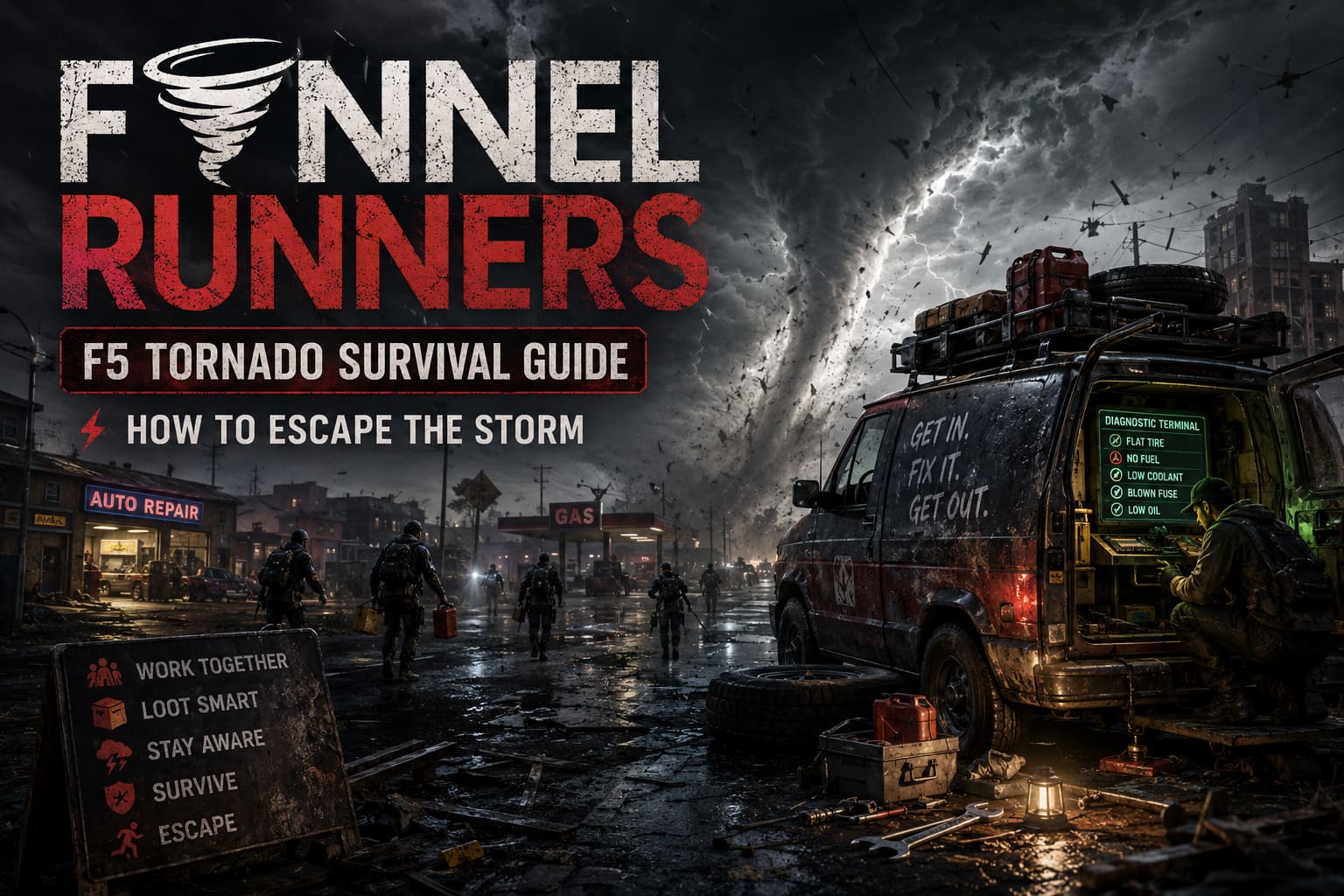
Funnel Runners F5 Tornado Survival Guide: How to Escape the Storm
I’ve played plenty of co-op survival games where the biggest enemy is a monster, an infected horde, or another player. Funnel Runners feels different. The tornado doesn’t care how much loot you’ve collected or how close you are to finishing the van. It simply keeps moving, destroying everything behind it, and if your team wastes even a few minutes, the entire match can spiral out of control.
What makes the game stand out is that it constantly forces difficult decisions. Do you risk entering one last house for the missing fuse? Do you leave a teammate behind to save the repair progress? Do you hide and wait or sprint through dangerous streets before they’re gone forever?
After spending multiple runs experimenting with different strategies, one thing became obvious: winning consistently isn’t about being the fastest player—it’s about making fewer bad decisions than the storm forces you to make.
The Tornado Is the Real Game Director
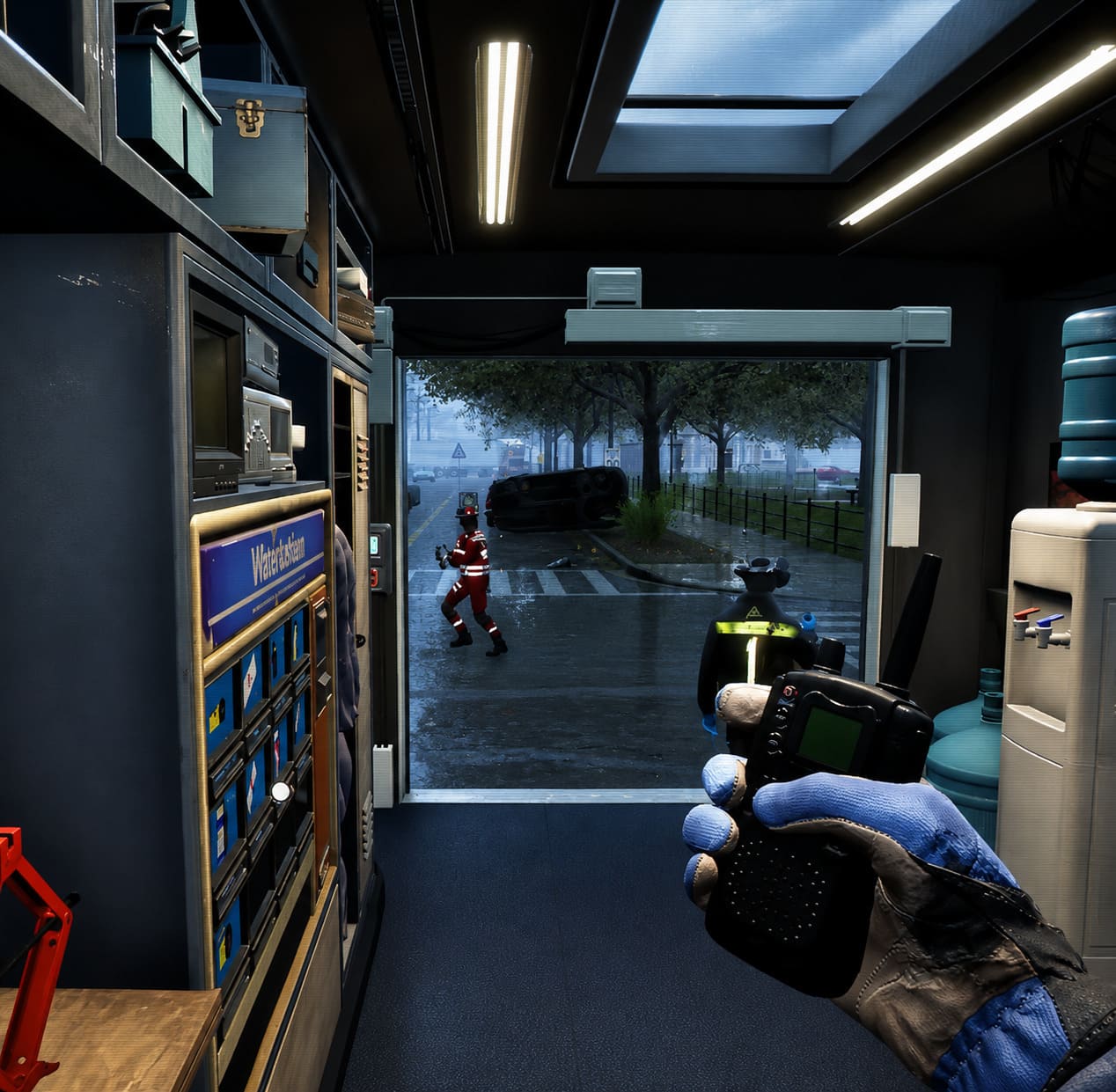
Unlike many survival games where the environment simply creates atmosphere, the tornado in Funnel Runners actively controls the pace of every match.
Buildings don’t just become dangerous—they disappear.
That completely changes how you should think about looting. Every minute you hesitate, another section of the city can become inaccessible forever. Valuable repair parts, fuel containers, medical supplies, and tools can literally vanish before anyone reaches them.
Instead of exploring randomly, successful teams treat every run like a timed operation.
My priorities always look like this:
- Diagnose the van.
- Find critical repair items.
- Return parts immediately.
- Loot extra supplies only if time allows.
Trying to fully loot the map is one of the quickest ways to lose.
Always Learn What the Van Actually Needs First
One mistake I see constantly is players sprinting into town before anyone even checks the vehicle.
That usually means people come back carrying completely useless items while the team still doesn’t know what’s actually broken.
The diagnostic terminal should be your first interaction every single match.
Once the problems are identified, the entire team’s priorities become much clearer.
| Van Problem | Priority | Usually Requires |
|---|---|---|
| Flat Tire | Very High | Replacement tire + lug wrench |
| No Fuel | Critical | Fuel canister |
| Low Coolant | High | Coolant container |
| Blown Fuse | Medium | Replacement fuse |
| Low Oil | Medium | Oil container |
Knowing the repair list early prevents wasted trips across the city.
Don’t Spread Across the Entire Map
It feels natural in an eight-player lobby to have everyone search different areas.
In reality, that usually creates more problems than it solves.
Players become isolated.
Medical kits stay too far away.
Heavy parts take longer to transport.
People die without anyone nearby to help.
I’ve had far more successful runs when the team operates in small two-person groups rather than eight individuals.
A partner can:
- Revive you.
- Carry equipment.
- Watch for hazards.
- Continue the objective if you get trapped.
Those extra seconds often make the difference between escaping and restarting.
The Crowbar Is More Valuable Than Most Repair Parts
Many new players underestimate the crowbar.
That usually changes after they find three boarded houses full of supplies they can’t enter.
The crowbar effectively unlocks huge portions of the map.
Some of my best runs happened because someone grabbed one immediately and started opening buildings before anyone else arrived.
Instead of forcing every teammate to search for their own entrance, one player can quickly clear access for the entire squad.
It’s one of the strongest early-game investments available.
Loot Fast—Don’t Loot Everything
This is probably the hardest habit to develop.
Every room contains something useful.
That doesn’t mean every room deserves your time.
Experienced players quickly recognize which buildings deserve a full search.
Generally, these are worth prioritizing:
- Auto repair shops.
- Gas stations.
- Municipal buildings.
- Maintenance facilities.
- Larger residential homes.
Smaller houses often contain supplies, but spending several minutes checking every bedroom rarely pays off.
If the storm is getting louder, leave.
You can always replace lost loot.
You can’t replace a collapsed building.
Weather Hazards Become More Dangerous Than the Tornado
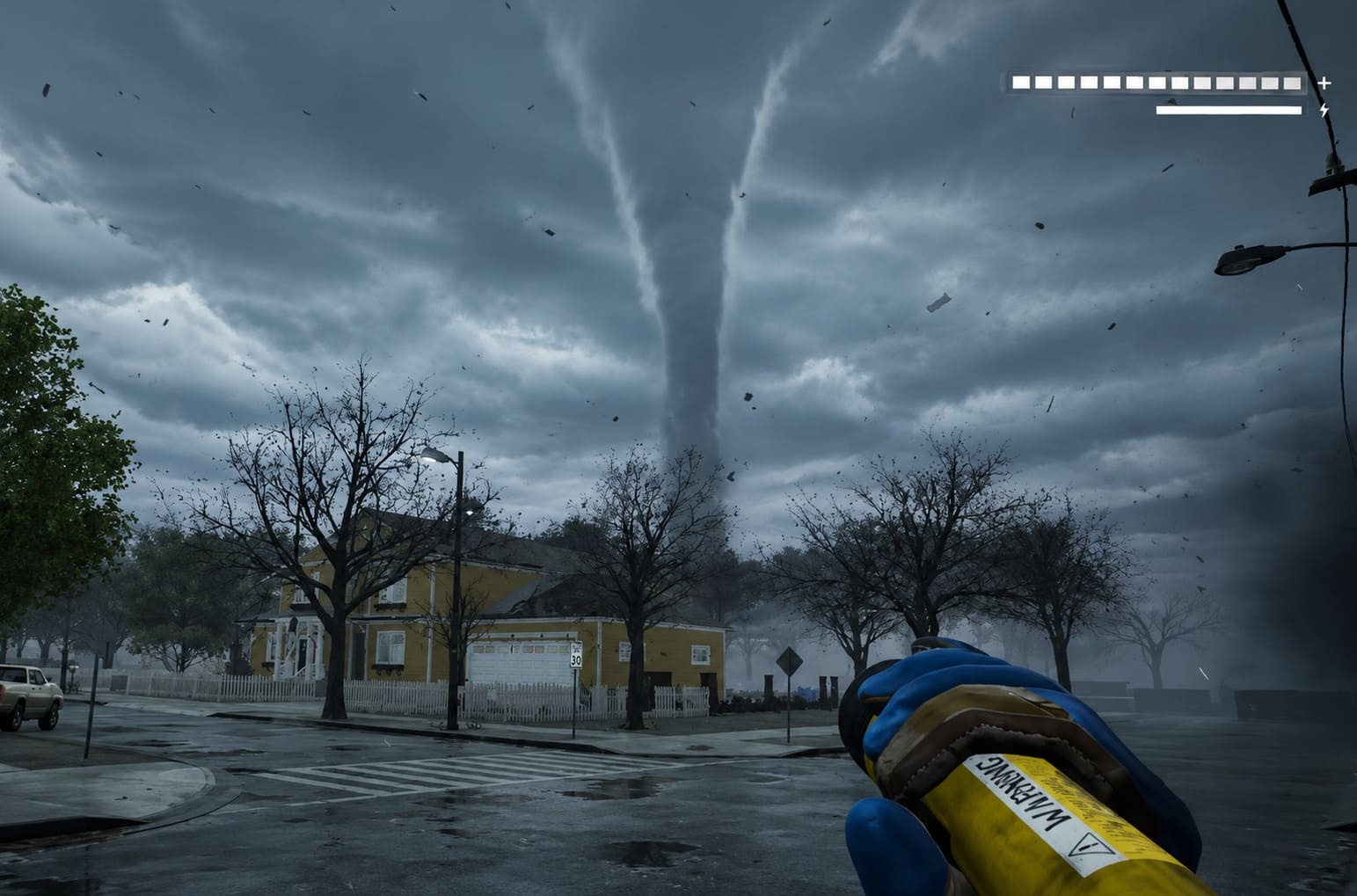
Ironically, I don’t think the tornado causes most failed runs.
The weather around it does.
Lightning is especially brutal.
The safest route isn’t always the shortest route.
Running through open streets might save thirty seconds, but those same roads become extremely dangerous once storms intensify.
Whenever possible I move:
- Through backyards.
- Between houses.
- Inside connected structures.
- Beneath covered entrances.
It feels slower.
Most of the time it’s actually safer—and safer usually ends up being faster because you aren’t constantly recovering health.
Never Ignore Downed Power Lines
Electrical hazards are easy to overlook because everyone focuses on the funnel cloud.
Don’t.
Once buildings begin collapsing, streets rapidly become filled with live power cables.
Stepping into one can completely ruin an otherwise perfect run.
If a main road becomes blocked, don’t force your way through.
Find another route.
The extra minute spent walking around is far better than losing half your health or becoming unable to move while the tornado catches up.
Darkness Changes Everything
As the storm grows stronger, visibility drops dramatically.
This is where players who skipped flashlights usually regret it.
Searching abandoned houses in near-total darkness wastes valuable time.
You miss repair items.
You miss medical supplies.
Sometimes you even miss the exit.
A flashlight or headlamp isn’t exciting loot, but after several matches I started treating lighting equipment as essential rather than optional.
The faster you identify items inside buildings, the faster you’re back outside before conditions worsen.
Shelter Isn’t Failure
One lesson the game teaches surprisingly well is knowing when to stop moving.
Sometimes the smartest decision is simply staying alive.
If the tornado completely blocks your route back to the van, don’t panic.
Look for the strongest building available.
Brick buildings consistently feel more reliable than lightweight wooden homes.
Once inside:
- Stay away from windows.
- Move toward interior rooms.
- Avoid upper floors if possible.
- Prepare for debris.
If your team has collected construction materials, reinforcing entrances can buy precious extra seconds.
Those moments often allow the storm to move just enough for your escape route to reopen.
Solo Play Requires a Different Mindset
Playing alone almost feels like a different game.
Without teammates, every decision becomes significantly more expensive.
You can’t rely on someone else bringing repair parts.
Nobody will revive you.
Nobody is watching your back.
Because of that, I play much more conservatively.
Instead of exploring huge sections of town, I focus almost entirely on locations most likely to contain vehicle components.
If the weather suddenly becomes aggressive, I leave immediately.
Greed ends solo runs faster than almost anything else.
My Favorite Team Setup
After trying several different approaches, this formation has consistently produced the best results.
| Role | Players | Primary Responsibility |
|---|---|---|
| Mechanics | 2 | Diagnose and repair the van. |
| Search Team Alpha | 2 | Vehicle parts. |
| Search Team Bravo | 2 | Fuel and tools. |
| Support Team | 2 | Medical supplies, backup, transportation. |
Everyone always knows their objective.
Nobody wastes time wondering where to go next.
Communication becomes much cleaner.
Small Habits That Quietly Win Matches
Some habits don’t seem important until you’ve survived dozens of games.
These are the little things I now do automatically:
- Drop repair items beside the van instead of carrying them forever.
- Keep checking weather conditions instead of staring at loot.
- Leave buildings immediately if structural damage begins.
- Avoid sprinting unnecessarily to preserve stamina.
- Watch where teammates are instead of only watching the map.
- Never assume another player has already searched an area.
Individually these choices look small.
Together they dramatically improve survival rates.
Funnel Runners Early Access Roadmap: 1990s Retro Storm Chasing Lore & Game Updates Explained
Final Thoughts
Funnel Runners succeeds because it constantly creates tension without relying on cheap difficulty. Every match tells a slightly different story. Sometimes your team escapes with seconds remaining after a desperate final repair. Other times the tornado swallows half the city before anyone even finds the first replacement tire.
That’s exactly why I keep coming back.
The game rewards planning more than reflexes, communication more than individual skill, and good judgment more than reckless speed.
If I could give one piece of advice to every new player, it would be this:
Respect the clock more than the tornado.
The funnel only finishes what wasted time started.
Once your team learns to diagnose the van immediately, prioritize essential repairs, travel in pairs, and recognize when it’s time to abandon loot for safety, you’ll be surprised how much more manageable even the most chaotic F5 runs become.
Surviving Funnel Runners isn’t about outrunning the storm.
It’s about staying one decision ahead of it.