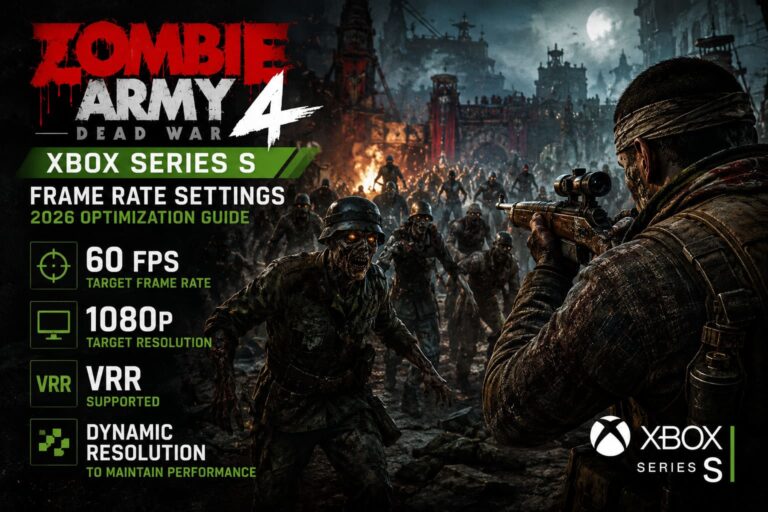
33 Immortals Price Drop After Launch — Why the 1.0 Release Feels Like a Win for Fans
When I first booted up 33 Immortals during its Early Access phase, I didn’t expect it to become one of those multiplayer experiments I’d still be thinking about a year later.
I’ve played a wide range of co-op games and roguelikes, and most of them follow a familiar pattern: strong launch hype, a gradual drop in players, and then either stabilization or quiet abandonment. This game, however, took a different path during its 1.0 release, especially with its unexpected pricing change.
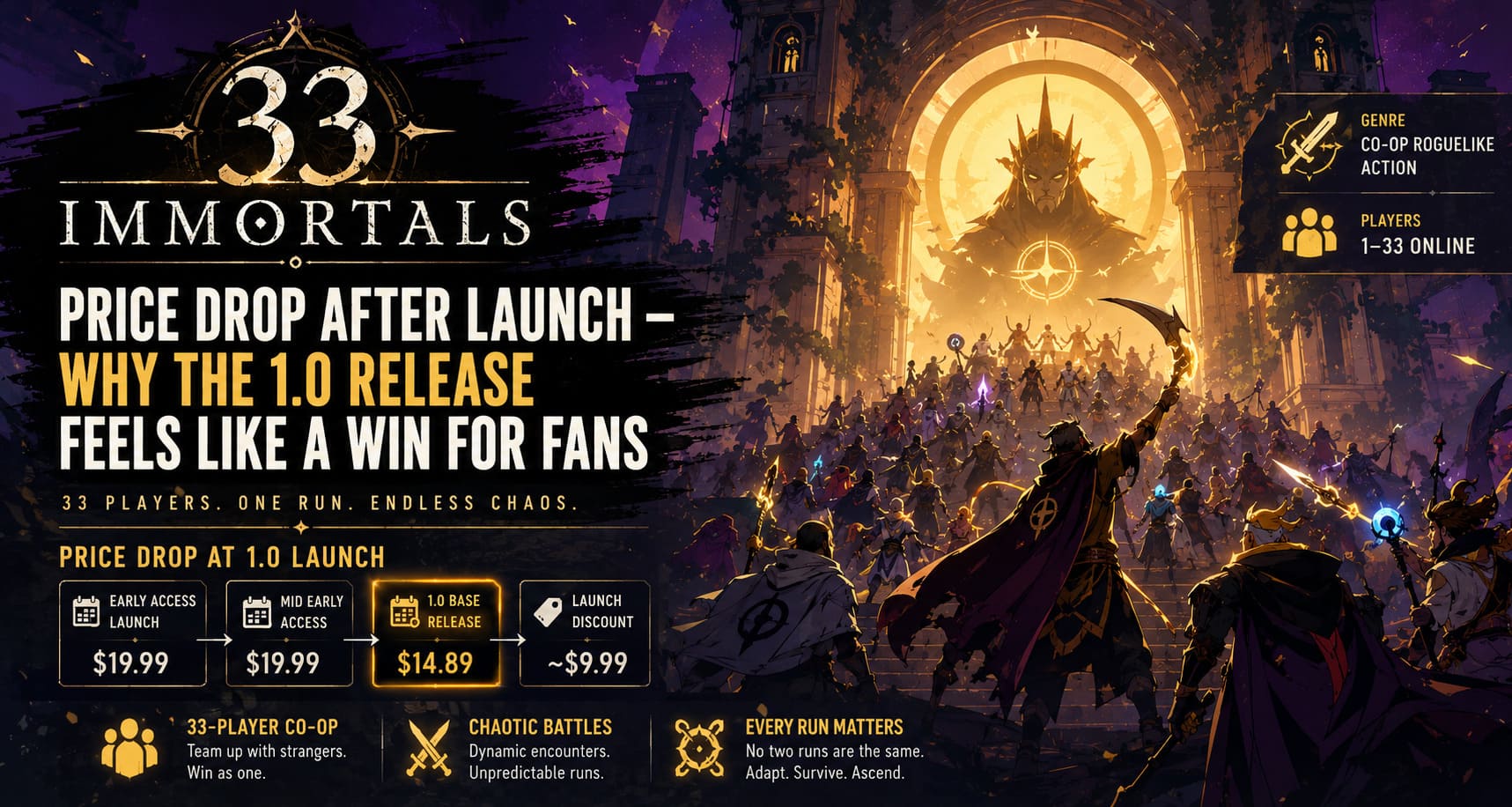
At its core, 33 Immortals is not a traditional roguelike. It’s closer to a large-scale cooperative chaos system where 33 strangers are thrown into the same run and expected to function as a single unit.
The result is a mix of structured gameplay and unpredictable teamwork that feels both messy and surprisingly cohesive at the same time.
33 Immortals Tier Lists Explained: All Weapon Stats & Beginner’s Tips
A Multiplayer System Built on Chaos
What makes the game stand out is not just combat or progression, but scale. Instead of small groups or solo runs, everything revolves around maintaining a full lobby of 33 active players. That changes everything about how the game behaves.
From my experience, runs typically feel like this:
- Constant movement and overlapping objectives
- Coordination that emerges naturally rather than being forced
- Occasional confusion that somehow still leads to success
- A strong dependence on active player population
This last point is critical because the entire design of the game depends on matchmaking health. Without enough players, the system simply doesn’t work as intended.
The Unexpected Price Change at Launch
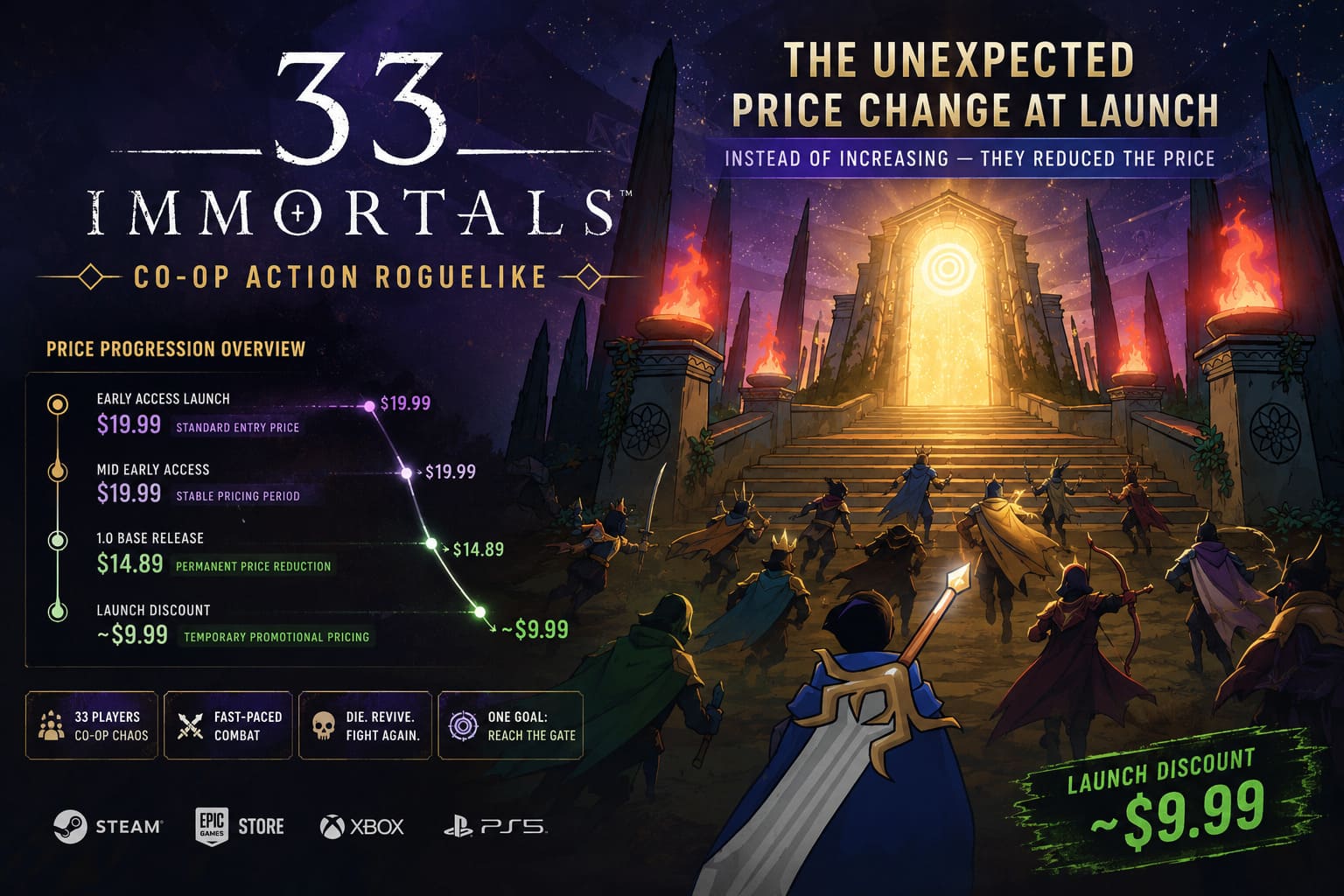
Most Early Access games follow a predictable pricing pattern: early adopters pay less, and the full release increases the price due to added content and polish. That’s what many players expected here as well, especially since developers had previously suggested a price increase.
Instead, the opposite happened during the 1.0 launch.
Rather than increasing the price, the developers reduced it significantly and paired it with launch discounts across platforms.
Price progression overview
Here’s how the pricing shifted over time:
| Phase | Price | Notes |
|---|---|---|
| Early Access Launch | $19.99 | Standard entry price |
| Mid Early Access | $19.99 | Stable pricing period |
| 1.0 Base Release | $14.89 | Permanent price reduction |
| Launch Discount | ~$9.99 | Temporary promotional pricing |
Why Lowering the Price Actually Makes Sense
At first glance, this might look like a simple revenue sacrifice, but in practice it’s a strategic move tied directly to how the game functions.
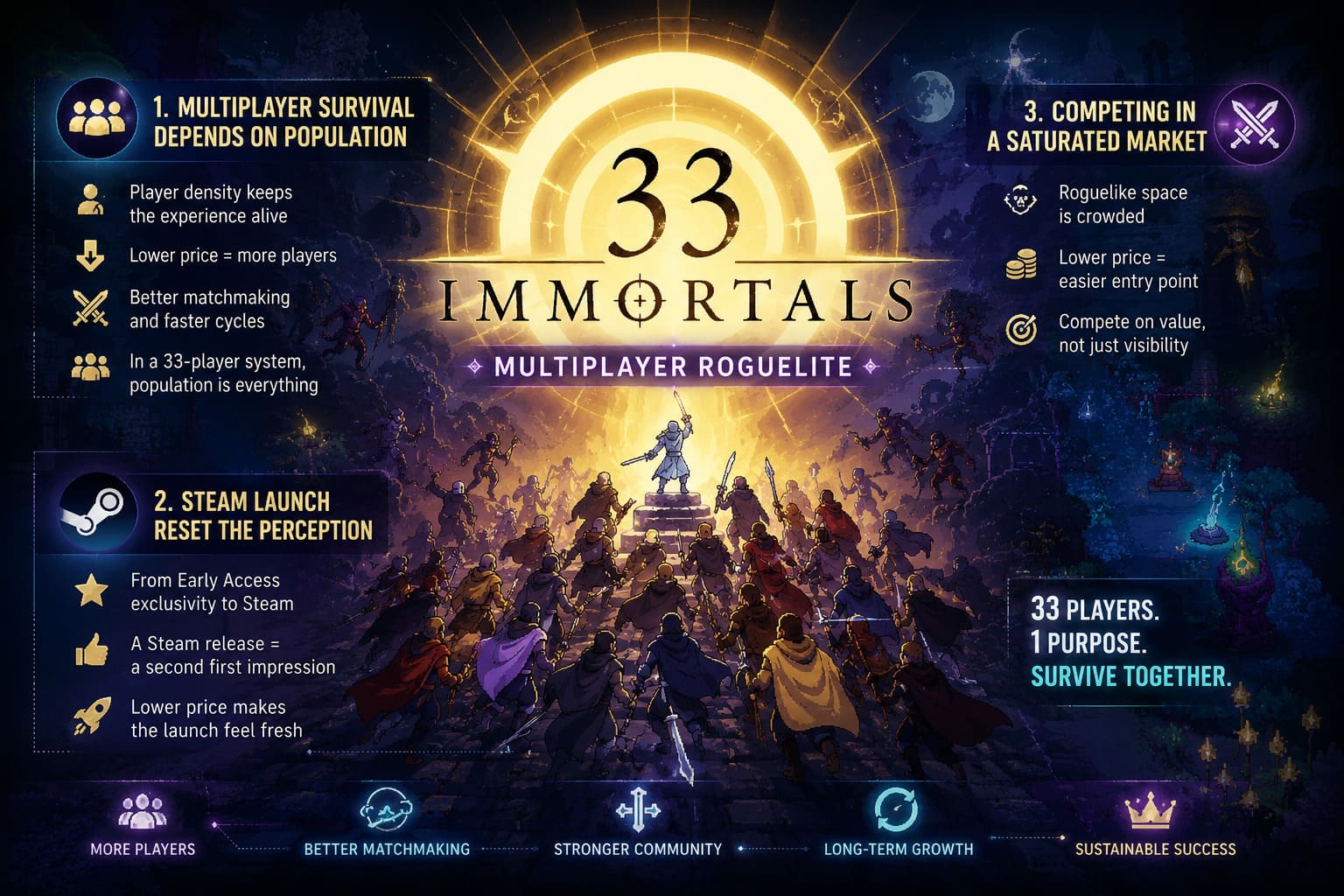
1. Multiplayer survival depends on population
The biggest challenge for a game like this is not content—it’s player density. If matchmaking slows down, the entire experience collapses. I’ve seen similar games lose momentum simply because queues became inconsistent or too long.
Lowering the price reduces friction for new players. It encourages impulse purchases, group entry, and faster matchmaking cycles. In a 33-player system, that isn’t just helpful—it’s essential.
2. Steam launch reset the perception
Moving from Early Access exclusivity to Steam changes how players perceive the game. Many users simply avoid certain platforms altogether, so a Steam release already acts as a second first impression.
Pairing that launch with a lower price makes it feel like a fresh start rather than a continuation of Early Access history.
3. Competing in a saturated market
The multiplayer roguelike space is crowded. Between extraction shooters, survival co-op games, and indie roguelites, attention is the most valuable resource. A lower price positions the game as an easy entry point rather than a considered purchase.
Early Access Player Compensation
One of the biggest risks when lowering a game’s price after Early Access is community backlash. Early supporters often feel punished for buying early.
To prevent that, the developers introduced compensation in the form of cosmetic bundles and exclusive rewards.
- Free cosmetic packs for Early Access players
- Total value exceeding the price difference
- Exclusive “Founding” rewards for early supporters
This approach softened criticism significantly and reframed early adopters as foundational supporters rather than overpaying customers.
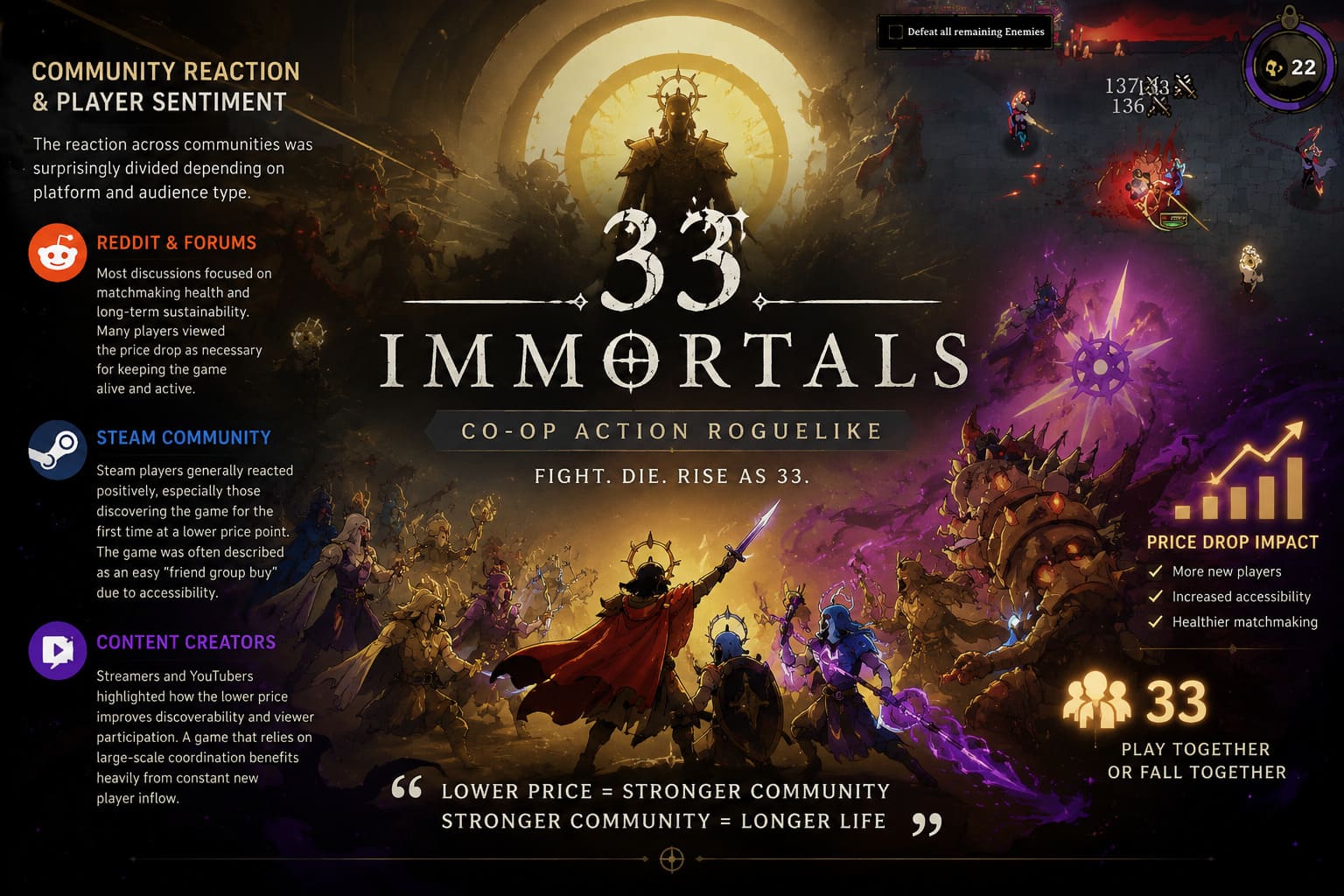
Community Reaction and Player Sentiment
The reaction across communities was surprisingly divided depending on platform and audience type.
Reddit and forums
Most discussions focused on matchmaking health and long-term sustainability. Many players viewed the price drop as necessary for keeping the game alive and active.
Steam community response
Steam players generally reacted positively, especially those discovering the game for the first time at a lower price point. The game was often described as an easy “friend group buy” due to accessibility.
Content creators
Streamers and YouTubers highlighted how the lower price improves discoverability and viewer participation. A game that relies on large-scale coordination benefits heavily from constant new player inflow.
Personal Experience and Long-Term Value
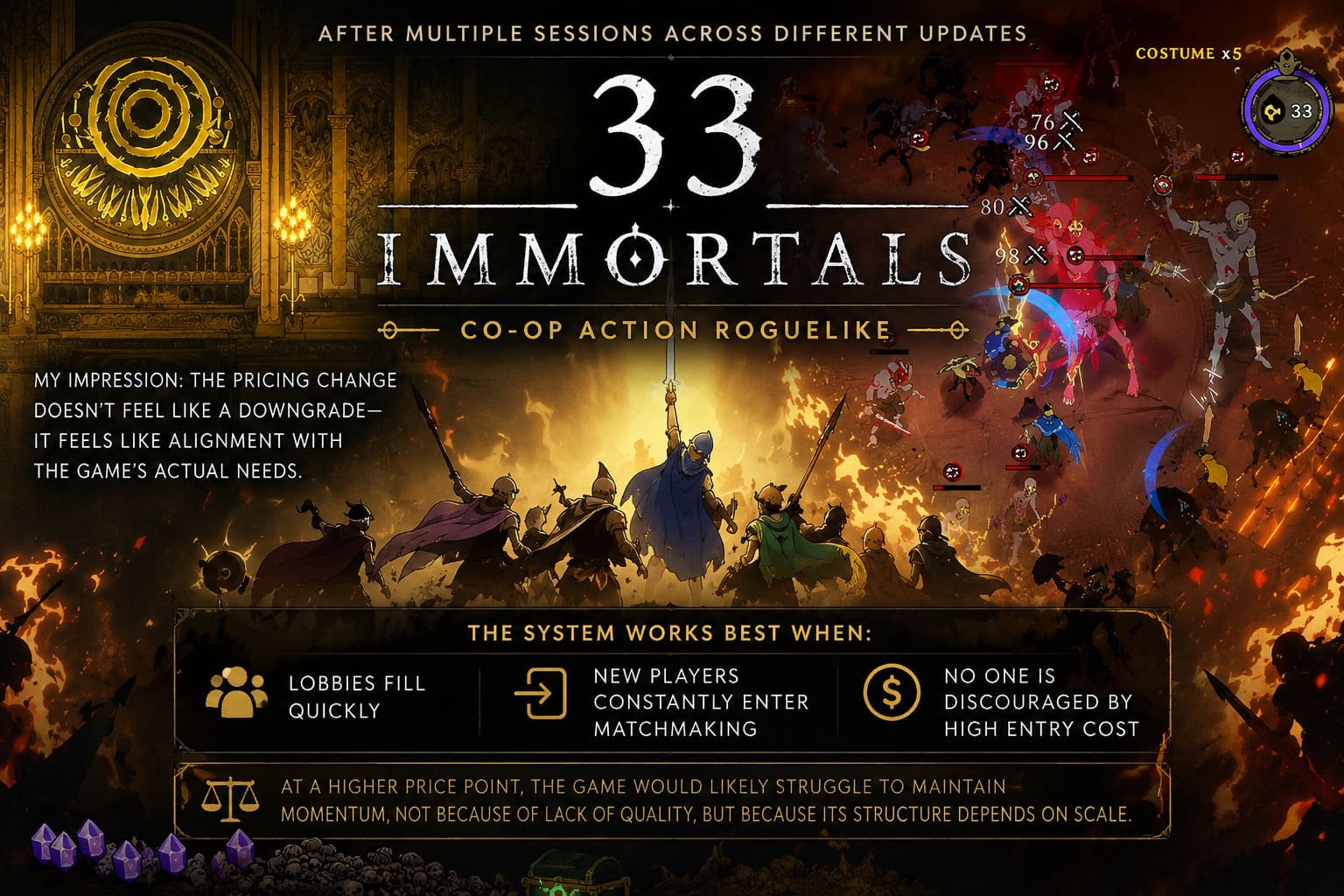
After spending multiple sessions across different updates, my impression is that the pricing change doesn’t feel like a downgrade—it feels like alignment with the game’s actual needs.
The system works best when:
- Lobbies fill quickly
- New players constantly enter matchmaking
- No one is discouraged by high entry cost
At a higher price point, the game would likely struggle to maintain momentum, not because of lack of quality, but because its structure depends on scale.
Final Thoughts
The 1.0 launch of 33 Immortals demonstrates something that many multiplayer developers overlook: pricing is not just a business decision, it is a design tool.
By lowering the price instead of increasing it, the developers prioritized long-term ecosystem health over short-term revenue gains. In a game where population density defines success, that decision may be the difference between long-term relevance and gradual decline.
From my perspective, it’s one of the more interesting examples of modern multiplayer strategy done right.