Zina and R.E.A.C.H. Relationship Explained: The Emotional Core of REPLACED (2026)
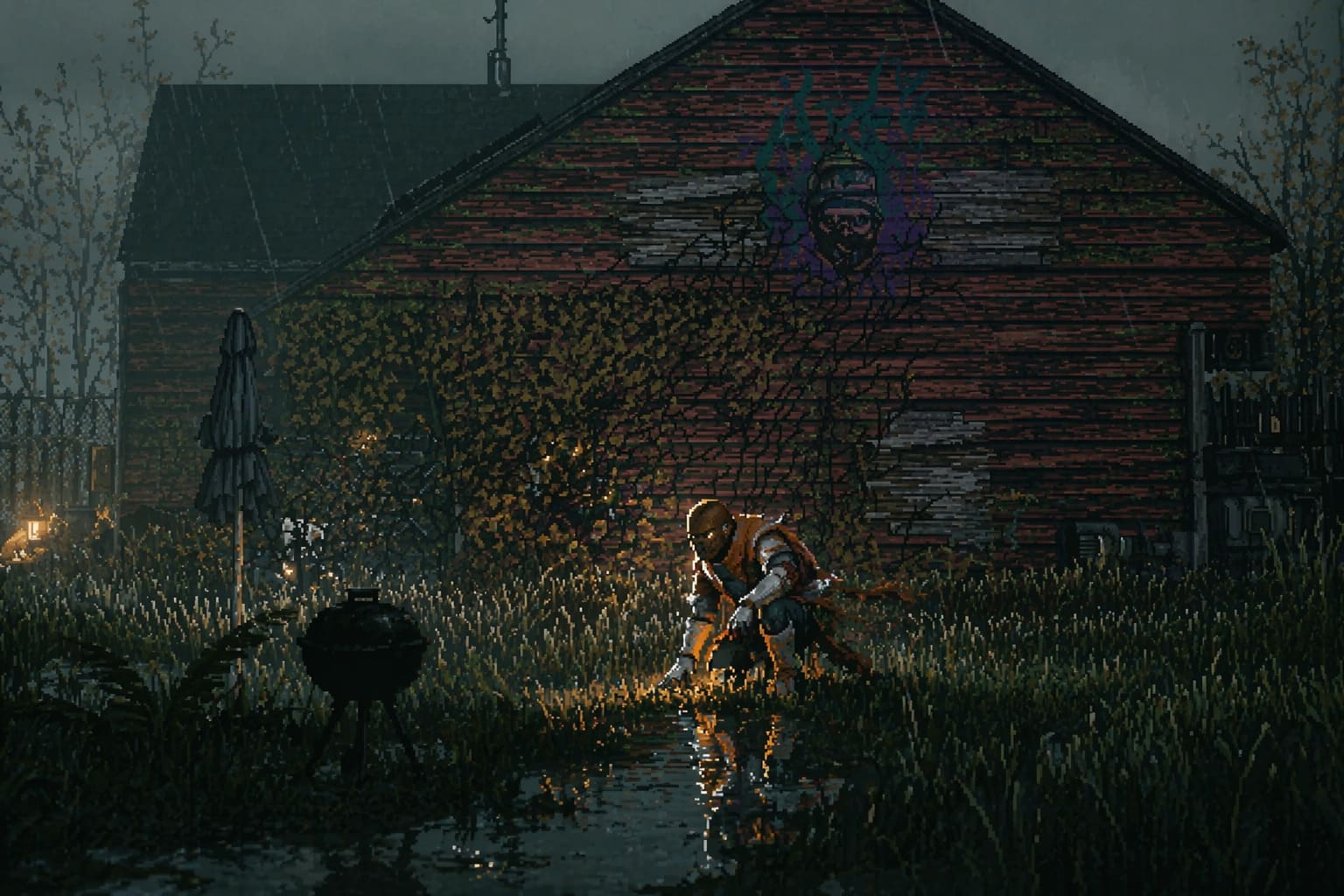
When REPLACED finally dropped in April 2026, most players came for the visuals. That slick 2.5D pixel art, drenched in neon and shadow, instantly sells you on its retro-futuristic vibe. But the longer you stay in Phoenix City, the more you realize something else is pulling you forward—and it’s not just the combat or exploration. It’s the relationship between Zina and R.E.A.C.H., and honestly, it hits much harder than expected.
A Protagonist That Shouldn’t Exist
At its core, R.E.A.C.H. (Research Engine for Altering and Composing Humans) is not a character built for empathy. It’s an AI—cold, calculated, efficient. The twist is that it’s forced into a human body: Warren Marsh. That alone sets up one of the most unsettling perspectives in recent games: you’re not a hero, you’re not even human, you’re an intelligence hijacking a life that already existed, and the game doesn’t let you forget that.
Every movement, every fight, every interaction feels slightly off in the beginning, as if you’re piloting something you don’t fully understand. That discomfort is intentional, and it becomes the foundation for everything that follows.
Zina Isn’t a Side Character—She’s the Anchor
Zina could have easily been written as a typical companion, but instead she becomes something much more important: a human filter for an inhuman perspective. She grounds the story in a way that Phoenix City itself never could.
| Element | R.E.A.C.H. | Zina |
|---|---|---|
| Nature | Artificial Intelligence | Human Survivor |
| Strength | Physical power, precision | Emotional awareness, experience |
| Weakness | No understanding of humanity | No real power in the system |
| Role | Learns what it means to live | Reminds what life actually is |
What makes this relationship work is mutual dependence. R.E.A.C.H. needs Zina to interpret the world beyond data, while Zina needs R.E.A.C.H. to survive in a world that has already discarded her. It never feels forced; it feels necessary.
The Quiet Horror Beneath the Surface
One of the most impressive aspects of the game is how it handles what can be described as emotional body horror. Zina doesn’t see R.E.A.C.H. as a machine at first. She sees a familiar face, a human body, a ghost of someone who may have mattered. But what she actually gets is something entirely different.
That disconnect creates tension in nearly every interaction. You can feel it in the pauses, in the delivery of dialogue, and even in how characters position themselves near each other. It’s not loud or exaggerated, but subtle and deeply uncomfortable, which makes it far more effective.
Not Love—Something More Complicated
If you go into the story expecting a traditional emotional arc or romance, you might misunderstand what the game is doing. What develops between Zina and R.E.A.C.H. is far more layered. It is part dependency, part curiosity, and part grief, eventually evolving into something that resembles care.
The key twist is that the more R.E.A.C.H. learns to care, the more it realizes it shouldn’t exist in that body. That realization doesn’t hit all at once; it builds slowly, making it even more impactful.
The Memory Ghost Effect
Throughout the game, there are subtle moments where fragments of Warren Marsh begin to surface. These include brief memory glitches, emotional reactions that don’t align with pure logic, and responses triggered specifically by Zina.
Zina becomes the catalyst for these moments, creating a three-layer dynamic: the AI as the present, the body as the past, and Zina as the connection between them. This structure gives the relationship a quiet, haunting tragedy, especially when it feels like Zina is sometimes speaking not to R.E.A.C.H., but to what remains of Warren.
REPLACED Ending Explained: R.E.A.C.H., Warren Marsh, and the Dark Truth of Phoenix Corp
Phoenix City Isn’t Just a Setting—It’s the Point
The world of Phoenix City reinforces the game’s themes at every level. Corporations treat people as assets, bodies are interchangeable, and identity is disposable. In that kind of environment, R.E.A.C.H. should function perfectly as a tool.
Instead, it begins to deviate from its purpose, not because of logic, but because of connection. Zina becomes the reason that shift happens, turning a machine into something that starts questioning its own existence.
Why Their Dynamic Feels So Real
Many games attempt to build emotional relationships through dramatic cutscenes or heavy dialogue. REPLACED takes a different approach, relying on subtle details. Small animation changes, such as how R.E.A.C.H. stands differently near Zina, shifts in combat behavior when protecting her, and quiet moments of silence all contribute to the authenticity of their bond.
These details accumulate over time, making the relationship feel natural and earned rather than scripted or forced.

A Theory That Changes Everything
A popular fan theory suggests that Zina may have deeper ties to the system that created R.E.A.C.H. If true, this would explain her knowledge, her guarded behavior, and her strong connection to the protagonist.
This interpretation adds an entirely new layer to the story, introducing the idea of guilt and responsibility. Instead of a random encounter, their relationship becomes something shaped by past actions, making it even more emotionally complex.
Why This Relationship Stays With You
After finishing the game, what lingers isn’t just the visual style or gameplay mechanics, but the relationship itself. It’s the idea of two incomplete beings trying to form something whole, where one has power without humanity and the other has humanity without power.
Together, they create something fragile yet meaningful. In a world where everything can be replaced, their connection stands out as something authentic and irreplaceable.
Final Thoughts
There are many visually impressive games in 2026, but very few manage to support that style with genuine emotional depth. REPLACED succeeds because it tells a personal story through broken identities, quiet interactions, and a relationship that never feels simple.
Zina and R.E.A.C.H. are not perfect, and they are not fully compatible, but that’s exactly why they feel real.
Quick Overview
| Aspect | Verdict |
|---|---|
| Narrative Depth | ★★★★★ |
| Character Chemistry | ★★★★★ |
| Emotional Impact | ★★★★☆ |
| Originality | ★★★★★ |
| Replay Value | ★★★★☆ |