Who is the Dog Trainer? Way of the Hunter 2 Licensed Guns & Gear Deep Dive
If you’ve spent any time with hunting sims, you know they can feel both incredibly immersive and oddly lonely.
That’s exactly why the upcoming Way of the Hunter 2 caught my attention—not just because it looks like a technical upgrade, but because it finally introduces something the genre has been missing for years: a meaningful canine companion.
And no, this isn’t just a gimmick or some half-baked feature thrown in for marketing. After digging into everything revealed so far, it’s clear the dog system is one of the most thoughtfully designed mechanics in the game.
Mastering Oongka in Crimson Desert: Best Builds, Skills, and Combat Style Guide
Let’s break it down from a player’s perspective—what actually matters, what feels fresh, and whether this Foxhound is worth your time in the wild.
You Are the Trainer — And That’s a Big Deal
One thing I immediately liked: there’s no “dog trainer NPC” holding your hand.
Instead, you are responsible for shaping your companion. That might sound simple, but it changes the entire dynamic. In many games, progression is menu-based—you click upgrade, stats go up, done. Here, it’s different.
Your dog improves because of:
- Time spent together
- Successful hunts
- How you actually treat it
That shift makes the system feel earned instead of granted, which is something a lot of modern games struggle with.
Meet Your Foxhound Companion
The game introduces a Foxhound, and honestly, it’s a perfect choice.
Why? Because this breed isn’t random—it’s rooted in real-world hunting traditions. Foxhounds are known for:
- Exceptional scent tracking
- Stamina over long distances
- Strong pack bonding instincts
That last point is especially important, because the game leans heavily into the idea that your dog isn’t just a tool—it’s a partner.
How the Dog System Actually Works
At its core, the system is built on two pillars:
1. Skill Progression Through Action
Your Foxhound starts off fairly basic. It’s helpful, but not amazing. Over time, it becomes significantly more capable depending on how you play.
Key abilities include:
- Tracking animal signs – spotting footprints or droppings you might miss
- Finding life zones – identifying where animals eat, drink, and rest
- Blood tracking – following wounded prey after a shot
What I like here is that none of this feels “magical.” The dog doesn’t suddenly become overpowered—it improves in a way that mirrors real training.
2. The Bonding System (The Real Game-Changer)
If there’s one feature that stands out, it’s this.
Your dog’s obedience depends on your relationship. That means:
- A well-treated dog responds quickly
- A neglected one might ignore commands
This creates a subtle but powerful gameplay loop. You’re not just managing mechanics—you’re managing a relationship.
You build that bond through:
- Successful hunts
- Spending time together
- Positive interactions
It’s not overly complicated, but it adds a layer of emotional investment that most hunting sims completely lack.
Why This Feels Different From Other Hunting Games
If you’ve played games like theHunter: Call of the Wild, you’ll notice the difference immediately.
Those games focus heavily on realism in:
- Ballistics
- Animal behavior
- Environments
But they often miss the human (or companion) element.
In Way of the Hunter 2, the dog bridges that gap. It:
- Reduces the feeling of isolation
- Adds tactical depth
- Makes every hunt more dynamic
It’s not just about finding animals anymore—it’s about working together to track them.
Realism Done Right: Behavior and Animation
Another thing worth mentioning is how seriously the developers are taking realism.
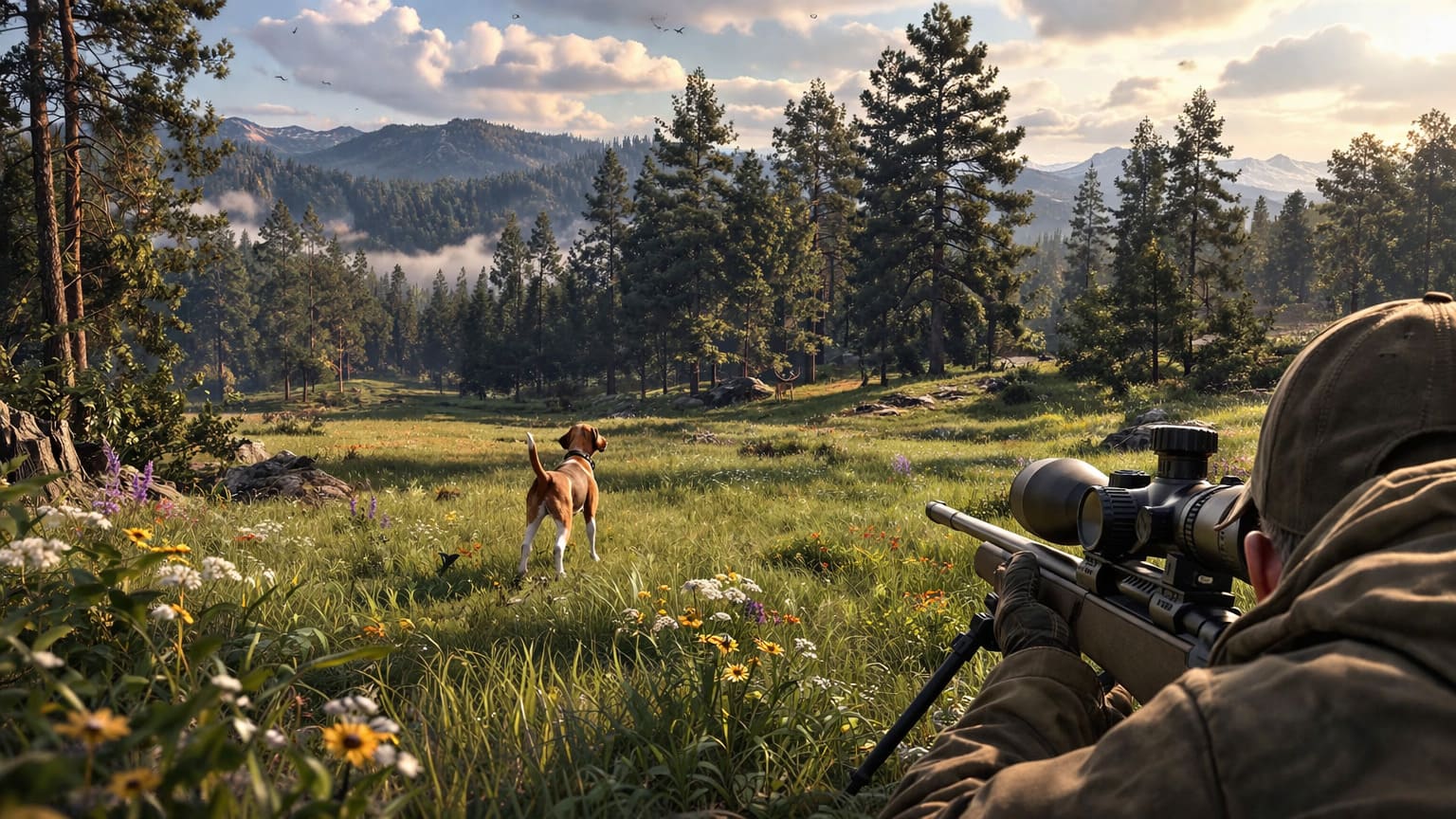
The Foxhound isn’t just following you around—it behaves like an actual hunting dog.
Notable details:
- Quartering behavior – a zig-zag search pattern used in real hunting
- Multiple movement speeds
- Environmental awareness
These touches might sound small, but they add up. Instead of feeling like an AI companion, the dog feels like a living presence in the world.
Is the Dog Required?
Here’s something I genuinely respect: the dog is optional.
If you prefer a solo experience, you can ignore the system entirely.
| Playstyle | Experience |
|---|---|
| With Dog | Easier tracking, more immersion, companionship |
| Without Dog | More challenging, traditional hunting feel |
This flexibility is important. Not every player wants assistance, and the game doesn’t force it on you.
What I Personally Like (And What I’m Watching Closely)
As someone who enjoys a mix of simulation and immersion-heavy games, this system hits a lot of the right notes.
What stands out:
- Organic progression instead of menu upgrades
- A real sense of companionship
- Gameplay impact that feels meaningful
What I’m curious about:
- How deep the bonding system really goes
- Whether the AI stays consistent over long sessions
- If skills plateau too early or keep evolving
Because let’s be honest—great ideas can fall apart if they’re too shallow. But so far, this doesn’t look like one of those cases.
Why This Feature Matters for the Genre
This isn’t just a cool addition—it could actually push hunting sims forward.
For years, the genre has been about:
- Solitude
- Patience
- Precision
Now, we’re seeing a shift toward:
- Companionship
- Interaction
- Emotional engagement
And that’s a big deal.
If done right, this system could become a new standard—something players start expecting in future titles.
More Than Just a Dog
The Foxhound in Way of the Hunter 2 isn’t just another feature—it’s a design philosophy shift.
Instead of giving players more tools, the game gives them:
- A relationship
- A responsibility
- A reason to care beyond the hunt
That’s what makes it interesting.
Whether you’re a hardcore sim player or just someone who enjoys immersive worlds, this system has the potential to make every session feel more personal—and honestly, that’s something this genre has needed for a long time.
Way of the Hunter 2 Guns & Gear Deep Dive: Why Licensed Firearms Actually Matter
If you’ve spent any time with hunting sims, you already know: guns aren’t just tools—they’re half the experience. And honestly, that’s where Way of the Hunter 2 looks like it’s making a very smart move.
Instead of going generic or fictional, the developers are leaning hard into real-world licensed firearms, and for players—especially in the North American audience—that’s a huge deal. Not just for realism, but for immersion, discussion, and yeah… a bit of that “gear obsession” we all secretly enjoy.
Let’s break down why this matters and what stands out from the confirmed lineup.
Why Licensed Guns Hit Different
A lot of games try to simulate hunting, but they miss one key thing: emotional connection to the equipment. When you see a real brand—something you’ve seen in real life, YouTube reviews, or even used yourself—it instantly changes how you approach the game.
Here’s why:
- Authenticity boost – You’re not just picking “Rifle A,” you’re choosing something with history.
- Community engagement – Players love debating calibers and setups.
- Playstyle identity – Your weapon becomes part of your character.
And let’s be honest—half the fun is tweaking loadouts and talking about them later.
Confirmed Heavy Hitters: The Core Brands
The sequel is bringing back some familiar names, and that’s exactly what fans wanted.
1. Remington – The Backbone of Any Loadout
If there’s one brand that feels almost mandatory in a hunting sim, it’s this one. The Model 700 is expected to return, and that’s a big win. It’s one of those rifles that just fits everywhere—whether you’re going after deer or something much larger.
Why it stands out:
- Extremely versatile
- Realistic recoil and handling expectations
- Multiple configurations likely (wood vs synthetic)
Popular caliber expectations:
- .270 Win – flat shooting, great for medium game
- .30-06 Springfield – classic, reliable, powerful
- .300 Win Mag – serious stopping power
This is probably going to be the “default serious hunter” choice for many players.
2. Winchester – Classic Meets Practical
There’s something about Winchester that just feels right in a hunting setting. It’s not flashy—it’s iconic. The Model 70, often called “The Rifleman’s Rifle,” is expected to play a major role. But what’s really exciting? Lever-action rifles.
They bring a completely different vibe to the game.
Why players love them:
- Faster follow-up shots
- Perfect for dense environments
- Old-school aesthetic that just hits different
If the new map includes tighter forests or closer-range encounters, expect these to become a fan-favorite niche pick.
3. Steyr Arms – Precision and Modern Design
Now this is where things get interesting. Steyr represents the more modern, high-end European approach to hunting rifles. Expected returning models include: Steyr Scout and Steyr Monobloc. These aren’t just weapons—they’re for players who care about ergonomics, modular setups, and precision shooting.
Why they’ll be popular:
- Clean, modern design
- Likely top-tier accuracy
- Ideal for long-range players
If you’re the type who enjoys setting up the perfect shot from 300+ meters away, this is your category.
Quick Comparison Table
| Brand | Playstyle Focus | Best For | Vibe |
|---|---|---|---|
| Remington | Balanced & versatile | All-around hunting | Practical, reliable |
| Winchester | Close to mid-range | Dense forests, classic hunts | Traditional, rugged |
| Steyr | Precision & range | Long-distance accuracy | Modern, technical |
Why This Matters for Gameplay
This isn’t just cosmetic licensing—it directly affects how the game feels.
1. Ballistics Will Feel More Real
Each caliber behaves differently: bullet drop, penetration, energy transfer. That means your choice isn’t just visual—it changes your success rate.
2. Loadout Strategy Becomes a Thing
Instead of “pick the strongest gun,” you’ll actually think about terrain, animal type, distance, and personal comfort. That’s where the game starts to feel less like an arcade sim and more like a true hunting experience.
3. Community Discussion Will Explode
Let’s be real—this is where a lot of longevity comes from. Players will debate things like: “Is .270 enough for elk?”, “Best rifle for beginners?”, “Scout vs Model 700 for long range?” That kind of conversation keeps games alive for years.
The “Gear-Porn” Factor (And Why It Works)
There’s a reason people spend hours browsing setups—even outside of games. This system taps into that perfectly. What players will likely enjoy: comparing rifle builds, sharing screenshots, testing different calibers, recreating real-life setups. It adds a layer of personal expression, which most sims completely miss.
My Honest Take as a Player
As someone who’s played a lot of simulation-heavy games, this is exactly the kind of direction I like to see. Not because “real brands = better game” automatically—but because it shows intent. It tells me the developers care about detail, player immersion, and long-term engagement. And more importantly—it avoids the biggest problem in hunting sims: everything feeling the same after a few hours. With this setup, your weapon choice actually matters—and that alone can carry a lot of replay value.
What I Hope to See Next
If they’re already going this deep, a few additions could make it even better: more caliber variety (especially niche rounds), optics customization (scopes, magnification differences), attachments or tuning systems, sound realism improvements. Even small upgrades here could push the experience from “good” to seriously addictive.
Final Thoughts
Way of the Hunter 2 isn’t just adding more guns—it’s building a system where gear becomes part of the gameplay identity. And that’s what makes this exciting. Whether you’re a realism-focused player, a casual hunter, or just someone who enjoys tweaking loadouts, there’s something here that will pull you in.
Because at the end of the day, it’s not just about hitting the target. It’s about how you choose to do it.