Ultimate BLACKWOOD 2026 Combat Guide: Mastering Environment Objects and Tactical Melee
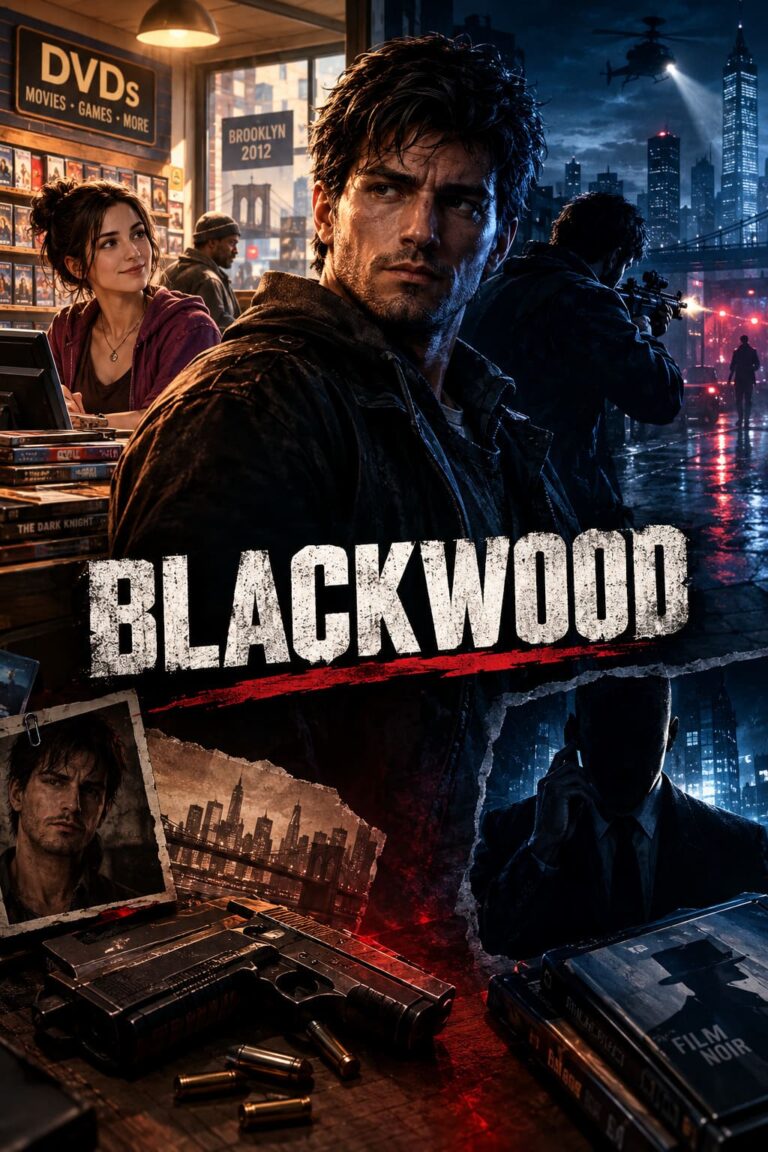
BLACKWOOD is the kind of game that rewards you for paying attention to the room instead of simply staring at your crosshair. Developed by AttritoM7 Productions and published by IZilla Games, this gritty 2026 action-thriller puts you in the shoes of Anton Blackwood, a man living two very different lives in a stylized version of 2012 New York. During the day he runs a DVD store, while at night he becomes something much more dangerous: an assassin who has to survive close-range firefights, brutal hand-to-hand encounters, and situations where a single mistake can end a run.
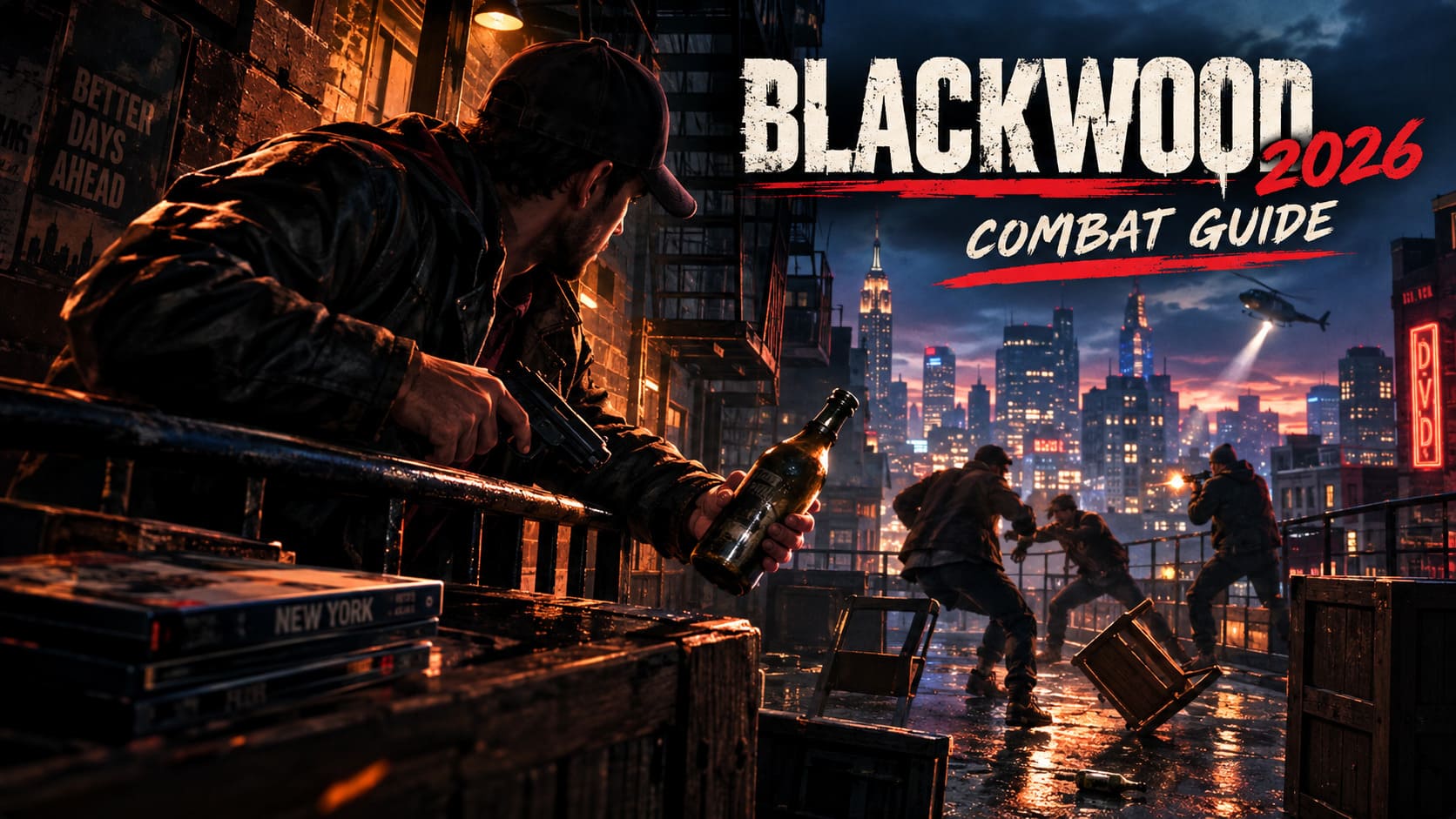
There is obviously a strong John Wick-style influence in BLACKWOOD, but what caught my attention more is how much the game wants you to use the actual space around you. Tables, chairs, crates, bottles, counters, walls, pillars, and even objects hanging from the ceiling can become part of a fight. That sounds like a small feature on paper, but it changes the way you approach almost every encounter. Instead of treating an arena as a decorative backdrop, you start looking at it as a toolbox.
This becomes particularly important on higher difficulties. Ammunition is less forgiving, enemies punish predictable behavior, and some of the visual assistance that makes combat easier on lower settings disappears. You cannot always depend on a convenient marker telling you when to attack or parry. You have to watch enemy animations, understand distances, and make quick decisions about whether it is better to shoot, punch, kick an object, or simply move.
Blackwood Apartment Customization Guide: Ultimate Base Building Tips
Why Environmental Combat Matters in BLACKWOOD
The first mistake I think players can make in BLACKWOOD is treating environmental objects as gimmicks. They are much more useful than that. The game’s physics-based combat system gives objects different levels of weight and momentum, meaning that the way you interact with something can affect the result. A bottle thrown at an enemy is obviously not equivalent to sending a heavy chair flying across the room.
The important thing is that environmental attacks are usually about creating an opening, rather than instantly winning the fight. You throw something to interrupt an enemy, kick an object to disrupt a group, or use the surroundings to create a finisher opportunity. Once you start thinking about objects in terms of timing rather than damage numbers, combat becomes much more fluid.
There are three basic interactions worth learning early:
- Throwing: Grab nearby objects and send them toward enemies to interrupt attacks, reloads, or movement.
- Kicking: Low objects can be kicked into opponents, creating stagger opportunities without requiring you to stop and pick them up.
- Contextual takedowns: Staggered enemies near certain environmental elements can trigger brutal melee finishers that use the surroundings against them.
None of these mechanics is particularly complicated on its own. The challenge comes from combining them with shooting and movement without breaking your momentum. BLACKWOOD feels best when you stop thinking in terms of separate combat systems and start treating everything as one continuous sequence.
Understanding Object Weight and Impact
Not every object in BLACKWOOD behaves the same way, and learning the rough weight categories can save you from making bad decisions during a hectic encounter. Lightweight props are fast and convenient, while heavier objects take more commitment but can produce much stronger reactions. Knowing which is which becomes especially useful when several enemies are closing in at once.
| Object Type | Examples | Best Use |
|---|---|---|
| Lightweight | DVD cases, bottles, small trash cans | Quick interrupts and emergency staggers |
| Medium-weight | Chairs, crates, wooden pallets | Knockdowns, guard breaks and crowd disruption |
| Heavy | Tables, counters, falling fixtures | Cover, positioning and powerful environmental attacks |
Lightweight Objects: Small Tools With Big Value
DVD cases, bottles and similar objects are easy to overlook because they do not feel particularly impressive. In practice, however, these are some of the most useful emergency tools in a chaotic fight. Their main advantage is speed. You can use them to interrupt an approaching melee attacker or briefly disrupt a gunman before he gets a clean shot.
Imagine running out of ammunition with an enemy already moving toward you. Instead of immediately panicking, grab whatever is within reach and throw it. Even a short stagger can be enough time to close the gap, reposition, reload, or start a melee sequence. That tiny window can make the difference between controlling a fight and getting surrounded.
Medium Objects: Where Environmental Combat Gets Interesting
Chairs, crates and wooden pallets are much more dangerous when used correctly. They generally require more commitment to pick up and throw, so you should not wait until an enemy is already standing in your face before deciding what to do. If you spot a useful object before the fight becomes chaotic, remember where it is and plan your movement around it.
A well-placed kick can be particularly effective against clustered opponents. Sending a chair into a group can cause multiple enemies to stumble, giving Anton a short but valuable opportunity to change position. This is also where movement mechanics become important because you can turn that stagger into a dive, slide, reload, or aggressive counterattack instead of simply standing still and waiting for the animation to finish.
Heavy Objects and Environmental Hazards
Large tables, counters and structural objects work differently. You are not necessarily going to pick up a massive table and throw it like a baseball, but that does not make it useless. Heavy furniture can affect how enemies approach you, while some objects can provide temporary protection from incoming fire or give you an escape route when the room starts becoming too crowded.
Overhead hazards are even more interesting. If a fixture is suspended by a chain, rope, or another breakable connection, look for ways to bring it down. Shooting or otherwise destroying the supporting element can turn the environment into an area-of-effect weapon. When several enemies are positioned underneath a heavy fixture, one well-timed environmental attack can remove a major part of the encounter without wasting precious ammunition.
Movement and Environmental Combat Go Hand in Hand
One of the things I like most about BLACKWOOD’s combat design is that movement is not just something you use to dodge bullets. It directly influences how effectively you can exploit the environment. Sprinting toward an object gives you more options than approaching it slowly, and maintaining momentum can make your next action much more effective.
The tactical dive is particularly useful here. You can use it to cross open areas, escape an enemy flank, clear an obstacle, or transition into another attack. If you aim during the dive, BLACKWOOD briefly slows the action, giving you an opportunity to line up a shot while everything around you feels slightly less frantic.
A strong sequence might look something like this: sprint toward a chair, kick it into an approaching enemy, immediately dive toward cover, then use the brief aiming slowdown to deal with a second threat. The important part is not memorizing this exact combination. It is understanding the principle behind it: every action should create the opportunity for the next one.

How to Approach Higher Difficulties
BLACKWOOD becomes considerably more demanding when you increase the difficulty, particularly because the game starts taking away some of the information that players normally rely on. Visual indicators can disappear, making combat feel less like a reaction test and more like a fight where you need to read body language.
This is where learning enemy animations becomes incredibly important. Instead of waiting for a symbol to tell you when a counter is available, watch the opponent’s shoulders, weapon movement, stance and attack preparation. Once you learn those tells, combat starts feeling more predictable without actually becoming easier.
Another important rule is never allow yourself to become trapped in a dead corner. If you have no useful object nearby, no cover, and several enemies approaching from different directions, your options disappear very quickly. Keep moving through the arena and try to preserve escape routes rather than focusing exclusively on killing the closest enemy.
A Simple Battlefield Scan Before Every Fight
Whenever you enter a new combat area, spend a second looking around before committing to the first attack. BLACKWOOD rewards players who understand the layout of an arena before the shooting starts. You do not need to memorize every prop, but identifying a few useful objects and escape routes can dramatically improve your chances.
- Find chokepoints. Narrow corridors and doorways can prevent enemies from surrounding you.
- Locate quick throwable objects. Keep at least a couple of lightweight items within reach for emergency interruptions.
- Look upward. Check for suspended fixtures, chains, breakable supports, or other environmental hazards.
- Identify solid structures. Pillars, heavy furniture and walls may become useful for contextual melee takedowns.
- Keep an escape route. Do not position yourself somewhere that leaves you with nowhere to move when the enemy numbers increase.
This preparation takes almost no time once it becomes a habit. More importantly, it changes how you see the level. Instead of entering a room and asking, ‘How many enemies are here?’, you start asking, ‘How can I make this room work for me?’ That is a much better question in BLACKWOOD.
Combining Guns, Melee and the Environment
The best BLACKWOOD players are unlikely to be the ones who only master shooting or only master melee. The real strength of the combat system comes from switching between these options at the right moment. Firearms can remove dangerous targets quickly, melee is excellent for controlling close-range threats, and environmental objects can create the openings needed to transition between both.
For example, you might shoot one enemy, kick a chair into another, dive behind a table, reload, and then finish the staggered opponent with a contextual takedown. None of these actions is extraordinary by itself, but together they create the fast, violent rhythm that makes BLACKWOOD’s combat stand out.
I also recommend resisting the temptation to constantly search for the ‘perfect’ environmental attack. Sometimes the best move is simply to shoot an enemy and keep moving. The environment is there to give you more options, not to force you into complicated combinations every few seconds.
My Biggest Combat Tip for BLACKWOOD
If I had to reduce the entire environmental combat system to one piece of advice, it would be this: keep moving and keep looking. The moment you stand still and focus only on the enemy directly in front of you, you lose much of what makes BLACKWOOD interesting. The game is built around awareness, and the most useful weapon in the room is often the one you noticed two seconds before everyone else did.
Do not underestimate simple objects because they look harmless. A bottle can interrupt an attack. A chair can break up a group. A table can give you breathing room. A hanging fixture can completely change an encounter. Once you understand the different roles these objects can play, the environments stop feeling like scenery and start feeling like part of Anton’s arsenal.
Final Thoughts
BLACKWOOD’s environmental combat is one of those mechanics that becomes more impressive the longer you play. At first, throwing a bottle or kicking a chair might feel like a fun extra feature. After spending more time with the combat system, however, you begin to understand that these interactions are connected directly to positioning, movement, ammunition management and enemy control.
That is why the system works particularly well for a game inspired by modern action cinema. The goal is not simply to eliminate everyone as quickly as possible. It is to maintain momentum, improvise when something goes wrong, and turn whatever is around you into an advantage. When everything comes together, a BLACKWOOD encounter can feel less like a conventional third-person shooter and more like a carefully controlled action sequence that you created yourself.
Master the lightweight objects first, learn how medium-weight props affect groups, understand the defensive value of heavy furniture, and start paying attention to overhead hazards. Combine those tools with dives, gunplay and contextual melee finishers, and the streets of BLACKWOOD become much less intimidating. In a game where ammunition can run low and enemies rarely give you room to breathe, knowing how to weaponize the environment may be the difference between barely surviving and completely controlling the fight.