Tiny Delivery Tropical Survival Expansion: Secret Routes, Solar Robots & Hidden Easter Eggs
If you go into Tiny Delivery expecting just a calm little driving simulator where you drop off packages and enjoy the rain hitting your windshield, you’re only seeing the surface. That’s how I felt at first too. A cozy, almost meditative experience… until I started noticing things that didn’t quite add up.
After a few hours (and way too many “just one more delivery” sessions), I realized this game is quietly hiding something much deeper. Not in a loud, horror-game way—but in a subtle, almost playful “you probably weren’t supposed to notice that” kind of way.
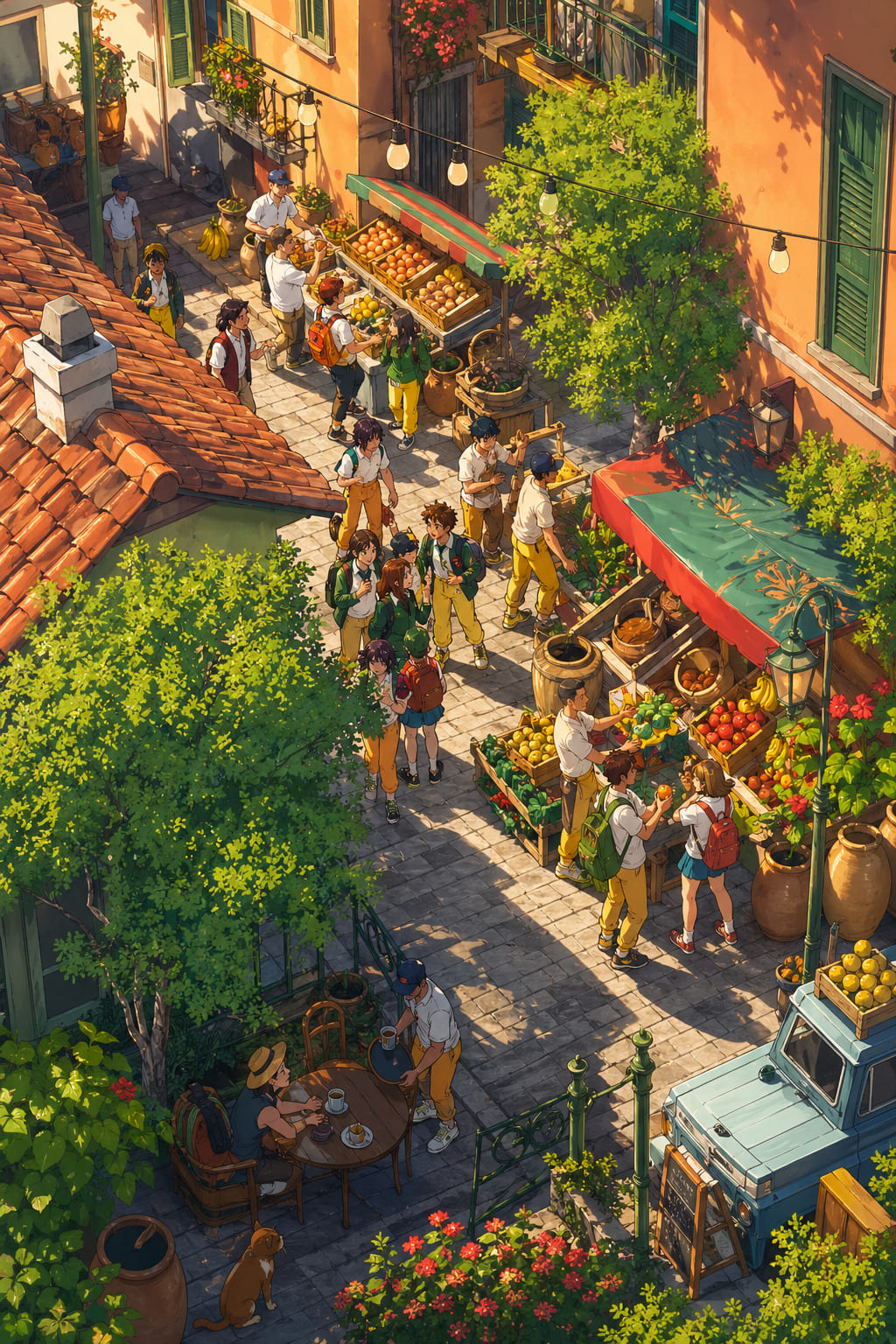
This article is a personal dive into everything strange, hidden, and slightly unsettling in Tiny Delivery, including mysterious packages, secret interactions, dev tools, and the legendary out-of-bounds discoveries players keep talking about on Reddit.
The Strange Charm of Tiny Delivery
At its core, Tiny Delivery is simple: drive a small vehicle, deliver packages, earn upgrades, and explore a quiet atmospheric world.
But the longer you play, the more the game starts to feel like it’s reacting to you. Not in obvious scripted ways, but through subtle environmental changes, odd NPC behavior, and deliveries that don’t feel “standard.”
The Mystery of Midnight Watcher Village: Siberia’s Most Disturbing Base & The Permafrost Theory
I’ve played a lot of indie games, and this one has that rare quality where you start asking: “Wait… was that always there?”
The Strange Charm of Tiny Delivery
One of the most intriguing mechanics in the game is the so-called mysterious packages. These aren’t your regular delivery jobs. They don’t behave like normal objectives, and they often feel like they belong to a different layer of the game entirely.
Here’s what makes them stand out:
- They don’t always appear on standard routes
- They trigger unusual NPC dialogue
- They sometimes alter environmental details permanently
- They can unlock hidden achievements or story fragments
One of the most talked-about interactions happens in Apartment 401. There’s a strange recurring character often described as “the man in the sweater.” Nothing about him feels random, even though the game pretends it is.
Repeated deliveries to him unlock small but meaningful rewards like “Knock Knock” achievement, “Intercom” interaction chain, and new dialogue fragments that hint at a deeper storyline. It’s subtle storytelling, but it sticks with you.
The Recovery Disk Mystery
Another object that kept popping up in discussions is the Recovery Disk. You can often find it in unexpected places like pawn shops in industrial areas.
What makes it interesting is not just its rarity, but what it unlocks. Players report that carrying it is required for certain “restore-style” endings, which seem to tie into a hidden narrative about repairing something broken in the game world.
Is it a system restore? A memory fragment? A metaphor? The game never says directly—and that’s exactly why people keep digging.
Snowy Peaks and the Coffee Encounter
The Snowy Peaks region feels like a different game entirely. Cold, isolated, and strangely peaceful.
Deep in this area is a hidden cabin where you meet a character known as MK. There’s no dramatic cutscene, no big reveal—just a quiet coffee interaction.
You get a unique achievement, a short cryptic conversation, and a feeling that you weren’t supposed to find this so easily. It’s one of those moments where the game feels alive in a very understated way.
Hidden Dev Features and Dev Menu
Now this is where things get really interesting. Players discovered a hidden developer interface hidden inside the in-game system. By interacting with specific trash or corrupted files, you can unlock something resembling a developer tool.
The dev menu features include weather and time manipulation, invincibility modes for your vehicle, instant money generation, and debug-style world controls. It’s not just a cheat menu—it feels like a leftover piece of the development process accidentally left in the final game.
And honestly, that makes it even more fascinating.
The Creepy Maze Incident
One of the more unsettling discoveries happens when your character dies under specific conditions. Instead of a standard reload screen, you get transported somewhere else entirely: a maze.
No clear explanation. No instructions. Just an eerie environment and a single message: “Under no circumstances…”
That’s it. No follow-up. No context. Players have spent a lot of time theorizing what it means, and it feels like one of those design choices meant to be interpreted rather than solved.
Exploration Secrets and Hidden Locations
The world of Tiny Delivery is bigger than it first appears. There are locations that are clearly not meant to be stumbled upon casually.
Notable hidden areas include remote bunkers marked subtly in blue, abandoned industrial structures, out-of-bounds terrain glitches, and the infamous Big Secret Bear location.
The Big Secret Bear is reached only through extreme exploration methods like flying vehicles or terrain exploitation. The reward is a bizarre achievement and a surreal visual moment that feels more like an inside joke from the developers than an actual gameplay goal.
Radio Towers and Hidden Audio Layer
One of the most underrated systems in the game is the radio tower network. There are multiple towers spread across regions like Easton, Upton, Snowy Peaks, and Lopton.
Activating them doesn’t just give completion progress—it unlocks deeper radio functionality. Some players discovered it allows custom MP3 playback, hidden audio tracks, and strange transmissions that may or may not be lore-related.
It turns exploration into something almost musical and unexpectedly personal.
Practical Tips for Secret Hunters
If you’re planning to dive into the hidden side of Tiny Delivery, here are a few things worth knowing early.
- Always carry utility items like lighters for blocked paths or survival situations
- Use duct tape upgrades early to prevent package loss
- Revisit locations often since some events only trigger after multiple visits
- Don’t rush endings because some content becomes missable depending on progression
The game rewards patience more than speed, and that’s part of its charm.
Why Tiny Delivery Sticks With You
What makes Tiny Delivery interesting isn’t just the secrets themselves—it’s how they’re presented. Nothing is shouted at you. Nothing is explained clearly. Instead, you get fragments: strange characters, hidden systems, broken-feeling menus, and quiet environmental storytelling.
As someone who plays a lot of indie games, I can say this: Tiny Delivery is one of those titles that feels bigger the less it explains. It invites curiosity instead of guiding you through it.
And honestly, that’s why players keep coming back—not just to finish deliveries, but to figure out what the game is really trying to say.
Or maybe it’s just a delivery simulator with a few clever secrets. But I don’t really believe that anymore.
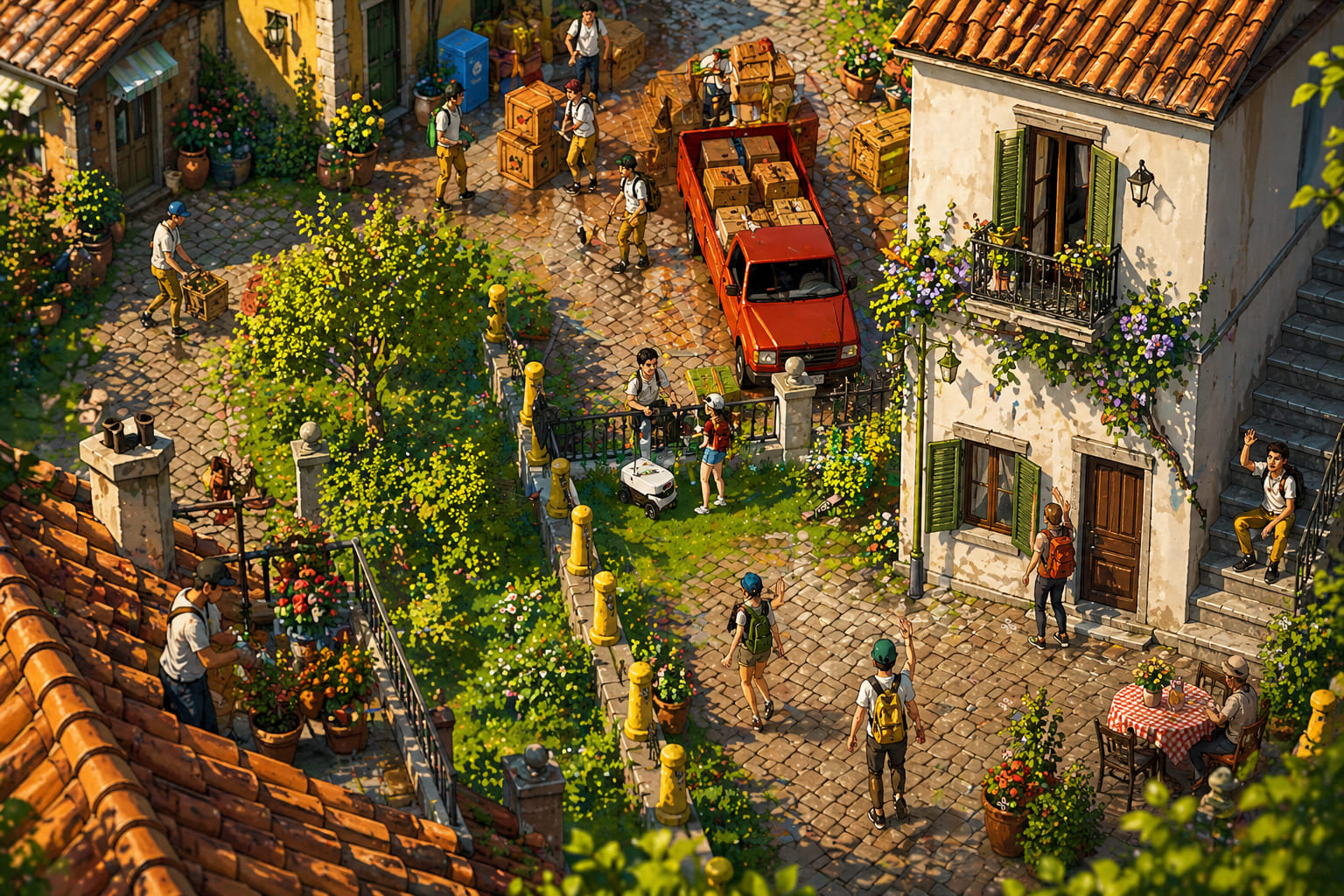
Tiny Delivery 2026: Tropical Survival Expansion Guide – Solar Robots, Heat Stress & Hidden Routes
If you’ve been following indie games for a while, Tiny Delivery (2026) is one of those projects that slowly stops feeling “small” in scope.
What begins as a simple idea about a tiny courier robot has evolved into something much more ambitious, especially with the introduction of the Tropical Expansion.
Instead of calm streets and cozy deliveries, the game now pushes players into a harsh, sun-drenched environment where survival systems matter just as much as logistics.
What stands out most is how much the game is willing to change its identity. It doesn’t just add content—it redefines how you interact with the world.
The tropical setting turns every delivery into a balancing act between energy, heat management, and environmental awareness. It feels like a natural evolution, even if it dramatically increases complexity.
A Shift From Cozy Delivery to Survival Gameplay
The original concept of Tiny Delivery leaned toward relaxed delivery gameplay, similar in spirit to minimalist logistics simulators. You would plan routes, manage packages, and enjoy a relatively calm environment. The Tropical Expansion changes that tone significantly.
Now, survival systems sit at the center of the experience. Heat, energy depletion, unstable terrain, and weather hazards are no longer background effects—they directly influence every decision you make. Instead of simply optimizing routes, you are constantly asking whether a route is even survivable in the current conditions.
This shift creates a very different gameplay rhythm. It’s no longer about efficiency alone, but about endurance and adaptation.
Solar Systems and Robot Energy Management
One of the most important changes in the Tropical Expansion is the introduction of solar-powered systems. Your robot is no longer just a machine with a battery—it behaves more like a living system that depends on environmental conditions.
The Solar-Agrivoltaic Chassis is at the core of this mechanic. It allows your robot to generate energy directly from sunlight, but it also introduces complications. Overheating becomes just as dangerous as low energy, meaning you constantly have to balance exposure and protection.
Energy storage upgrades are equally important. Without proper storage, you can end up in situations where daytime charging is wasted and nighttime exploration becomes impossible. This creates a natural cycle of planning around daylight and darkness.
Another interesting mechanic is thermal efficiency. Certain environmental elements, such as shaded areas and specific plant formations, can improve energy performance by reducing overheating. This makes exploration more tactical, since terrain itself becomes a resource.
New Biomes and Environmental Challenges
The Tropical Expansion introduces several new regions that significantly change traversal and delivery strategy. Each biome presents unique risks and forces players to adapt their approach.
The Sun-Drenched Dunes are one of the most demanding areas. High temperatures affect both movement and cargo stability, making fragile deliveries especially risky. Managing energy becomes critical, as overheating can quickly turn a simple route into a failure.
Coastal Sandstorm regions introduce unpredictable physics. Visibility drops and movement becomes unstable, forcing players to rely on timing and careful navigation. Even small mistakes can lead to lost cargo or broken routes.
AquaTrap Recovery Zones offer a rare moment of relief. These systems extract moisture from the air to cool your robot and stabilize its systems. They act as temporary safe points in an otherwise hostile environment.
Mysterious Packages and Exploration Rewards
One of the more interesting evolutions in Tiny Delivery is the way it handles hidden content. Packages are no longer just objectives—they are tied to environmental puzzles and exploration challenges.
Solar-Locked Vaults require full energy charge under specific conditions, usually during peak sunlight. This encourages players to climb, explore, and position themselves carefully before attempting access.
Hidden bunkers scattered across the map contain rare upgrades and cosmetic items. These spaces reward curiosity and encourage off-route exploration, adding depth beyond the main delivery objectives.
Environmental delivery locks further expand this system by tying rewards to weather and terrain conditions. It’s no longer enough to reach a location—you also need the right environmental state.
Gameplay Strategy Overview
The Tropical Expansion introduces multiple overlapping systems that force players to think in terms of survival planning rather than simple route optimization. Success depends on understanding how energy, heat, and environment interact.
Below is a simplified breakdown of key systems and their impact:
| System | Player Action | Consequence if Ignored |
|---|---|---|
| Solar Energy | Maximize daylight charging efficiency | Loss of power during night cycles |
| Heat Management | Use shade and cooling zones strategically | System lag and performance instability |
| Cargo Protection | Secure packages during storms | Damage or loss of deliveries |
| Exploration | Discover hidden routes and bunkers | Missed upgrades and progression paths |
What makes this system interesting is that none of these mechanics exist in isolation. Every decision affects another system, forcing players to think holistically rather than reactively.
Smaller Mechanics That Add Depth
Beyond the major systems, Tiny Delivery introduces several smaller mechanics that significantly influence gameplay feel.
The Sunburn Meter acts as a performance limiter when exposed to extreme heat. If ignored, it affects control responsiveness and movement precision, making navigation more difficult.
Duct tape returns as a surprisingly important tool. It is no longer just a humorous item but a practical necessity for stabilizing cargo during sandstorms and unstable terrain.
Vertical traversal also plays a bigger role. Elevated routes, cliffs, and aerial options open new possibilities for navigation, especially in late-game exploration scenarios.
These systems collectively add personality to the gameplay loop, making the world feel reactive rather than static.
Personal Perspective on the Expansion
What makes the Tropical Expansion interesting is its willingness to challenge player expectations. Instead of staying within the comfort zone of a delivery simulator, it introduces survival complexity that changes how you approach even basic tasks.
The solar energy system feels particularly well thought out. It avoids being a simple resource meter and instead becomes part of environmental interaction. You are not just collecting energy—you are managing exposure, terrain positioning, and timing.
At the same time, the increased complexity may not appeal to everyone. Players looking for a purely relaxing experience might find the survival elements overwhelming. The game demands attention and planning in a way that significantly raises its difficulty curve.
However, this transformation also gives the game a stronger identity. It becomes more than just a delivery simulator—it turns into a hybrid survival-exploration experience with systems that actively shape how you play.
Final Thoughts
Tiny Delivery (2026) with its Tropical Expansion represents a bold shift in direction. It expands the original concept into a more complex survival-driven experience while keeping its core identity intact. The combination of solar mechanics, environmental hazards, and exploration systems creates a layered gameplay structure that rewards planning and curiosity.
It is no longer just about completing deliveries efficiently. It is about surviving a world that constantly tests your ability to adapt. If the final release manages to balance its systems well, it could become one of the most distinctive indie games of its year.
It is a game that doesn’t just ask you to deliver packages—it asks you to understand the environment you are delivering them through.