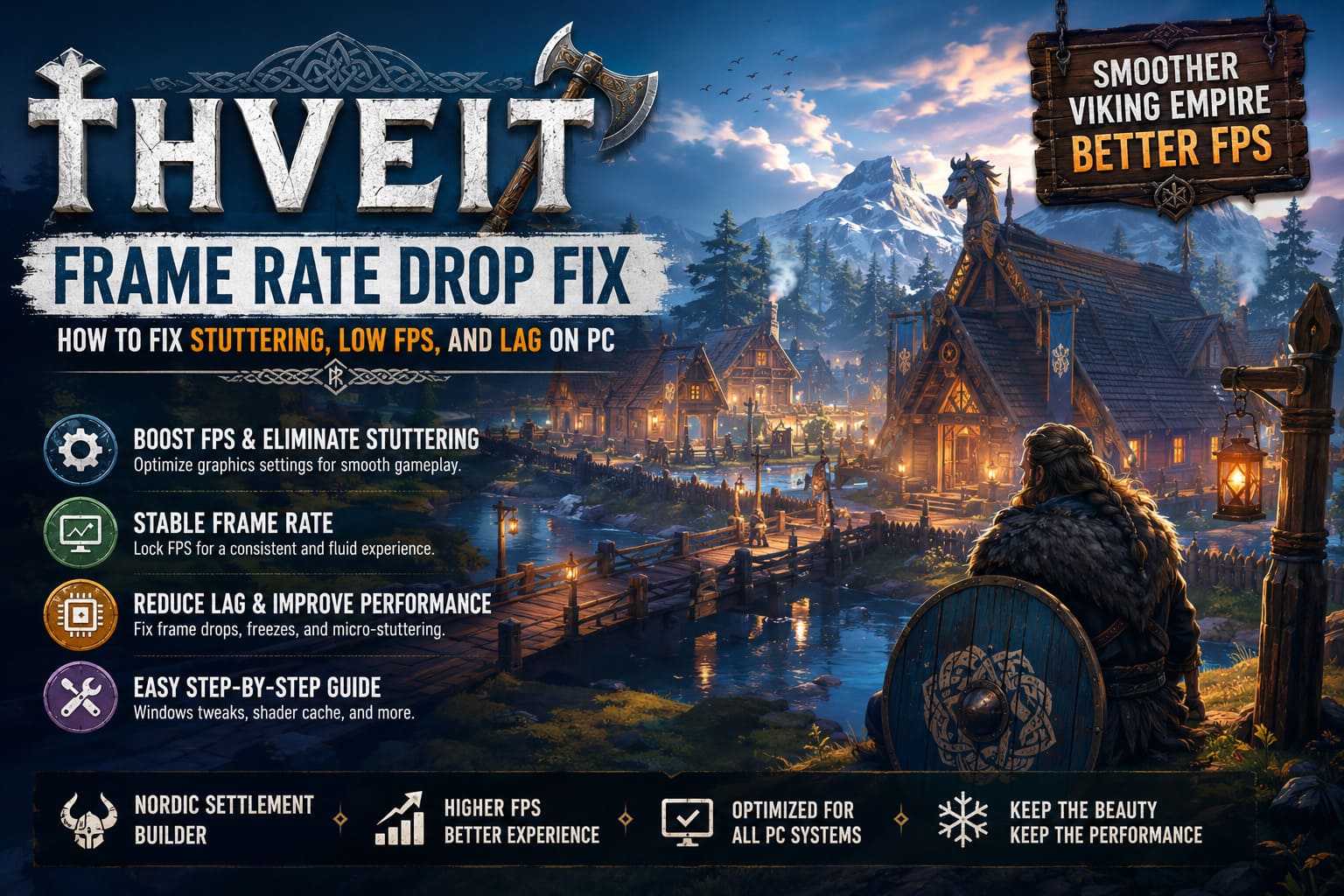
Thveit Frame Rate Drop Fix: How to Fix Stuttering, Low FPS, and Lag on PC
Thveit FPS Drops and Stuttering Fix Guide: Best PC Performance Settings
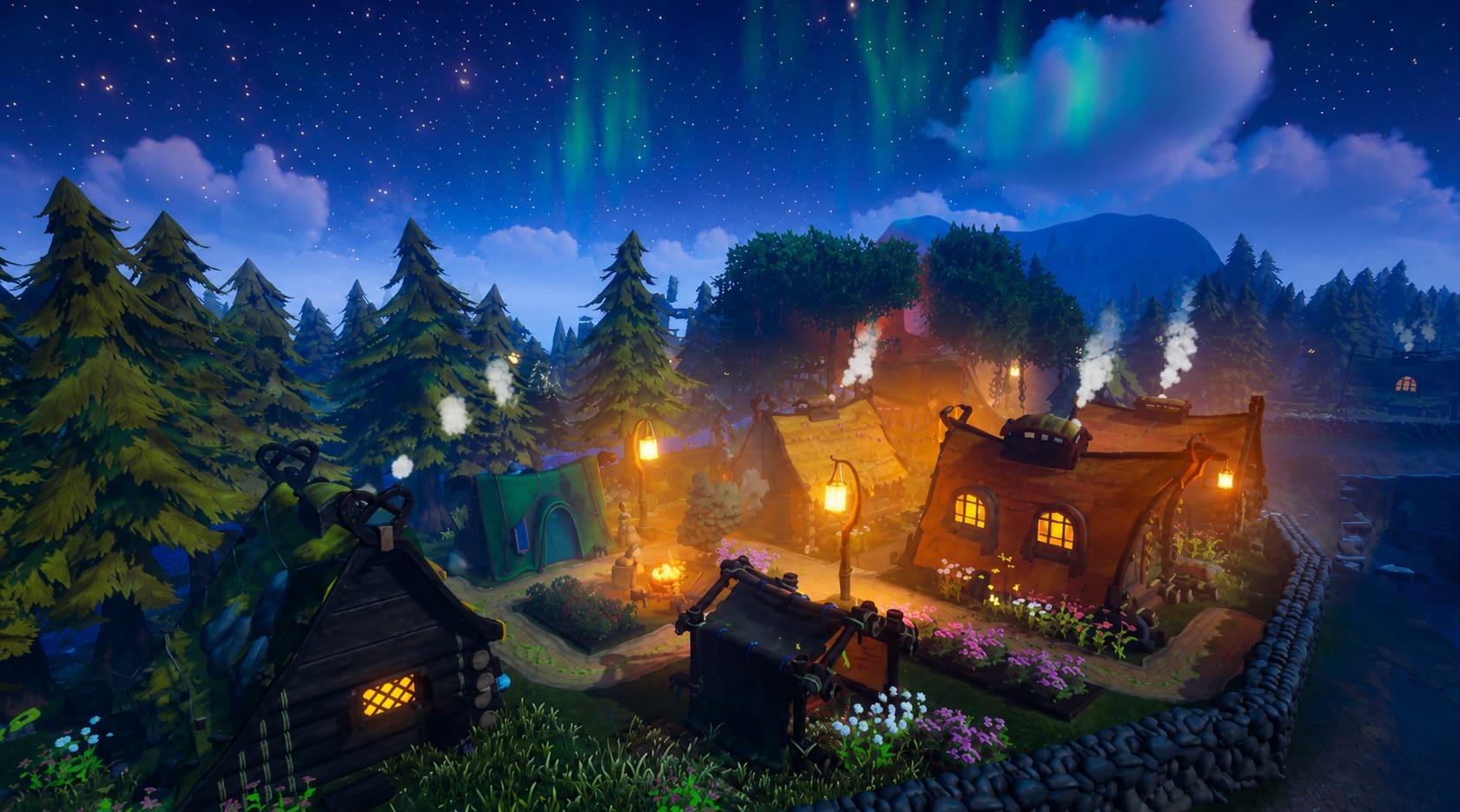
After spending countless hours with city builders, survival games, and management simulators, I have learned one important thing: even the most relaxing and beautiful game can lose its charm when performance issues start interrupting the experience. Thveit, the cozy Norse settlement builder from Winter Cats Studios, is a perfect example of a game that looks simple on the surface but becomes surprisingly demanding once your village starts growing.
The first hours of building your Viking settlement usually feel smooth. You place houses, gather resources, assign villagers, and enjoy the peaceful atmosphere. However, as your settlement expands, production chains become more complicated, AI routines increase, weather effects become heavier, and many players begin experiencing FPS drops, random freezes, frame pacing problems, and micro-stuttering.
From my experience with simulation and strategy games, these problems are rarely caused by one single setting. Games like Thveit constantly calculate AI behavior, resource movement, procedural environments, and settlement systems in the background. Even modern gaming PCs can struggle if the graphics options and Windows settings are not properly balanced.
How to Fix Thveit Black Screen on Launch Winter Cats Studios 2026 Error Guide
This guide covers the most effective ways to fix Thveit low FPS, stuttering, lag, and unstable frame rates on PC. Instead of simply lowering every visual option, the goal is to create a smoother and more consistent gameplay experience while keeping the beautiful Nordic atmosphere intact.
Check If Your PC Meets Thveit System Requirements
Before changing graphics settings or modifying Windows options, the first step is checking whether your hardware can comfortably handle Thveit. Many players immediately start adjusting settings, but if your system is below the recommended specifications, performance drops during larger settlements are expected.
Simulation games are often more demanding than they appear because they are constantly processing hundreds of small actions. A small village may run perfectly, but a large settlement filled with workers, production systems, and environmental effects creates a much heavier workload for your CPU, RAM, and graphics card.
| Component | Minimum Requirements | Recommended Requirements |
|---|---|---|
| Operating System | Windows 10 64-bit | Windows 10/11 64-bit |
| Processor | AMD Ryzen 7 5700U / Intel Core i7-1165G7 | AMD Ryzen 5 7600 / Intel Core i5-13600K |
| Memory | 8GB RAM | 16GB RAM |
| Graphics Card | Nvidia GTX 1070 / AMD RX 6600 | Nvidia RTX 3070 / AMD RX 9060 |
| Storage | 10GB SSD | 10GB SSD |
| DirectX | DirectX 11 | DirectX 11 |
If your computer is closer to the minimum requirements, you should expect performance drops when your Norse empire becomes larger. The biggest problems usually come from CPU calculations, limited VRAM, and background applications taking system resources.
Best Thveit Graphics Settings for Higher FPS
One mistake many players make is instantly lowering every graphics option to the lowest possible value. Personally, I do not recommend this approach because Thveit’s visual style is one of its biggest strengths. The better solution is adjusting the settings that have the biggest performance impact while keeping the game looking good.
Enable True Fullscreen Mode
Fullscreen mode is one of the easiest improvements you can make. Borderless window mode is convenient, but it allows Windows desktop processes to continue interacting with the game, which can sometimes create additional frame timing problems.
For better performance:
- Open Thveit graphics settings.
- Change display mode to Fullscreen.
- Restart the game after applying changes.
This small adjustment can reduce inconsistent FPS behavior, especially on systems using multiple monitors or running many background applications.
Reduce Texture Quality If You Have Limited VRAM
Texture quality usually does not heavily affect powerful graphics cards, but it can create serious problems when your GPU runs out of video memory. When VRAM becomes overloaded, the game constantly transfers assets between system memory and your graphics card, causing freezing and sudden frame drops.
Recommended texture settings:
- 4GB VRAM: Use Low texture quality.
- 6GB VRAM: Medium textures are recommended.
- 8GB or more VRAM: High textures should work comfortably.
Lower Shadows and Weather Effects
Thveit’s seasonal atmosphere looks fantastic, especially during snowstorms, foggy mornings, and changing weather conditions. Unfortunately, these effects are also some of the most demanding options in the game.
The biggest performance improvements usually come from reducing:
- Shadow quality.
- Volumetric effects.
- Fog quality.
- Post-processing settings.
A good balance is keeping textures high while lowering shadows to Medium. This keeps the world detailed while reducing the heavy calculations that often cause FPS drops.
Disable In-Game V-Sync
V-Sync can remove screen tearing, but some games handle it poorly and create input delay or unstable frame pacing. If your mouse movement feels slower or the game freezes briefly during camera movement, disabling the internal V-Sync option may help.
For many players, external synchronization through Nvidia or AMD software provides better results.
Lock Your FPS for More Stable Performance
Many players focus only on achieving the highest possible FPS, but simulation games benefit more from consistency. Thveit can easily jump between very high frame rates in empty areas and much lower FPS when viewing a massive settlement full of active systems.
A stable frame rate usually feels smoother than an unstable one. Personally, I would rather play at a locked 90 FPS than constantly bounce between 140 FPS and 60 FPS.
| Monitor Refresh Rate | Recommended FPS Cap |
|---|---|
| 60Hz | 60 FPS |
| 120Hz | 117 FPS |
| 144Hz | 141 FPS |
| 165Hz | 162 FPS |
You can apply FPS limits using programs like Rivatuner Statistics Server, Nvidia App, or AMD Software Adrenalin. A proper frame cap improves frame pacing and prevents sudden performance swings.
Fix Frame Generation and Upscaling Problems
Modern upscaling technologies can improve performance, but they can also introduce unexpected problems. Some players using frame generation tools experience FPS drops when opening construction menus, inventory screens, or management panels.
If you are using DLSS, FSR, XeSS, or external tools such as Lossless Scaling, try these fixes:
- Disable frame generation temporarily.
- Restart Thveit completely.
- Use Quality or Balanced upscaling presets.
- Avoid extreme performance modes unless your hardware requires them.
Sometimes artificial frame generation creates additional instability instead of improving smoothness, especially in simulation games with heavy UI elements.
Clear DirectX Shader Cache to Remove Micro-Stuttering
Shader cache problems are one of the most common reasons for small freezes in modern PC games. Thveit players may notice stuttering when entering new areas, changing seasons, or experiencing major weather events.
To clear the DirectX shader cache:
- Close Thveit completely.
- Open Windows Search.
- Type Disk Cleanup.
- Select your main Windows drive.
- Enable DirectX Shader Cache.
- Confirm deletion.
- Restart the game.
The first launch after cleaning may take slightly longer because the game needs to rebuild shader files.
Optimize Windows Performance Settings
Windows sometimes prioritizes background tasks instead of your game. This can affect simulation titles because the CPU constantly handles AI calculations, worker movement, and production systems.
Enable Hardware-Accelerated GPU Scheduling
To enable this feature:
- Open Windows Settings.
- Search for Graphics Settings.
- Enable Hardware-Accelerated GPU Scheduling.
- Restart your computer.
This option can improve GPU workload management on supported hardware.
Change Power Plan to High Performance
Windows Balanced mode is designed to reduce energy usage, but it can sometimes limit CPU boost behavior during demanding gameplay sessions.
- Open Control Panel.
- Select Power Options.
- Choose High Performance.
This allows your processor to maintain stronger clock speeds when managing large settlements.
Close Background Applications Before Playing
Thveit requires consistent CPU and memory resources. Background applications can interrupt important calculations and create small performance spikes that become noticeable during gameplay.
Before launching the game, consider closing:
- Browser tabs.
- Recording software.
- Streaming applications.
- RGB management programs.
- Extra launchers and overlays.
You can also disable Steam Overlay by opening your Steam Library, right-clicking Thveit, selecting Properties, and turning off the overlay option.
Final Thoughts: Getting Smooth Performance in Thveit
Thveit is the type of game where performance problems become more obvious the longer you play. A small village may run perfectly, but a massive Viking settlement with complex production chains and hundreds of calculations creates a completely different challenge for your hardware.
The best solution is not simply lowering every setting. The biggest improvements come from balancing graphics options, controlling FPS, clearing shader files, and making sure Windows gives the game enough resources.
For the smoothest experience, I recommend using:
- Fullscreen mode.
- Medium shadow settings.
- A stable FPS cap.
- Updated graphics drivers.
- Disabled unnecessary overlays.
- High Performance Windows mode.
With these changes, Thveit should feel much closer to the relaxing Norse settlement builder it was designed to be instead of becoming a frustrating experience filled with stutters and frame drops.