The Witcher 3 Remastered 2026: Release Date, Platforms, and Massive Gameplay Changes Explained
There are some game announcements that make you stop whatever you’re doing and read the details twice. The Witcher 3: Wild Hunt – Remastered is exactly that kind of announcement.
I’ve spent an embarrassing amount of time wandering around Velen, getting distracted by question marks, taking contracts I absolutely wasn’t prepared for, and telling myself I’d only play for another half hour. So when CD Projekt RED revealed a much more ambitious version of The Witcher 3 during Gamescom 2026, my first reaction wasn’t “another remaster.” It was basically: Wait, they’re actually doing this?
And according to the announced details, this isn’t simply the 2022 next-gen update with a different label. The 2026 edition is positioned as a much larger technical and gameplay overhaul, touching everything from lighting and materials to progression, combat, quality-of-life features, and mod support.
Here is what stands out to me.
The Witcher 3 Remastered Release Date Is September 29, 2026
The most important piece of information is also the easiest one to remember: The Witcher 3 Remastered launches worldwide on September 29, 2026.
This time, CD Projekt RED is targeting a broad simultaneous release rather than making players wait for different versions.
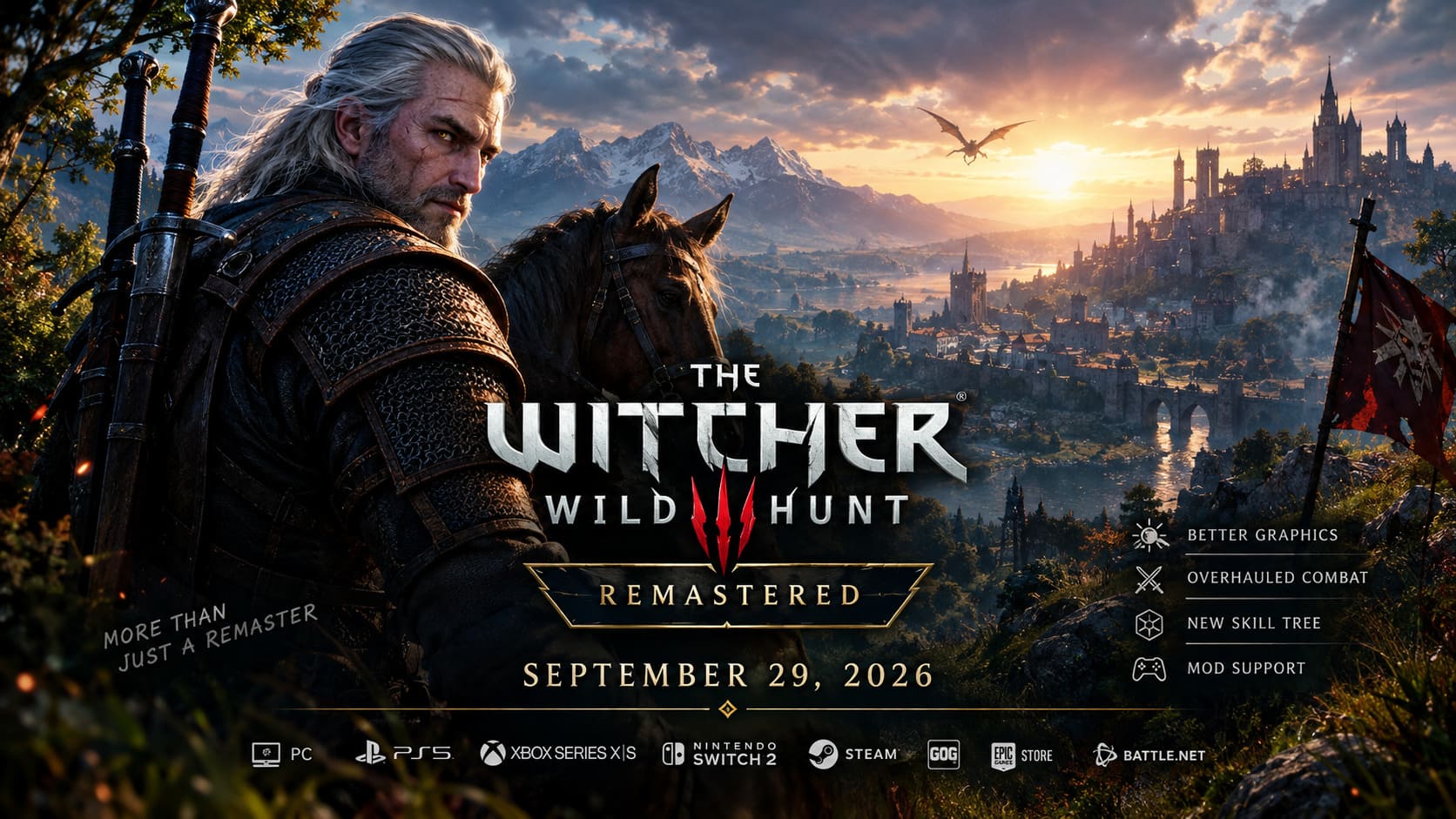
| Platform | Remastered Version |
|---|---|
| PC | Yes |
| PlayStation 5 | Yes |
| Xbox Series X | Yes |
| Xbox Series S | Yes |
| Nintendo Switch 2 | Yes |
| Steam | Yes |
| GOG | Yes |
| Epic Games Store | Yes |
| Battle.net | Yes |
The Battle.net release is particularly interesting because it gives PC players another official way to access the game. For a game that has traditionally been associated with Steam and GOG on PC, that’s a notable expansion of the ecosystem.
The Nintendo Switch 2 version also deserves attention. The original Witcher 3 on Nintendo hardware was already something of a technical curiosity, so seeing a substantially upgraded version targeted at newer hardware is one of the releases I’m most curious about.
Existing Owners Get the Remaster for Free
This is probably the part that will make veteran Witcher players happiest.
The Remastered edition is being offered as a free upgrade to existing owners on supported platforms.
That means players who already own the game don’t have to buy The Witcher 3 again simply to access the new edition. The announced upgrade applies to owners on platforms including Steam, GOG, Epic Games Store, PlayStation, and Xbox.
Even better, the Remastered package includes Hearts of Stone and Blood and Wine.
As someone who considers Blood and Wine one of the strongest pieces of RPG expansion content I’ve played, this is a big deal. Those expansions aren’t small bonus chapters that you finish over a weekend. They’re substantial adventures with their own characters, quests, locations, and stories.
For somebody discovering The Witcher 3 for the first time in 2026, the Remastered edition could therefore become the easiest version to recommend.
The Graphics Upgrade Goes Well Beyond the 2022 Update
The 2022 next-gen update already made The Witcher 3 look dramatically better on modern hardware. The 2026 Remastered edition is supposed to push things substantially further.
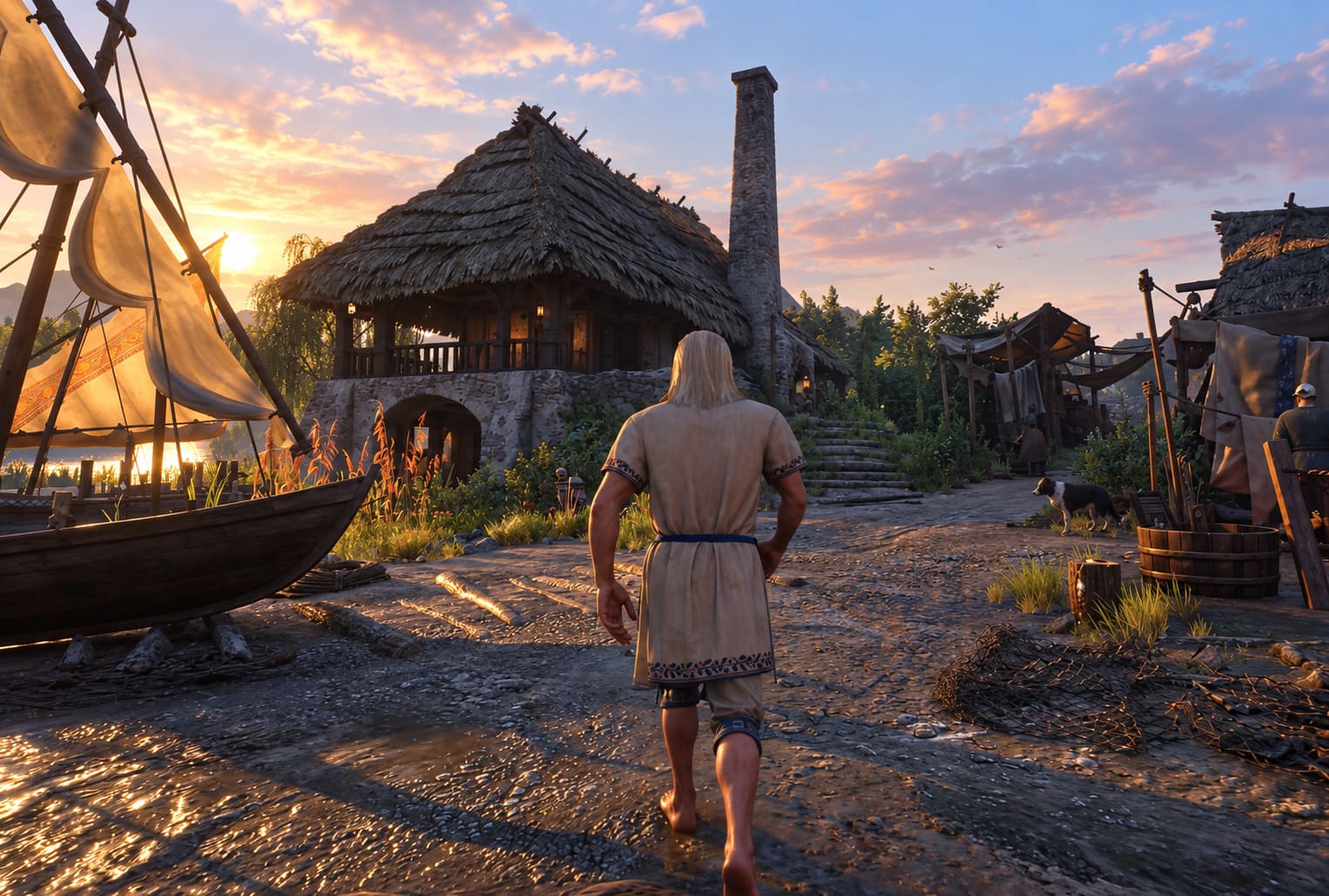
The biggest headline is full path tracing on PC.
Instead of relying on separate techniques for different lighting effects, path tracing creates a much more unified simulation of how light behaves throughout an environment. The practical difference should be most obvious in places with complicated lighting: forests, interiors, villages at sunset, caves, and rainy environments.
The announced feature set also includes NVIDIA Ray Reconstruction, intended to improve the quality of ray-traced imagery and reduce artifacts.
Then there is the new generation of upscaling technologies:
- DLSS 4.5
- AMD FSR 4
- Intel XeSS 2.0
That combination tells me something important: CD Projekt RED clearly expects the highest graphical settings to be demanding.
A More Detailed World
The visual overhaul isn’t limited to fancy reflections.
The Remastered version reportedly introduces a revised material and shading system, improved skin rendering through subsurface scattering, denser vegetation, higher-quality textures, longer draw distances, and improved reflections.
The foliage changes could actually be more important to the overall atmosphere than some of the headline ray-tracing features.
The forests, swamps, villages, mountains, and weather are part of the game’s identity. If the new foliage system makes those areas feel more natural instead of simply throwing more polygons at them, the improvement could be immediately noticeable.
Gameplay Is Getting a Much Bigger Shake-Up
This is where the Remastered edition becomes genuinely interesting to me.
A graphics upgrade is nice. A better-looking Witcher 3 is still Witcher 3. But changing progression and combat can actually alter how the game feels after dozens of hours.
A Redesigned Skill Tree
The original skill system could sometimes encourage players to specialize heavily in one area. Combat, Signs, and Alchemy each offered powerful options, but experimenting across different branches wasn’t always as comfortable as it should have been.
The Remastered version is designed to make hybrid builds more accessible much earlier.
That’s something I welcome.
One of my favorite things about RPGs is discovering combinations that weren’t necessarily obvious from the beginning. If the new progression system lets players mix swordplay, Signs, and Alchemy without feeling like they’re wasting precious points, experimentation should become much more rewarding.
Combat Is Faster and More Aggressive
Geralt’s swordplay is also getting an overhaul.
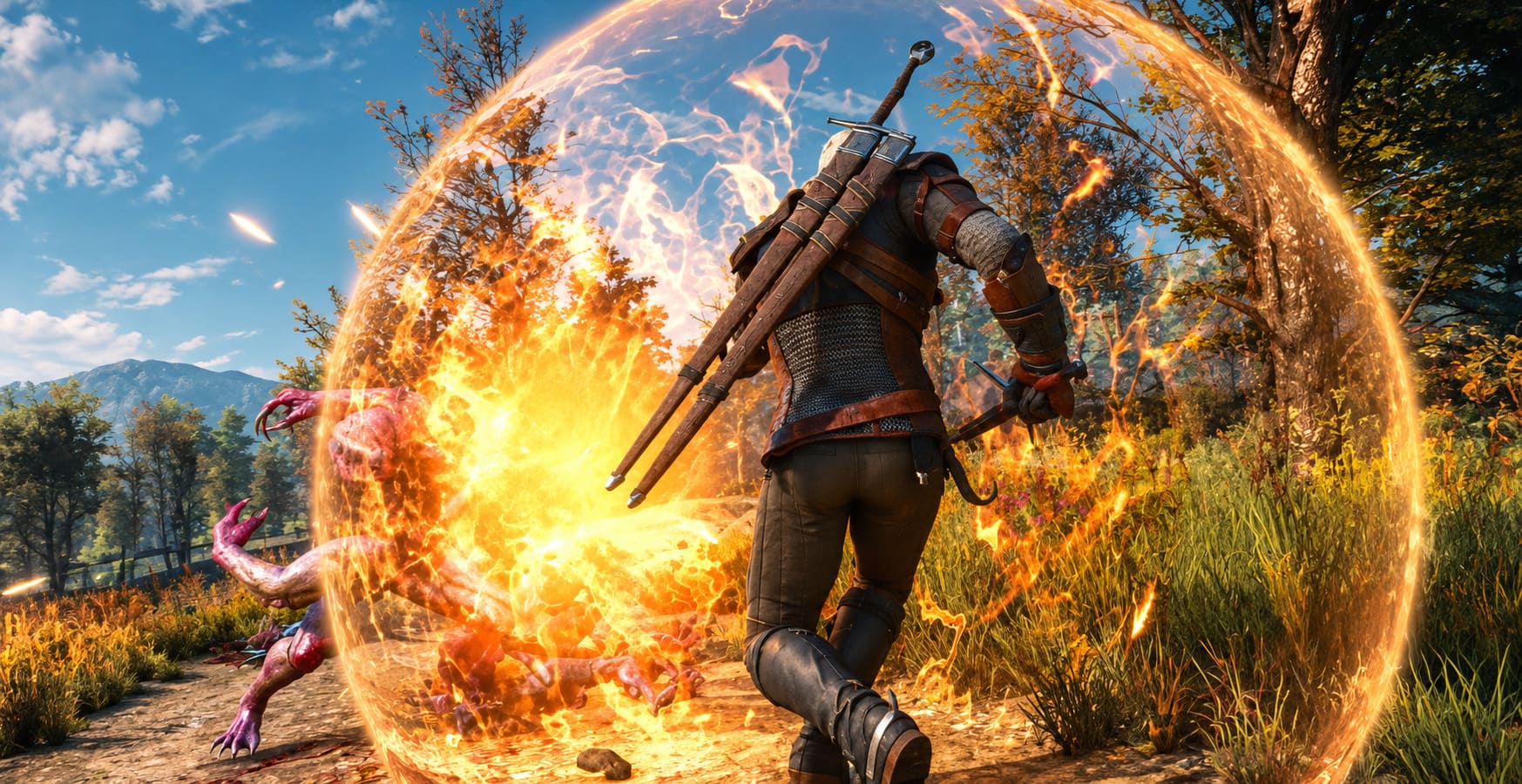
The announced changes include smoother animations, more fluid movement, smarter enemy behavior, and new finishing attacks. The most eye-catching addition is the introduction of Sign-based finishers, including executions involving Aard, Igni, and Yrden.
The enemy improvements may matter even more than the animations.
The Witcher 3’s combat has always been functional, but after years of modern action RPGs, some encounters can feel predictable. Better enemy positioning and more aggressive reactions could force players to actually prepare for difficult fights instead of relying on the same handful of attacks.
And yes, that apparently means those oils you’ve been ignoring might finally deserve some attention.
Transmog Finally Solves an Old Witcher Problem
I love the look of certain Witcher armor sets. I also love having good stats.
Unfortunately, those two things don’t always agree.
The new Reforging transmog system addresses that problem by allowing players to preserve the statistics of their equipped gear while using the appearance of another discovered item.
For me, this is one of those features that sounds minor until you actually have it.
Once you’ve spent dozens of hours building a specific Geralt appearance, being forced to wear something visually worse because it has better stats is frustrating. Transmog gives players more freedom without requiring them to sacrifice progression.
Meditation Becomes Part of the World
Another surprisingly cool change is the new approach to meditation.
The old meditation system was essentially a menu transition. The Remastered version turns it into a more immersive in-world activity, with Geralt sitting down while time, weather, and lighting change around him.
This isn’t going to transform the RPG mechanically, but it fits the atmosphere of The Witcher 3 beautifully.
Small environmental details like this are exactly what can make a remaster feel more thoughtful instead of merely more technically impressive.
Roach, UI and Photo Mode Also Get Attention
The quality-of-life changes continue with improvements to quest tracking, looting, and Roach’s handling.
I’ll be especially interested in the horse improvements. Anyone who has spent enough time with Roach knows that getting from point A to point B isn’t always as elegant as it should be.
The Remastered edition also expands photo mode with additional poses, camera controls, lighting adjustments, filters, frames, and character customization options.
Considering how beautiful The Witcher 3’s landscapes can be, a stronger photo mode makes perfect sense.
Console Mod Support Could Be a Game Changer
One of the most ambitious additions is cross-platform mod support.
According to the announced plans, PlayStation 5 and Xbox Series X|S players will receive access to a curated selection of community-created modifications.
That opens the door to things such as:
- Custom quests
- New weapons
- Additional armor
- Gameplay and balance changes
For PC players, mods have always been a huge part of extending the lifespan of The Witcher 3. Bringing a controlled version of that ecosystem to consoles could make the Remastered edition feel much more like a living platform.
The key word here is curated. Console modding is unlikely to offer exactly the same freedom as installing anything you want on a PC, but even a controlled selection would be a meaningful change.
Xbox Play Anywhere Makes the PC Version More Convenient
Another September 2026 announcement confirms Xbox Play Anywhere support.
For players purchasing or owning the digital Xbox version, this means access to the Windows Microsoft Store version without purchasing the game again.
The system also supports cross-progression and cross-saves, making it possible to move between Xbox and PC while maintaining your progress.
That’s particularly useful for a game as long as The Witcher 3. Nobody wants to restart a 100-hour adventure because they changed where they play.
PC Hardware Requirements Will Be More Demanding
There is, however, an obvious downside to all this technology.
The Witcher 3 Remastered will be significantly more demanding than the original release.
Path tracing, denser environments, upgraded materials, improved lighting, and higher-resolution assets all require additional GPU and system resources.
Fortunately, CD Projekt RED is also giving PC players a fallback option.
Players on Steam and GOG will be able to roll back to legacy versions through the beta branch system. That should be particularly useful for people running older hardware or maintaining mod setups that aren’t compatible with the Remastered build.
I actually think this is one of the smarter decisions surrounding the release. Not everyone needs the latest visual technology, and preserving an older version gives the community more flexibility.
The 2027 Expansion Is the Wildest Part
And then there is the announcement I wasn’t expecting at all.
CD Projekt RED says it is developing a new standalone Witcher 3 expansion called Songs of the Past, also known in some regions as Ballads of the Past.
The planned release is 2027, with Geralt traveling to Letten, described as the homeland of Dandelion.
The expansion is expected to introduce new monsters, unique mutagens, and a story designed to connect the original trilogy with the next generation of the franchise.
That makes it more than just another DLC pack. If the connection to the next saga is as significant as described, it could become an important piece of the transition toward The Witcher 4.
How to Fix Dressmaker Black Screen on Startup in Windows 11 (2026 Guide)
My Take: This Is More Than a Resolution Upgrade
What makes The Witcher 3 Remastered interesting isn’t simply that it will have prettier lighting.
We’ve already seen what the game looks like with modern enhancements. The real question is whether these changes improve the experience.
From the announced feature set, CD Projekt RED is attempting to touch almost every major part of the game:
| Area | 2026 Remastered Changes |
|---|---|
| Graphics | Path tracing, revised lighting, improved materials |
| Upscaling | DLSS 4.5, FSR 4, XeSS 2.0 |
| Combat | New animations, finishers, improved enemy behavior |
| Progression | Redesigned skill system and hybrid builds |
| Gear | Transmog/Reforging |
| Exploration | Improved Roach, UI and quest tracking |
| Immersion | Real-time meditation |
| Photography | Expanded photo mode |
| Mods | Curated console mod support |
| Xbox | Play Anywhere and cross-progression |
| Future Content | Songs of the Past expansion |
For longtime players, the most exciting part may actually be the chance to experience familiar locations differently. The Witcher 3 is one of those games where I can remember specific roads, taverns, forests, and quests years after playing them.
If the Remastered edition manages to preserve that identity while making combat, progression, exploration, and presentation feel modern, then this could be a genuinely substantial return to the Continent rather than another excuse to sell an old game again.
And the timing is fascinating.
With the next main Witcher saga approaching, giving Geralt’s original adventure another major technical and gameplay pass could be CD Projekt RED’s way of keeping players connected to the world before the next chapter arrives.
For me, September 29 isn’t just another release date. It’s an invitation to ride back into Velen, ignore the main quest for several hours, get distracted by a monster contract, and somehow end up playing until 3 AM again.
Some games are remastered because publishers want another launch.
The Witcher 3 is being remastered because, apparently, we’re not finished with it yet.