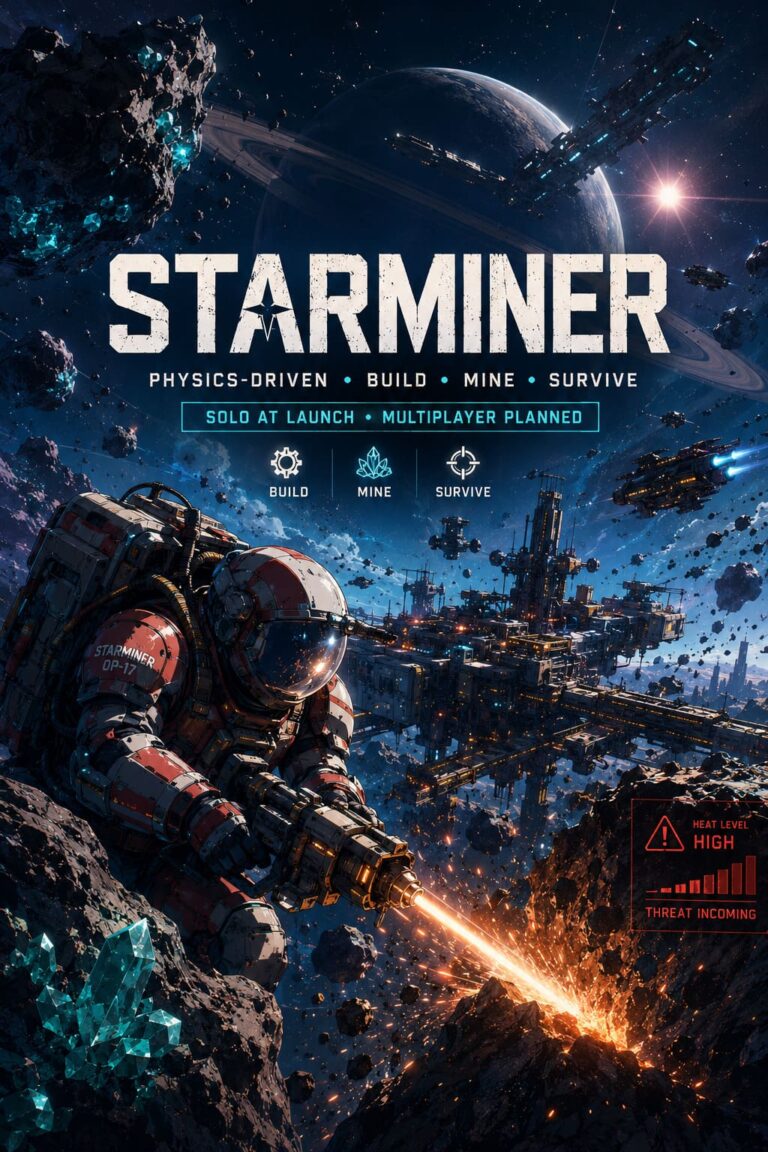
Starminer Jupiter Rift Lore and Gameplay Breakdown
I’ve played my fair share of space sims over the years—some polished, some ambitious, and a few that clearly bit off more Newtonian physics than they could chew. But every once in a while, a game lands in Early Access that doesn’t just want you to play space—it wants you to feel how hostile it really is. That’s exactly the vibe I got diving into Starminer.
And honestly? It’s been a while since a game made me sit back mid-session and think: “Yeah… I probably shouldn’t have built that many mining rigs this close to the anomaly.”

Let’s talk lore, systems, and why this game feels less like a sandbox and more like a living, breathing corporate nightmare wrapped in cosmic mystery.
Starminer Survival Mode Base Building Guide
A Universe Built on Pressure, Not Freedom
Most space games sell you freedom. Starminer sells you consequences.
From the moment you start working under the Reclamation mining structure, you realize nothing in this universe is passive. The world reacts. It watches. It escalates.
The Jupiter Wormhole isn’t just a backdrop—it’s basically the game’s nervous system. Everything stems from it: economy, conflict, exploration, and survival pressure.
As a streamer, I love games that create stories without forcing them. And Starminer does that through systems that push back against your success.
The Jupiter Wormhole: Humanity’s Worst Best Discovery
In the lore, the Jupiter anomaly changes everything in 2148. Humanity isn’t expanding—it’s trapped. And then suddenly, a naturally occurring wormhole opens near Jupiter.
This isn’t a “new frontier” moment. It’s more like humanity finding a door with no idea who built it, while everyone immediately starts fighting over it.
The entire political and economic structure collapses into corporate scramble:
- Corporate factions rush in first
- Governments lose control of deep space logistics
- Private mining groups dominate extraction routes
- Everything becomes expendable in pursuit of expansion
From a gameplay perspective, this justifies why everything feels aggressive. You’re not exploring—you’re extracting before someone else does.
Starminer Reclamation 9 Survival Guide: Mining, Combat & Automation Walkthrough
Eonite: The Resource That Breaks Everything
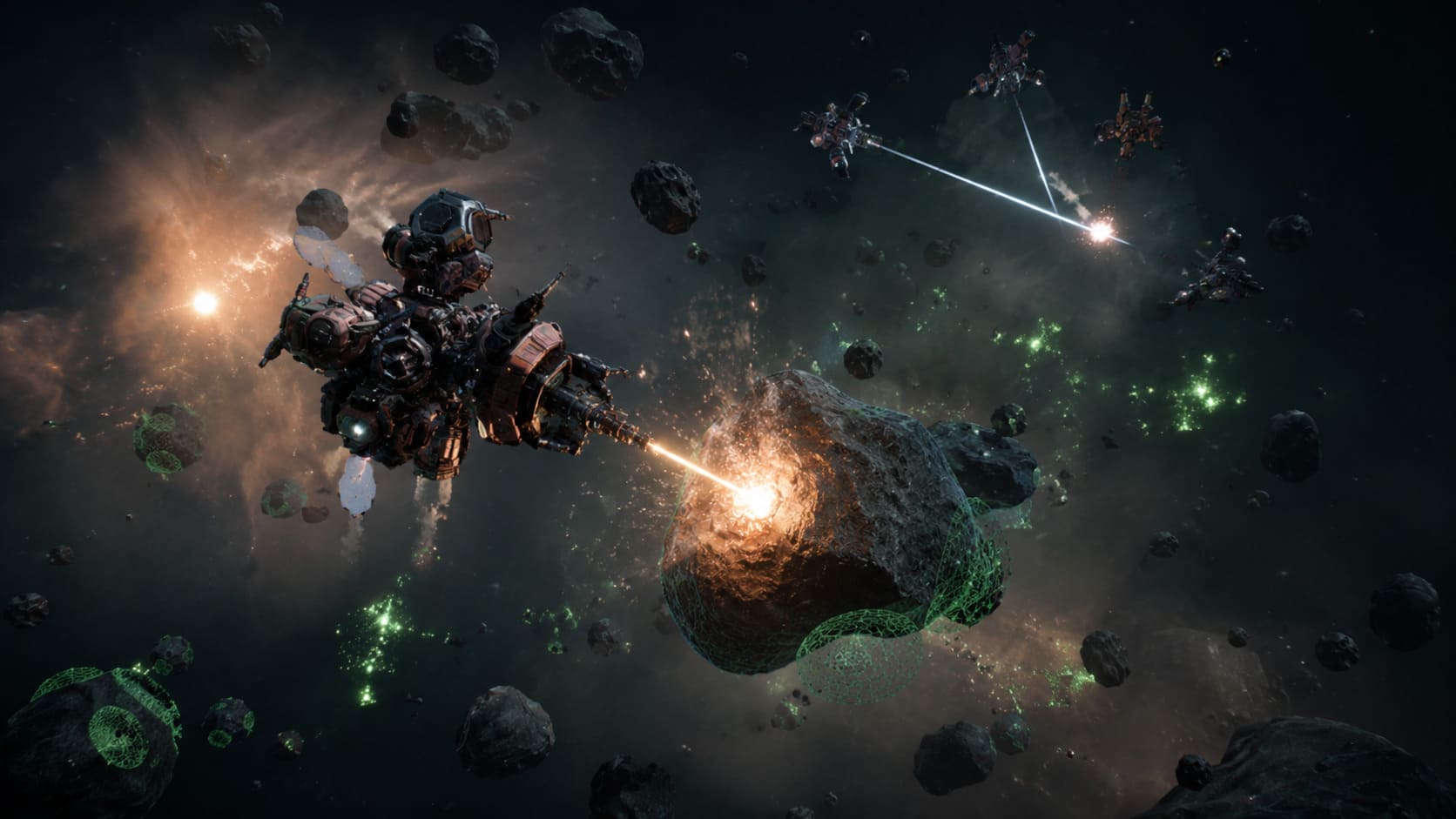
Eonite is where Starminer really shifts from standard sci-fi to something more dangerous.
It isn’t just a rare resource—it’s the backbone of the entire interstellar economy. Warp systems, advanced reactors, military tech—all of it depends on Eonite refinement.
And the key design idea is simple but brutal: the more valuable something is, the more it forces you into danger.
Eonite System Impact Overview
| Category | Effect |
|---|---|
| Economy | Replaces traditional currency systems |
| Industry | Powers advanced refineries and energy grids |
| Military | Enables high-tier weapons and defense systems |
| Logistics | Forces high-risk interstellar transport routes |
From a streamer perspective, this is where chat usually starts panicking. And they’re often right.
Heat Signature System: The Universe Notices You
This is one of the most interesting systems in Starminer because it ties gameplay directly into lore.
Everything you do generates heat—mining, refining, expanding fleets, running reactors. And the universe reacts to that footprint.
At first, it’s just pirates. Then it escalates. Then it becomes something much worse.
You don’t just grow a base. You become a signal.
And eventually, that signal attracts attention you probably don’t want.
Corporate Factions and Space Feudalism
Starminer doesn’t let you be a hero. You’re a contractor inside a corporate extraction machine.
Early gameplay revolves around efficiency, output, and survival metrics rather than exploration fantasy.
Core corporate expectations include:
- Tons of material extracted
- Fleet survival efficiency
- Logistics throughput
- Cost reduction per operation cycle
This is the kind of system where “replacement cost” includes your ship, your fleet, and you as an operator.
Gameplay vs Lore: Why It Actually Works
Starminer succeeds because it doesn’t separate story from mechanics.
The lore says expansion creates danger. The gameplay enforces it. The narrative explains it. Everything loops back into one idea: growth is not safe.
That makes every decision feel heavier than it should in a sandbox game.
Streamer Perspective: Why It Sticks With Me
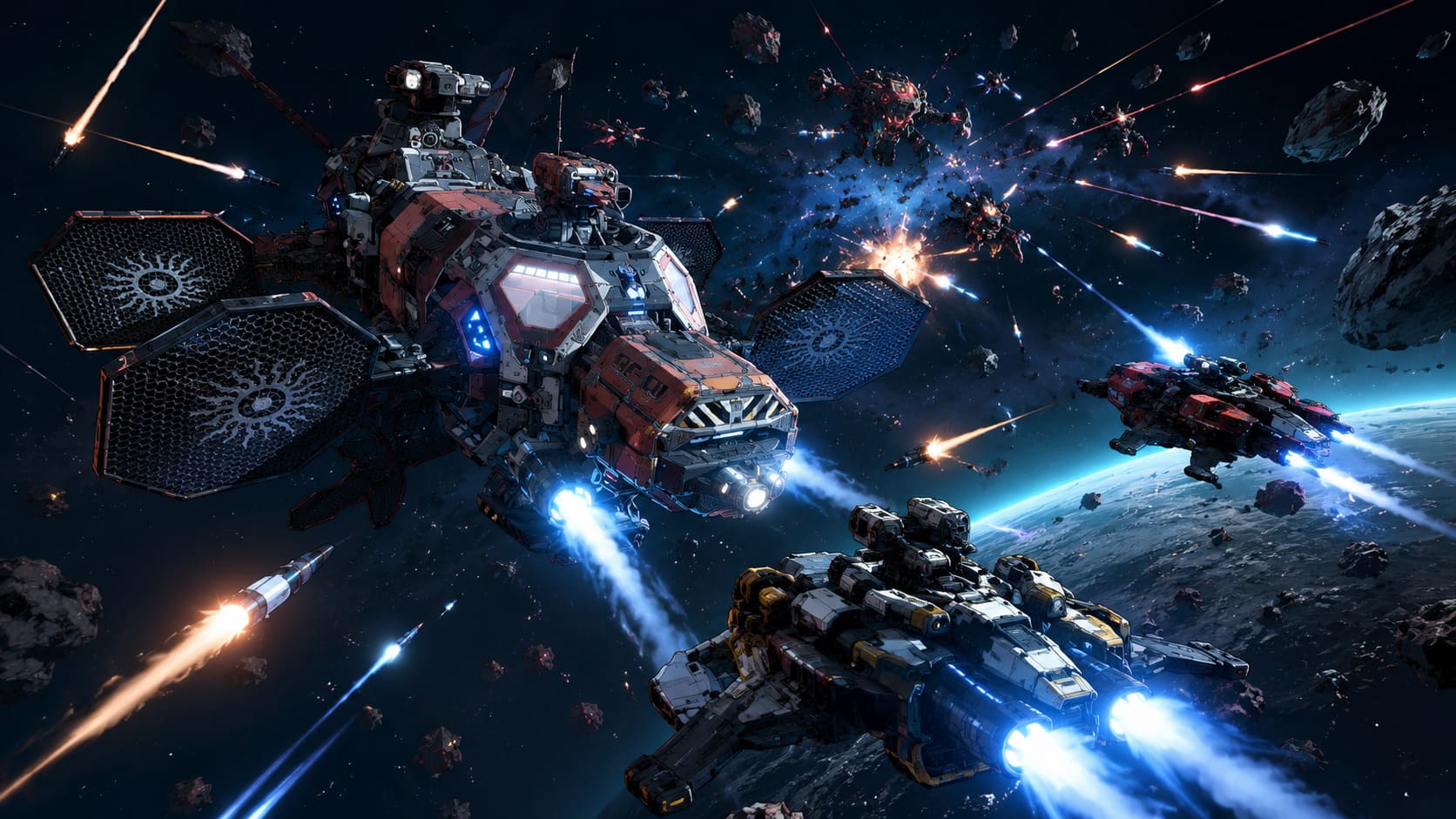
I expected Starminer to be another chill space builder. Instead, it became something closer to a tension simulator.
Instead of relaxing expansion, you get:
- Constant optimization pressure
- Unexpected escalation events
- Logistics chains that can collapse suddenly
- Emergent disaster stories mid-stream
And honestly, that’s where it shines. It creates moments you don’t plan for—but definitely remember.
Core Systems Overview
| System | Function | Impact |
|---|---|---|
| Wormhole Network | Interstellar travel gateway | Progression unlock system |
| Eonite Economy | Core resource value system | Drives expansion and conflict |
| Heat Signature | Reactive threat scaling | Dynamic difficulty escalation |
| Corporate Factions | Mission and logistics control | Early-game structure |
| Alien Response | Adaptive enemy system | Late-game pressure layer |
Why Starminer Feels Different
Most sandbox games reward scaling. Starminer challenges it.
Every expansion choice increases your visibility. Every optimization step increases your risk profile. And the game never lets you forget that balance.
It’s not a comfortable experience—but it is a memorable one.
Final Thoughts
Starminer isn’t about conquering space. It’s about negotiating with it while it reacts to your ambition.
The Jupiter Wormhole isn’t just a plot device—it’s a warning. A gateway to opportunity that also ensures something on the other side is watching back.
And after enough time in-game, that idea stops feeling like lore and starts feeling like system design.
You don’t beat Starminer.
You scale until the universe notices you.