Starminer at Launch: Solo Gameplay and Multiplayer Plans Explained
If you’ve spent enough time in complex space simulation games, you eventually learn to be skeptical of big promises, especially when multiplayer is involved. The Early Access release of Starminer follows a familiar pattern: ambitious systems, heavy physics simulation, and a deliberate decision to delay multiplayer. After going through the available information and thinking about it like someone who has played far too many space sandboxes, the decision actually feels more reasonable than disappointing.
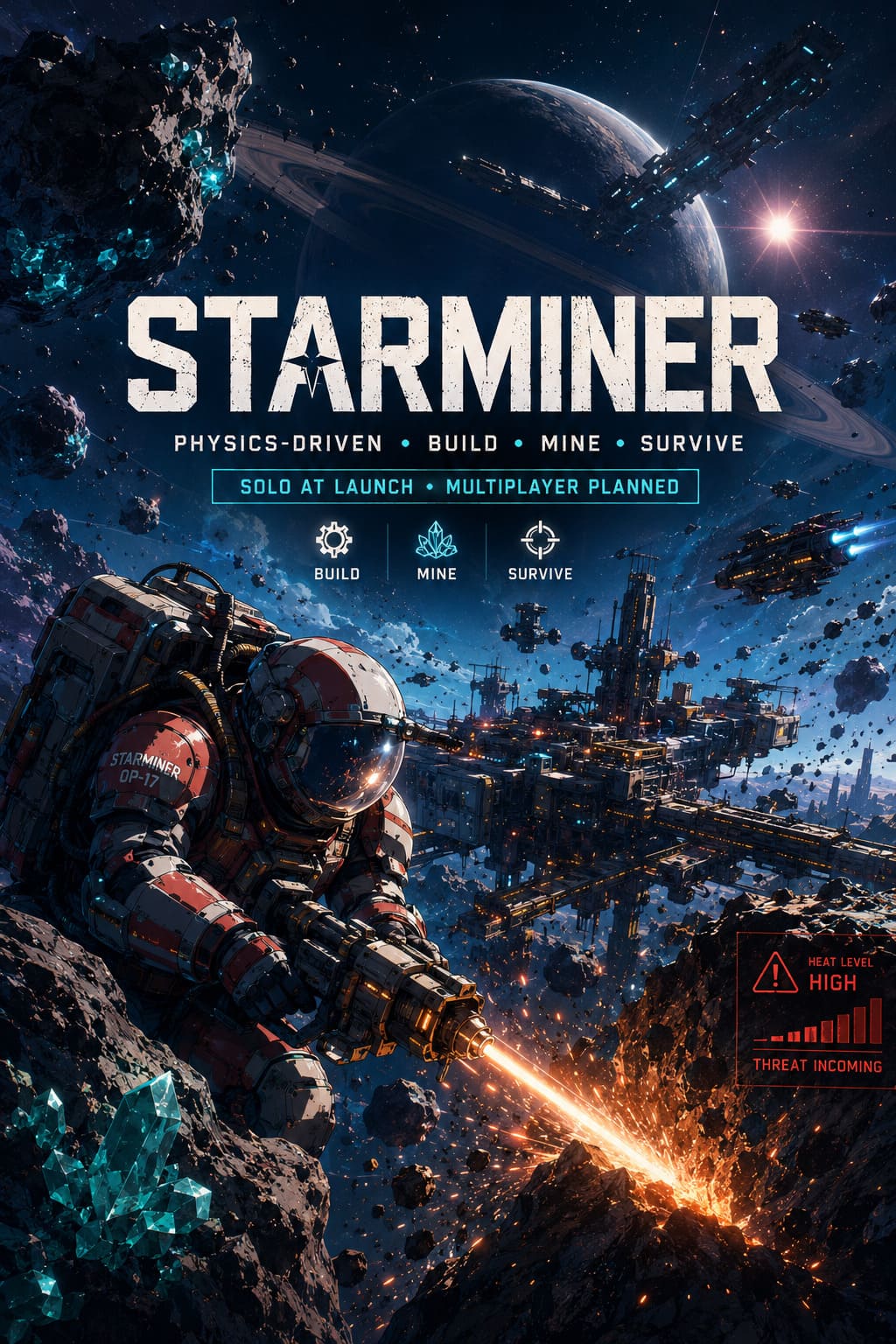
At launch, Starminer is a strictly single-player experience. There is no co-op, no shared galaxy, and no PvP. On paper, that might sound limiting, but in practice it aligns with the kind of systems the game is trying to support.
Starminer Jupiter Rift Lore and Gameplay Breakdown
Launch State: Why Starminer Starts as Single-Player Only
When Starminer enters Early Access on May 27, 2026, it focuses entirely on solo gameplay. This includes building modular mining ships, managing industrial logistics chains, and surviving in a dynamically hostile environment shaped by your own progress. The developers have clearly prioritized stability over scale, which is something many games in this genre struggle with.
The core reason for the single-player launch comes down to complexity. Starminer is built around Newtonian physics, real-time structural simulation, and systems where every object has weight, momentum, and consequence. Syncing all of that across multiple players in real time would be extremely demanding even for experienced studios.
Instead of rushing multiplayer, the game is designed to first prove that its foundation actually works under pressure. That approach might frustrate some players initially, but it often leads to more stable long-term systems.
Starminer Survival Mode Base Building Guide
Core Gameplay Experience: What You Actually Do in Starminer
At its heart, Starminer is not just about flying ships. It is about managing an entire industrial ecosystem in space. You are responsible for mining operations, transport logistics, ship construction, and defensive planning across multiple star systems.
The gameplay loop is built around expansion and optimization. You start small, but gradually build up automated systems that extract resources, refine materials, and transport goods between stations and fleets. The more efficient your system becomes, the more pressure the game applies back onto you.
Main gameplay pillars include:
Mining operations that extract raw materials from asteroids and planetary debris fields.
Fleet expansion where every additional ship increases logistical complexity and system load.
Automation chains that connect mining, refining, and transport into a unified economy.
Dynamic threat escalation that responds to your industrial footprint and activity level.
The Heat System: Growth That Attracts Danger
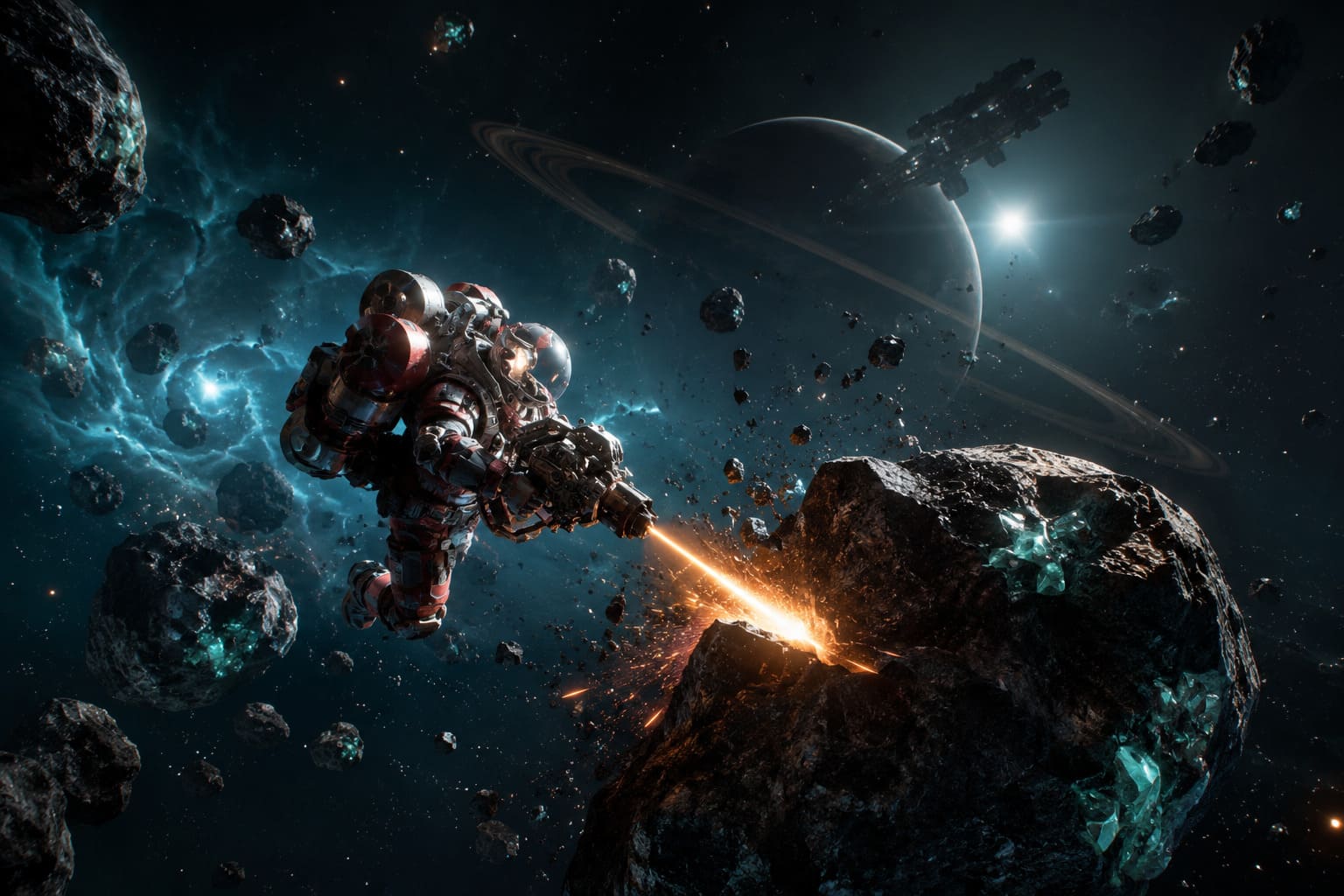
One of the most interesting mechanics in Starminer is its heat system, which essentially tracks how noticeable you are in the galaxy. Unlike many space games where enemies remain static or scripted, here the universe reacts to your actions in a more organic way.
Mining generates heat. Expanding your fleet increases heat. Accumulating resources also contributes to your visibility. Over time, this creates a pressure curve where success naturally attracts attention.
Early on, this manifests as small pirate encounters. Later, it escalates into coordinated faction-level attacks that can seriously disrupt poorly prepared logistics networks. This system forces players to balance expansion with defense rather than blindly scaling up production.
Shipbuilding and Physics: Engineering Over Arcade Gameplay
Ship construction in Starminer is one of its defining features. It is not a simplified upgrade system or preset selection menu. Instead, ships are constructed from modular components that each have weight, structural impact, and functional dependencies.
Because the game uses Newtonian physics, every design decision matters. A heavily loaded cargo vessel behaves completely differently from a lightweight scout ship. Acceleration, turning radius, and braking distance are all affected by mass distribution and thrust placement.
On top of that, ships require careful management of power grids and heat systems. Poorly designed structures can overheat or become unstable under stress, especially during combat or heavy mining operations.
Why Multiplayer Is Delayed (And Why That Might Be Good)
Multiplayer is planned, but intentionally not included at launch. Based on how the game is structured, this decision makes technical sense. Synchronizing physics-heavy environments across multiple players is one of the most difficult problems in game development, especially when every object interacts dynamically with others.
Starminer’s systems introduce several challenges that are significantly easier to solve in single-player first. These include real-time physics simulation, dynamic threat scaling, modular destruction systems, and large-scale resource automation.
Rushing multiplayer into this kind of environment could easily lead to instability, desynchronization, or broken progression systems. By focusing on solo gameplay first, the developers are effectively trying to ensure the foundation is stable before layering additional complexity on top.
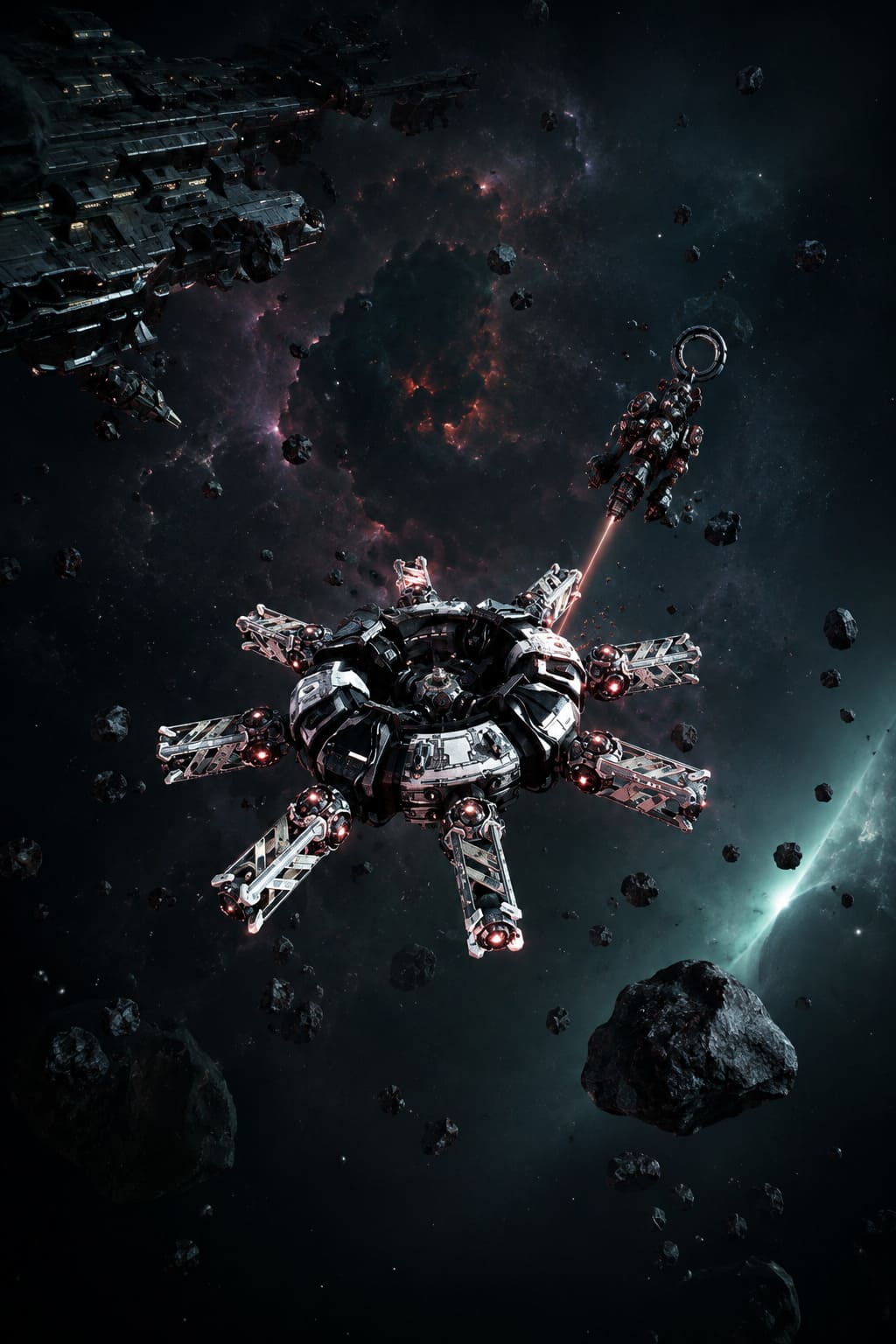
Planned Multiplayer Features: What Comes Later
Even though multiplayer is not available at launch, it is clearly part of the long-term vision for Starminer. The roadmap suggests that cooperative and competitive modes will eventually be introduced during Early Access updates.
Co-op Mode
A cooperative mode for two to four players is planned, where players share a persistent galaxy and divide responsibilities. One player might focus on mining operations, another on logistics, and another on combat defense. This structure fits naturally with the game’s existing systems.
Competitive PvP Mode
A dedicated PvP mode is also planned, focusing on ship design and tactical combat. Because physics and structural integrity play a major role in Starminer, battles are expected to reward engineering efficiency as much as raw firepower.
Long-Term Faction Systems
There are also hints at larger faction-based systems where player groups compete for resources and territorial control. While details are limited, this could potentially extend the game’s sandbox into a more persistent competitive environment.
Game Modes at Early Access Launch
Starminer launches with three main single-player modes, each offering a different style of experience depending on how you want to engage with the simulation.
Campaign Mode
A structured introduction to the game that guides players through core systems, lore, and basic logistics management. It functions as both a narrative experience and a tutorial layer.
Sandbox Mode
A fully customizable environment where players can adjust resource abundance, threat levels, and starting conditions. This is likely where most experimentation will happen once players understand the systems.
Survival Mode
An endurance-focused mode where players face increasingly difficult waves of enemies while managing limited resources. This mode emphasizes efficiency and long-term planning under pressure.
Personal Perspective: Why Solo First Actually Works
From a gameplay standpoint, Starminer feels like a game designed to be understood slowly. It rewards experimentation, system mastery, and long-term planning. These are qualities that often get lost in multiplayer environments where coordination and speed take priority over deep system understanding.
Playing solo first forces players to engage directly with the mechanics rather than relying on teammates to handle complexity. That alone may lead to a stronger understanding of the game’s systems once multiplayer eventually arrives.
Conclusion: A Cautious but Promising Start
Starminer at launch is not trying to be everything at once. It is a focused single-player simulation that builds its identity around physics-driven engineering, industrial logistics, and escalating systemic pressure.
The absence of multiplayer at launch may disappoint some players, but it also reduces the risk of technical instability in a game that is already extremely system-heavy. If the foundation proves solid, the planned co-op and competitive modes could eventually elevate Starminer into something much larger than its initial release suggests.
For now, it is best understood as a deep solo engineering sandbox first, and a future multiplayer experience second.