Mastering Perspective Switching in Dark Light: Survivor – A Personal Guide to Hybrid Combat Flow
I’ve played a lot of roguelike survivors over the years, from pure bullet-heaven chaos to more grounded action RPG hybrids, but Dark Light: Survivor genuinely surprised me with how much its Perspective Switch system changes the feel of every run.
At first, I honestly thought it was just a gimmick—something flashy to market the game. But after several long sessions (and more failed runs than I’d like to admit), I started to realize it’s actually one of the most important mechanics in the entire game loop.
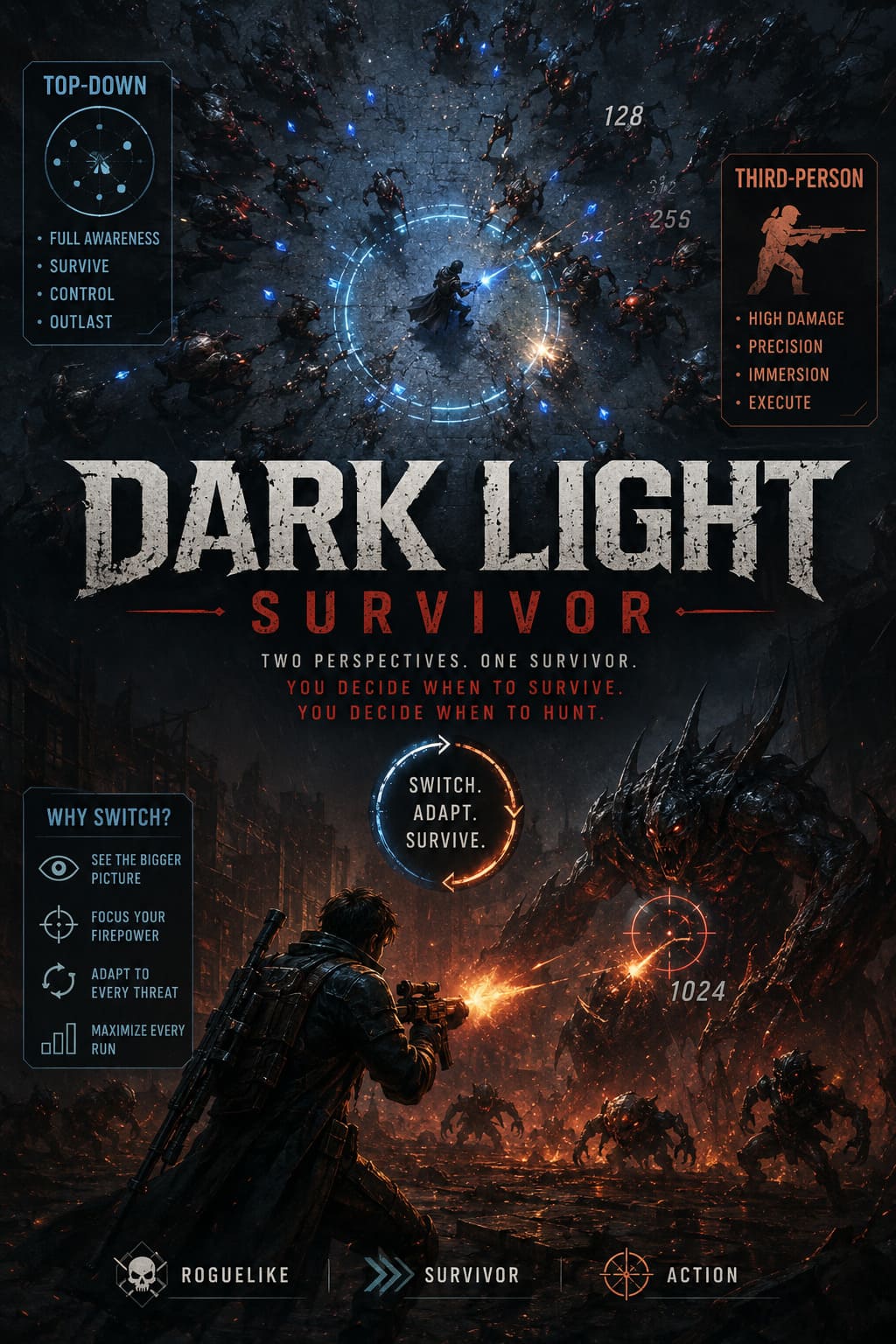
It’s not just “changing the camera.” It feels more like switching roles: from a survivor trying not to die, to a hunter actively controlling the battlefield.
That shift is where the game becomes interesting.
Nexus Hold in Dark Light: Survivor – A Player’s Complete Guide to NPCs, Upgrades
Two Perspectives, Two Different Games
What makes the system so compelling is that each view fundamentally changes how you interact with enemies, loot, and even your own decision-making.
Top-Down Perspective: Survival First
When I’m in top-down mode, the game feels like a classic survivor-like experience. It’s messy, crowded, and overwhelming in the best way possible.
Here’s how I personally use it:
- Reading enemy waves before they collapse on me
- Collecting XP shards efficiently without overextending
- Kiting large groups in smooth circular movement patterns
- Keeping awareness of the entire screen instead of tunnel visioning fights
This is the “calm before the storm” mode—even when the screen is anything but calm.
What I like most is that mistakes feel forgivable here. You can recover from bad positioning if your movement is clean enough.
Third-Person Perspective: Aggression Mode
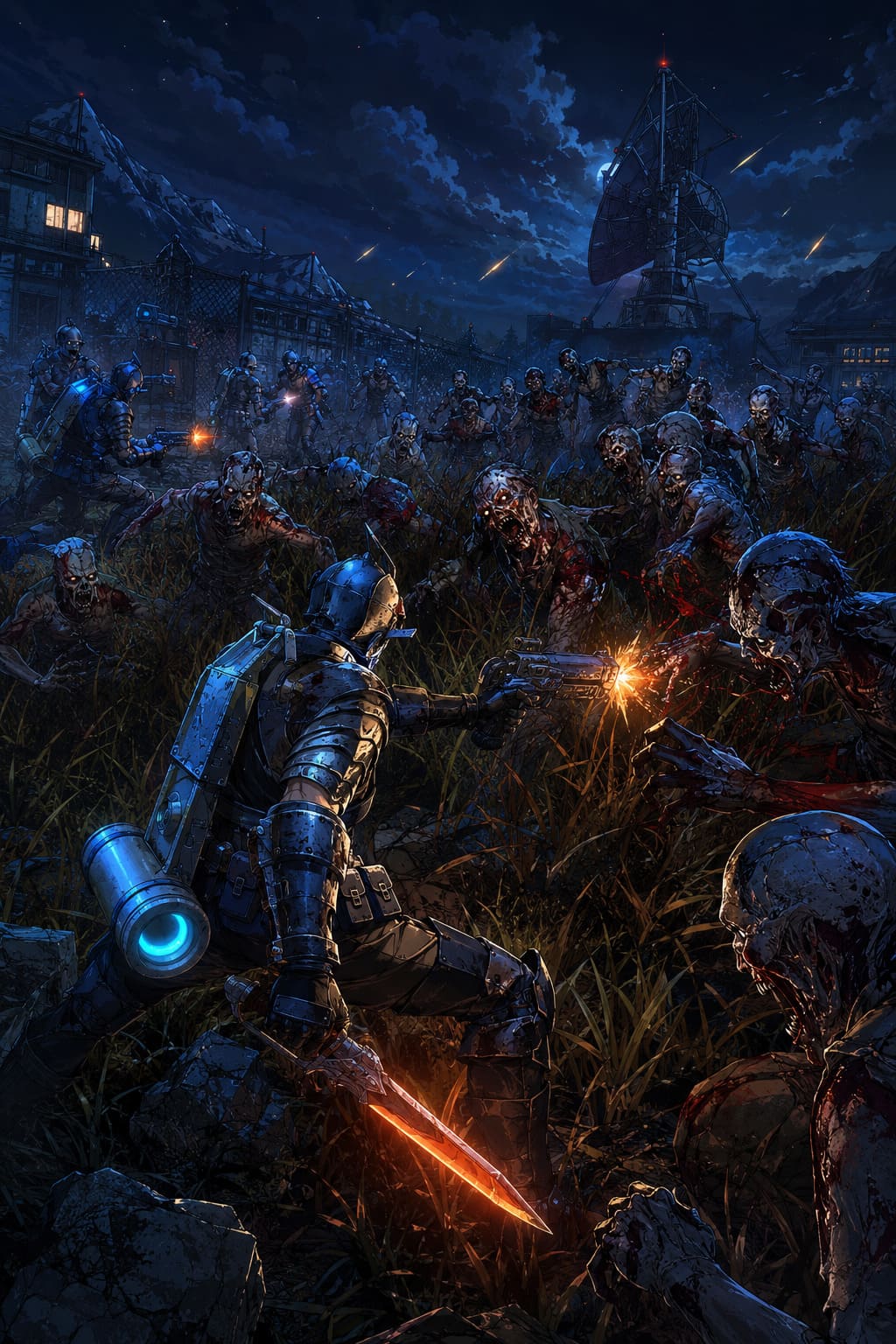
Then there’s the third-person view. This is where things get intense.
The first time I switched mid-fight, it honestly felt like I had unlocked a completely different character.
This mode is less about surviving and more about executing targets efficiently.
Key advantages I noticed:
- Noticeably higher damage output, especially with ranged builds
- Better precision against elites and bosses
- Easier targeting of weak points
- Stronger sense of immersion during high-intensity fights
It almost feels like the game is saying: “Okay, you survived long enough. Now finish the job properly.”
And I kind of love that design philosophy.
Comparison Table: When Each Mode Feels Right
| Feature | Top-Down Mode | Third-Person Mode |
|---|---|---|
| Primary Role | Survival & Control | Damage & Precision |
| Enemy Awareness | Full-screen visibility | Focused targeting |
| Best Use Case | Early waves, crowd control | Elites, bosses |
| Risk Level | Lower | Higher but rewarding |
| Player Feel | Tactical and cautious | Aggressive and cinematic |
This isn’t just theoretical either—it actually changes how I build my character every run.
Stahl the Winged Guardian: Dark Light: Survivor Lore and Build Guide
The Rhythm of Switching: Where the Skill Actually Is
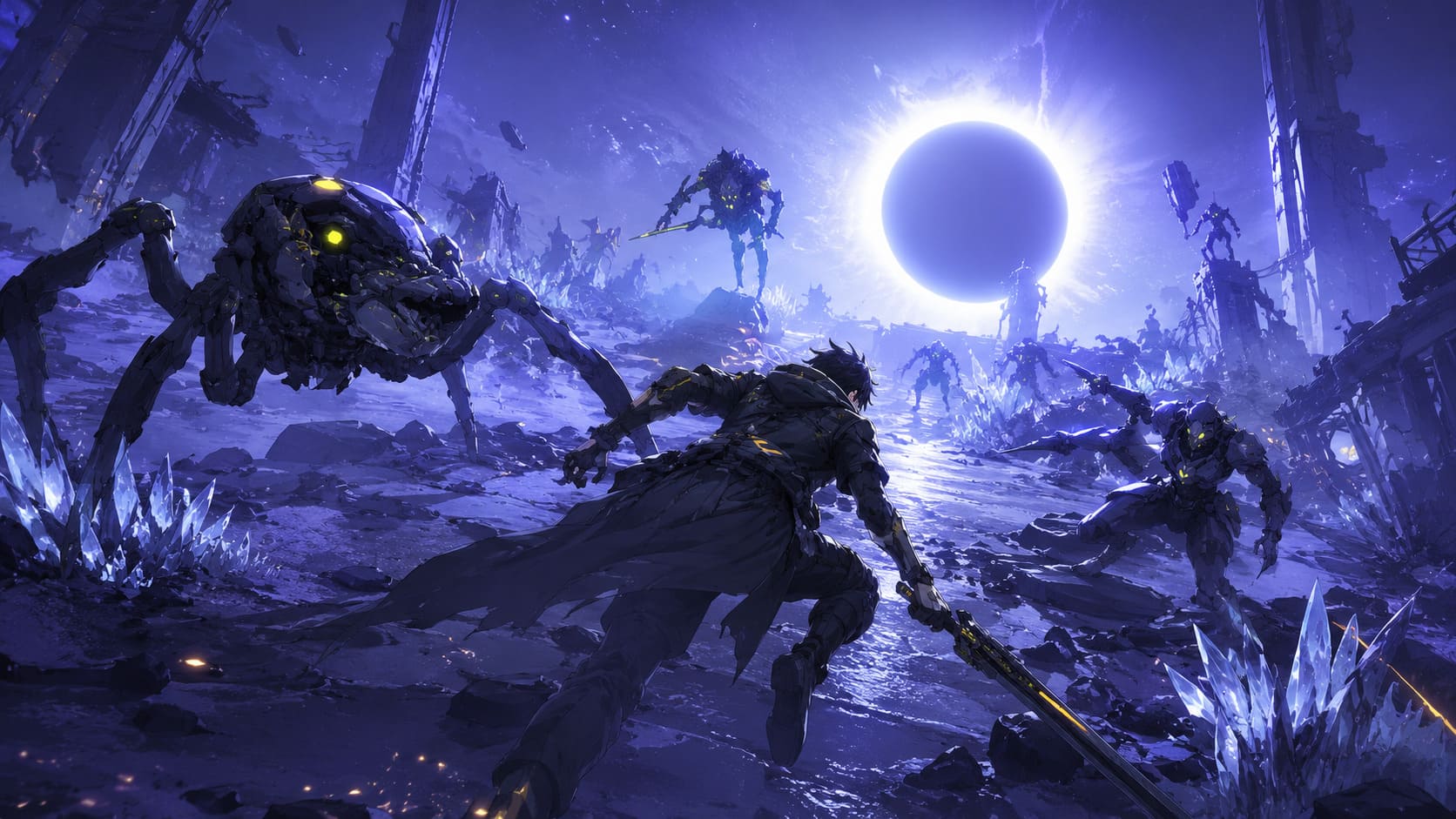
After a while, I stopped thinking of the perspective switch as a toggle and started treating it like a rhythm system.
Most successful runs I’ve had follow a pattern like this:
- Start in top-down to build early momentum and survive initial waves
- Switch to third-person when elite enemies or pressure spikes appear
- Return to top-down immediately after to reset awareness and stabilize positioning
This loop creates a pacing structure that feels surprisingly dynamic. Instead of the gameplay becoming repetitive, it constantly forces adaptation.
It’s one of the few systems in a roguelike that makes timing feel just as important as build synergy.
What the Game Doesn’t Tell You (But You Feel Anyway)
One thing I appreciate about Dark Light: Survivor is that it doesn’t over-explain this system.
You’re never told how often to switch or when to optimize it. You just feel it out.
Through trial and error, a few things become clear:
- Staying too long in third-person increases risk significantly
- Top-down alone can make boss fights feel slow
- Switching too frequently can disrupt your combat rhythm
It’s a balancing act rather than a fixed strategy.
Build Synergy: How Perspective Changes Your Loadout
What surprised me most is how much your preferred perspective influences build decisions.
If leaning Top-Down:
- Area-of-effect abilities
- Auto-targeting skills
- Movement speed boosts
- Sustain and survivability upgrades
If leaning Third-Person:
- Critical damage scaling
- Weak-point amplification
- Range enhancement perks
- Precision weapon modifiers
It feels like two playstyles living inside the same system, which keeps replay value surprisingly high.
Performance and Feel Across Hardware
I’ve tested the game on different setups, and performance changes are noticeable depending on perspective.
- Top-down mode runs extremely stable even in heavy enemy swarms
- Third-person mode is more demanding due to environmental rendering
On weaker systems, I naturally spend more time in top-down during chaotic moments. Still, the cinematic weight of third-person is worth occasional performance dips.
Final Thoughts
The Perspective Switch in Dark Light: Survivor isn’t just a feature—it’s the core identity of the game.
It transforms standard survivor gameplay into something closer to a hybrid action system, where awareness and aggression constantly compete for control.
If ignored, the game feels harder than it should be.
If mastered, it feels like you’re playing two games at once—and switching between them whenever you decide the situation demands it.
That’s what makes it memorable.