How Many Dudes Progression System Guide: Tutorial and Metaprogression Strategies (2026)
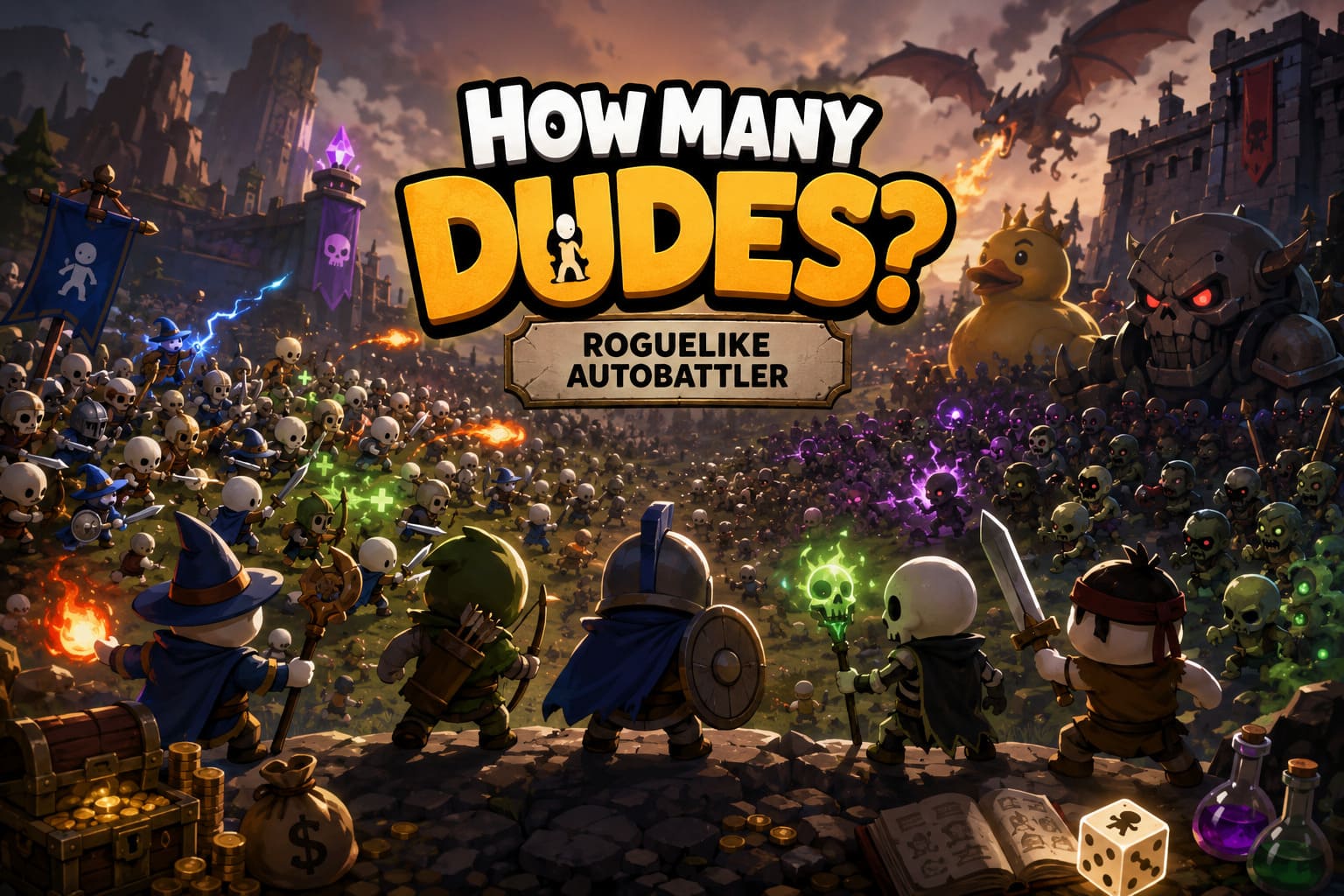
When I first loaded How Many Dudes, I expected another funny indie autobattler built around an internet meme. You know the idea—throw an absurd number of ordinary people against impossible enemies and see what happens. Five minutes later, I realized I was completely wrong.
Behind all the flying bodies, exploding Zombies, fireball-spamming Wizards, and thousands of enemies flooding the screen sits one of the more interesting progression systems I’ve seen in a roguelike this year. It’s chaotic on the surface, but surprisingly methodical underneath.
The biggest mistake I made during my first dozen runs was treating every attempt as completely disposable. That’s not how How Many Dudes wants you to play. Every run is slowly building toward something bigger, and once that clicked, the game became far less dependent on luck.
If you’re aiming to consistently reach Round 100, chase Round 110, or simply unlock permanent upgrades faster, here’s what actually matters.
Don’t Think About Winning One Run—Think About Improving Every Future Run
One thing I appreciate about How Many Dudes is that permanent progression isn’t just another XP bar.
Instead of endlessly grinding levels, you’re gradually making future runs more consistent. That’s a much healthier design for a roguelike because success comes from understanding the systems rather than simply increasing your stats.
The real objective isn’t your current army.
It’s your account.
Every relic you master, every unit you push farther, and every achievement you unlock slowly removes some of the randomness from future attempts.
That makes experimentation much more rewarding.
Every Run Is Built Around Three Upgrade Systems
Although battles happen automatically, your decisions between fights determine whether the run snowballs or completely falls apart.
Three systems shape almost every successful build.
| Upgrade | Why It Matters | Priority |
|---|---|---|
| Perks | Define your army’s overall direction and scaling. | Very High |
| Relics | Add unique mechanics and create powerful combinations. | Extremely High |
| Boss Trinkets | Enhance individual units with specialized bonuses. | High |
None of these systems work particularly well by themselves.
Strong runs happen when all three support the same strategy.
For example, investing heavily into magical damage makes little sense if your relics mostly improve melee units. Likewise, amazing Trinkets won’t carry a team built around conflicting perks.
Everything should point toward one clear game plan.
Don’t Chase Every Good Perk
One lesson I learned after far too many failed runs is that good doesn’t always mean correct.
The perk shop regularly offers upgrades that are objectively powerful, but they may have absolutely nothing to do with your current squad.
Trying to force every powerful option into one build usually creates a mediocre army instead of a great one.
A focused build almost always beats a flexible one.
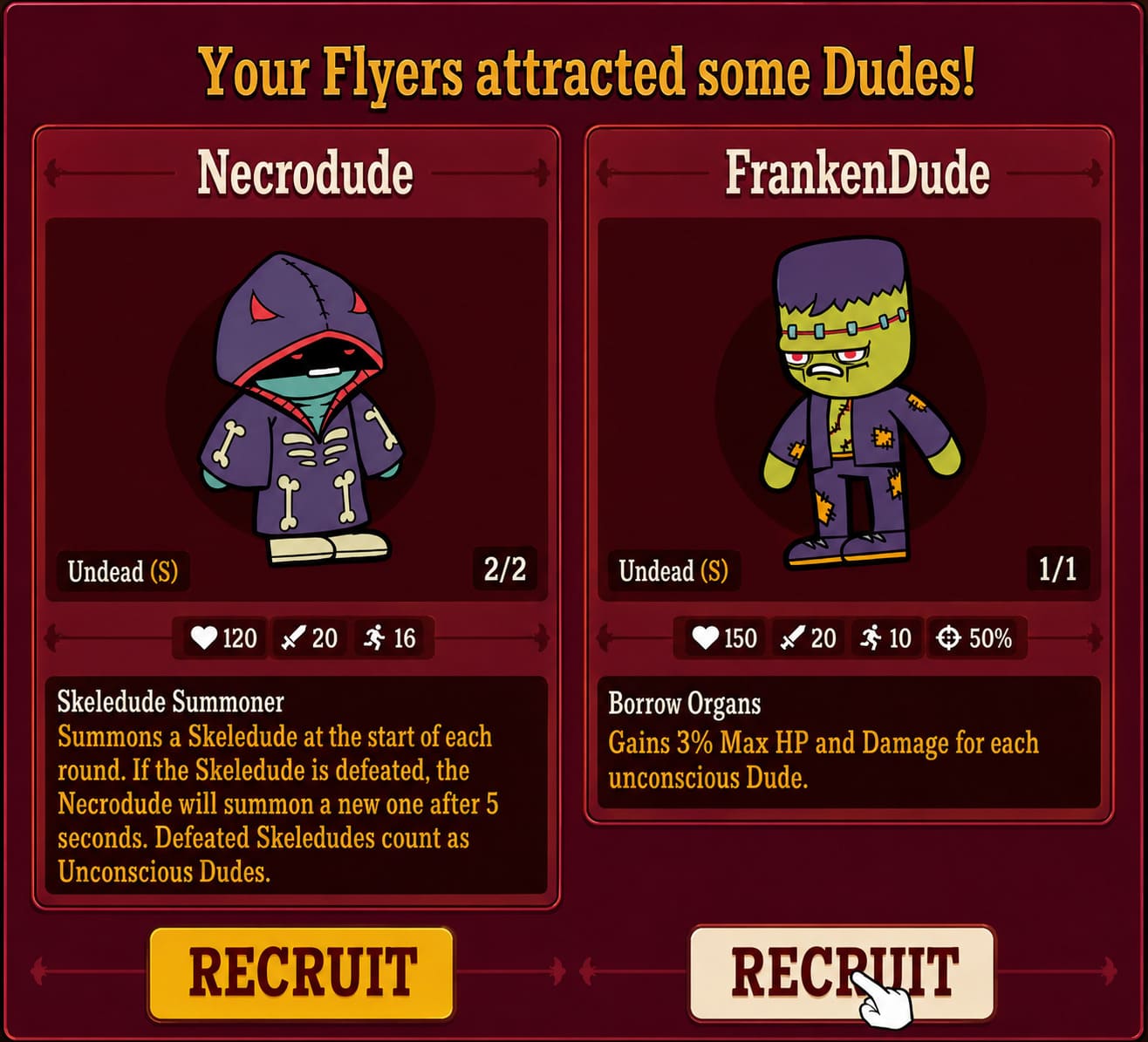
If your frontline revolves around Undead units, keep investing in that identity.
If you’re already building around Wizards, continue supporting spell damage instead of suddenly pivoting into physical attackers simply because the shop offered an attractive perk.
Consistency wins.
Relics Are Where Runs Become Completely Ridiculous
If perks determine your strategy, relics determine just how broken that strategy becomes.
Some relics simply boost numbers.
Others completely rewrite how certain units function.
That’s where the real fun begins.
I’ve seen Wizards turn into walking artillery batteries that launch fireballs almost nonstop.
I’ve watched Finance Dudes practically fund an entire army after frontline units started falling.
And once healing relics begin stacking together, some teams become incredibly difficult for enemies to break.
The strongest builds rarely rely on one overpowered relic.
Instead, they combine several smaller effects that constantly trigger one another until the battlefield descends into glorious chaos.
That’s usually the point where the game starts feeling unfair—in your favor.
Boss Trinkets Deserve More Attention Than Beginners Give Them
Many new players simply grab whichever Trinket sounds coolest after defeating a boss.
I definitely did.
That was a mistake.
Boss Trinkets aren’t random collectibles.
They’re often the finishing piece for a particular unit.
Giving the right Trinket to your primary carry can completely change how that character performs during the final stages of a run.
Instead of asking:
“Which Trinket looks strongest?”
Ask yourself:
“Which Trinket makes my current strategy stronger?”
That mindset alone improved my consistency more than any single relic.
Pocket Dice Completely Change the Game
If I had to recommend one long-term goal for every new player, it would be unlocking more Pocket Dice as quickly as possible.
Early shops are often the difference between an incredible run and one that’s effectively over before it begins.
Pocket Dice let you reroll those early opportunities and hunt for the units you actually need.
That might sound like a small advantage.
It isn’t.
The difference between finding your core units immediately versus waiting twenty rounds is enormous.
After unlocking several permanent Pocket Dice, the game feels dramatically more strategic and much less dependent on pure luck.
How Permanent Progression Actually Works
The Collection system quietly rewards nearly everything you accomplish.
Rather than asking players to endlessly grind experience, the game tracks how well you’ve mastered individual content.
Here’s a simplified overview.
| Objective | Reward |
|---|---|
| Reach Round 100 with specific units or relics | Silver Star |
| Reach Round 110 under Gold Star requirements | Gold Star |
| Complete enough Silver collections | Permanent Pocket Dice |
| Finish entire Gold collections | Additional Pocket Dice |
| Max out the Collection | Pocket Dice, extra starting resources, larger consumable capacity |
Personally, I think this is one of the smartest progression systems in recent indie roguelikes.
Instead of forcing repetitive grinding, it encourages players to try unusual team compositions they might otherwise ignore.
Don’t Ignore the Business Dude
Almost everyone wastes gold during their first few hours.
I certainly did.
The Business Dude initially feels risky because you’re handing over thousands of gold instead of immediately strengthening your army.
That feels wrong.
Ironically, it’s usually the correct decision.
Late-game shops become extremely expensive, especially once relics begin appearing that perfectly complement your build.
Without a healthy economy, you’ll constantly skip upgrades simply because you can’t afford them.
These investment milestones worked well for me:
- Early game: roughly 3,000–4,000 gold
- Mid game: around 6,000–18,000 gold
- Late game: aim for 20,000–40,000 gold
Having that financial cushion makes the final stretch dramatically less stressful.
One thing that’s easy to overlook is replacement costs.
Every fallen Dude requires resources to recover.
If you’re repeatedly choosing the hardest map routes and losing multiple units every battle, those repair expenses quietly erase much of your investment profit.
Sometimes the safer path is actually the smarter one.
Three Builds That Continue Performing Well
The meta will inevitably evolve, but a few archetypes consistently feel reliable.
1. Undead Frontline
Core Units
- Zombie
- Necromancer
- Cleric
- Knight
- Frankenstein
This setup thrives through durability.
Zombies keep buying time while Necromancers rebuild the frontline, creating constant pressure without requiring perfect positioning.
2. Endless Sustain
Core Units
- Bard
- Ghost
- Paladin
If survival is your biggest obstacle, this composition is fantastic.
Ghosts rescue endangered allies while Paladins stabilize the frontline.
Meanwhile, Bards quietly amplify the entire team’s effectiveness through movement and attack speed bonuses.
The result is a defensive loop that’s surprisingly difficult to break.
3. Massive Area Damage
Core Units
- Wizard
- Samurai
- Spartan
- Bard
This build sacrifices some durability for overwhelming offensive pressure.
Spartans absorb incoming attacks while Wizards flood the battlefield with spells.
Once the right relics begin stacking, entire enemy waves disappear almost as quickly as they spawn.
How Many Dudes Strategy Guide: Best Combos, Synergies, and Roster Builds
My Biggest Piece of Advice
The hardest habit to break is restarting whenever a run doesn’t begin perfectly.
Don’t.
Some of my strongest runs started with mediocre shops and awkward unit combinations.
The real strength in How Many Dudes comes from recognizing opportunities as they appear instead of trying to recreate the exact same build every game.
Treat every failed attempt as progress toward unlocking more Pocket Dice, expanding your Collection, and learning new synergies.
Eventually, you’ll notice something interesting.
The game doesn’t necessarily become easier.
You simply become much better at manipulating its systems.
And that’s exactly what makes this roguelike so addictive.
By focusing on permanent progression, investing your gold intelligently, building around clear synergies instead of random powerful upgrades, and steadily unlocking more Pocket Dice, you’ll spend less time hoping for lucky shops and more time crafting the kind of ridiculous armies that can comfortably push beyond Round 100. In a genre overflowing with temporary power fantasies, How Many Dudes stands out because almost every run leaves your account stronger than before—and that feeling keeps pulling me back for “just one more run.”