Graveyard Keeper Achievements Guide: How to Unlock the 64 Most Common Trophies
Graveyard Keeper is one of those games that looks simple for about five minutes before throwing an absurd amount of systems at you. You start with a broken cemetery, a mysterious donkey, a church that barely qualifies as a building, and a whole village full of people who somehow always need something from you. Then come farming, alchemy, fishing, crafting, dungeon crawling, trading, corpse preparation, technology points, and enough weekly errands to make the calendar itself feel like an enemy.
After playing a lot of management and crafting games, I think that is exactly what makes Graveyard Keeper achievements interesting. Most of them aren’t random checklist objectives that ask you to perform some bizarre action for no reason. They are tied to the systems you are already using, although a few hidden achievements and character quests can absolutely catch you off guard. If you’re chasing completion, the trick isn’t simply doing everything eventually; it’s understanding which activities overlap so you don’t spend half the game rebuilding the same infrastructure twice.
Graveyard Keeper 2 Farming Guide: How to Make Gold with Wine & Crops
How the Graveyard Keeper Achievement System Works
There are plenty of achievements across the full game and its additional content, but the commonly earned milestones give you a useful picture of how a normal completionist playthrough develops. You’ll naturally pick up some trophies by progressing the story, while others demand deliberate preparation, such as producing gold-quality crops, learning alchemy recipes, reaching deeper dungeon floors, or improving your graveyard enough to unlock higher church tiers.
The biggest mistake I see with games like this is treating every achievement as a separate job. Don’t do that in Graveyard Keeper. Build systems that feed several goals at once. Farming can give you food, ingredients, money, and technology progress. Cemetery upgrades can improve your church while producing blue points. Dungeon runs provide combat progress and materials for quests. Once you start thinking this way, the achievement list becomes much less intimidating.
| Achievement Area | Main Focus | Best Time To Work On It |
|---|---|---|
| Story Characters | Weekly quests and relationships | Throughout the game |
| Cemetery | Burials, quality, church upgrades | Early to late game |
| Farming & Cooking | Crops, dishes, quality products | Mid game onward |
| Technology | Red, green, and blue points | Constantly |
| Dungeon | Combat and floor progression | Mid to late game |
| Hidden Story | Special quests and endings | Late game |
First Meetings and the Main Story Characters
A large chunk of your early achievements comes from simply meeting the strange people who keep the valley functioning. The important thing is that these characters operate on weekly schedules. If you miss somebody’s day, you generally have to wait, so I recommend keeping track of who appears where instead of wandering around hoping to find them.
- Sweetheart Bishop: Meet the Bishop when he visits the church grounds. This happens as part of the early church progression.
- Shady Snake: Explore the cellar beneath your house, clear the blocked passage, and eventually encounter Snake during his nighttime appearances.
- Charm Itself: Visit the tavern on Ms. Charm’s designated day to begin her storyline.
- Holy Inquisition: Travel to Witch Hill and meet the Lord Inquisitor during his weekly visit.
- Wealthy Merchant: Find the Merchant south of the tavern and start his trading-related progression.
- Old Astrologer: Open the route toward the Lighthouse and meet the Astrologer on his scheduled day.
- An Unexpected Guest: Progress through the relevant expanded-content storyline until Marquis Teodoro Jr. appears.
- Summon a Chicken: Continue Snake’s questline and provide what he needs for his strange ritual.
- A Book With Funny Pictures: Obtain the requested Necronomicon and deliver it to Snake.
- Perfume: Progress Ms. Charm’s storyline until you can provide the requested perfume.
These achievements are easy to underestimate. Personally, I would put them near the top of your priority list because they also unlock quests, technologies, resources, and access to other parts of the game. A completion run becomes much smoother when you make every weekly character visit part of your regular routine rather than leaving all the storylines until the end.
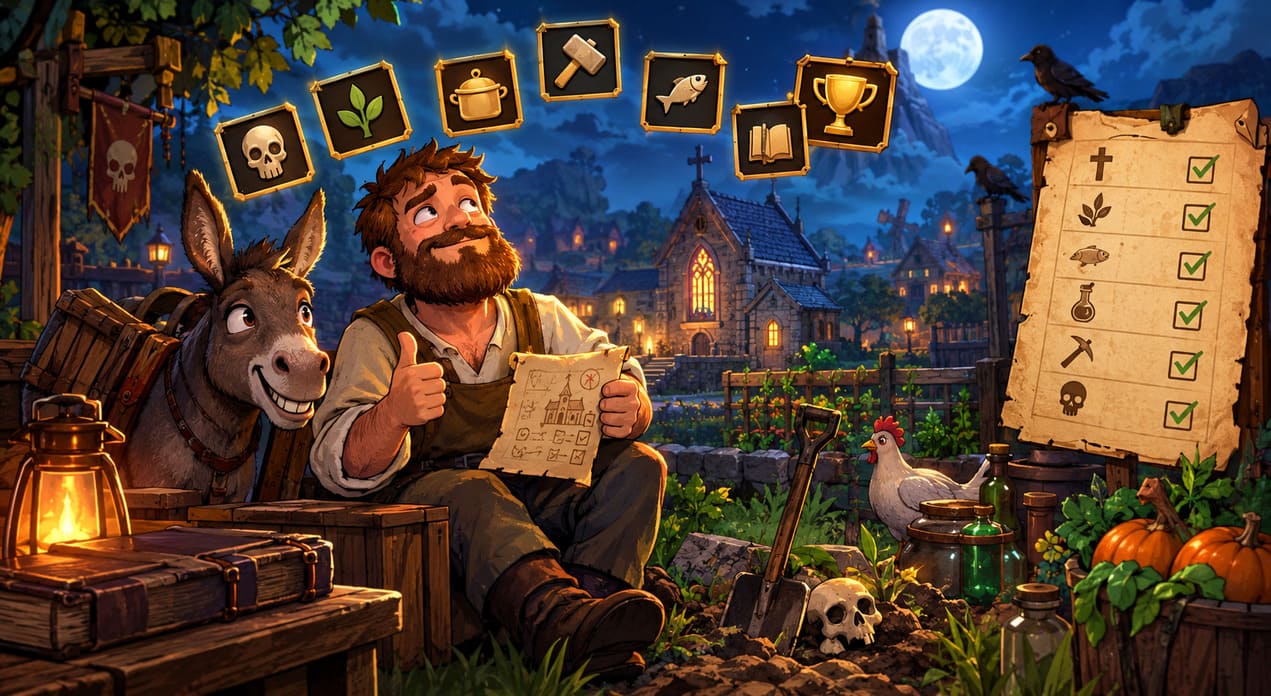
Cemetery Management and Corpse Processing Achievements
The cemetery is your first real business, and you should start improving it almost immediately. Your first corpse teaches you the basic loop of autopsy, burial, and cemetery quality, but the system eventually becomes much deeper. Removing the right organs, preserving bodies, improving graves, and building better decorations all become part of the larger progression puzzle.
- First Slice: Use the autopsy table and remove your first piece of meat.
- Novice Gravedigger: Bury your first corpse in a prepared grave.
- Advanced Gravedigger: Reach ten completed burials.
- Stone Fence: Upgrade the cemetery boundary with a proper stone fence after unlocking the necessary construction technology.
- His House: Upgrade the church for the first major time.
- His Mansion: Push the church to its next major upgrade tier with higher-quality furnishings and decorations.
One thing worth remembering is that cemetery quality isn’t just an achievement stat. It affects church progression and therefore becomes part of your larger economy. I found it much more efficient to build quality graves and monuments as soon as the necessary resources become practical instead of dumping every corpse into the ground with minimal preparation.
Farming, Fishing, Cooking, and Crafting
Graveyard Keeper eventually turns into a surprisingly serious farming and production game. The garden is one of the first systems you should repair, because crops become useful for food, alchemy, quests, trading, and quality products. Once you have reliable production, achievements involving cooking and gold-quality items become much easier to handle.
- Even Here: Repair the garden and begin growing crops.
- Graveyard Veggies: Establish the relevant commercial relationship with the Merchant.
- Golden Pumpkin: Grow and harvest a gold-quality pumpkin using appropriate farming and fertilizer systems.
- Not a Hot Dog: Sell burgers during the Inquisitor’s burning ceremony.
- Winemaker: Produce a gold-quality wine from high-quality grapes and proper processing.
- Cook of Revolution: Complete the relevant supply work for the revolutionary faction.
- Writer of Revolution: Continue helping the revolutionaries with their requested written materials.
- Kitchen Boy: Prepare ten different dishes or drinks.
- Sashimi Master: Produce thirty slices of the relevant fish-based food.
- Tastes Like Home: Eat a fish stick.
- A Fish a Day!: Catch six different types of fish.
The food achievements are much easier if you don’t treat cooking as an afterthought. Keep a decent stockpile of ingredients and experiment with recipes while you’re already producing crops and fishing. Gold-quality farming is especially worth preparing for early, because quality fertilizers and better production chains can take time to establish.
Red, Green, and Blue Technology Points
The technology system is one of the most important pieces of the entire game. Red points generally come from physical and crafting activities, green points are heavily connected to nature and organic materials, and blue points become much more important once you start working with spiritual research, advanced crafting, and the Study Table.
| Achievement | Requirement | Practical Approach |
|---|---|---|
| Just Red Points | 1,000 red technology points | Mine, chop, craft, build, and process materials. |
| More Red Points! | 3,000 red technology points | Keep expanding workshops and production chains. |
| Just Green Points | 1,000 green technology points | Farm, forage, harvest plants, and process organic materials. |
| More Green Points! | 3,000 green technology points | Maintain large-scale farming and organic production. |
| Just Blue Points | 1,000 blue technology points | Study organs, craft advanced items, and improve cemetery structures. |
| Apprentice | Discover 5 alchemy recipes | Experiment with powders, solutions, and extracts. |
| Alchemist | Discover 10 alchemy recipes | Continue expanding your laboratory and ingredient collection. |
Red and green points tend to take care of themselves if you’re actively building and farming. Blue points are the ones I would actively plan around. They can feel scarce when you first need them, so unlocking access to studying and producing blue-point items earlier saves a lot of frustration later. Don’t wait until a late-game quest suddenly demands a mountain of blue research.
Construction and Infrastructure Achievements
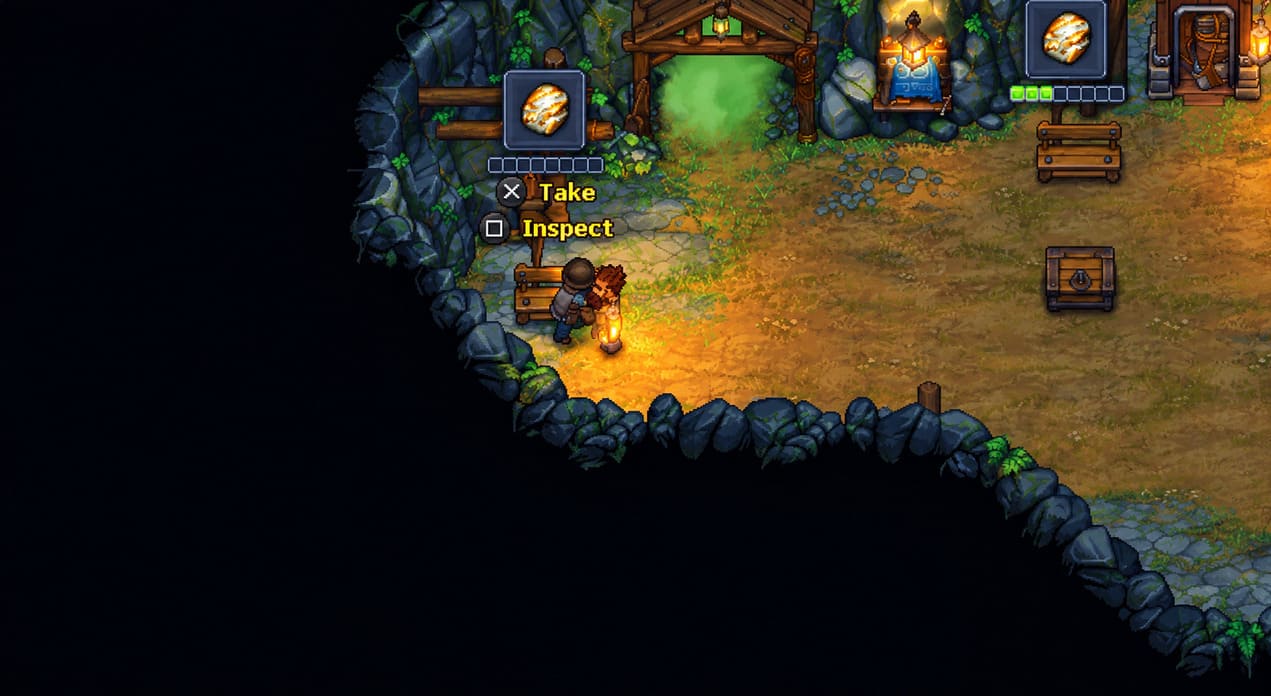
Several achievements are tied to rebuilding the world around you. These projects aren’t just cosmetic either. Bridges, quarries, mills, and expanded buildings open up new resources and production options, which makes infrastructure one of the best investments in a completionist playthrough.
- Bridge Builder: Gather the required materials and repair the bridge leading toward the western swamp.
- Marble: Prepare the marble quarry and gain access to advanced stone resources.
- The Mill: Restore the mill so grain processing no longer has to be handled manually.
- Talking Skull: Build the tavern through the relevant expanded-content progression.
- Employee of the Month: Put Yorick to work as the tavern’s bartender.
- A Habitable Room: Construct and furnish a usable guest room.
- A Lost Stained Glass Window: Restore the missing church window as part of the church improvement chain.
These are the kinds of objectives that can look expensive when you first unlock them, but their value compounds. The mill saves time, marble opens better construction options, and the tavern creates another useful activity hub. Whenever an infrastructure project unlocks a new production loop, I would prioritize it over purely decorative upgrades.
Dungeon and Combat Achievements
The dungeon beneath the workshop is where Graveyard Keeper suddenly stops feeling like a farming simulator and reminds you that it has actual combat. The deeper you go, the more dangerous the enemies become, but dungeon exploration also provides valuable materials and progression items.
- Not Far From the Ground: Clear dungeon level 5.
- Scary Dungeon Depths: Clear dungeon level 10.
- Nothing Underneath: Reach and clear dungeon level 15.
I wouldn’t rush the deepest floors immediately. Better weapons, armor, food, healing resources, and general preparation make the descent considerably less painful. The nice part is that dungeon runs can be combined with other objectives, so you’re not wasting a trip if you’re collecting materials needed for quests or alchemy at the same time.
Special, Hidden, and Story-Based Achievements
This is where completionists can lose the most time. Several achievements are attached to specific interactions or late-game storylines, while hidden achievements don’t reveal themselves until their conditions have been met. If you’re trying to collect everything in one save, pay attention to unusual dialogue and character requests rather than assuming every achievement is going to announce itself.
- A Perfect Gift: Give the Astrologer a skull.
- On Every Shelf: Raise the relevant company Fame to 5.
- Dream Dinner: Prepare a gold-quality dinner.
- Vampires in the Village: Progress the vampire-related village storyline.
- Simple but Stylish: Decorate the Dark Shrine.
- Side Quest: Defeat the Vampire Hunter during the relevant storyline.
- Strange Delivery: Complete the required Donkey-related delivery progression.
- Landlord: Purchase your first piece of land in the village.
- Ideal Song: Help Vagner obtain the inspiration needed to produce an Ideal Song.
- Match 3: Collect three dark organs.
- A Locked Ghost From the Past: Discover the relevant hidden character and storyline.
- MacPlayer: Complete the specific conditions associated with this unusual achievement.
- Forward to the Past: Use the archaeological time machine for the first time.
- Best Seller: Give the Astrologer a gold-quality book.
Then there are the hidden achievements: Two Brothers, A Father and a Son, Prodigal Father, and Back Home. These don’t simply sit in your Steam list waiting to explain themselves. Their triggers are connected to later story progression, relationships, and the game’s central objective, so the safest approach is to keep pushing the major questlines rather than abandoning characters after their early requests.
My Recommended Achievement Roadmap
If I were starting a fresh completionist save today, I wouldn’t follow the achievement list from top to bottom. I’d build the game in phases, because Graveyard Keeper rewards preparation much more than frantic checklist hunting.
Phase 1: Build Your Core Economy
Repair the garden, establish basic farming, improve your stone and iron production, and start building the workshops you’ll rely on for the rest of the game. At the same time, keep burying bodies and improving the cemetery instead of treating corpse processing as a temporary tutorial mechanic. This phase naturally pushes you toward your first red and green technology milestones while giving you the resources needed for church upgrades.
Phase 2: Work Around the Weekly Calendar
Once your basic production is stable, organize your week around the Bishop, Snake, Ms. Charm, Inquisitor, Merchant, and Astrologer. Their schedules can make the game feel slower than it really is, but that waiting time is actually useful because you can spend the intervening days farming, crafting, fishing, exploring, and clearing dungeon floors. The trick is to never have an empty day.
Phase 3: Push Research and High-Level Production
As your infrastructure improves, start deliberately farming blue technology points and expanding your alchemy options. Study useful materials, improve the cemetery, produce better crops, and build the equipment needed for higher-quality products. This is where the seemingly unrelated achievements start connecting together, because the same upgraded production chain can satisfy several requirements at once.
Phase 4: Clean Up the Completionist List
Once the major story and infrastructure systems are under control, return to the remaining specialist achievements. Finish fishing varieties, gold-quality meals, premium wine, alchemy recipes, dungeon floors, special deliveries, hidden character interactions, and the remaining story branches. At this stage, you’re no longer building a medieval cemetery business from scratch; you’re basically cleaning up the weird little checklist you’ve accumulated over dozens of hours.
Final Thoughts on Completing Graveyard Keeper
Graveyard Keeper is not really a game about rushing achievements. It is much more enjoyable when you let the systems overlap naturally. Your farm supports your kitchen, the kitchen supports your quests, quests unlock better access to characters and resources, cemetery improvements generate research, research unlocks better production, and eventually the whole thing becomes one giant interconnected machine.
There will definitely be moments when the weekly schedule drives you crazy or when you realize that one obscure item you need could have been prepared three hours earlier. That’s part of the charm, at least for me. Compared with cleaner, more streamlined management games, Graveyard Keeper is messy and occasionally awkward, but that mess gives its progression a personality that most achievement checklists simply don’t have.
If your goal is to unlock the commonly earned achievements without turning the entire playthrough into a spreadsheet, focus on infrastructure first, weekly character quests second, research constantly, and specialized cleanup last. Keep your farm producing, your cemetery improving, and your workshop busy, and a surprising number of trophies will unlock naturally while you play. The remaining achievements then become targeted projects rather than a mountain of unrelated chores.
Graveyard Keeper is at its best when you stop thinking like an achievement hunter and start thinking like the world’s most overworked medieval manager. Once that mindset clicks, even the strangest trophies begin to feel like milestones from your own ridiculous little story.