GRAIN ROT Beginner Guide: Shifting Ruins Walkthrough and Extraction Tips (2026)
Some games take hours before they finally click. GRAIN ROT wasn’t one of them for me.
The first descent into the underground ruins immediately made it clear that this wasn’t another generic co-op survival game. Every trip underground feels tense because you’re constantly balancing greed against survival. Do you stay five more minutes for another pile of valuable scrap, or do you head back before everything falls apart?
After spending plenty of time experimenting with different strategies, watching community discoveries, and comparing approaches with other players, I’ve found that success in GRAIN ROT isn’t about fighting everything you see. It’s about planning, efficiency, and knowing exactly when it’s time to leave.
If you’re just starting your adventure, this guide covers everything I wish I knew during my first few runs.
Understanding the Gameplay Loop
At its core, GRAIN ROT follows a surprisingly addictive cycle.
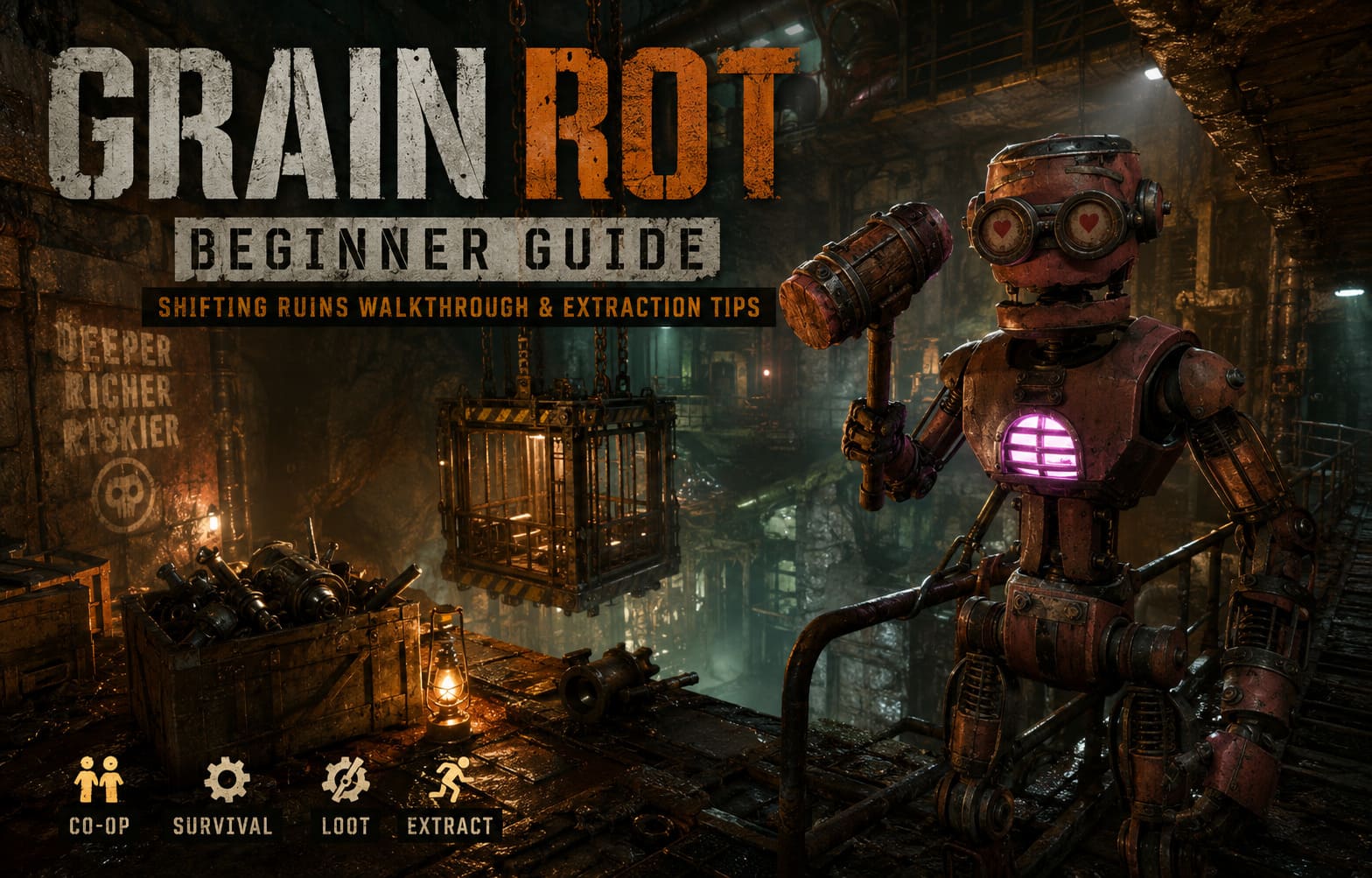
Instead of controlling a traditional survivor, you’re a Living Spark inhabiting a fragile wooden vessel. The burning surface world forces everyone underground, where procedurally generated ruins hide both valuable resources and deadly creatures.
Every successful expedition usually follows the same structure:
- Descend into the ruins.
- Search for valuable scrap.
- Process loot before extraction.
- Return home to upgrade your Outpost.
- Repeat while pushing into deeper layers.
The simple formula becomes incredibly rewarding because every run feels different thanks to changing layouts, enemy placements, and resource distribution.
Your Wooden Vessel Is More Fragile Than You Think
One mistake many beginners make is treating their body like it’s a normal health bar.
It isn’t.
Your wooden shell is vulnerable to explosions, heavy impacts, fire, environmental hazards, and powerful enemies. Losing your vessel doesn’t always end the run, but it immediately puts your entire team under pressure.
You’ll constantly be managing three important resources:

| System | Why It Matters |
|---|---|
| Hull Integrity | Determines how much punishment your vessel can survive. |
| Stamina | Controls sprinting, jumping, kicking, and swinging heavy tools. |
| Rot | The hidden timer that gradually turns every expedition against you. |
The Rot mechanic deserves special attention.
The longer you remain underground, the worse things become. High Rot doesn’t simply lower your health—it begins affecting your movement, awareness, and overall control, making dangerous encounters even more chaotic.
Because of that, experienced players rarely stay until everything is collected.
Sometimes leaving with 80% of the available loot is the smartest decision you’ll make.
Upgrade Your Outpost Before Chasing Bigger Runs
One lesson I learned fairly quickly is that rushing deeper layers without improving your Outpost is usually a mistake.
Permanent upgrades make every future expedition easier.
Some of the most valuable investments include:
- Maximum stamina for longer exploration.
- Permanent health increases to survive unexpected mistakes.
- Additional inventory space for more efficient looting.
- Damage upgrades that reduce the number of swings needed against enemies and objects.
Inventory improvements deserve special mention because they completely change how productive each run feels.
More carrying capacity means fewer trips across dangerous hallways, which naturally reduces the chances of getting caught by wandering monsters.
Never Underestimate Your Tools
Weapons often receive the most attention, but your basic equipment usually determines whether an expedition succeeds.
The humble mallet is easily one of the best items in the early game.
It breaks furniture, destroys obstacles, and converts abandoned objects into valuable scrap. The only downside is durability.
Breaking your last mallet halfway through a profitable area feels terrible.
Whenever possible, I always try to enter a run with backup tools available.
Higher progression eventually unlocks:
- Swords
- Heavy hammers
- Firearms
- Navigation tools like compasses
While guns certainly make dangerous encounters easier, they don’t replace good positioning.
Avoiding combat is almost always cheaper than repairing a destroyed vessel afterward.
A Small Inventory Trick Worth Using
One of the smartest community discoveries involves preparing before the elevator even begins moving.
Instead of carrying every tool in your inventory, you can place several extras directly onto the elevator floor before departure.
This gives your team emergency replacements without immediately consuming inventory slots.
There is a built-in limit, however.
Attempting to bring excessive duplicates causes older items to disappear automatically.
Keeping a reasonable number of backup tools is far more reliable than trying to exploit the system.
My Preferred Route Through Every Expedition
After dozens of runs, I naturally settled into the same routine.
It consistently produces better results than randomly wandering through rooms.

1. Stop and Listen
GRAIN ROT relies heavily on environmental audio.
There isn’t constant music telling you when danger appears.
Instead, footsteps, scratching, distant growls, and metallic noises provide valuable information.
Spending ten seconds listening often saves several minutes of fighting later.
2. Find Valuable Objects First
Large industrial heaters are among the highest-value objects you’ll encounter.
Destroying one provides an excellent amount of scrap early in the expedition.
There is one catch.
They’re unstable.
If you hesitate while breaking them apart, they may ignite and explode, destroying both your vessel and nearby resources.
Commit fully or don’t touch them at all.
3. Locate the Processing Machines
The sooner you discover a Compactor or Extractor, the smoother your run becomes.
Instead of carrying heavy inventories across the entire map, you can establish a short farming route nearby.
Less travel means:
- Faster income
- Lower risk
- More efficient inventory management
4. Memorize Safe Rooms
Recovery areas are invaluable.
Whenever I discover one, I immediately remember its location before continuing exploration.
If combat becomes overwhelming, retreating into one of these locations often resets the situation and allows enough time to recover.
5. Know When to Leave
This may be the hardest lesson in GRAIN ROT.
Greed ends more expeditions than monsters do.
If you’ve already secured enough scrap for meaningful upgrades, extraction is usually the correct decision.
One extra room rarely justifies losing everything.
How I Deal With the Early Enemies
Every creature encourages different behavior.
Explosive Chasers
These enemies become dangerous only if you panic.
Sharp corners are your best friend.
Force them to explode against walls rather than next to your wooden body.
The Creepy Child
At first, this enemy doesn’t seem threatening.
That’s exactly why so many beginners ignore it.
Allowing it to remain nearby rapidly increases your Rot, making every following encounter much more dangerous.
Breaking line of sight and using doors effectively usually solves the problem.
Heavy Brutes
Don’t try to prove you’re stronger.
You aren’t.
These monsters punish direct melee combat.
Environmental hazards are significantly more reliable.
If possible, bait their charge and let the terrain eliminate them instead.
Grain Rot Outpost Rebuilding Guide: Best Upgrades List & Meta Extraction Strategies
Advanced Tips That Made the Biggest Difference
Once the basics become second nature, several habits dramatically improve survival rates.
Stay quiet whenever possible.
Running everywhere attracts unnecessary attention.
Walking slowly through dangerous sections often prevents encounters altogether.
Use Spark Mode intelligently.
Losing your vessel isn’t always the end.
Your Living Spark can safely scout hallways, identify threats, and help teammates navigate dangerous areas before finding another shell.
Assign clear co-op roles.
A balanced team performs much better than four players doing everything.
A simple setup works surprisingly well:
| Role | Main Responsibility |
|---|---|
| Demolisher | Break valuable objects and gather scrap quickly. |
| Transporter | Move resources to processing stations. |
| Scout | Explore ahead and identify enemy locations. |
| Defender | Protect teammates during extraction and emergencies. |
Good communication often matters more than expensive equipment.
GRAIN ROT Guide: Living Spark Mechanic Explained & What Happens When Your Vessel Breaks
Final Thoughts
One reason I’ve enjoyed GRAIN ROT so much is that it constantly rewards smarter decisions instead of reckless aggression.
The atmosphere, the risk of permanent loss, and the satisfying progression loop make every successful extraction feel genuinely earned.
If I could offer only three pieces of advice to every new player, they’d be these:
- Upgrade your Outpost consistently instead of rushing deeper floors.
- Don’t become obsessed with clearing every room.
- Always respect the Rot meter.
Those habits alone will dramatically improve your survival rate.
GRAIN ROT may look unforgiving during your first few hours, but once you understand how its systems work together, every expedition becomes a careful balance of preparation, teamwork, and knowing exactly when to walk away.
Master those fundamentals, and the shifting ruins become far less intimidating—even when the darkness starts fighting back.