Echoes of Aincrad: How to Raise Weapon Level Cap & Max Out Proficiency
If there was one lesson I learned after spending hours exploring Sword Art Online: Echoes of Aincrad, it’s this: grinding enemies alone won’t make your character stronger forever. I made the same mistake many players do—I stayed out in the field farming monsters, expecting my weapon damage to keep climbing naturally. Instead, I eventually hit a wall where enemies kept feeling tougher while my favorite sword barely improved.
That’s when I realized the game hides its real progression behind several interconnected systems rather than simple experience farming. Once you understand how they work together, upgrading your weapons becomes much smoother, and combat starts feeling rewarding again.
If you’re wondering how to increase your weapon level cap, unlock stronger Sword Skills, or simply avoid wasting hours grinding inefficiently, here’s everything I’ve learned from my own experience combined with what the community has been discovering since launch.
Why Weapon Progression Feels Different
Unlike many action RPGs where stronger enemies simply drop better gear, Echoes of Aincrad encourages players to advance through the story instead of endlessly farming one location.
At first this felt frustrating.
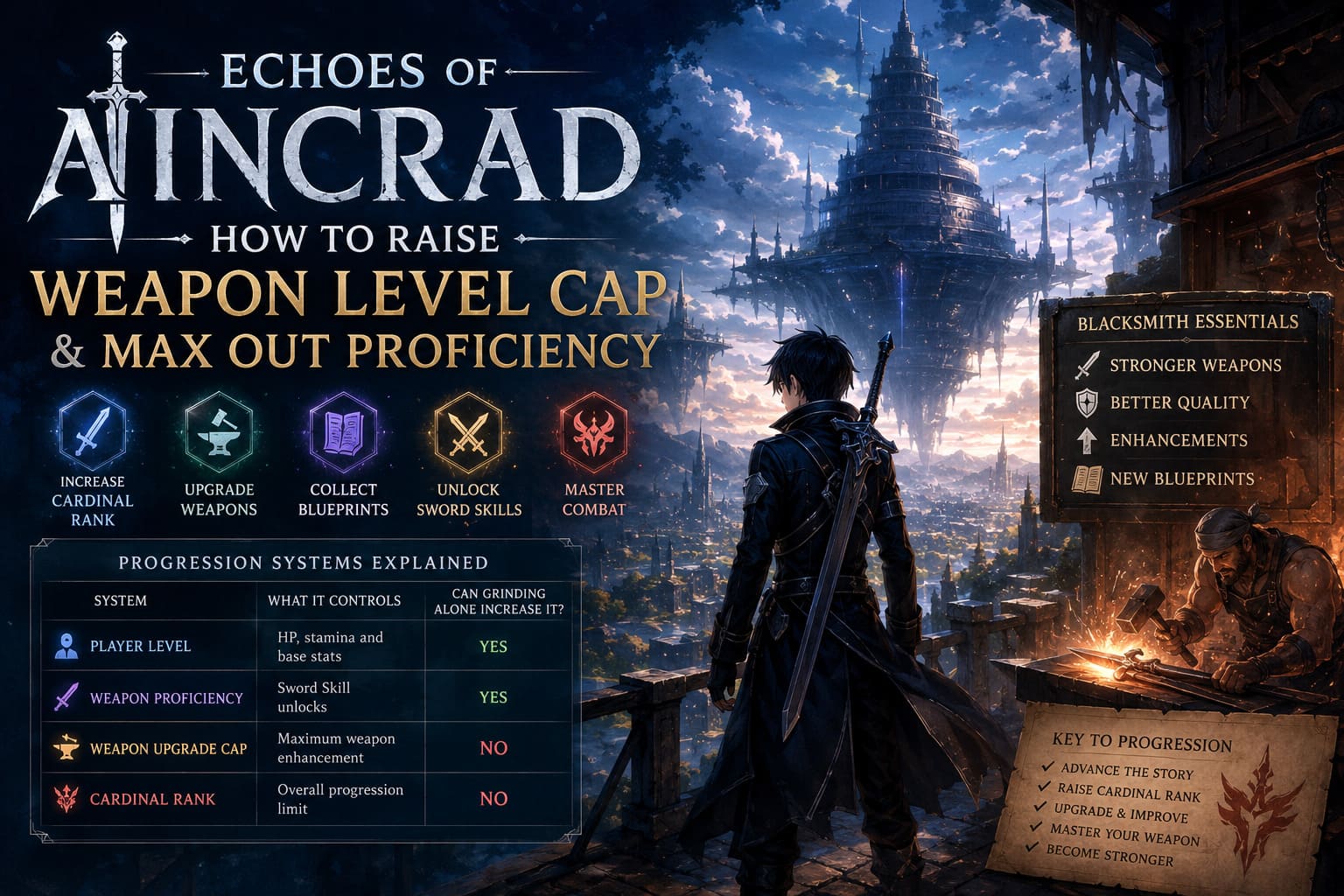
I had plenty of crafting materials and enough experience from defeating monsters, yet the blacksmith refused to improve my equipment beyond a certain point. After experimenting for a while, it became obvious that the game separates progression into several different systems.
| System | What It Controls | Can Grinding Alone Increase It? |
|---|---|---|
| Player Level | HP, stamina and base stats | Yes |
| Weapon Proficiency | Sword Skill unlocks | Yes |
| Weapon Upgrade Cap | Maximum weapon enhancement | No |
| Cardinal Rank | Overall progression limit | No |
This distinction is important because raising your player level doesn’t automatically make your equipment stronger.
Cardinal Rank Is the Real Progression Gate
In my opinion, Cardinal Rank is easily the most misunderstood mechanic in the entire game.
Many players assume reaching a higher character level automatically unlocks better upgrades. Unfortunately, that’s not how the system works.
Your Cardinal Rank determines how far your equipment can be enhanced. Until this rank increases, every weapon eventually reaches a hard ceiling regardless of how many monsters you defeat.
The only reliable way to raise Cardinal Rank is by progressing through the main storyline and unlocking new areas.
That means story progression is never optional if your goal is maximizing damage.
Finish Main Story Missions Before Heavy Grinding
One habit I quickly stopped was spending several hours farming the same map.
Early on it seems efficient because experience comes quickly, but after enough time the returns become much smaller.
Instead, I now follow a much better routine:
- Complete several story missions.
- Unlock new settlements.
- Raise Cardinal Rank.
- Return to town.
- Upgrade weapons.
- Continue farming with stronger gear.
This cycle feels significantly faster than trying to overpower enemies through levels alone.
Always Visit the Blacksmith After Major Progress
One mistake I constantly made was forgetting to return to town after completing important objectives.
The game won’t automatically improve your equipment.
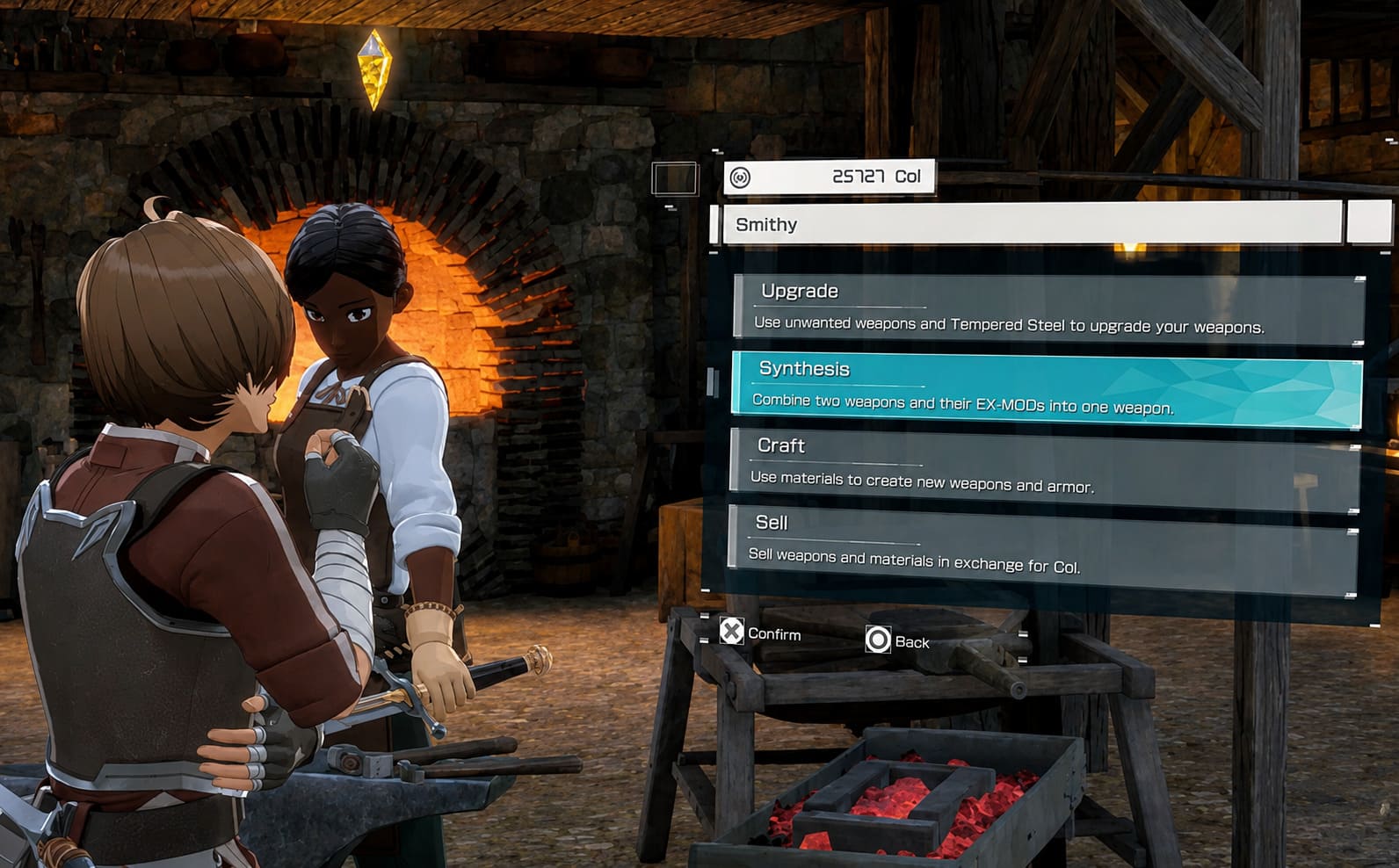
Whenever your progression advances, make visiting the smithy your next priority.
The blacksmith allows you to:
- Upgrade weapon attack power.
- Improve equipment quality.
- Apply stronger enhancement effects.
- Craft higher-tier weapons.
- Use newly unlocked blueprints.
Skipping these upgrades can leave your character feeling much weaker than intended.
Blueprints Matter More Than I Expected
Materials alone aren’t enough.
Several of the strongest upgrades remain unavailable until you’ve collected the correct blueprints.
Fortunately, blueprints appear from multiple activities including:
- Side quests.
- Hidden exploration rewards.
- Treasure discoveries.
- Story progression.
- Optional encounters.
Whenever I entered a new region, I made exploring every corner a priority before moving on.
It paid off surprisingly often.
Don’t Ignore Weapon Proficiency
Weapon Proficiency is another system that’s easy to misunderstand.
Increasing proficiency doesn’t directly increase your weapon’s attack stat.
Instead, it unlocks additional Sword Skills, which often provide a much larger damage increase than a few extra attack points.
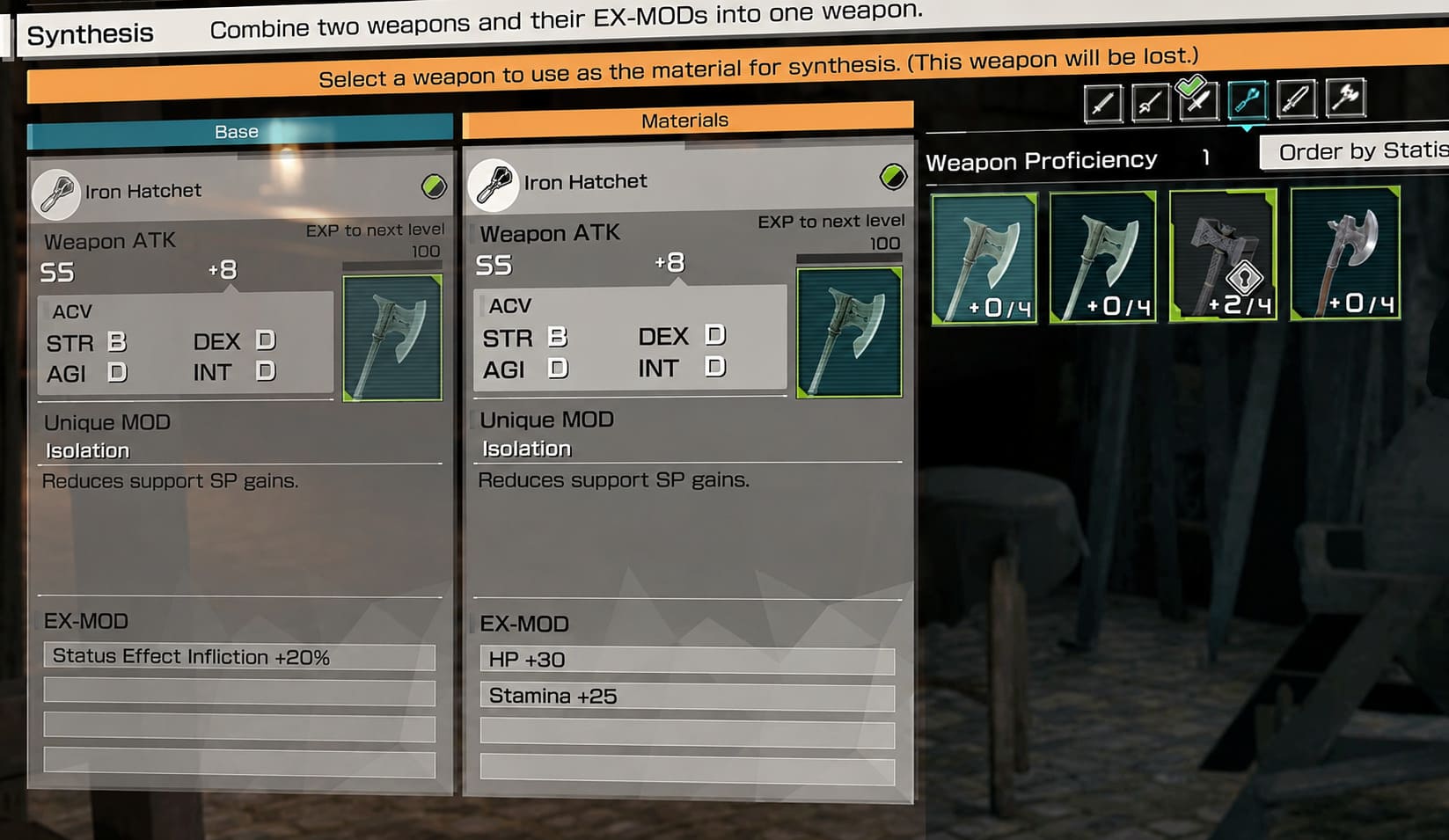
Each weapon category develops independently.
Some examples include:
- One-Handed Sword
- Rapier
- Dagger
- Mace
- Two-Handed Sword
- Two-Handed Axe
If you constantly swap weapon types, your proficiency becomes spread across multiple categories.
Personally, I found sticking with one weapon during the early game much more efficient.
Specializing first lets you unlock stronger combat abilities sooner.
My Favorite Early Weapon Farming Strategy
After trying several different farming routes, one quest consistently stood out.
Within the Shadows offers excellent enemy density without requiring long travel times.
The layout allows continuous combat, making it ideal for building proficiency while also collecting useful crafting resources.
I wouldn’t call it mandatory, but it definitely felt faster than randomly roaming open areas looking for enemy groups.
Combat Is More Important Than Raw Stats
One thing I genuinely appreciate about Echoes of Aincrad is that combat rewards skill instead of button mashing.
Landing consecutive attacks while avoiding damage gradually builds momentum.
Once you establish a rhythm, battles become noticeably easier.
Some habits that helped me improve:
- Dodge instead of trading hits.
- Chain Sword Skills together.
- Learn enemy attack timing.
- Maintain offensive pressure.
- Preserve stamina for emergencies.
These mechanics matter far more than simply having slightly better equipment.
Never Empty Your Stamina Bar
If I could give only one combat tip to new players, it would be this:
Always save stamina.
Running completely out of stamina almost guarantees punishment during difficult boss encounters.
Even if you’re confident, unexpected attacks happen.
Keeping at least one-third of your stamina available gives enough room for emergency dodges and defensive movement.
That small habit alone probably saved me dozens of times.
Invest Growth Points With a Plan
Another trap I fell into early was spreading my Growth Points across every available attribute.
Balanced builds sound attractive, but they usually delay your damage potential.
Instead, I recommend committing to the primary stat that matches your favorite weapon.
| Weapon Type | Recommended Focus |
|---|---|
| One-Handed Sword | Dexterity |
| Rapier | Dexterity |
| Dagger | Agility |
| Mace | Strength |
| Two-Handed Sword | Strength |
| Two-Handed Axe | Strength |
Building around one weapon specialization creates much stronger results than trying to master everything simultaneously.
Avoid This Common Grinding Mistake
One mechanic surprised me more than anything else.
Enemies continue scaling while you’re exploring.
That sounds normal until you realize something important.
If you’re stuck inside a long quest, you can’t immediately spend Growth Points or upgrade your equipment at the blacksmith.
So while enemies become stronger, your weapon may remain exactly the same.
That imbalance creates unnecessary difficulty.
Whenever I noticed battles taking longer than usual, I stopped farming, finished the objective, returned to town, upgraded everything, and then resumed exploring.
The difference was dramatic.
Echoes of Aincrad Rapier vs Daggers: Best High-Speed Agility Build Guide
My Recommended Upgrade Routine
After experimenting for dozens of hours, this became my preferred progression loop.
- Advance the main story.
- Increase Cardinal Rank.
- Visit the blacksmith immediately.
- Upgrade every primary weapon.
- Spend Growth Points at the inn.
- Farm Weapon Proficiency.
- Collect blueprints.
- Repeat the cycle.
It’s simple, efficient, and keeps your equipment synchronized with enemy strength.
Is Grinding Worth It?
Absolutely—but only after your progression systems are aligned.
Grinding before increasing Cardinal Rank eventually becomes inefficient because your upgrade ceiling remains locked.
Grinding afterward feels much more rewarding since every improvement directly translates into higher weapon damage, stronger Sword Skills, and smoother boss encounters.
In other words, timing matters just as much as effort.
Final Thoughts
After spending a considerable amount of time experimenting with Sword Art Online: Echoes of Aincrad, I honestly think its progression system is smarter than it first appears. It doesn’t simply reward players who defeat the most monsters—it rewards those who understand how every mechanic connects.
Weapon Proficiency, Cardinal Rank, blueprints, blacksmith upgrades, Growth Points, and exploration all support one another. Ignore one system, and progression slows down. Learn how they interact, and suddenly every upgrade feels meaningful.
If you’re chasing higher damage numbers, don’t fall into the trap of endless grinding. Push the story forward, unlock higher Cardinal Ranks, collect every useful blueprint you can find, and return to the smithy whenever new upgrades become available.
Once everything starts working together, you’ll notice your favorite weapon growing stronger at a steady pace, bosses falling much faster, and the climb through Aincrad becoming far more enjoyable than it seemed during those early hours.