Assassin’s Creed Black Flag Resynced Combat Analysis: Is It Better Than Shadows?
As someone who has spent far too many hours sailing across the Caribbean in the original Assassin’s Creed IV: Black Flag, I can’t ignore how bold the reimagining of Assassin’s Creed Black Flag Resynced feels. Ubisoft Singapore is not just polishing the old formula—they are rebuilding its combat identity from the ground up. The original game was never about deep melee systems, but more about freedom, piracy fantasy, and naval adventure. Still, the on-foot combat was extremely simple and often repetitive, relying heavily on counters and scripted kill animations.

Now the remake pushes in a completely different direction. Instead of preserving the old rhythm-based combat, it transforms it into a modern action system built around real-time responsiveness. For players like me who enjoy both cinematic sword fights and skill-based action systems, this raises a real question: does this version actually improve Edward Kenway’s combat identity, or does it reshape it into something entirely new?
30 Terabytes a Day: How Embark Studios Tracks Every Single Bullet in Arc Raiders
A Combat System That Finally Feels Alive
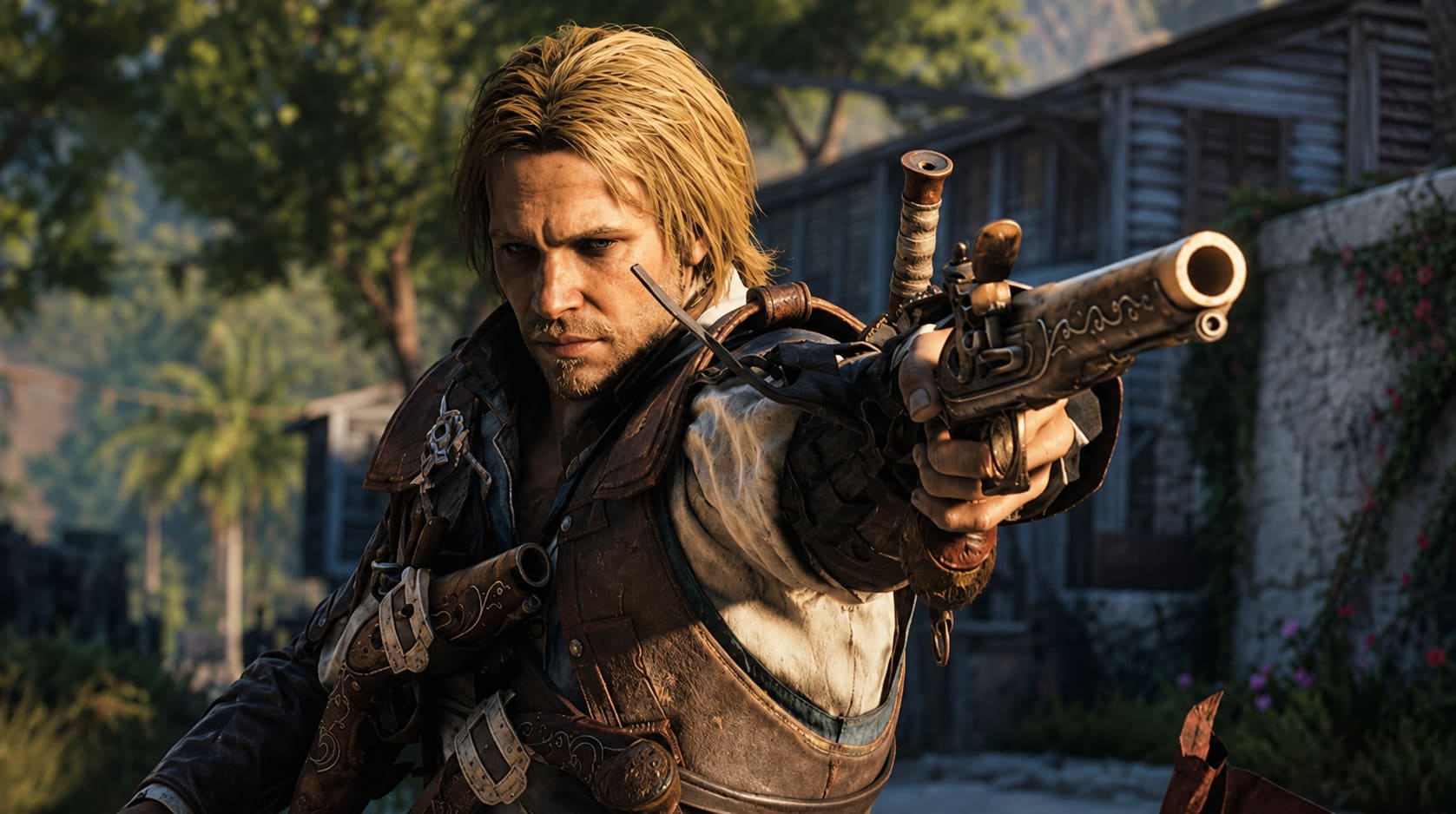
The most noticeable change in Assassin’s Creed Black Flag Resynced is the shift from animation-locked combat to a hitbox-driven system. This removes the old “wait, counter, instant kill” loop and replaces it with a system based on spacing, timing, and physical positioning. Every encounter feels more dynamic because success depends on how well you read enemy movement instead of waiting for scripted prompts.
Combat now feels far more manual and reactive. You can no longer rely on predictable patterns or passive defense. If you swing recklessly or misjudge distance, you are punished immediately. This creates a more grounded and tense experience where pirate duels feel unpredictable and dangerous rather than routine.
The parry system also receives a major overhaul. A perfectly timed parry now breaks enemy posture and opens a window for high-impact counterattacks. Instead of just stopping damage, it becomes a tool for controlling momentum. Skilled players can chain these openings into multi-target executions, reinforcing the fantasy of Edward as a deadly and efficient pirate captain.
Hidden Blade Changes: Cleaner but More Controversial
One of the most debated changes in the community revolves around the Hidden Blade. In the original game, it could be used more freely in open combat, blending stealth tools with melee fighting in creative ways. That flexibility gave players a lot of expressive freedom during chaotic encounters.
In Assassin’s Creed Black Flag Resynced, this flexibility is removed. The Hidden Blade is now strictly a contextual finisher, activated after parries, guard breaks, or stealth assassinations. During standard combat, Edward relies entirely on his dual weapons, making the combat identity more focused but less hybrid in nature.
While some fans may see this as a limitation, the change does improve readability and flow. Edward now feels more specialized, and transitions between combat states are smoother and more cinematic. It is a design choice that prioritizes clarity over versatility.
Combat Design Comparison: Resynced vs Shadows
To understand how different this direction is, it helps to compare it with Assassin’s Creed Shadows. Both games modernize combat, but they do so in completely different ways. Shadows leans heavily into RPG systems, while Resynced focuses on pure mechanical execution.
| Feature | Black Flag Resynced | Assassin’s Creed Shadows |
|---|---|---|
| Core System | Hitbox-based action combat | RPG + stat-driven combat |
| Progression | Skill mastery | Leveling and gear scaling |
| Hidden Blade Use | Finisher-only system | Integrated hybrid combat tool |
| Enemy Design | Reactive tactical AI | Stat-tiered RPG enemies |
| Combat Feel | Fast, skill-focused duels | Build-oriented encounters |
What stands out most is how aggressively Resynced removes RPG mechanics. There are no damage sponge enemies or level-gated encounters. Everything is based on execution, timing, and awareness rather than stats or gear progression.
Why the Action-First Approach Works
The decision to fully commit to action gameplay gives Assassin’s Creed Black Flag Resynced a very distinct identity. Instead of relying on numerical progression, the game challenges players through mechanics. Victory depends on learning systems rather than grinding power levels.
This also changes how failure feels. Losing a fight no longer feels like a stat mismatch but a skill gap. That makes the experience more consistent and fair, even when it becomes difficult. Players are encouraged to improve rather than grind.
Another important addition is the quick-command ability system. It allows seamless integration of tools like sweep kicks, rope pulls, pistol shots, and environmental interactions. These actions can be mixed into combat combos without breaking flow, making fights feel more improvisational and expressive.
Environmental Combat and Pirate Chaos
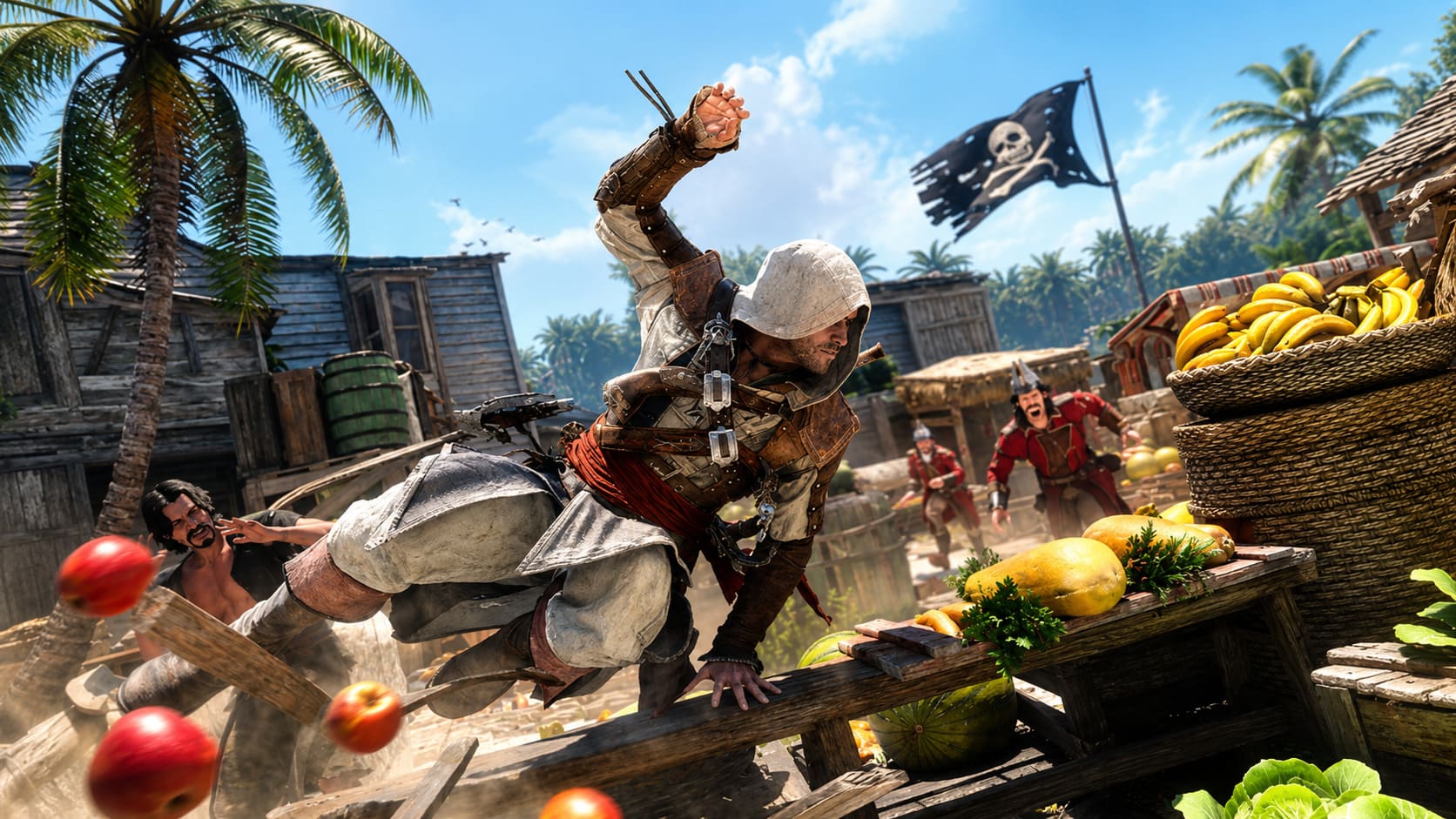
Environmental interaction is another major improvement. Players can now slam enemies into walls, throw them into crates, or use terrain hazards to create openings. This adds a layer of unpredictability that was missing in the original game.
Instead of static arenas, fights now feel like evolving spaces. Narrow ship corridors, dense jungle paths, and crowded docks all influence how encounters play out. The environment becomes part of your toolkit, not just a background setting.
Smarter Enemies That Fight Back
Enemy AI has also been significantly improved. Guards no longer wait patiently to be countered one by one. Instead, they react to repeated patterns and adjust their behavior during fights.
New enemy archetypes introduce additional complexity. Heavily armored units and disruption-focused enemies force players to prioritize targets and manage threats instead of simply clearing waves. This makes encounters feel more strategic without slowing down pacing.
As a result, combat becomes less about repetition and more about adaptation. Players must constantly evaluate positioning, timing, and enemy behavior to survive effectively.
Final Thoughts: A Risky but Exciting Redesign
Assassin’s Creed Black Flag Resynced represents a bold reinterpretation of a classic game. Instead of preserving the original combat system, it replaces it with a modern action framework focused on precision and skill. This makes it feel significantly more responsive and engaging for players who prefer mechanical depth over RPG systems.
Compared to Assassin’s Creed Shadows, it clearly chooses a different philosophy. Shadows builds depth through progression systems, while Resynced builds depth through player mastery. Both approaches have merit, but Resynced feels more aligned with fast-paced pirate fantasy.
If executed properly, this redesign could finally make on-foot combat in Black Flag as memorable as its legendary naval battles. It is a risky evolution, but one that could redefine how fans remember Edward Kenway’s journey.