Echoes of Aincrad Weapon Stats Guide: Randomized Loot and Synthesis System Explained
One of the biggest reasons I’m excited for Sword Art Online: Echoes of Aincrad isn’t simply because it’s another SAO game. What immediately caught my attention is how much more freedom it gives players compared to previous entries. Instead of replaying Kirito’s journey once again, we finally create our own survivor inside Aincrad, and that completely changes how progression feels.
After following developer presentations, community discussions, and beta impressions, one mechanic stands out more than anything else—the randomized weapon system. At first glance it may sound like another typical loot grind, but the more I looked into it, the more I realized that weapon progression appears to be one of the smartest systems Bandai Namco has introduced for the series.
Rather than endlessly replacing equipment with slightly higher numbers, you’ll constantly evaluate whether a weapon deserves to become your main choice, a synthesis material, or simply extra inventory space. That creates decisions instead of automatic upgrades, and personally, I think that’s exactly what action RPGs need.
Weapons Define Your Entire Playstyle
Unlike many fantasy RPGs, Aincrad isn’t filled with flashy magic classes. Your weapon is essentially your class, and your investment into mastering it shapes everything about combat.
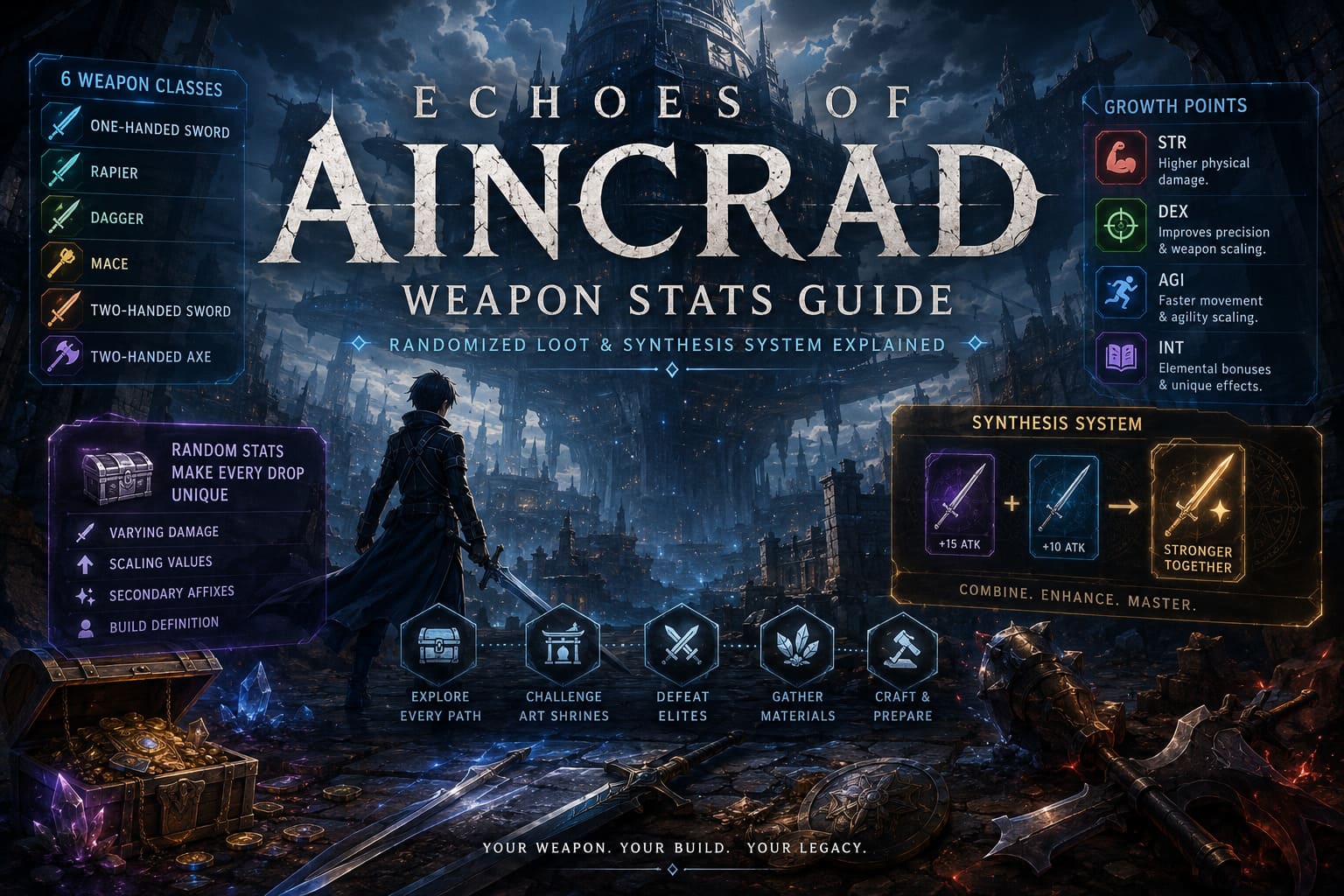
At launch there are six primary weapon categories.
| Weapon | Playstyle | My Impression |
|---|---|---|
| One-Handed Sword | Balanced offense and defense | Excellent for learning bosses and defensive play. |
| Rapier | Fast attacks and critical hits | Perfect for aggressive players who enjoy mobility. |
| Dagger | Extremely quick strikes | Great for applying pressure and staying mobile. |
| Mace | Heavy stagger damage | Strong against durable enemies and elite monsters. |
| Two-Handed Sword | Wide sweeping attacks | High damage with impressive crowd control. |
| Two-Handed Axe | Slow but devastating hits | Risky, but incredibly rewarding if your timing is good. |
Personally, I usually start RPGs with balanced weapons, so the One-Handed Sword immediately feels like the safest choice. Having access to defensive options while still dealing respectable damage is always valuable when learning new boss mechanics.
That said, I have to admit the Two-Handed Sword has become far more interesting after hearing how its scaling works.
Every Weapon Continues Growing With You
Something I really like is that weapon progression isn’t limited to simply finding stronger drops.
Each weapon type earns its own experience through combat. As you defeat monsters, complete quests, and clear dangerous encounters, you’ll gradually unlock additional Sword Skills tied specifically to that weapon category.
Instead of constantly switching equipment, the game seems designed to reward players who commit to mastering a favorite style.
Combat also appears to involve real resource management.
- Stamina for sprinting, dodging, and guarding.
- SP for activating powerful Sword Skills.
- Positioning during longer enemy encounters.
This creates a nice balance between offense and survival instead of allowing players to endlessly spam abilities.
Random Weapon Stats Make Every Drop Worth Checking
This is probably my favorite feature revealed so far.
Two weapons with the exact same name are not necessarily equal.
Each drop can roll different stat combinations, different scaling values, and different bonus attributes.
That instantly reminds me of loot systems from games like Diablo or Nioh, where every legendary—or even common—drop deserves at least a quick inspection before selling it.
Instead of asking:
“Is this weapon higher level?”
You’ll often ask:
“Does this weapon actually fit my build better?”
That small change dramatically improves long-term progression.
Character Stats Matter More Than I Expected
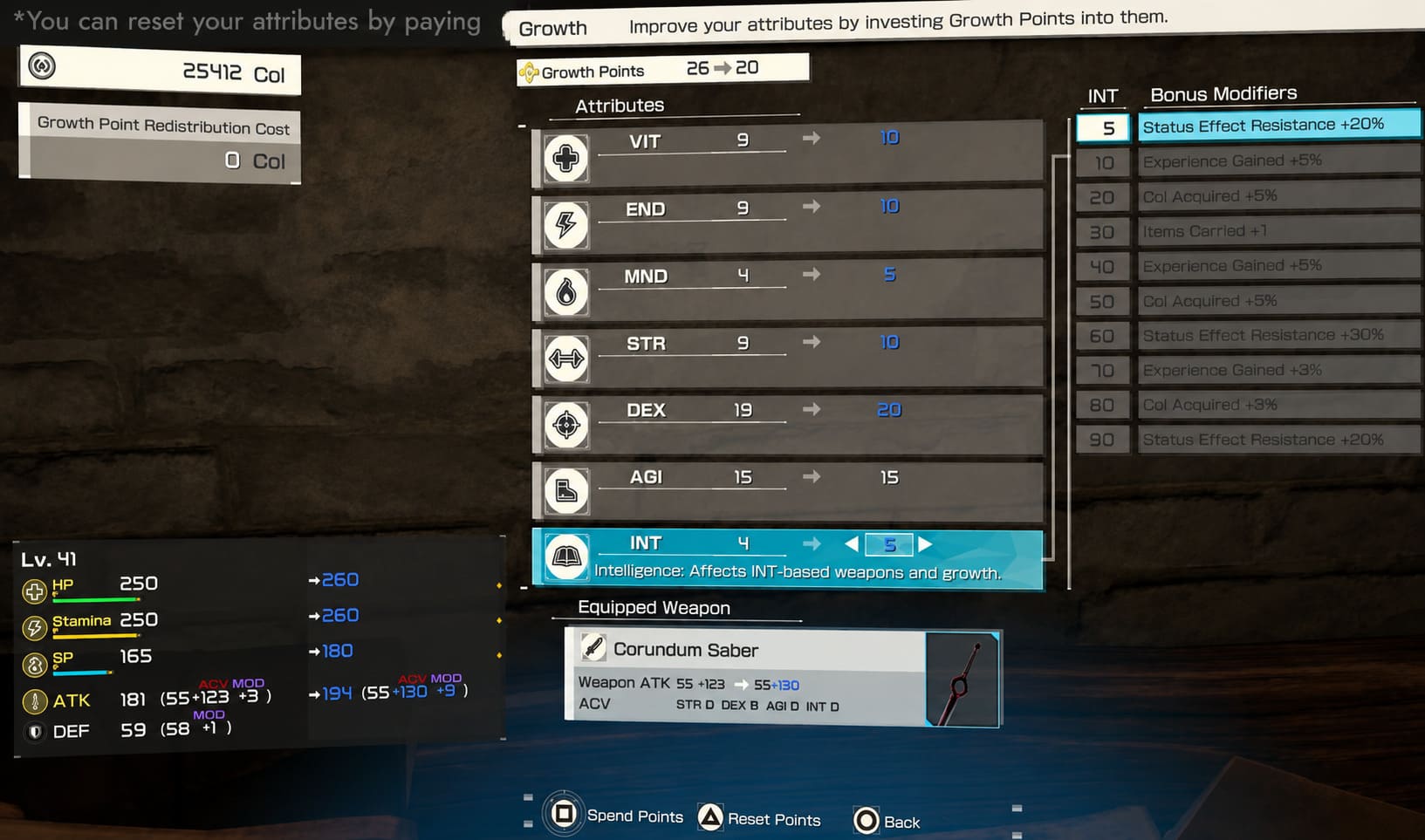
Your character receives Growth Points when leveling up, allowing you to specialize your build.
From everything shown so far, these attributes influence weapon performance quite heavily.
| Attribute | Primary Benefit |
|---|---|
| STR | Higher physical damage for heavy weapons. |
| DEX | Improves precision and benefits several unexpected weapon types. |
| AGI | Faster movement and stronger scaling for agile weapons. |
| INT | Supports elemental bonuses and unique weapon effects. |
One discovery from beta discussions really surprised me.
Many players assumed heavy swords would naturally scale almost entirely with Strength.
Instead, some early Two-Handed Swords reportedly receive stronger bonuses from Dexterity, making them much more flexible than expected.
That’s exactly the kind of system I enjoy because it discourages copying one universal build from YouTube.
Experimentation actually matters.
Secondary Affixes Could Become the Real Endgame
Base damage is only part of the equation.
Random secondary stats appear capable of changing how effective a weapon becomes in real combat.
Some of the most useful bonuses include:
- Flat Attack increases
- Additional Health
- Extra Stamina
- Critical Hit Chance
- Resistance against status effects
Personally, I always value Stamina more than raw damage during early progression.
Living longer often results in faster clears than equipping the weapon with the biggest Attack number.
Later in the game, however, stacking offensive affixes will probably become much more important once survivability is no longer an issue.
Weapon Synthesis Is the System I’m Most Looking Forward To
Random loot usually creates one major problem.
Eventually your inventory fills with weapons that are almost good enough.
Echoes of Aincrad seems to solve that issue through its synthesis mechanic.
Instead of throwing away every weaker weapon, you’ll be able to recycle valuable stat lines into your main equipment.
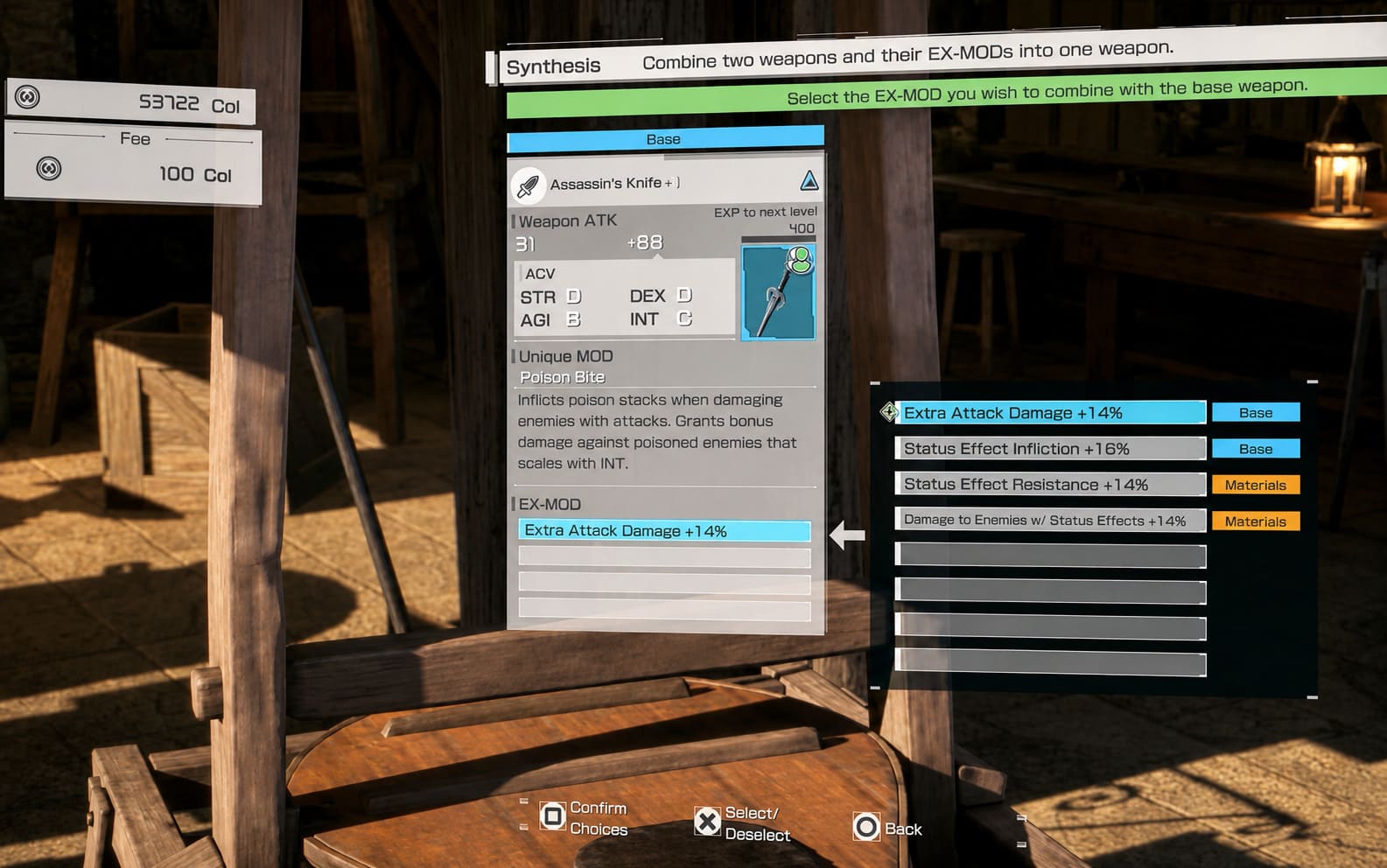
Imagine finding:
- Sword A with +15 Attack
- Sword B with +10 Attack
Rather than choosing between them, synthesis allows the stronger weapon to inherit additional bonuses from the weaker one while consuming the donor weapon.
That gradual improvement loop feels incredibly satisfying.
Even average loot remains useful because individual stat rolls can still strengthen your favorite weapon.
Honestly, this might become my favorite progression feature if it’s balanced well after launch.
Efficient Farming Will Be More Important Than Endless Grinding
Quest areas appear to function as large mission-based zones instead of completely open worlds.
That actually isn’t a bad thing.
Structured environments usually allow developers to place meaningful encounters instead of forcing players to wander huge empty maps.
Whenever I enter a farming zone, my priorities would probably look like this:
- Search every side path for treasure chests.
- Activate every Art Shrine encountered.
- Eliminate elite enemies before leaving.
- Collect every crafting material along the way.
Missing hidden content often means missing upgrade materials later.
Treasure Chests Should Never Be Ignored
One lesson I’ve learned from dozens of RPGs is that hidden chests almost always reward curiosity.
Echoes of Aincrad seems to continue that tradition.
Treasure containers can provide:
- Random equipment
- Crafting recipes
- Col (currency)
- Upgrade materials
Even if the equipment isn’t useful immediately, it may become valuable synthesis material later.
That’s another reason I doubt I’ll rush directly toward quest objectives.
Exploration appears heavily rewarded.
Art Shrines Look Like High-Risk, High-Reward Activities
Art Shrines might end up becoming the best source of rare equipment.
These encounters reportedly summon stronger enemies or mini-bosses that protect higher-quality rewards.
Besides rare weapon drops, clearing these challenges can unlock additional paths containing even more loot.
If that information holds true after launch, I expect experienced players will create optimized farming routes focused almost entirely around these shrines.
Crafting Shouldn’t Be Overlooked Either
Weapons receive most of the attention, but gathering materials also appears worthwhile.
Monster drops and harvested resources can be converted into practical items back in town.
Some examples include:
- Healing Crystals
- Recovery supplies
- Utility explosives
- Exploration tools
Having enough consumables available before tackling difficult bosses could easily determine whether a run succeeds or fails.
Echoes of Aincrad EX-Mods Transfer Guide: How to Move Weapon Skills and Save Progress
My Early Build Strategy
If I were starting Echoes of Aincrad on launch day, this would probably be my approach:
| Priority | Reason |
|---|---|
| Choose one weapon class early | Focused progression unlocks Sword Skills faster. |
| Match Growth Points with weapon scaling | Better long-term damage than spreading stats evenly. |
| Save promising duplicate weapons | Excellent synthesis materials later. |
| Explore every mission area completely | Hidden rewards often outperform quest rewards. |
| Challenge every Art Shrine | Higher chance of obtaining powerful equipment. |
I generally avoid switching between multiple weapon types during the first several hours of an RPG unless the game specifically encourages it.
Mastering one moveset usually provides much stronger overall performance.
Echoes of Aincrad Weapon Synthesis Guide: How to Craft God-Tier EX-Mods
Final Thoughts
From everything revealed before release, Sword Art Online: Echoes of Aincrad looks far more interesting than I initially expected. The combination of randomized weapon rolls, meaningful stat scaling, weapon-specific progression, and a synthesis mechanic that gives duplicate loot real value creates a progression loop that feels much deeper than simply chasing higher item levels.
What excites me most is that nearly every weapon drop has the potential to matter. Even if a new sword isn’t stronger than your current favorite, it might carry the perfect bonus to improve it through synthesis later. That’s the kind of design that keeps exploration rewarding instead of frustrating.
If the final release maintains this balance, I can easily see players spending dozens of hours refining a single weapon into their personal masterpiece. For me, that’s one of the strongest signs that Echoes of Aincrad could deliver the satisfying long-term progression that many action RPG fans have been hoping for. Instead of replacing gear every few minutes, we’ll be shaping it over time—and that makes every dungeon, every elite enemy, and every hidden chest feel like it truly matters.