Beast of Reincarnation Blight Explained: Lore, Powers, and Monster Origin
There are plenty of games that promise a dark fantasy setting, mysterious monsters, and emotional storytelling. After spending years with series like Dark Souls, Nioh, Monster Hunter, NieR, Sekiro, and dozens of other action RPGs, I’ve become skeptical whenever developers claim they’re creating something “unique.” Most titles borrow familiar ideas, change the visual style, and call it innovation.
Beast of Reincarnation is one of the few upcoming games that actually caught my attention for a different reason. Instead of relying only on difficult combat or cinematic storytelling, it builds its entire world around a single concept—the Blight. From everything shown so far, this mysterious force isn’t just another fantasy curse.
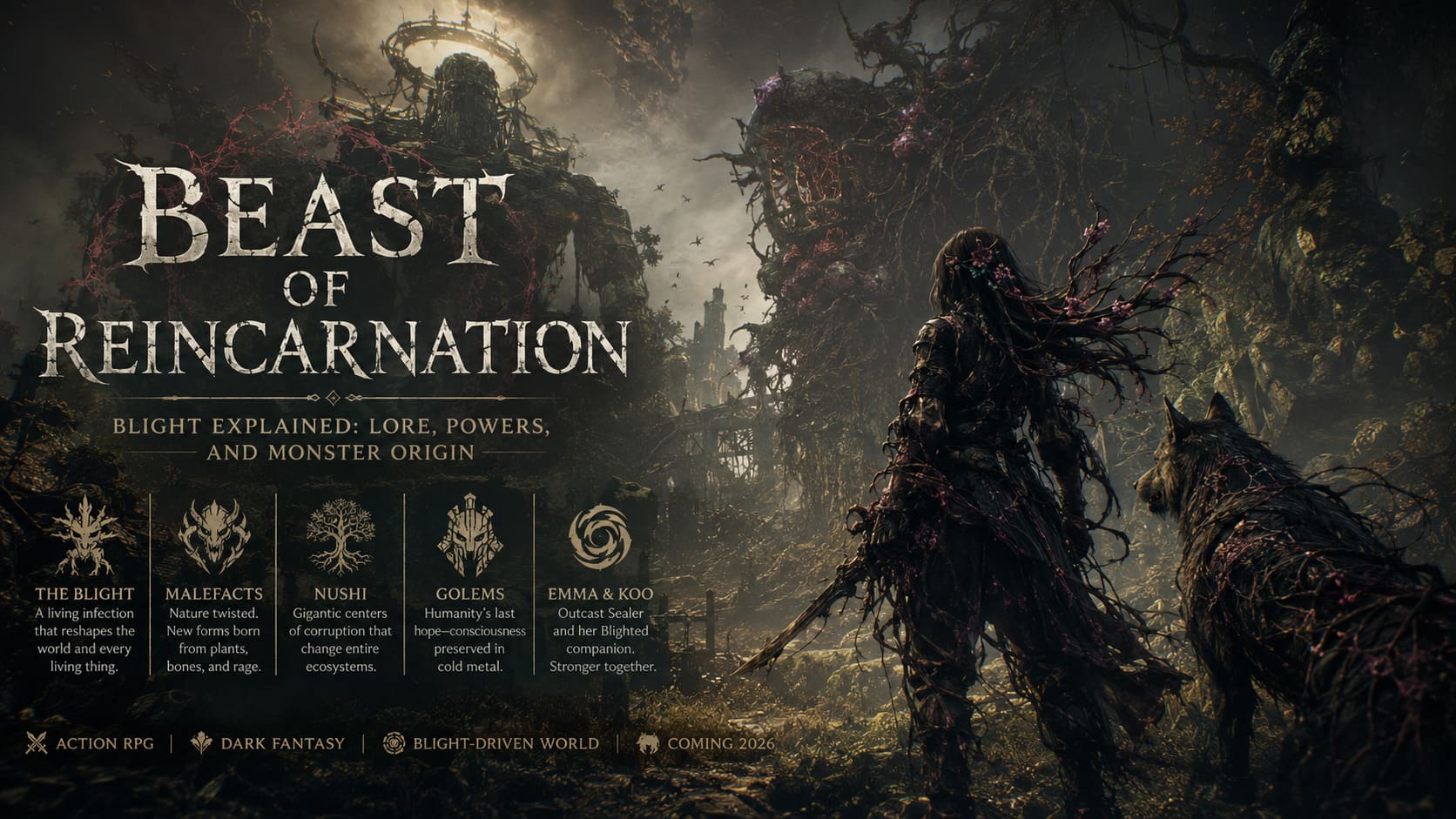
It shapes the lore, changes the environment, transforms living creatures, and even influences how exploration and combat work. If Game Freak delivers on these ideas, the Blight could become one of the most memorable world-building elements we’ve seen in recent action RPGs.
Beast of Reincarnation Lore: The Dark Truth Behind Emma and Koo Explained
The Blight Is More Than a Typical Apocalypse
Many post-apocalyptic games explain their ruined worlds with nuclear war, zombies, magic, or deadly viruses. Beast of Reincarnation takes another direction that feels both strange and fascinating.
The disaster began thousands of years before the game’s present timeline when an enormous extraterrestrial being, known as the Beast of Reincarnation, arrived on Earth. Instead of instantly destroying civilization, its influence slowly spread across the planet through a biological corruption called the Blight.
This gradual collapse makes the setting much more believable. Humanity didn’t disappear overnight. Civilization spent centuries trying to survive while nature itself became something completely alien. By the year 4026, the world has transformed into a hostile ecosystem where almost every living organism has been altered beyond recognition.
In my opinion, this slower approach creates a stronger sense of history. The world feels ancient, broken, and lived in rather than simply abandoned.
A Living Infection Instead of a Simple Disease
What immediately stood out to me is that the Blight doesn’t behave like a virus in the traditional sense.
Instead, it acts almost like an intelligent ecosystem. Plants invade animals. Trees grow through bones. Flowers become armor. Roots replace muscles. Every creature evolves into something unpredictable.
Rather than covering the world with decay, the Blight creates entirely new forms of life. It’s disturbing because these monsters don’t look undead—they look alive, only horribly transformed.
Some early gameplay footage suggests that every infected region develops its own personality depending on how the Blight has evolved there, which should make exploration feel much less repetitive.
The Malefacts Are More Interesting Than Standard Monsters
One thing I’ve grown tired of in modern RPGs is fighting endless groups of enemies that differ only by color or statistics.
The Malefacts already seem far more creative.
These corrupted creatures are formed by merging animals and vegetation into aggressive hybrid organisms. Instead of simply becoming stronger versions of wildlife, they develop completely new biological structures.
Key traits of Malefacts include:
- Plant roots replacing skeletal structures
- Flowers functioning as defensive armor
- Branches acting as natural weapons
- Mutated growth constantly spreading across their bodies
This approach makes every encounter feel like fighting nature itself rather than ordinary monsters. As someone who enjoys environmental storytelling, I appreciate enemies that visually explain the world’s history without needing long dialogue scenes.
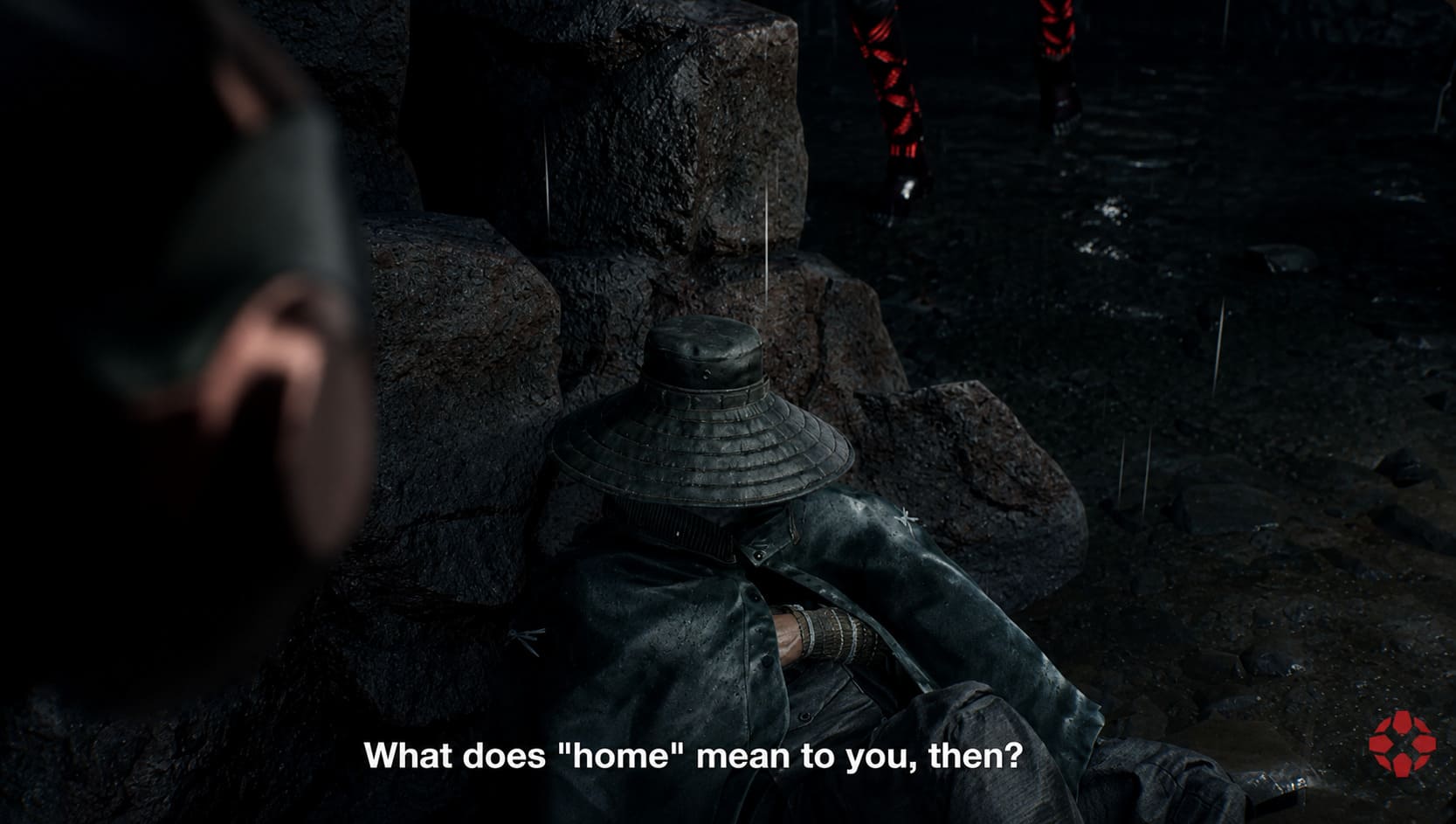
The Nushi Feel Like True Ecosystem Bosses
Large bosses have become a standard feature in action RPGs, but the Nushi appear to serve a much bigger purpose.
These gigantic creatures aren’t simply stronger Malefacts. Instead, they function as living centers of infection that actively expand the Blight across entire regions.
Defeating one isn’t only about winning a fight—it can completely change the surrounding ecosystem.
| Feature | Standard RPG Boss | Nushi in Beast of Reincarnation |
|---|---|---|
| Main role | Combat challenge | Source of regional corruption |
| World impact | Usually minimal | Alters surrounding ecosystem |
| Story importance | Isolated enemy | Key part of global survival struggle |
| Rewards | Equipment or skills | Blight-based progression and abilities |
Humanity’s Last Attempt to Escape the Blight
One of my favorite pieces of lore involves the ancient Golems. Normally, giant mechanical guardians exist simply because fantasy games need giant robots. Here, they actually make sense.
Since the Blight infects living tissue, humanity attempted to preserve itself by transferring consciousness into massive metal constructs. It’s an incredibly desperate solution that highlights how far civilization had fallen. However, over centuries, these machines lost their purpose and became hostile relics wandering abandoned territories.
This blend of science fiction and dark fantasy gives the world another layer instead of relying only on monsters and magic.
Emma Is an Unusual Hero
Emma stands out from many modern action RPG protagonists because she is not a traditional chosen hero. Instead, she survives because she carries the very corruption destroying humanity.
As a Sealer, Emma can absorb concentrated Blight from defeated enemies, turning it into power. This makes her both humanity’s hope and its greatest fear. She has lost her memories, struggles with emotional expression, and is treated as an outcast by the very people she is trying to protect.
Personally, I find characters like this far more compelling than predictable hero archetypes.
Exploration Looks Surprisingly Creative
Traversal is often one of the weakest parts of open-world RPGs, usually relying on repetitive mechanics.
Emma’s abilities appear far more imaginative. Her mutated hair has evolved into living vines capable of extending across cliffs, forming temporary supports, and interacting with terrain in unique ways. Instead of adding a generic grappling hook, the game integrates movement directly into its biological world-building. This makes exploration feel like an extension of the lore rather than a separate system.
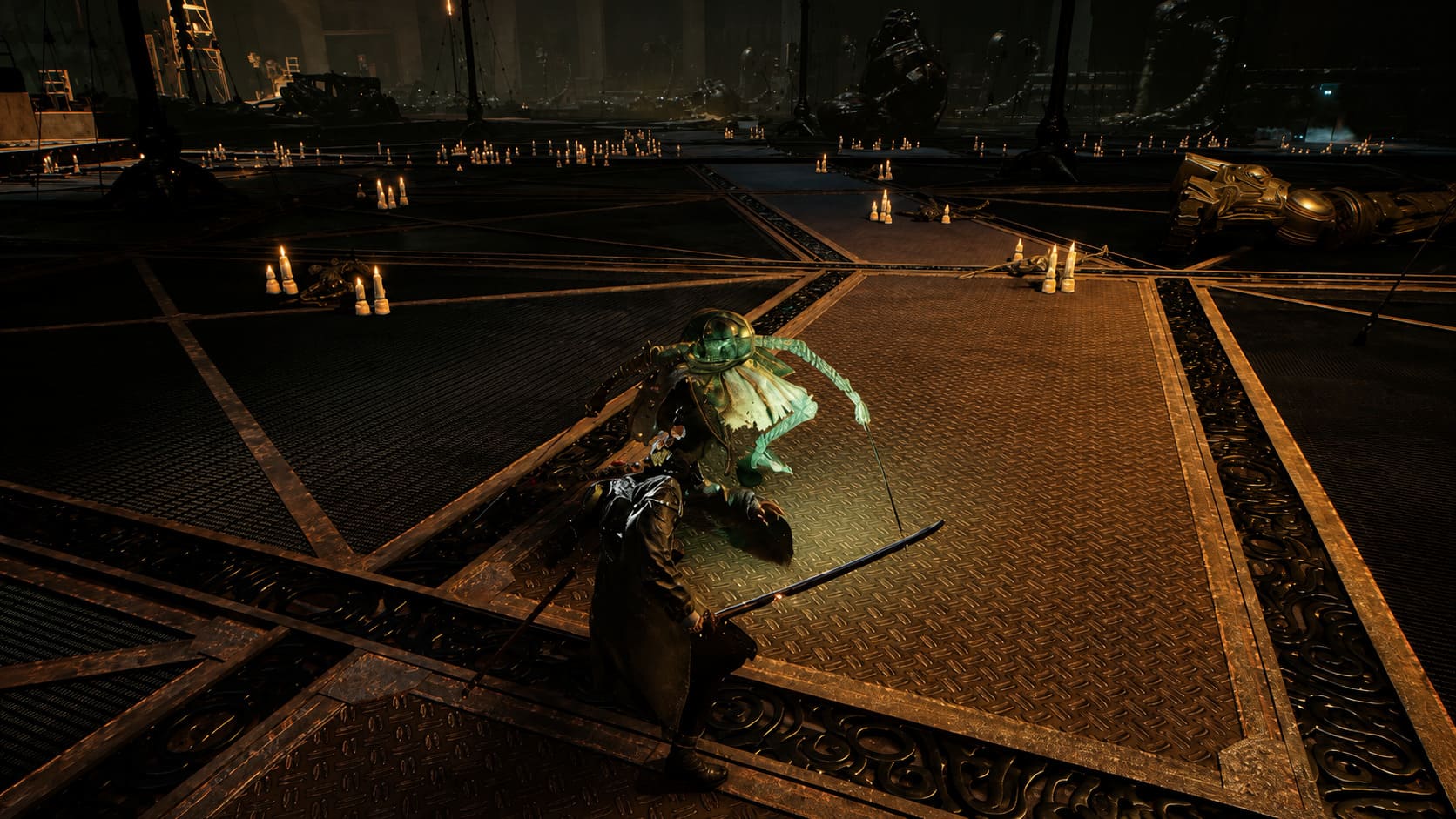
Koo Might Become the Emotional Core
Koo, Emma’s canine companion, seems to play a much deeper role than a typical sidekick. Like Emma, he is affected by the Blight, giving him abilities that complement her combat style. Together, they form a dual-character system where coordination is essential for survival.
More importantly, Koo may serve as Emma’s emotional anchor. Since she struggles with memory and expression, their bond could carry much of the game’s emotional weight.
The Final Goal Gives the Journey Meaning
Unlike many RPGs where objectives feel disconnected, Beast of Reincarnation builds its progression around a single clear purpose.
Every defeated Nushi weakens the Blight and strengthens Emma, pushing her closer to the final confrontation with the original Beast of Reincarnation—the cosmic source of all corruption.
This structure makes every step forward feel meaningful rather than repetitive.
Final Thoughts
The more I learn about Beast of Reincarnation, the more confident I become that its world design is its strongest feature.
The Blight isn’t just background lore—it defines everything from enemy design to traversal mechanics and character progression.
Of course, ambitious ideas don’t always translate into great gameplay. Combat flow, pacing, and mission structure will ultimately decide whether the game succeeds.
Still, if everything comes together, Beast of Reincarnation could stand out as one of the most interesting action RPGs of 2026 and show that Game Freak can build worlds far beyond its established legacy.