Monopoly Star Wars Heroes vs Villains 3v3 Guide: Rules, Teams, and Strategies
The moment I realized Monopoly Star Wars Heroes vs Villains wasn’t trying to recreate classic Monopoly was the moment I started enjoying it a lot more. Instead of slowly buying properties, waiting for someone to go bankrupt, and watching matches drag on forever, this version turns the formula into a surprisingly tactical team game where every move matters.
The biggest reason for that is the 3v3 multiplayer mode.
Whether you’re playing online with friends or sitting together on the couch, the game rewards communication far more than individual skill. I’ve seen teams with stronger characters lose simply because they ignored positioning or wasted their shared resources. On the other hand, coordinated squads using average heroes often dominate thanks to smart teamwork.
If you’re planning to spend time in competitive matchmaking, here are the mechanics, strategies, and team-building ideas that make the biggest difference.
Why 3v3 Feels Completely Different
Traditional Monopoly is an individual game.
Here, every decision affects your entire team.
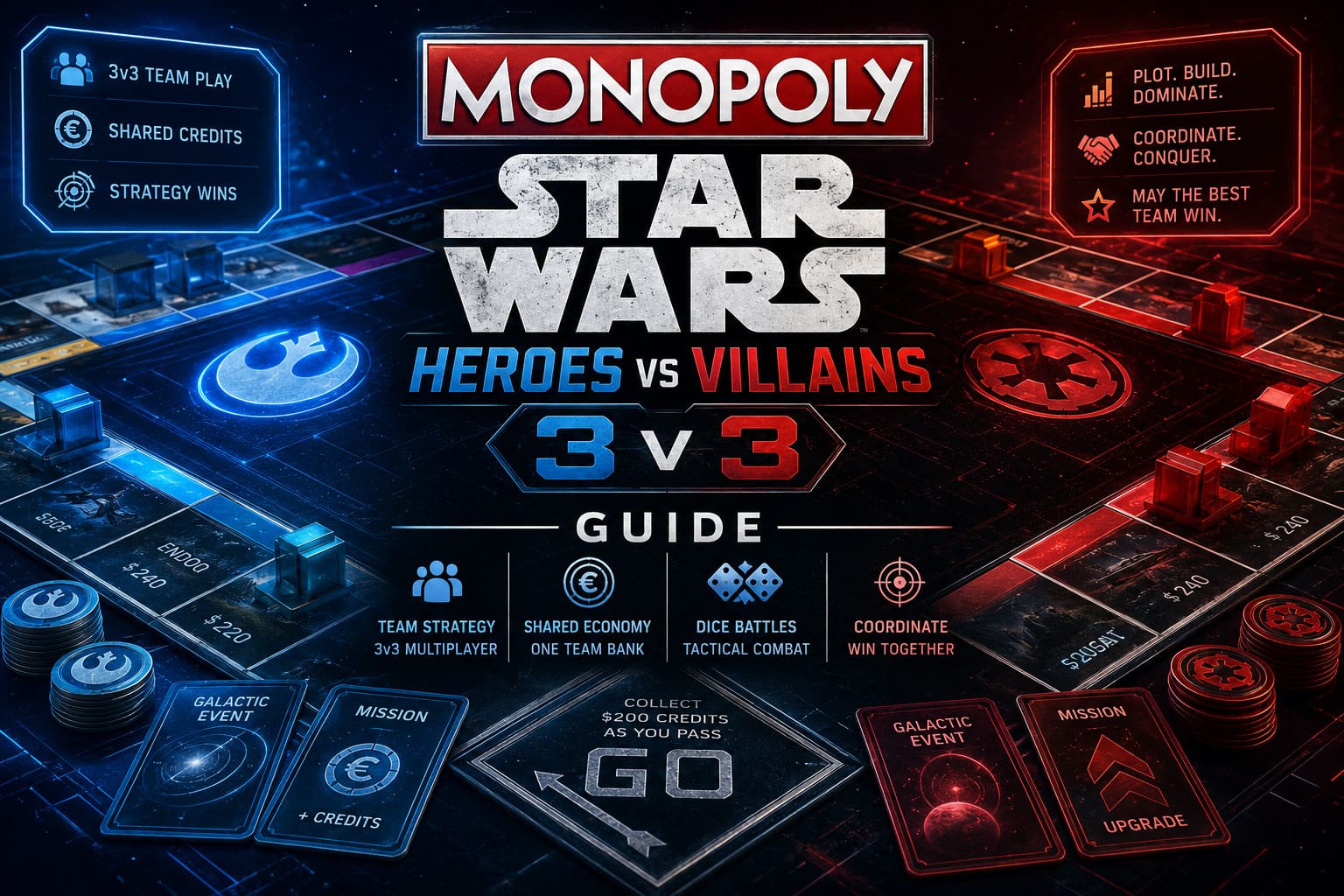
Instead of six players competing separately, you have two factions made up of three players each. One side represents the Heroes, while the other fights for the Villains.
That one change completely transforms how you approach every turn.
You’re no longer asking:
“Should I buy this property?”
Instead you’re asking:
“Is buying this worth spending our team’s money?”
That difference becomes more important the longer a match lasts.
The Shared Economy Is the Real Challenge
One of my favorite mechanics is the shared credit pool.
Everyone on your team spends from exactly the same bank account.

That means:
- purchasing locations costs team credits
- rent earned benefits everyone
- penalties hurt the entire squad
- upgrades become group decisions
I’ve watched teammates buy expensive locations simply because they could, only to leave the faction with almost no money for the next few turns.
A single bad purchase can snowball into defeat.
Because of that, communication matters almost as much as movement.
Victory Isn’t About Individual Survival
Unlike classic Monopoly, players aren’t eliminated one by one.
Instead, your faction loses when its shared credits reach zero.
That creates a much faster pace.
Sometimes it’s smarter to avoid buying another property if doing so leaves your team vulnerable to one expensive rent payment.
Managing risk becomes just as important as expanding your territory.
Picking the Right Team Matters More Than Picking Your Favorite Character
There are plenty of recognizable Star Wars characters available, but not every combination works equally well.
I’ve found balanced teams consistently outperform squads built around pure offense.
A good lineup usually contains three different roles.

| Role | Main Responsibility |
|---|---|
| Vanguard | Claims valuable locations quickly. |
| Bruiser | Wins property battles and protects key zones. |
| Support/Tactician | Generates credits and manipulates board advantages. |
Trying to run three aggressive fighters sounds fun, but it often leaves your economy exposed.
Hero Picks Worth Considering
Several Light Side characters naturally complement each other.
Luke Skywalker excels at controlling contested areas. His combat bonuses make him difficult to push away from important color groups.
Princess Leia quietly becomes one of the strongest economic characters. Small bonuses earned throughout the game eventually create a noticeable financial advantage.
Obi-Wan Kenobi offers incredible utility. Forcing opponents to reroll movement or preventing dangerous outcomes can save thousands of credits over an entire match.
Together they create a lineup that feels reliable in almost every situation.
Strong Villain Combinations
The Dark Side also has several excellent options.
Darth Vader shines during property battles. His offensive bonuses make stealing locations much easier.
Darth Maul is incredibly mobile, allowing him to reach valuable spaces before most opponents.
Boba Fett constantly pressures enemy finances by creating additional ways to drain shared credits.
Instead of overwhelming enemies immediately, this trio gradually builds momentum until the opposing faction struggles to recover.
Don’t Wander Around the Board Alone
One mistake I see constantly is teammates spreading across opposite sides of the map.
That usually ends badly.
The assist mechanic rewards staying relatively close together.
When battles occur near friendly teammates, additional support dice can dramatically improve your odds.
Think of your team like a small strike force instead of three independent players.
You don’t need to occupy the exact same space, but remaining within supporting distance gives you far more consistency during important fights.
Every Turn Should Have a Purpose
Although matches move quickly, each turn follows a familiar rhythm.
Before rolling, check where opponents are standing.
Ask yourself:
- Which properties are vulnerable?
- Can someone support me if combat starts?
- Is spending credits right now actually worth it?
Those few seconds of planning often prevent expensive mistakes.
Property Battles Are the Heart of the Game
The combat system is what separates this game from every Monopoly adaptation I’ve played.
Landing on an enemy property doesn’t automatically mean paying rent.
Instead, ownership is contested through a dice battle.
Multiple factors influence the result:
- character abilities
- combat bonuses
- nearby teammates
- faction effects
- temporary board events
Winning feels rewarding because success isn’t based purely on luck.
Preparation matters.
If your squad positions itself well before combat begins, the odds usually swing in your favor.
Staying Together Creates Huge Advantages
Support dice are incredibly valuable.
Whenever possible, avoid creating isolated players.
I’ve noticed successful teams naturally rotate around one section of the board before shifting together toward another objective.
This provides several advantages:
- stronger offense
- stronger defense
- safer property control
- easier counterattacks
It’s surprisingly similar to objective-based multiplayer games where grouping wins more matches than individual hero plays.
Don’t Ignore the Board Events
Passing GO isn’t just about collecting credits anymore.
It also contributes toward larger Galactic Events.
Depending on the situation, these events may:
- strengthen your faction
- weaken enemy structures
- improve upgrades
- dramatically shift map control
They’re unpredictable enough that experienced players always keep them in mind while planning long-term strategies.
Jail Can Be More Dangerous Than You Think
Being detained hurts far more than simply missing turns.
An imprisoned teammate temporarily loses access to important abilities.
Even worse, they cannot assist nearby allies during combat.
If your strongest defender is unavailable, enemy players will often attack your most valuable locations immediately.
Whenever possible, freeing teammates quickly is usually worth spending shared resources.
Managing Credits Wins More Games Than Buying Properties
This is probably the biggest lesson I’ve learned.
New players often believe more properties automatically equal victory.
Not necessarily.
Sometimes maintaining a healthy credit reserve is the smarter decision.
A simple rule I like to follow is keeping enough money available to survive the highest rent currently on the board.
That safety margin prevents one unlucky roll from instantly ending the match.
Aggressive expansion feels exciting, but disciplined resource management usually wins over time.
Focus on Complete Color Groups
Trying to own pieces of every section rarely works.
Instead, coordinate with teammates to complete one or two color groups as early as possible.
Doing this unlocks stronger upgrades while forcing opponents into dangerous positions.
Rather than controlling half the board, you’ll create areas where enemies simply don’t want to land.
Those zones become economic engines that steadily pressure the opposing faction.
Punish Poor Positioning
Online matchmaking often comes down to exploiting mistakes.
Eventually you’ll notice one opponent who:
- keeps wandering alone
- ignores teammate support
- spends credits recklessly
- repeatedly exposes valuable properties
Once you’ve identified that player, coordinate attacks.
Winning several battles against the same isolated opponent doesn’t just earn territory—it drains the enemy team’s shared economy much faster than random skirmishes across the board.
Target selection is often more important than raw aggression.
My Biggest Advice After Spending Time With 3v3
The temptation is to treat Monopoly Star Wars Heroes vs Villains like an action game.
It’s actually much closer to a tactical strategy title disguised as a board game.
The strongest teams usually aren’t rolling better dice.
They’re communicating.
They’re saving credits.
They’re moving together.
They’re planning two or three turns ahead instead of reacting after something goes wrong.
That approach consistently produces better results.
Final Thoughts
Monopoly Star Wars Heroes vs Villains succeeds because it isn’t afraid to reinvent one of gaming’s oldest board games. The addition of team-based mechanics, shared resources, cinematic dice battles, and character abilities gives every match a level of tension that traditional Monopoly rarely achieves.
The 3v3 mode is where the game truly shines. Every decision feels meaningful because your success depends on your teammates just as much as your own choices. A balanced lineup, careful economy management, and smart positioning will almost always outperform reckless aggression.
If you’re jumping into online multiplayer, don’t worry about memorizing every character immediately. Learn how the shared economy works, stay close enough to support your allies, prioritize complete property groups instead of random purchases, and always keep enough credits in reserve for unexpected setbacks.
Once your team starts thinking as a single unit instead of three separate players, the game becomes far more rewarding—and winning starts happening a lot more often. May the Force be with your next roll.