1666 Amsterdam AI Art Controversy Explained: A Gamer’s Honest Take on Patrice Désilets’ Comeback Drama
I’ve been following Patrice Désilets’ work for a long time, so seeing 1666: Amsterdam resurface after years of uncertainty genuinely felt like one of those rare moments in gaming where a “lost project” suddenly comes back to life. As someone who plays everything from massive AAA releases to smaller experimental indie titles, I was curious, excited, and a bit skeptical all at once.
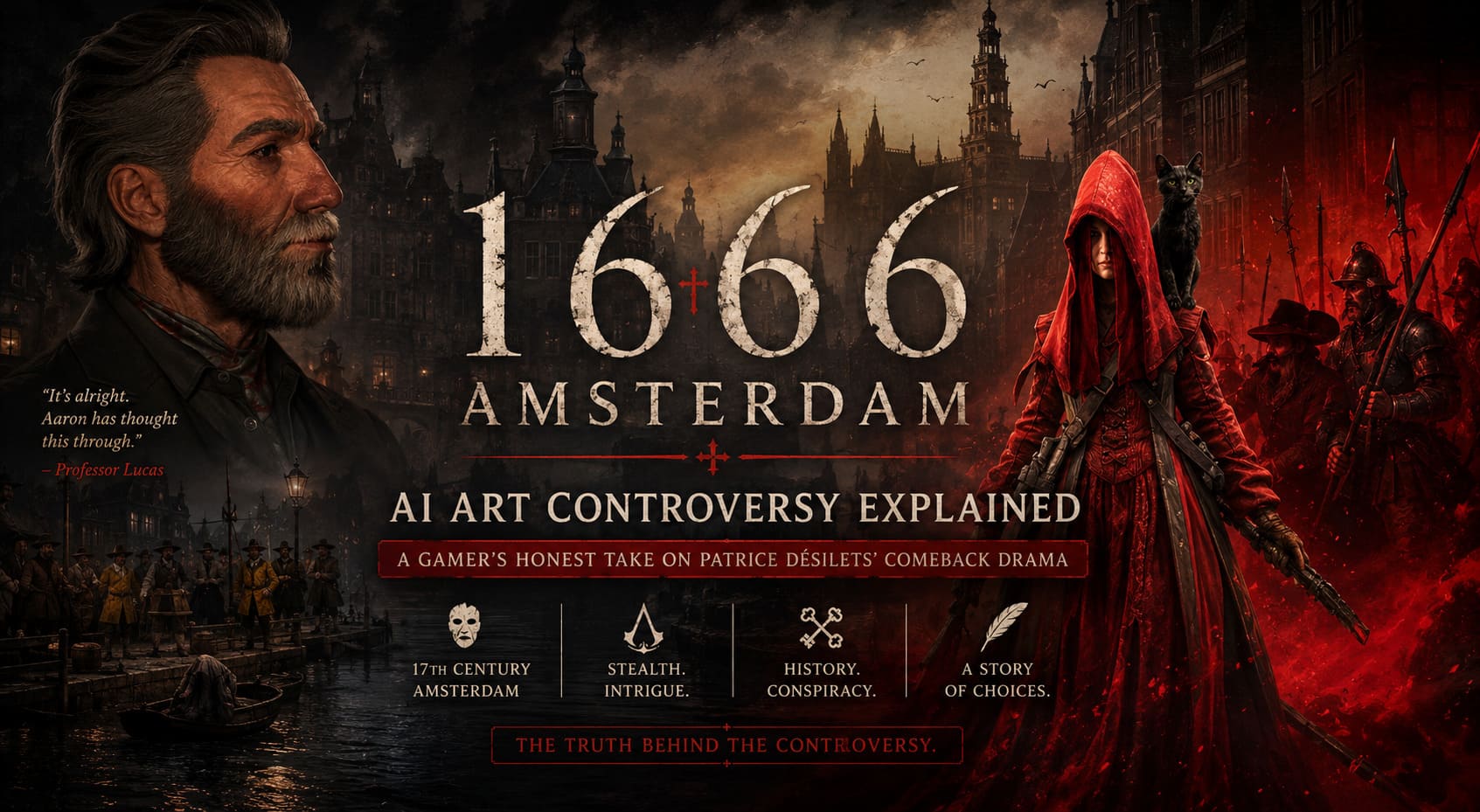
But what started as excitement quickly turned into one of the most debated controversies of Summer Game Fest 2026. And like many modern gaming scandals, it all comes down to one word: AI.
Crimson Desert Sales Hit 6 Million: How Pearl Abyss’ Epic RPG Conquered the US Market
The Return of 1666: Amsterdam and Initial Hype
When the playable prologue dropped on Steam and Epic Games Store, the reaction was almost nostalgic. This was a project once considered “lost media,” tied to Patrice Désilets after his departure from Ubisoft, and fans had been waiting years just to see it resurface in any form.
At first glance, the game actually impressed a lot of players:
- A dark, atmospheric recreation of 17th-century Amsterdam
- Strong Assassin’s Creed-style stealth influences
- Slow, immersive historical storytelling
- A grounded, almost cinematic presentation style
For a brief moment, it really looked like this could be a comeback story worth celebrating.
How the AI Art Controversy Started
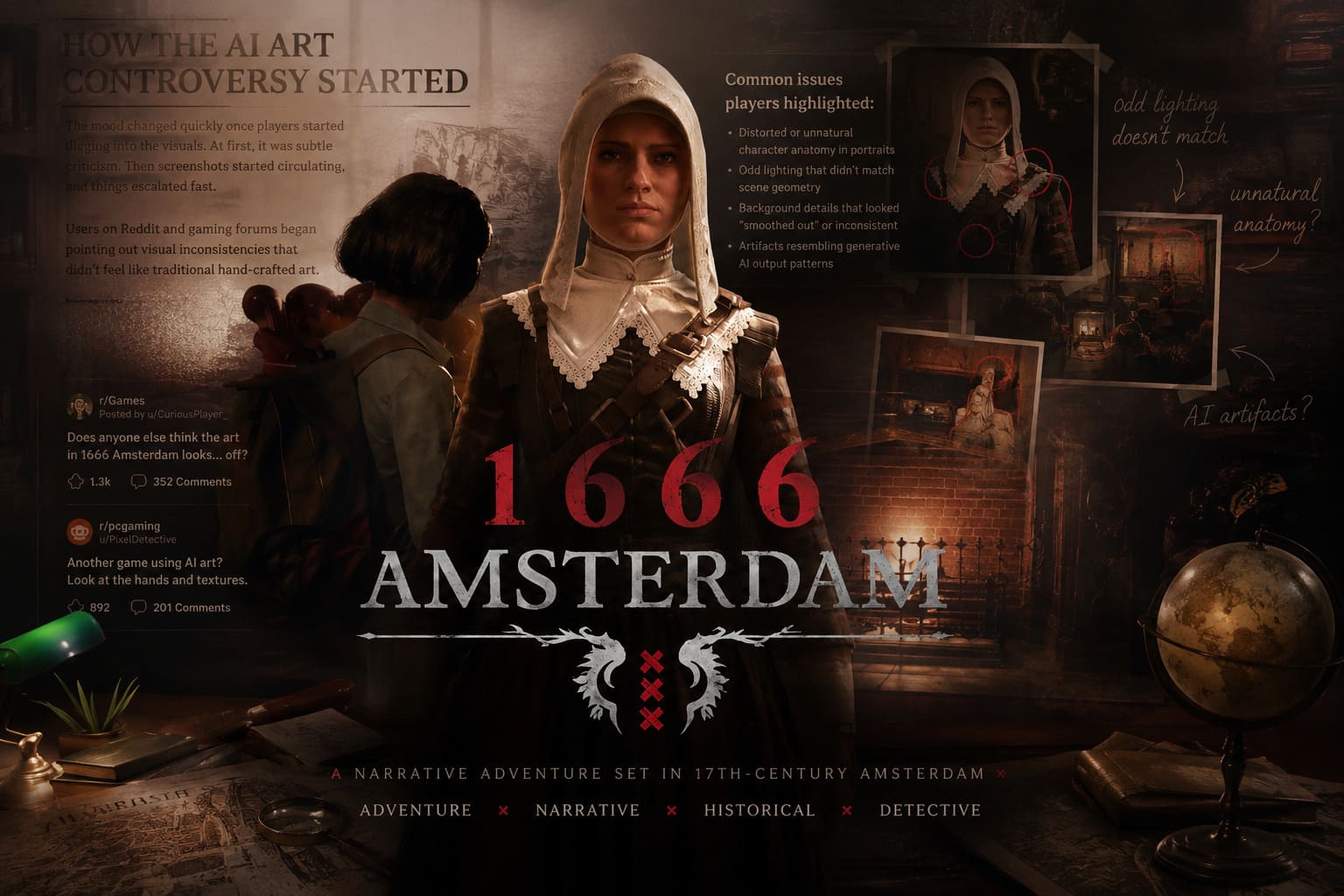
The mood changed quickly once players started digging into the visuals. At first, it was subtle criticism. Then screenshots started circulating, and things escalated fast.
Users on Reddit and gaming forums began pointing out visual inconsistencies that didn’t feel like traditional hand-crafted art.
Why Is Ubisoft Closing Studios? Massive Restructuring and Job Losses Explained
Common issues players highlighted:
- Distorted or unnatural character anatomy in portraits
- Odd lighting that didn’t match scene geometry
- Background details that looked “smoothed out” or inconsistent
- Artifacts resembling generative AI output patterns
Once those observations spread, the conversation shifted almost entirely away from gameplay and toward a much bigger debate: was generative AI used in the demo and marketing materials?
The Developer Response from Panache Digital Games
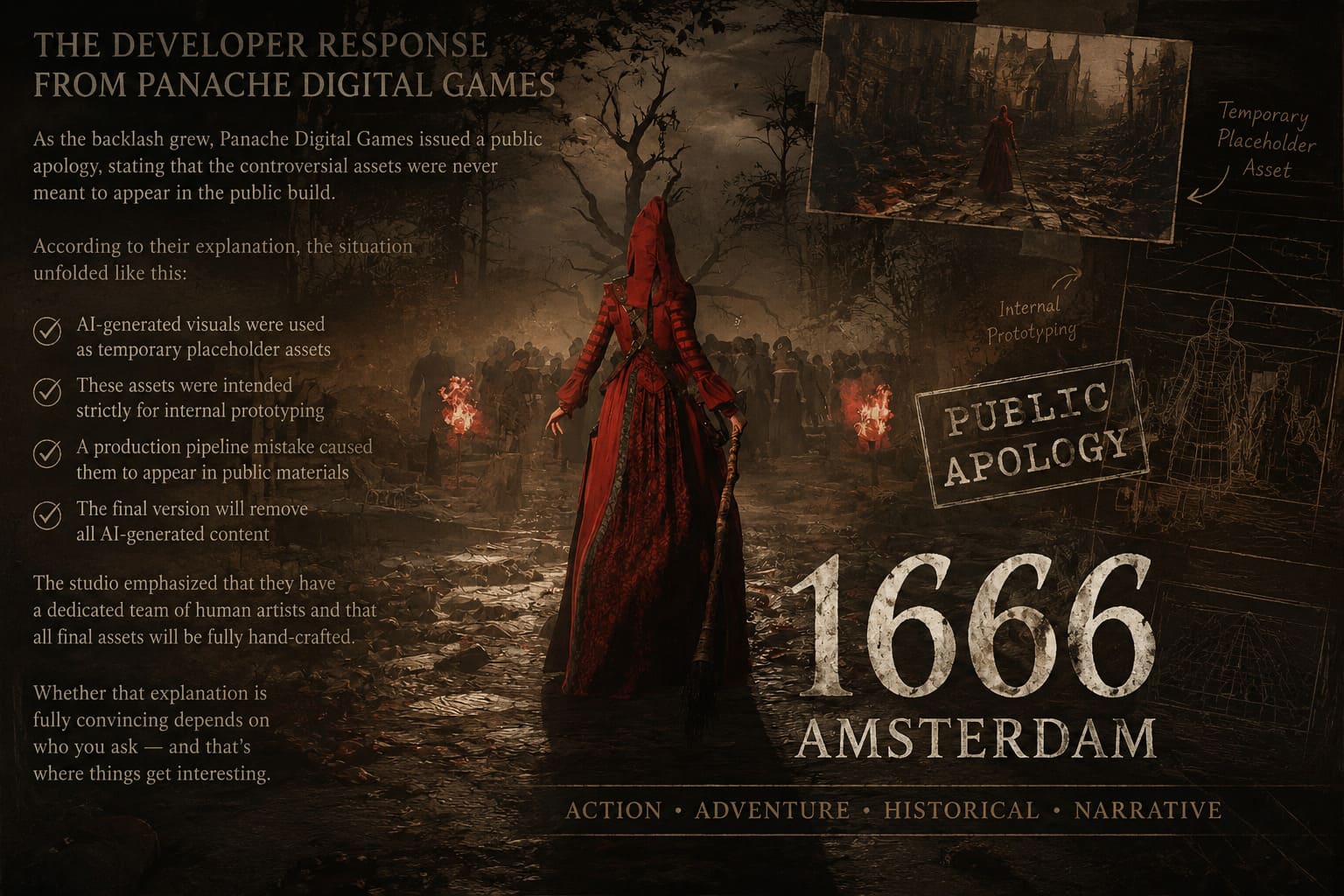
As the backlash grew, Panache Digital Games issued a public apology, stating that the controversial assets were never meant to appear in the public build.
According to their explanation, the situation unfolded like this:
- AI-generated visuals were used as temporary placeholder assets
- These assets were intended strictly for internal prototyping
- A production pipeline mistake caused them to appear in public materials
- The final version will remove all AI-generated content
The studio emphasized that they have a dedicated team of human artists and that all final assets will be fully hand-crafted.
Whether that explanation is fully convincing depends on who you ask — and that’s where things get interesting.
Community Reaction: Split Opinions Across the Internet
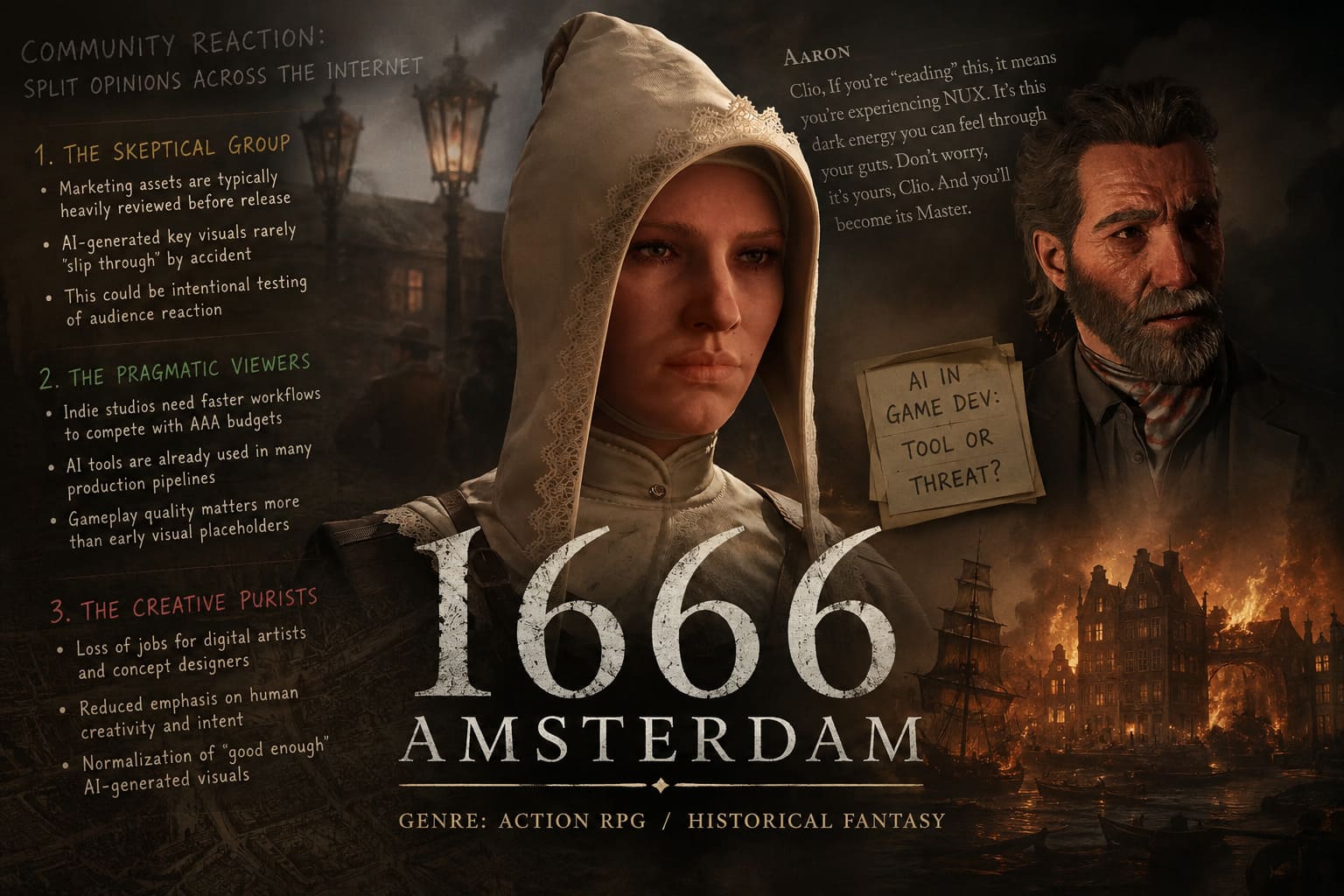
The gaming community reaction has been extremely divided. I’ve seen arguments break out across Reddit, YouTube comments, and gaming forums, and the split is pretty clear.
1. The Skeptical Group
This group doesn’t fully accept the “accidental placeholder” explanation. Their main concerns are trust and transparency.
Key arguments include:
- Marketing assets are typically heavily reviewed before release
- AI-generated key visuals rarely “slip through” by accident
- This could be intentional testing of audience reaction
2. The Pragmatic Viewers
Another group sees AI tools as an unavoidable part of modern game development.
Their perspective is more practical:
- Indie studios need faster workflows to compete with AAA budgets
- AI tools are already used in many production pipelines
- Gameplay quality matters more than early visual placeholders
3. The Creative Purists
This group is the most emotionally invested. Artists and long-time fans of handcrafted game design are concerned about what AI means for the industry.
Their fears include:
- Loss of jobs for digital artists and concept designers
- Reduced emphasis on human creativity and intent
- Normalization of “good enough” AI-generated visuals

The Bigger Pattern in the Gaming Industry
What makes this situation more important than just one game is that it feels like part of a larger industry shift. Summer Game Fest 2026 has already seen multiple discussions around AI-assisted development tools.
Across the industry, we’re seeing:
- AI-assisted concept art and prototyping
- Procedural systems enhanced by machine learning tools
- Faster production pipelines for indie studios
- Growing tension between efficiency and artistic authenticity
It’s not really about whether AI exists in development anymore — it clearly does. The real debate is about how visible it should be and whether players deserve full transparency.
Quick Summary of What Happened
| Stage | What Happened |
|---|---|
| Launch | 1666: Amsterdam prologue released during Summer Game Fest 2026 |
| Discovery | Players notice AI-like visual inconsistencies |
| Spread | Screenshots go viral across Reddit and forums |
| Backlash | Community accuses game of using generative AI |
| Response | Developer apologizes and claims accidental placeholder usage |
| Ongoing Debate | Community remains divided on intent and ethics |
Final Thoughts
From my perspective as someone who enjoys a wide range of games, this situation feels less like a one-off mistake and more like a sign of where the industry is heading. Whether intentional or not, AI is already influencing how games are made, and players are becoming increasingly sensitive to it.
I still think 1666: Amsterdam has potential. The atmosphere and concept are strong enough to stand on their own, and Patrice Désilets has a proven creative track record. But trust is fragile in modern gaming communities, and once players start questioning authenticity, it’s hard to fully reset that perception.
If the studio follows through and truly delivers a fully human-crafted final product, they might recover from this early controversy. But they’ll need consistency, transparency, and careful communication moving forward.
Because right now, this isn’t just about one game anymore — it’s about where the line between human creativity and AI assistance is going to be drawn in the future of gaming.