Crimson Desert Sales Hit 6 Million: How Pearl Abyss’ Epic RPG Conquered the US Market
When I look at the current gaming landscape, it feels like most major releases are either sequels or safe bets from established franchises.
That’s why the rise of Crimson Desert feels unusually refreshing. It’s not just another sequel—it’s a brand-new IP that somehow managed to break into the global AAA conversation almost overnight.
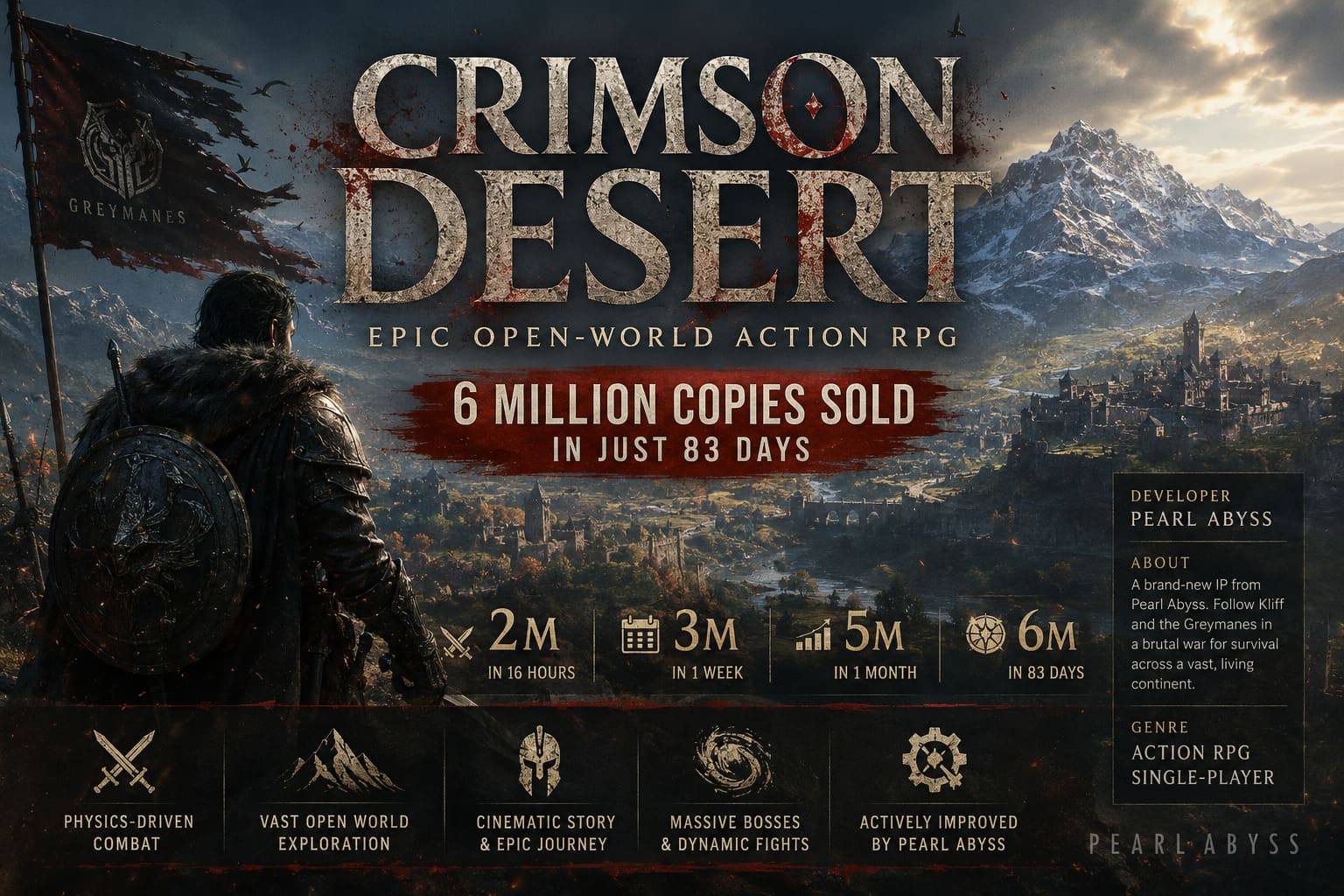
Developed by Pearl Abyss, the game has reportedly crossed 6 million copies sold in just 83 days. And while sales numbers alone don’t always tell the full story, in this case they absolutely reflect a bigger shift happening in the industry.
Why Is Ubisoft Closing Studios? Massive Restructuring and Job Losses Explained
A Surprise Hit in a Crowded AAA Market
It’s not easy for a new IP to compete with long-running giants, especially in the action RPG space. Yet Crimson Desert didn’t just compete—it exploded.
Here’s a simplified breakdown of its early sales trajectory:
- 2 million copies within the first 16 hours
- 3 million in the first week
- 5 million within the first month
- 6 million in under three months
That kind of curve usually indicates one thing: strong word-of-mouth momentum combined with high replay visibility across platforms like YouTube and TikTok.
Why This Game Matters More Than the Numbers
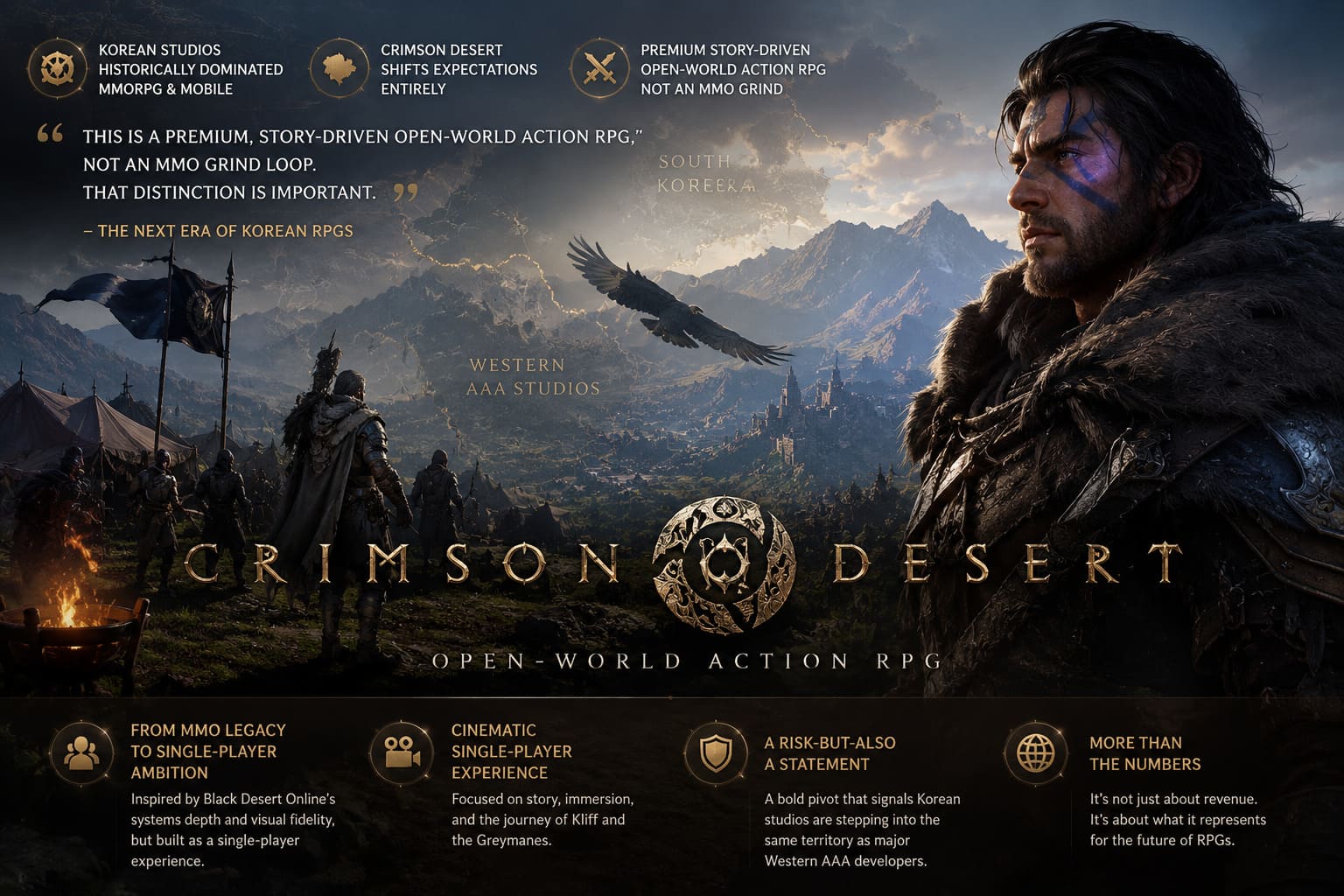
What makes this success interesting isn’t just the revenue—it’s what it represents. Korean studios have historically dominated MMORPG and mobile ecosystems. But Crimson Desert shifts that expectation entirely.
This is a premium, story-driven open-world action RPG, not an MMO grind loop. That distinction is important because it signals that developers in South Korea are now confidently stepping into the same territory occupied by major Western AAA studios.
And honestly, that shift has been a long time coming.
From MMO Legacy to Single-Player Ambition
Many players still associate Pearl Abyss with Black Desert Online, a massive online RPG known for its systems depth and visual fidelity. That legacy clearly influenced Crimson Desert, but the direction is very different.
Instead of building another MMO ecosystem, the studio focused on a cinematic single-player experience built around the character Kliff and the mercenary group known as the Greymanes.
This pivot alone makes the project feel like a risk—but also like a statement.
Gameplay: Why Players Keep Sharing Clips Online
Even people who are mixed on the game’s performance tend to agree on one thing: the combat is entertaining to watch and even more fun to experiment with.
Key gameplay strengths include:
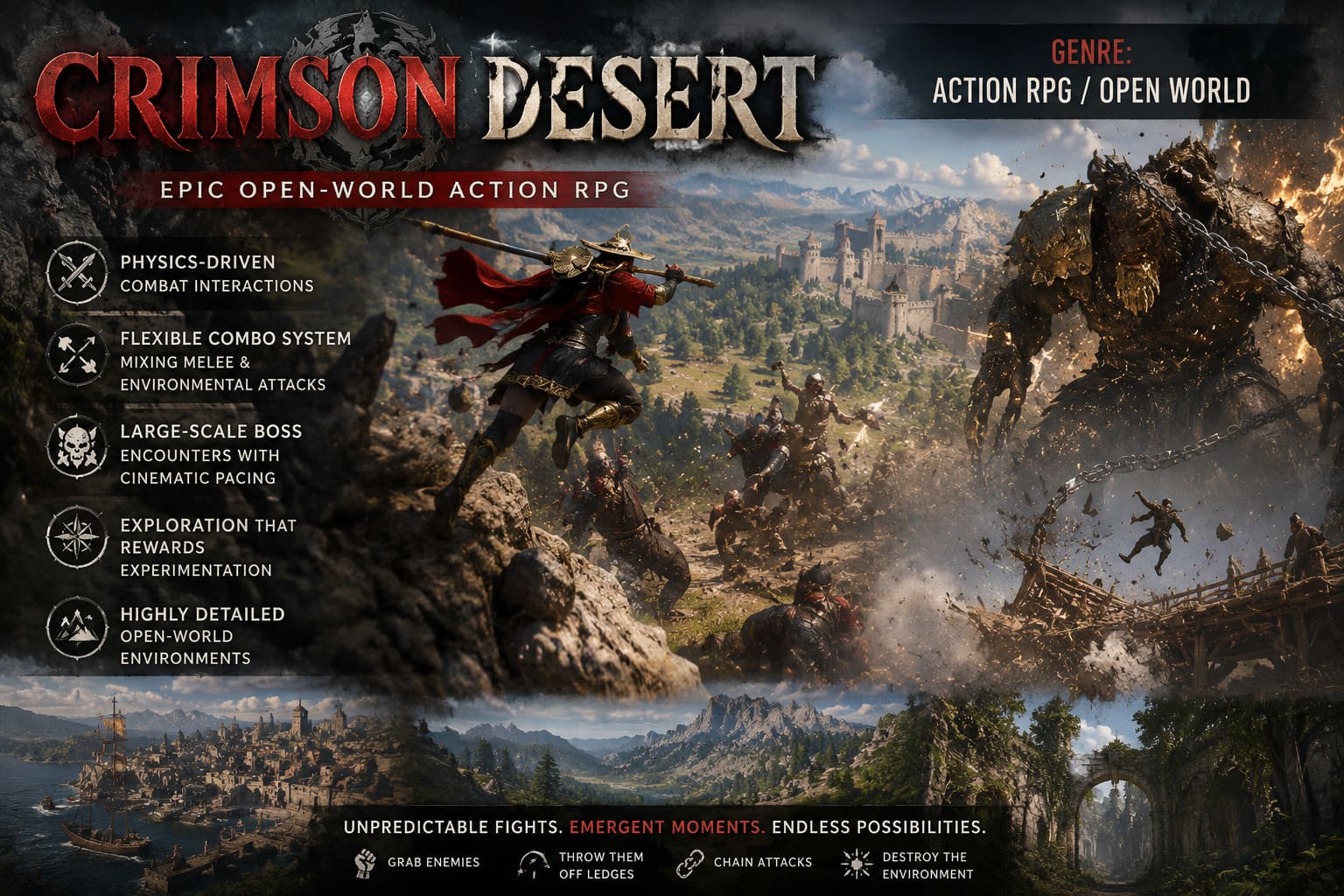
- Physics-driven combat interactions
- Flexible combo system mixing melee and environmental attacks
- Large-scale boss encounters with cinematic pacing
- Exploration that rewards experimentation
- Highly detailed open-world environments
What really stands out is how unpredictable fights can become. Instead of strictly scripted encounters, players often create chaotic moments themselves—grabbing enemies, throwing them off ledges, or chaining attacks into environmental destruction.
That kind of emergent gameplay is exactly what fuels viral content.
Performance Issues and Fast Developer Response
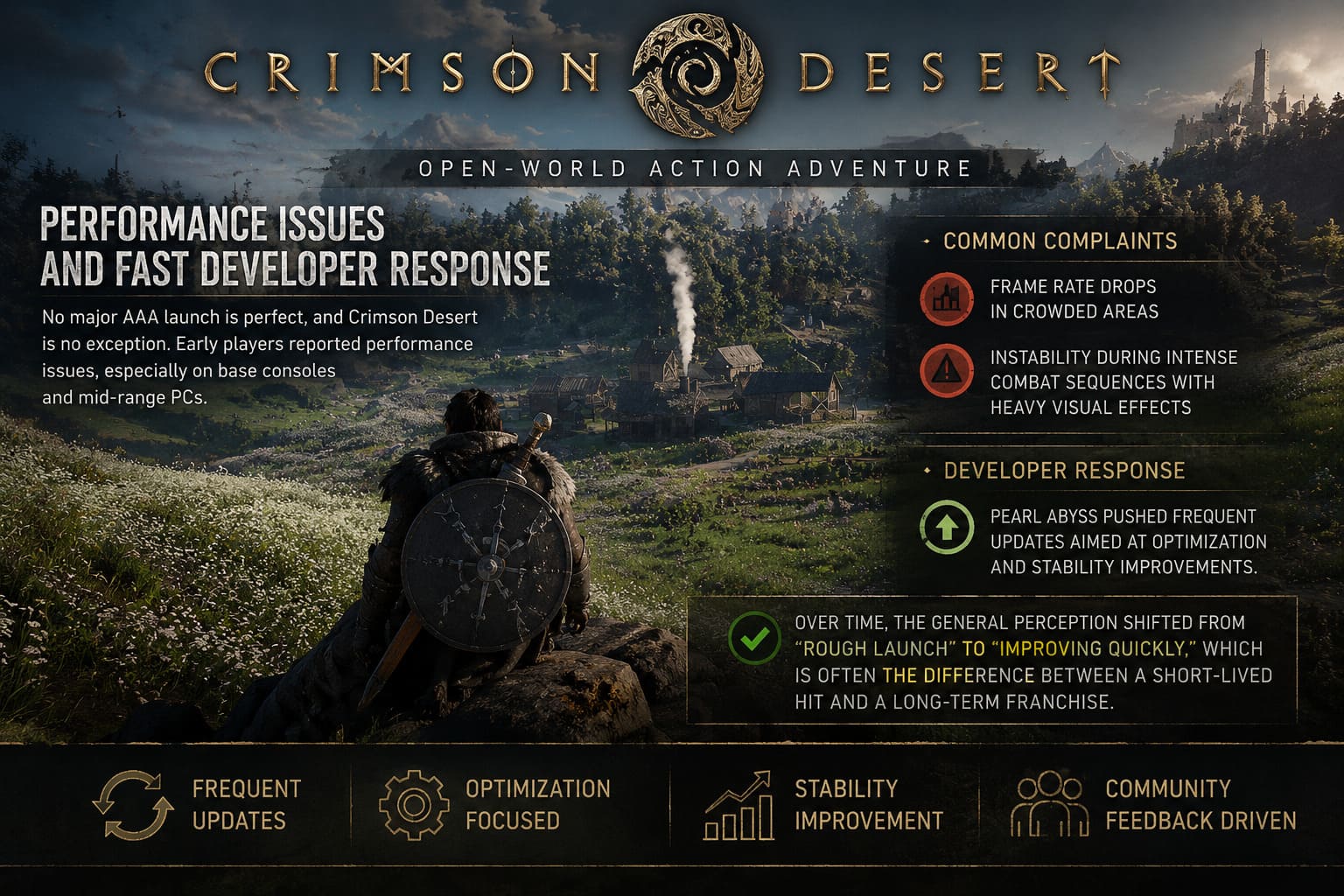
No major AAA launch is perfect, and Crimson Desert is no exception. Early players reported performance issues, especially on base consoles and mid-range PCs.
The most common complaints included frame rate drops in crowded areas and instability during intense combat sequences with heavy visual effects.
However, what stands out is how quickly the developers responded. Instead of slow patch cycles, Pearl Abyss pushed frequent updates aimed at optimization and stability improvements.
Over time, the general perception shifted from “rough launch” to “improving quickly,” which is often the difference between a short-lived hit and a long-term franchise.
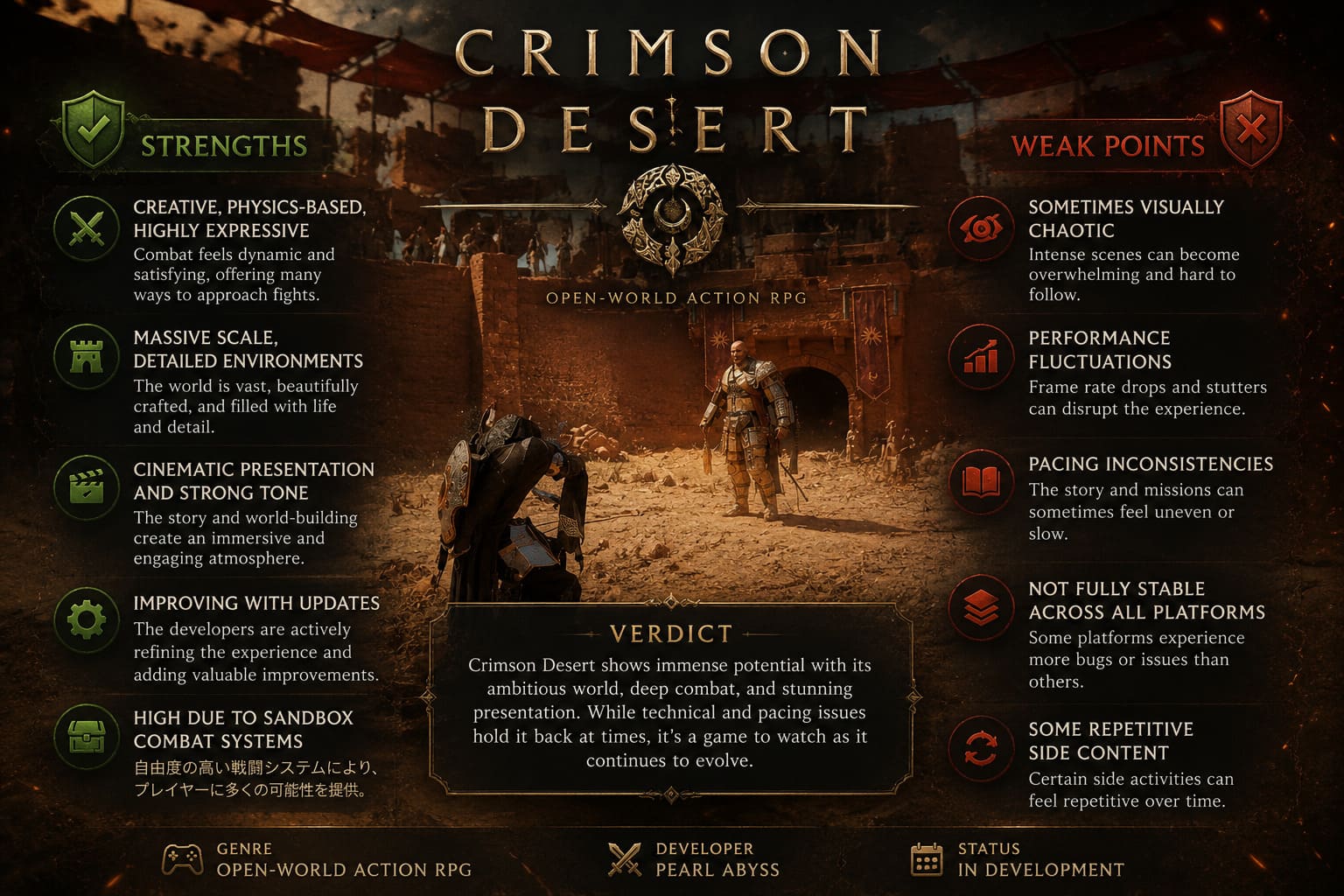
Current Strengths vs Weak Points
From a player’s perspective, the game feels like a mix of ambitious design and uneven execution.
| Area | Strengths | Weak Points |
|---|---|---|
| Combat | Creative, physics-based, highly expressive | Sometimes visually chaotic |
| World Design | Massive scale, detailed environments | Performance fluctuations |
| Story | Cinematic presentation and strong tone | Pacing inconsistencies |
| Technical State | Improving with updates | Not fully stable across all platforms |
| Replay Value | High due to sandbox combat systems | Some repetitive side content |
What Comes Next for Crimson Desert
The post-launch roadmap suggests Pearl Abyss is treating Crimson Desert as a long-term platform rather than a one-time release.
Planned updates include expanded story content, new combat challenges, quality-of-life improvements, and cross-save support between platforms. There is also a major DLC expansion in development that could significantly extend the game’s lifespan.
If executed well, this could transform Crimson Desert from a strong launch into a long-running franchise.
Final Thoughts
What makes Crimson Desert interesting isn’t perfection—it’s ambition. It’s a game that clearly aims high, sometimes stumbles, but also delivers moments that feel genuinely memorable.
As a player, I see it as one of those releases that might not define the genre immediately, but could influence where open-world action RPGs are headed in the next few years.
And if Pearl Abyss continues refining it at this pace, this might end up being the foundation of a much larger franchise than anyone expected at launch.