Why Is Ubisoft Closing Studios? Massive Restructuring and Job Losses Explained
The gaming industry has always been unstable in cycles, but what’s unfolding at Ubisoft right now feels less like a temporary downturn and more like a long structural crisis.
As a gamer who has spent years jumping between Assassin’s Creed worlds, co-op chaos in Rainbow Six Siege, and experimental Ubisoft open worlds, it’s hard not to feel that something fundamental is shifting inside the company.
Recent restructuring reports, studio closures, and layoffs point to a publisher trying to survive financial pressure while redefining its identity at the same time.
Official messaging talks about “efficiency” and “strategic focus,” but the real story is much more complicated and, honestly, much more uncomfortable.
Massive Studio Closures Across Multiple Regions
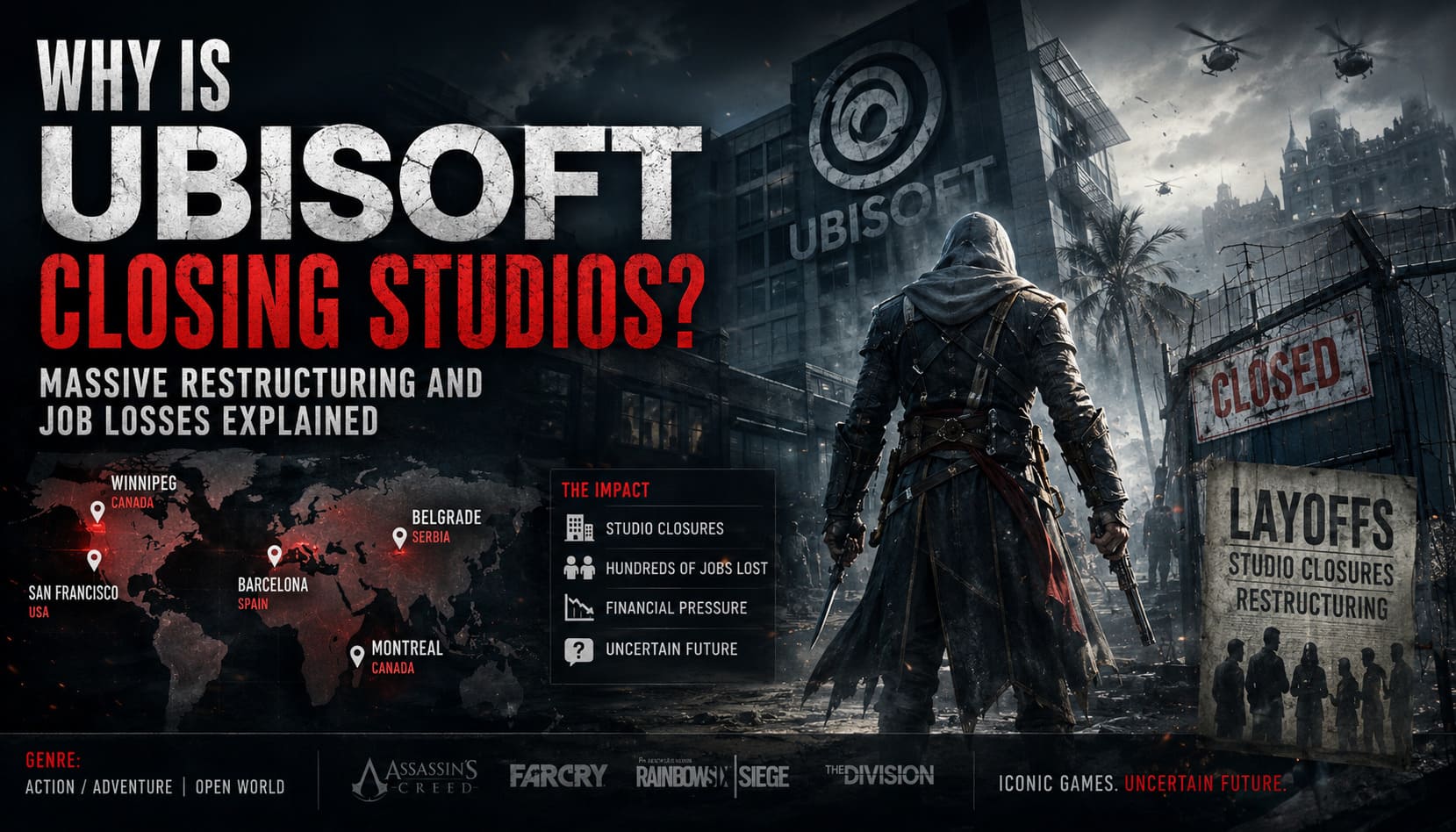
Ubisoft’s latest restructuring reportedly includes the closure of studios in Winnipeg (Canada) and Belgrade (Serbia), affecting hundreds of developers. These aren’t small symbolic cuts—they are full shutdowns of teams that have contributed to major AAA development pipelines.
What makes these closures especially important is the type of work these studios handled:
- Ubisoft Winnipeg focused on engine support and technical systems
- Ubisoft Belgrade worked on co-development and optimization for large-scale titles
In other words, these teams weren’t just creating content—they were maintaining the infrastructure that keeps Ubisoft’s entire game ecosystem functioning.
Global Impact Across Ubisoft Studios
The restructuring doesn’t stop with two locations. It spreads across multiple continents, affecting both support and flagship development teams. While some employees are reportedly being reassigned, the level of disruption is still significant.
Here’s a simplified breakdown of the impact:
| Studio | Region | Impact |
|---|---|---|
| Ubisoft Winnipeg | Canada | Full closure (~65 roles) |
| Ubisoft Belgrade | Serbia | Full closure (~100 roles) |
| Ubisoft Barcelona | Spain | ~28% workforce reduction |
| Ubisoft San Francisco | USA | Staff reductions in publishing and support |
| Ubisoft Montreal | Canada | Reassignments and internal restructuring |
Even Ubisoft Montreal, one of the company’s most important creative hubs, is not insulated from the turbulence. Constant restructuring creates uncertainty, and in game development that uncertainty can seriously affect long-term project quality.
Financial Pressure Behind the Decisions
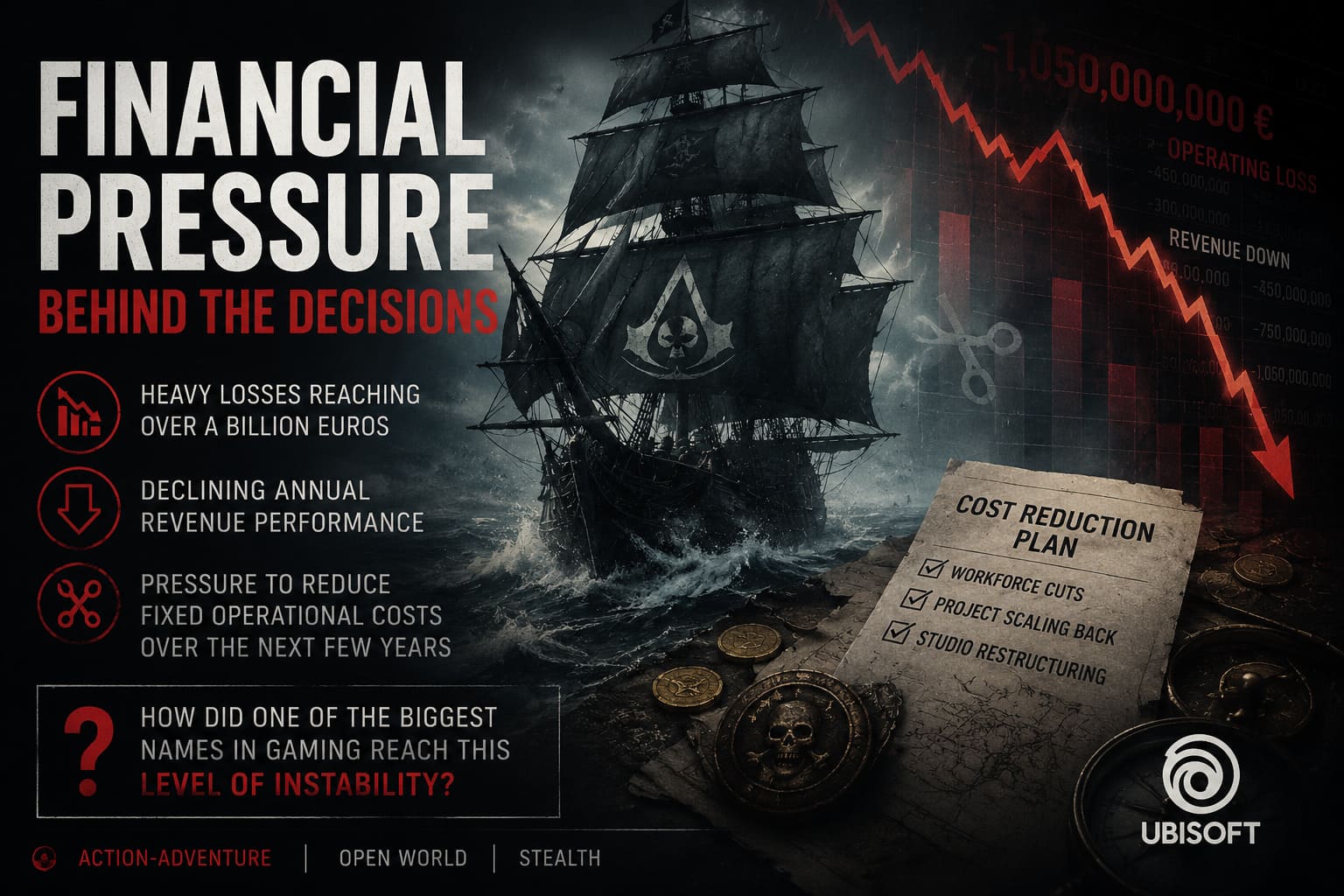
The financial side of the story helps explain why these cuts are happening, even if it doesn’t make them easier to accept. Ubisoft has reportedly faced a major operating loss and a significant drop in revenue, forcing leadership to rethink long-term spending.
The key issues include:
- Heavy losses reaching over a billion euros in reported figures
- Declining annual revenue performance
- Pressure to reduce fixed operational costs over the next few years
From a business standpoint, cost-cutting becomes unavoidable at a certain point. But from a gamer’s perspective, it raises a much bigger question: how did one of the biggest names in gaming reach this level of instability?
A Long Pattern of Cuts and Cancellations
This isn’t an isolated event. Ubisoft has been gradually shrinking and reshaping its structure for years. What we’re seeing now feels like the acceleration of a long-running trend rather than a sudden shock.
Across recent months, the company has reportedly:
- Canceled multiple in-development projects
- Closed or downsized several international studios
- Reduced staff across key production divisions
- Delayed major upcoming releases into later years
The result is a noticeably thinner release pipeline. Outside of remakes and long-delayed sequels, there is less clarity about what Ubisoft’s future lineup actually looks like.
What This Means for Developers
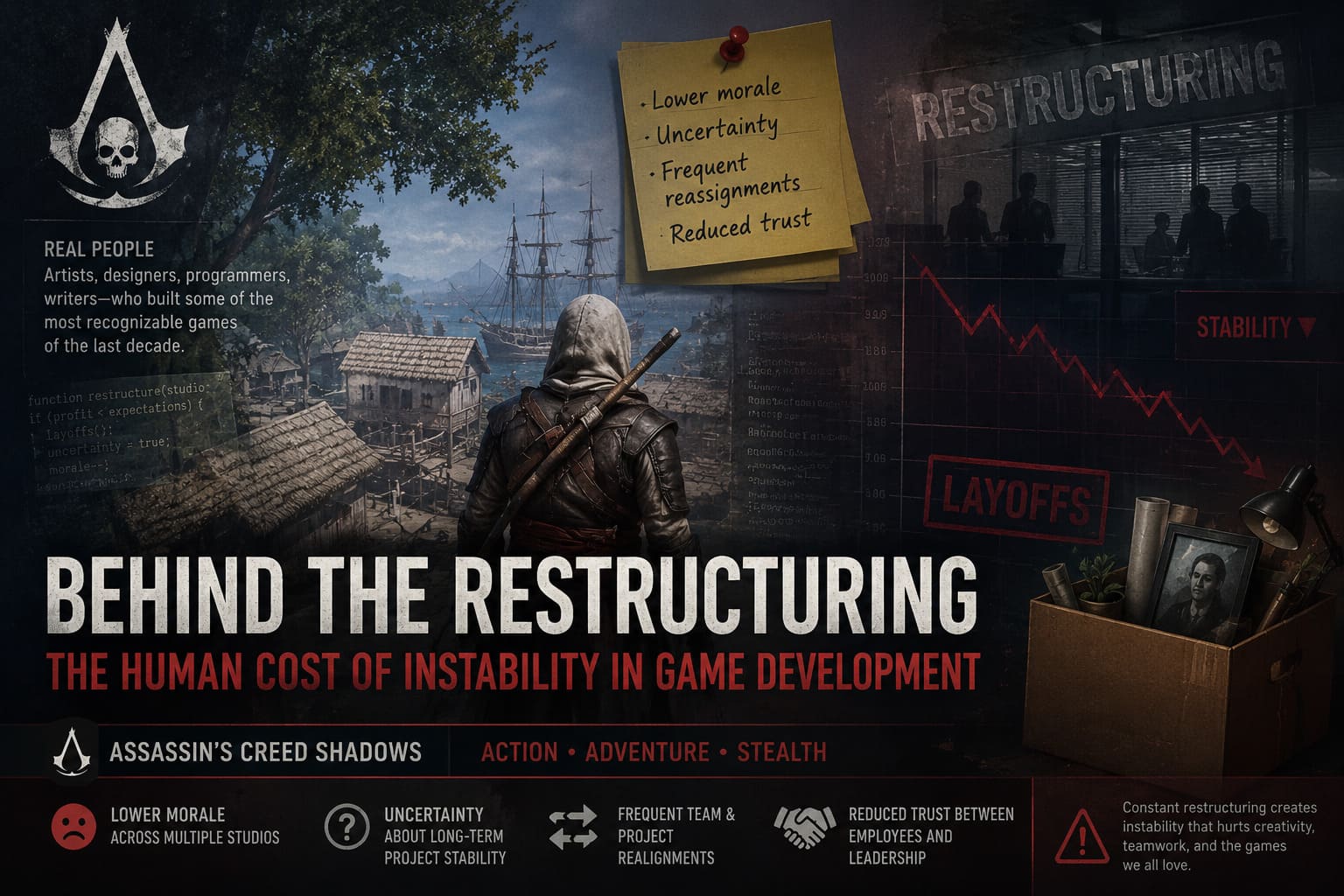
Behind every restructuring announcement are real people—artists, designers, programmers, writers—who built some of the most recognizable games of the last decade.
The internal impact reportedly includes:
- Lower morale across multiple studios
- Uncertainty about long-term project stability
- Frequent reassignment between teams and projects
- Reduced trust between employees and leadership
Game development is already a high-pressure environment. Constant restructuring adds another layer of instability that can affect creativity and productivity in ways that don’t show up immediately in financial reports.
Community Reaction and Growing Frustration
Player communities have been increasingly vocal about Ubisoft’s direction for years, and the recent news only intensifies that sentiment. Across forums and social platforms, several recurring criticisms appear:
- Repetitive open-world design structures
- Overreliance on live-service mechanics
- Cancellation of promising or experimental projects
- Declining trust in long-term franchise direction
Even long-time fans who once defended Ubisoft’s design philosophy are starting to question whether the formula still works in today’s gaming landscape.
Where Does Ubisoft Go From Here?
Despite the uncertainty, Ubisoft is not disappearing. It still owns some of the most recognizable franchises in gaming and maintains global publishing power. However, the direction it is taking feels increasingly cautious and financially driven.
Key takeaways from the current situation include:
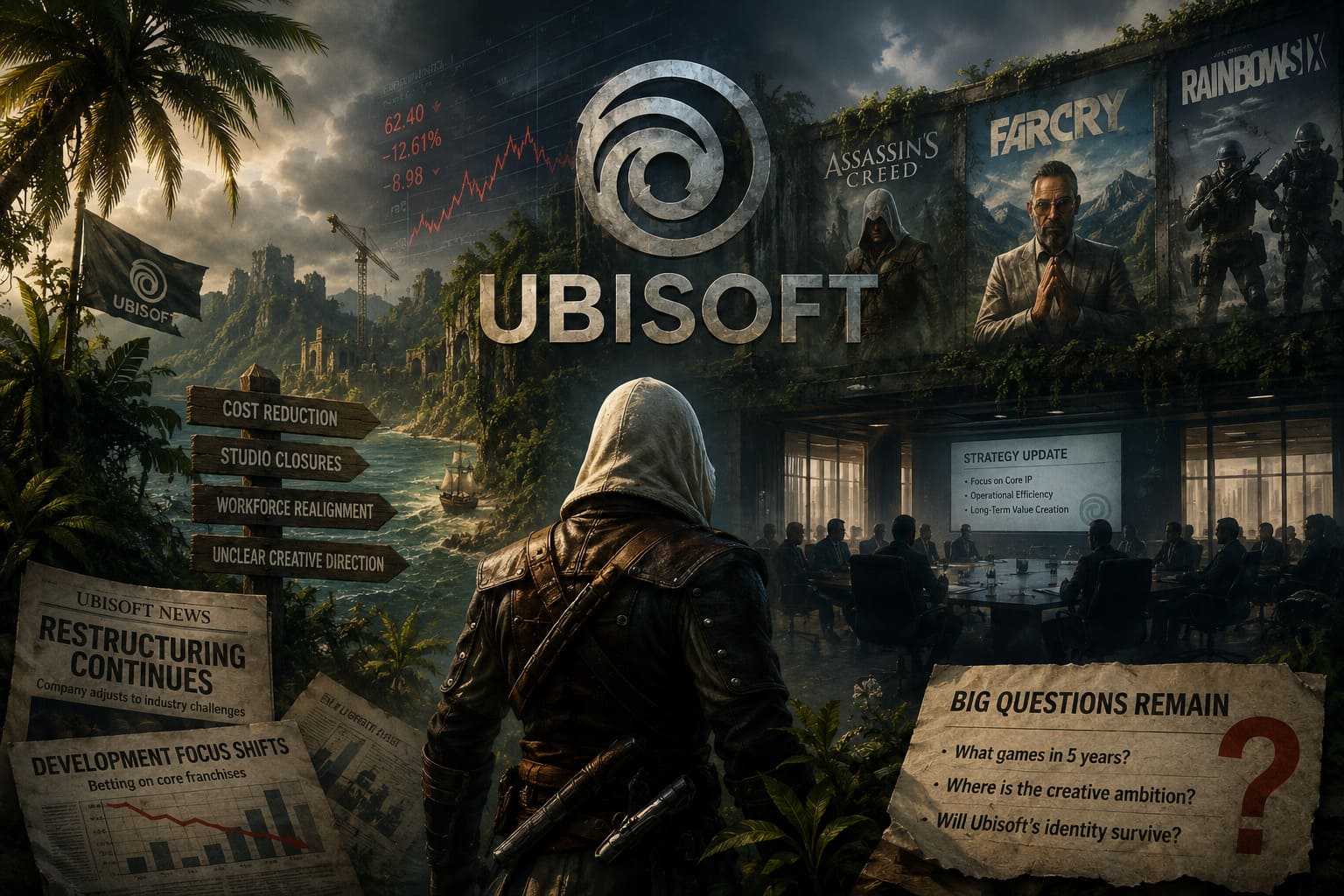
- Ongoing focus on cost reduction and restructuring
- Studio closures and workforce realignment
- Reduced development diversity in favor of core franchises
- Unclear long-term creative direction
The biggest concern isn’t just layoffs—it’s identity. What kind of games will Ubisoft actually be making five years from now? And will those games still carry the creative ambition the company was once known for?
Final Thoughts
Watching Ubisoft go through this level of restructuring is difficult, especially for players who grew up with its franchises. The company has produced iconic gaming experiences that shaped entire generations of players. But right now, the focus has shifted from expansion and experimentation to survival and consolidation.
The AAA gaming industry is changing quickly, and Ubisoft’s situation feels like one of the clearest examples of how even industry giants are not immune to financial pressure, shifting player expectations, and internal structural challenges.
Whether Ubisoft stabilizes or continues downsizing will depend heavily on its next few years of releases. For now, the uncertainty remains—and so does the sense that a major chapter in modern gaming history is being rewritten in real time.