Is Belleright Worth Playing in 2026? Honest Player Review After Hundreds of Hours
The survival crafting genre in 2026 is more competitive than ever, with new open-world titles launching regularly and promising deeper systems, smarter AI, and more immersive base building. Most of them struggle to stand out for long.
Bellwright is one of the few that still manages to stay in the conversation, mainly because of its ambition rather than its initial polish.
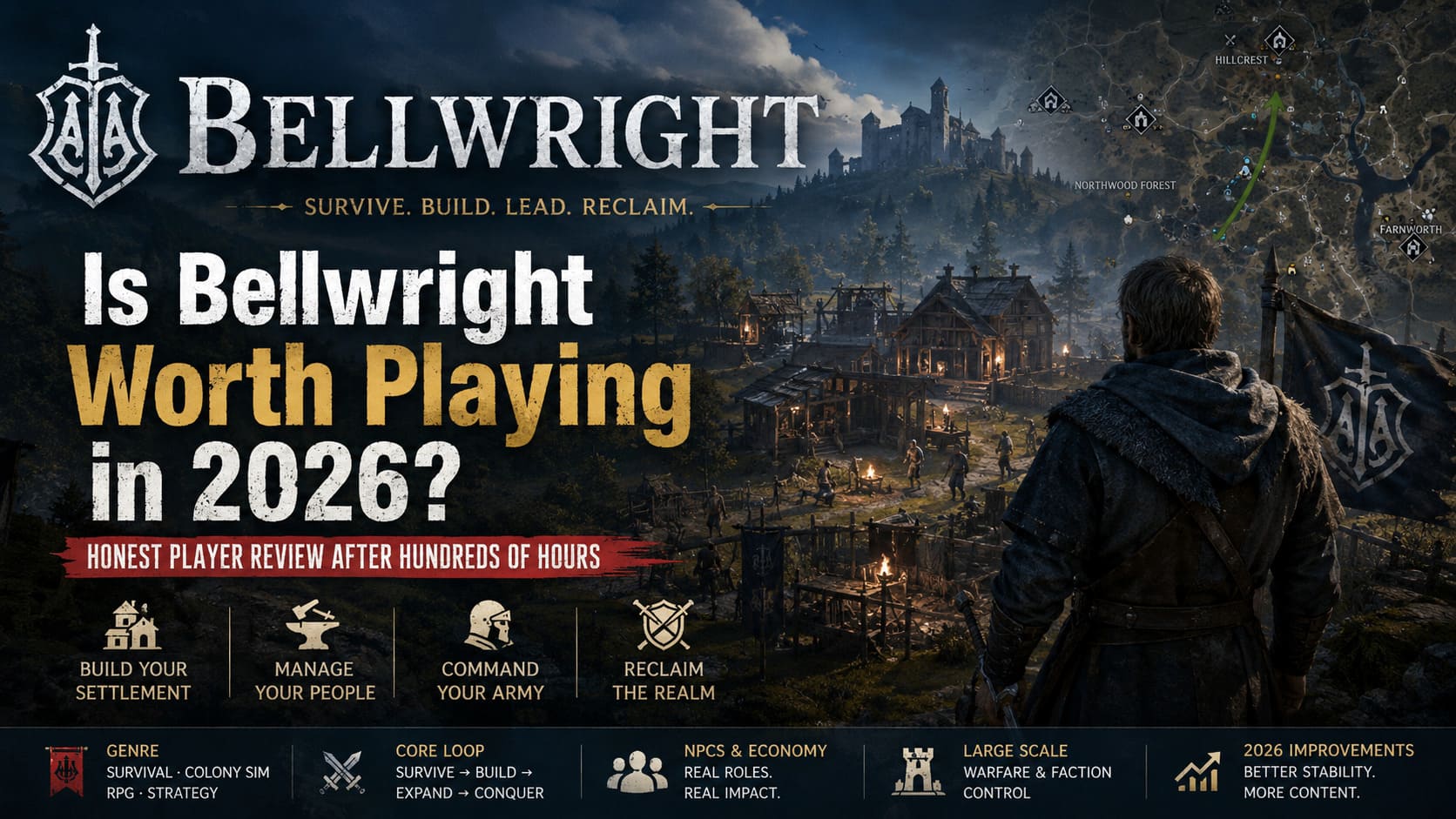
After spending a significant amount of time with the game across different updates, including returning in 2026 after earlier Early Access impressions, it becomes clear that Bellwright is a project built on big ideas.
It is not a simple survival game, and it is not a fully traditional strategy title either. Instead, it sits somewhere in between, trying to merge multiple genres into one connected experience.
Belleright Xbox Series X Review: A Deep, Honest Look From a Veteran Survival Gamer
What Bellwright actually is in 2026
At its core, Bellwright combines survival crafting, colony simulation, RPG progression, and large-scale tactical combat. You begin as a low-status fugitive trying to survive in a harsh medieval world, gathering basic resources and slowly learning the environment.
However, the game quickly expands beyond typical survival mechanics. Instead of remaining a lone survivor, you gradually build a functioning settlement where NPCs take on real production roles. These systems are not just cosmetic. Villagers actively contribute to resource gathering, crafting, and expansion based on how you organize your settlement.
Later in the game, the focus shifts again, introducing large-scale rebellion mechanics where your settlement evolves into a military force capable of challenging regional control. This transition from survival to city-building to warfare is the main structure of the game loop.
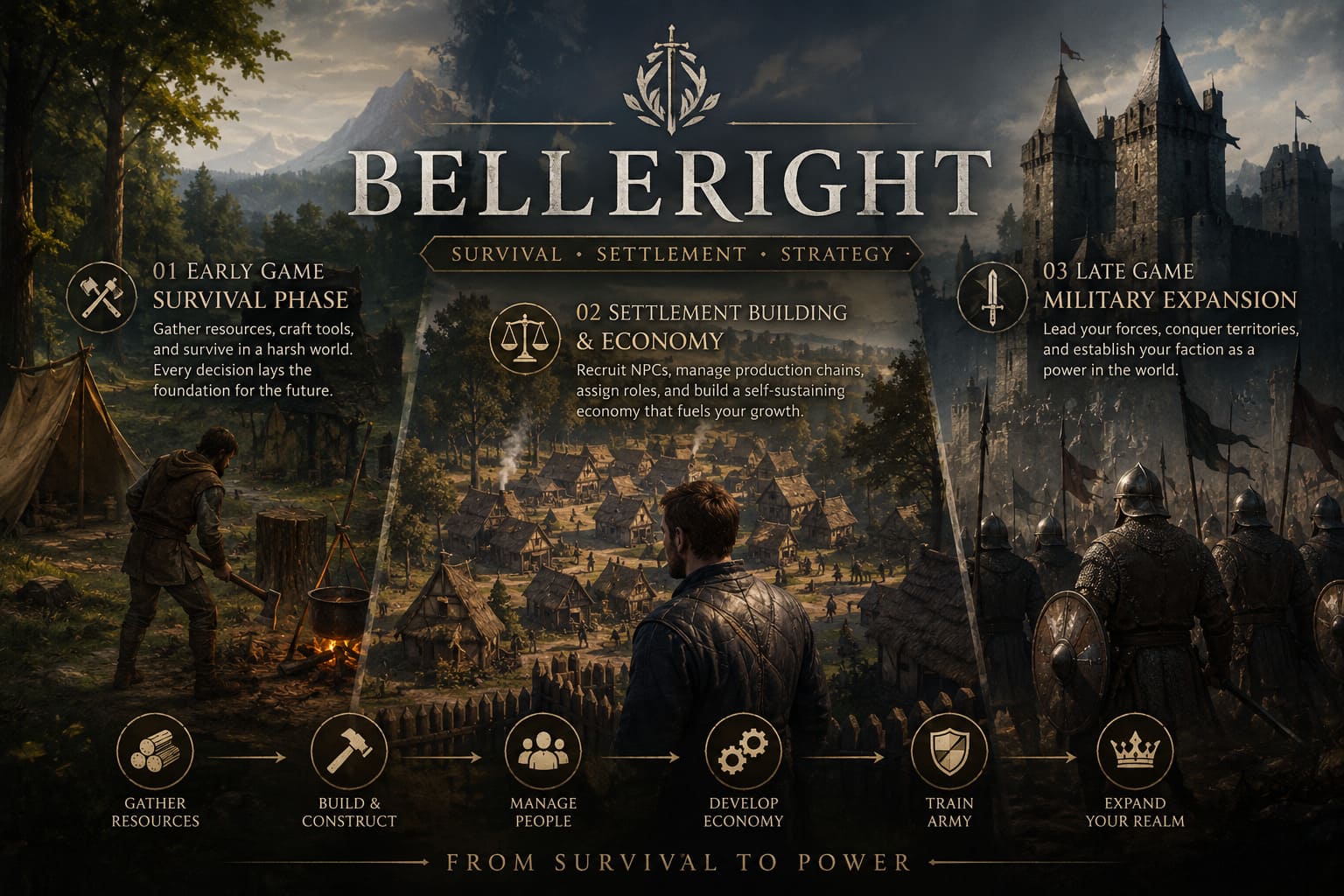
Core gameplay loop and progression
Early game survival phase
The early hours of Bellwright are familiar to anyone who has played survival games. You gather wood, food, and basic materials while trying to avoid threats in the environment. Progress is slow but intentional, setting the foundation for later systems.
Settlement building and economy
Once you begin recruiting NPCs, the game shifts into a deeper management layer. Instead of simple building placement, you design production chains and assign roles that directly impact your settlement’s efficiency. This is where Bellwright starts to differentiate itself from other survival titles.
The feeling of watching your small camp grow into a structured economy is one of the strongest aspects of the game. Resources are not just collected for survival but are part of a larger system that supports expansion and military growth.
Late game military expansion
As your settlement grows, you eventually transition into commanding armed units. The focus shifts from survival and production to strategic warfare and territorial control. This final layer adds scale, turning your settlement into a functional faction within the world.
2026 updates and improvements
By 2026, Bellwright has undergone several significant updates that improved both stability and structure. While it still retains Early Access characteristics, the overall experience is noticeably more refined than at launch.

Key improvements include better performance stability, expanded map regions, improved UI systems, and more structured early-game pacing. These changes help reduce confusion and make the game more accessible to new players compared to its earlier versions.
Notable system improvements
- Improved performance and reduced crashes
- More structured early-game progression
- Expanded world regions and endgame content
- Better settlement management tools
- Improved trade and logistics systems
What makes Bellwright addictive
The strongest aspect of Bellwright is how interconnected everything feels. Unlike many survival games where resources feel disconnected from long-term impact, here every material contributes directly to a growing society.
The settlement system is especially engaging when it functions properly. Watching NPCs wake up, gather tools, move resources, and expand production creates a sense of continuity that many survival games fail to achieve.
The transition from individual survival to managing a large-scale settlement and then commanding military forces creates a progression loop that feels meaningful over long play sessions.
Current issues and limitations

NPC immersion problems
Despite improvements, NPC presentation still feels inconsistent. Some dialogue and voice delivery lack emotional depth, which reduces immersion during story-driven moments. This is one of the most commonly mentioned weaknesses among players.
Combat system inconsistency
Combat remains one of the most divisive aspects of Bellwright. While the system attempts to replicate directional melee mechanics, execution is inconsistent. Large battles often become chaotic, with unpredictable hit detection and awkward animation transitions.
Smaller fights can be enjoyable, but large-scale encounters often lose clarity and tactical precision.
Base building limitations
Terrain restrictions continue to affect base design. Many structures require flat ground, limiting creative placement and forcing players to adjust their plans around environmental constraints rather than building freely.
Strengths and weaknesses overview
| Strengths | Weaknesses |
|---|---|
| Deep settlement and economy systems | Inconsistent combat mechanics |
| Strong long-term progression loop | Immersion issues with NPC dialogue |
| Meaningful resource management | Restricted building flexibility |
| Large-scale strategic gameplay | Occasional animation and AI issues |
| Improved stability in 2026 updates | Still partially unfinished systems |
Who should play Bellwright in 2026
Bellwright is not designed for every type of player. It is a slow-paced, systems-heavy experience that requires patience and long-term engagement.

Recommended for players who enjoy:
- Colony simulation and management systems
- Slow progression survival games
- Titles like Kenshi, Medieval Dynasty, or Mount & Blade
- Large-scale strategic gameplay
- Complex production and economy systems
Not recommended for players who prefer:
- Fast-paced action survival gameplay
- Highly polished combat systems
- Strong narrative-driven RPG experiences
- Short-session gameplay loops
Final verdict: Is Bellwright worth it in 2026?
Bellwright in 2026 is a much more stable and structured experience compared to its Early Access beginnings. It still carries flaws, particularly in combat consistency and NPC immersion, but its core systems have become more cohesive and engaging over time.
What makes the game stand out is its ambition. Few survival titles attempt to merge settlement simulation, resource economy, and large-scale rebellion mechanics into one unified system. When it works, it creates a very satisfying long-term progression loop that is hard to find elsewhere in the genre.
However, it is still not a fully polished product. Players expecting a smooth, cinematic, or highly refined experience may still find frustration in its rough edges.
For players who enjoy deep systems, long-term planning, and emergent gameplay, Bellwright is absolutely worth considering in 2026. For everyone else, it remains a niche but ambitious survival simulation that may or may not align with their expectations.