ARK Survival Ascended on Nintendo Switch 2: A Gamer’s Perspective
When you’ve spent years playing survival games across different platforms, you start to develop a sense for what is realistic and what is mostly hype. I’ve played ARK in multiple forms over the years—from early unstable builds to more refined versions—and if there is one thing I’ve learned, it is that this franchise always pushes hardware to its limits.
That is why the idea of ARK: Survival Ascended running on a Nintendo Switch 2 is both exciting and questionable at the same time.
This is not just another “can it run on Switch” discussion. ASA is built on Unreal Engine 5 systems that already struggle on high-end PCs.
So the real question is not whether it is impressive, but what kind of compromises would make it playable at all on handheld hardware.
ARK Survival Ascended Best Settings for High FPS (2026 Optimization Guide)
The Reality of Bringing ARK to a Handheld Device
ARK: Survival Ascended is not a simple open-world game. It is a constantly streaming simulation with AI creatures, dynamic weather, heavy foliage density, and physics-driven systems that all interact at once. Even small performance drops can affect gameplay in a noticeable way.
From my experience playing survival games on both powerful PCs and weaker hardware, there is always a trade-off: either the world feels alive but unstable, or it becomes simplified and predictable. On a handheld system like Switch 2, that balance becomes even harder to maintain.
Core challenges for the port
- Heavy reliance on Unreal Engine 5 rendering systems
- Large-scale AI behavior for dinosaurs and wildlife
- Constant world streaming with minimal loading screens
- High sensitivity to frame drops in combat situations
ARK Survival Ascended Steam Disk Space Loop Fix Guide
Unreal Engine 5: The Engine Behind the Problem
The biggest factor behind ARK’s performance demands is Unreal Engine 5. Systems like Lumen and Nanite allow for impressive visuals, but they also require significant hardware resources. On paper, they make the world look next-gen. In practice, they can be extremely demanding even for desktop systems.
If a Switch 2 version of ARK: Survival Ascended exists, it would almost certainly rely on aggressive optimization of these systems rather than full-feature parity. That means reduced lighting complexity, simplified geometry handling, and heavily tuned asset streaming.
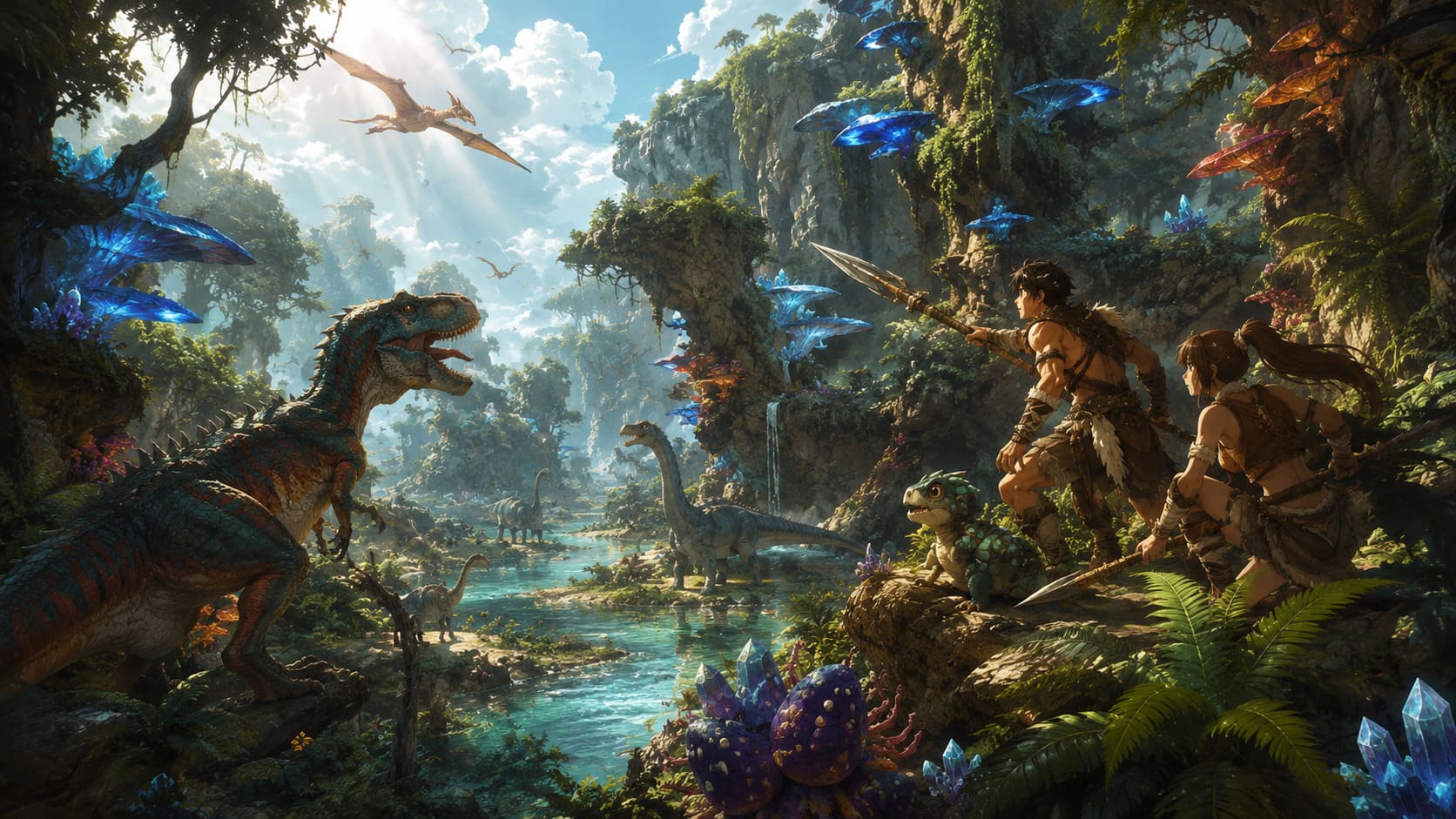
What likely gets changed
- Reduced Lumen quality or partial replacement with baked lighting
- Scaled-down Nanite usage in dense environments
- Lower foliage density and draw distance
- Compressed texture streaming for memory efficiency
Performance Expectations and Frame Rate Reality
One of the most discussed aspects of this potential port is performance. Many optimistic predictions suggest a stable 30 FPS target, possibly enhanced with frame generation technologies. From a technical perspective, this sounds appealing. From a gameplay perspective, especially in a survival game like ARK, it raises concerns.
I have played games where frame generation improves visual smoothness but introduces noticeable input delay. In fast-paced survival situations—dodging attacks, reacting to predators, or engaging in PvP—that delay can completely change how the game feels.
Expected performance profile
- Dynamic resolution scaling (likely 720p–900p range)
- 30 FPS target with potential dips in dense areas
- Reduced environmental density in high-load zones
- Possible reliance on frame interpolation techniques
The Input Lag Problem
One of the biggest concerns I personally have is input responsiveness. Survival games are not cinematic experiences where slight delays are acceptable. They are reactive systems where timing matters. If a dinosaur charges at you, even a fraction of a second delay can decide whether you survive or lose hours of progress.
Frame generation technology is often designed for improving already stable frame rates, not compensating for low internal performance. If the base frame rate is too low, the added smoothness might come at the cost of responsiveness.
Why this matters in ARK specifically
ARK is built around unpredictable encounters. You are rarely in control of what happens next, which means your reaction time is constantly tested. Any delay between input and action breaks immersion and can directly impact survival outcomes.
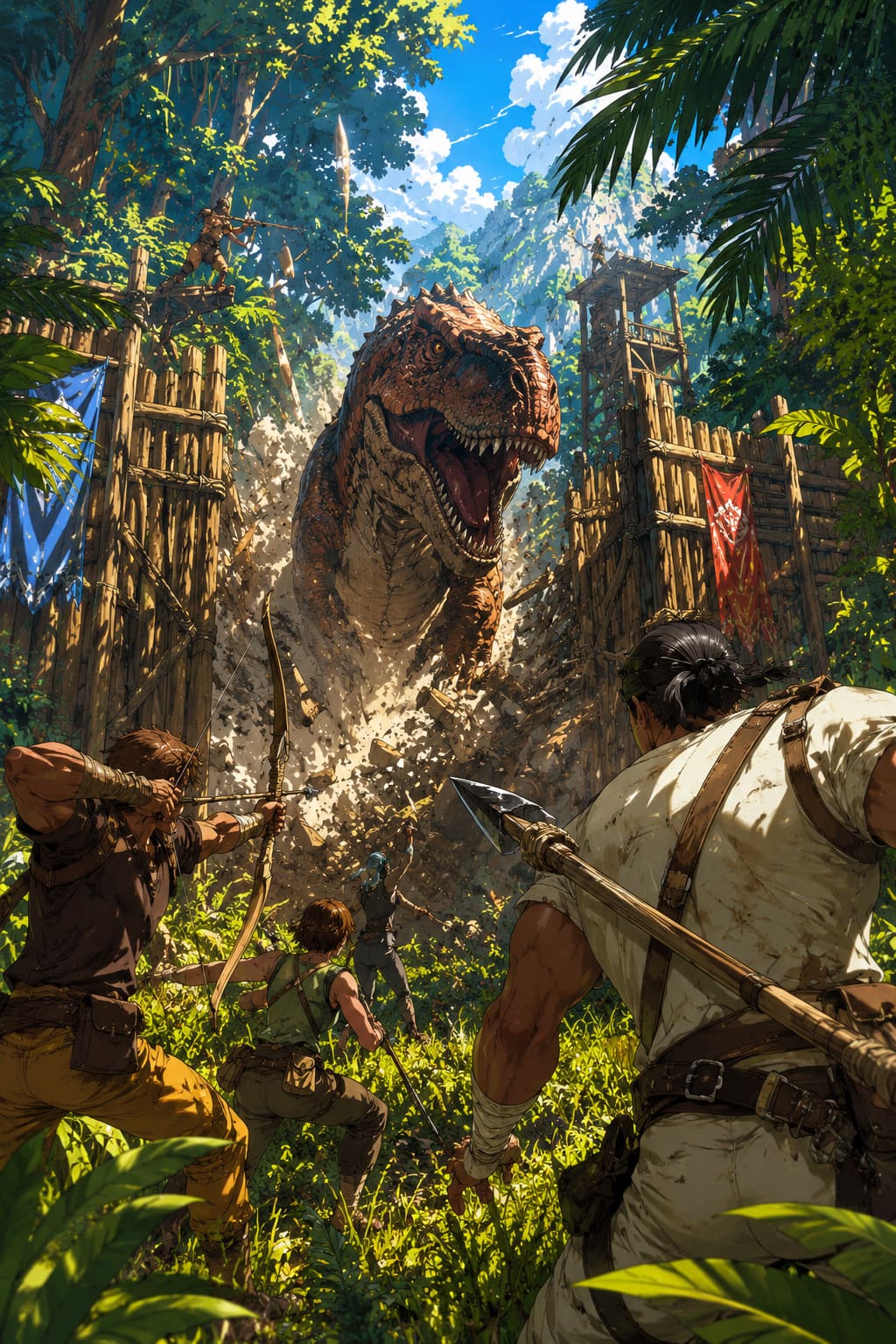
Visual Trade-offs: What Will Still Look Good
Despite all the compromises, I do not think the Switch 2 version would look bad. Developers today are extremely good at preserving visual identity even under heavy constraints. The key is selective scaling rather than full degradation.
Based on how similar ports behave, I expect the game to still retain its core identity, especially in terms of world structure and creature design. However, atmosphere density and lighting complexity will likely be reduced.
Likely preserved visual elements
- Creature models and animations (slightly simplified)
- Core map layout and landmarks
- Basic weather systems
Likely reduced visual elements
- Dense foliage and environmental clutter
- High-quality shadows and reflections
- Long-distance atmospheric rendering
Why the Switch 2 Version Still Makes Sense
Even with limitations, the idea of playing ARK on a handheld device is actually compelling. Survival games naturally fit short-session gameplay loops. You can log in, manage resources, check on tames, or adjust your base without committing to long play sessions.
From my perspective as someone who has spent long hours in ARK, the ability to step into the game casually rather than committing to a full PC session could be a real advantage.
Community Reaction: Between Hope and Skepticism
The reaction to the idea of ARK: Survival Ascended on Switch 2 is divided. Some players are excited about portability and technical ambition, while others are skeptical due to past optimization issues in the franchise.
I understand both sides. ARK has a history of pushing hardware beyond its limits, sometimes successfully and sometimes not. That history naturally makes players cautious about new platform promises.
Main viewpoints in the community
- Optimists expect a breakthrough in handheld UE5 performance
- Realists expect heavy downgrades and compromises
- Veterans remain cautious due to past optimization issues
Final Thoughts: A Risky but Interesting Experiment
If I had to summarize my view after years of playing survival games, I would say this: the Switch 2 version of ARK: Survival Ascended is not about perfection. It is about possibility.
It will either demonstrate how far optimization and hardware scaling have come, or it will highlight the limits of trying to shrink a very demanding PC experience into a portable device.
Personally, I would try it—but only if the controls feel responsive and the performance remains stable under pressure. In a game like ARK, smooth visuals mean nothing if the moment-to-moment gameplay feels delayed or inconsistent.
Still, the fact that this conversation is even happening shows how far gaming hardware has evolved. A few years ago, this idea would have been impossible. Now, it is just uncertain.