ARK Legacy of Santiago: Streamer Review and ARK 2 Lore Bridge
I’ve been streaming survival games for years, and I’ve seen my fair share of lore expansions that try to connect massive universes, sequels, and fragmented timelines. Some of them actually land well, but most end up as confusing sci-fi layering that loses players halfway through.
ARK Legacy of Santiago Part 1 sits in a much more interesting space—it feels like something that actually reshapes how you look at the entire ARK universe, whether you treat it as a strict expansion or a high-level narrative interpretation of the community-driven lore.
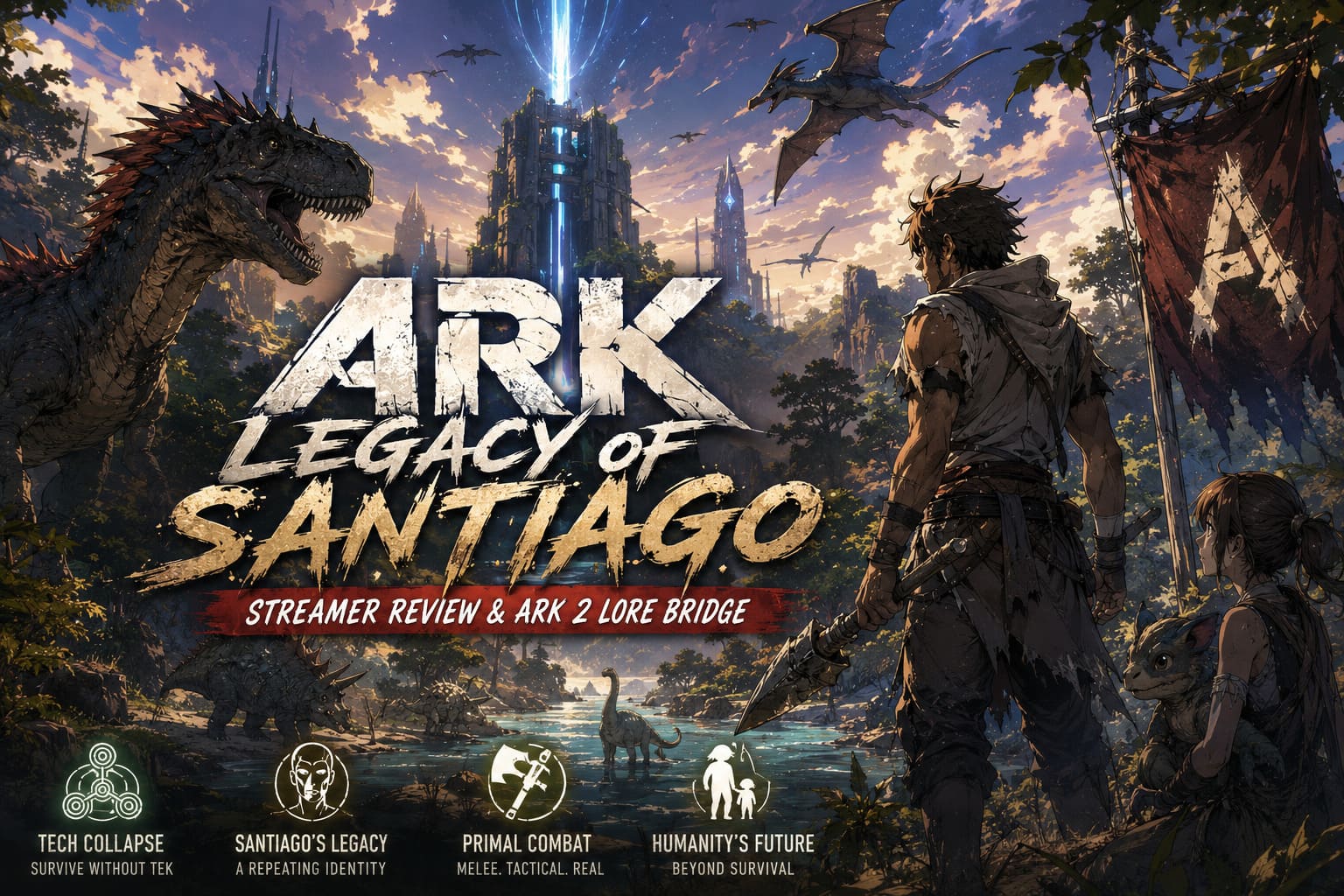
What surprised me most is how quickly it shifts ARK away from just “survive and build” into something that feels heavier, slower, and more reflective of consequences.
As a streamer, that immediately changes the kind of experience you get on screen. It’s not just gameplay anymore—it becomes discussion material.
ARK Genesis Story Explained: HLN-A, Simulation Secrets & Rockwell Lore Breakdown
The Universe Feels Connected for Once
ARK has always had deep lore buried in notes, terminals, and environmental storytelling, but it rarely felt unified while playing. Legacy of Santiago changes that perception by making the world feel like it is collapsing between technological eras rather than existing as separate maps.
The key difference here is tone. Instead of jumping between sci-fi power fantasy and primitive survival, this expansion tries to justify why that regression happens in the first place. And for long-time players, that context actually matters more than it seems.
Why This Expansion Stands Out
- It explains technological collapse in a structured way
- It repositions Santiago as a repeating experiment across timelines
- It introduces survival logic that removes reliance on Tek gear
- It connects emotional storytelling with gameplay limitations
ARK Survival Ascended Tides of Fortune – First Impressions & Streamer Breakdown
Santiago as a Repeated Identity
Santiago is not treated like a traditional protagonist here. Instead, he is framed as a repeating construct across different eras of the ARK timeline. That idea alone changes how you interpret everything he has done in previous expansions.
| Version | Role | Impact | Outcome |
|---|---|---|---|
| Extinction Era Santiago | Engineer and Survivor | Built survival infrastructure and Mek systems | Self-sacrifice during Earth’s final conflict |
| Genesis Clone | System Managed Operator | Assisted colony systems and engram control | Memory manipulation and control state |
| Ark 2 Santiago | Post-collapse Leader | Guides humanity in primal conditions | Ongoing survival narrative |
What makes this interesting from a storytelling perspective is that Santiago stops feeling like a single character and starts feeling like a continuity problem that the world keeps trying to solve through cloning and system resets.

World Collapse and the Loss of Technology
One of the strongest narrative decisions in Legacy of Santiago is the removal of technological stability. Instead of relying on Tek dominance or automated systems, everything begins to fail in a controlled but inevitable way.
This is where the expansion becomes more grounded. Power sources degrade, colony systems break, and survivors are forced to rely on physical survival skills rather than advanced tech. It’s a deliberate design choice that pushes ARK closer to its original survival identity.
Core Survival Shifts
- Tek systems become unreliable or unavailable
- Resource gathering regains importance
- Crafting shifts toward primitive hybrid technology
- Combat becomes more physical and deliberate
Combat and Gameplay Direction
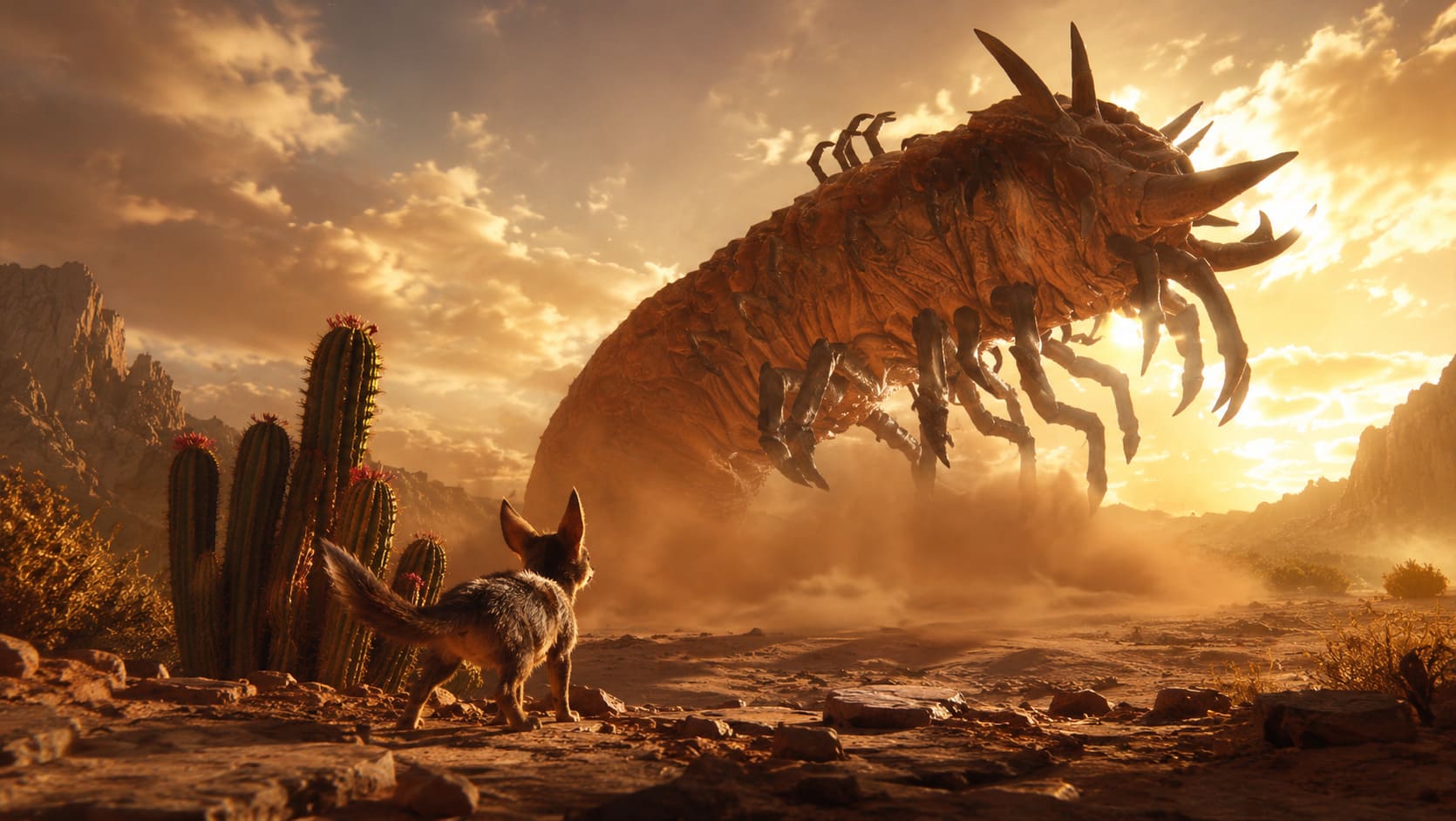
The most controversial and interesting change is the shift toward third-person, melee-focused combat. It introduces timing-based mechanics like dodging, blocking, and stamina control. While not perfect, it clearly signals a future direction for ARK 2.
From a streamer perspective, this creates more unpredictable gameplay moments. Instead of ranged dominance, encounters become tense and close-range, which naturally increases engagement during live play.
Combat System Feel
- More tactical and slower-paced encounters
- Higher emphasis on positioning
- Risk-reward decision making in every fight
- Less reliance on high-tech weapon dominance
Exploration and Environmental Design
Exploration in Legacy of Santiago feels more vertical and physically demanding. Players are not just traveling across terrain—they are actively navigating it. This includes climbing, descending, and avoiding threats in a more grounded survival loop.
As someone who streams exploration-heavy gameplay, this is where the expansion shines. It creates natural tension and viewer engagement because mistakes are more visible and consequences feel immediate.
Emotional Core: Meeka and Human Survival
One of the most important narrative additions is Meeka, who represents a shift from technological survival to human continuity. Instead of focusing on machines or systems, the story begins to explore what it means for humanity to rebuild without artificial dependency.
This adds emotional grounding that ARK has often lacked. It is no longer just about surviving threats, but about protecting something that represents a future beyond survival itself.
Streamer Perspective Breakdown
From a content creation standpoint, Legacy of Santiago has both strong advantages and clear limitations. It delivers atmosphere and discussion value, but it also risks overwhelming new players with lore complexity.
| Strengths | Weaknesses |
|---|---|
| Deep narrative world-building | High lore complexity for new players |
| Strong atmosphere and tone shift | Combat system still feels experimental |
| Better emotional engagement | May alienate classic ARK players |
| Improved exploration tension | Learning curve is noticeably higher |
Final Thoughts on ARK 2 Direction
If Legacy of Santiago is viewed as a conceptual bridge to ARK 2, then it represents a major shift in how the franchise approaches survival storytelling. It moves away from isolated sandbox experiences and toward a structured narrative survival evolution.
The biggest takeaway is that ARK is no longer just about surviving dinosaurs or building bases. It is becoming a story about repeated civilizations, broken systems, and humanity trying to redefine itself after technological collapse.
From a streamer’s point of view, that direction is actually exciting. It creates space for discussion, theory crafting, and emotional engagement that goes beyond standard survival gameplay loops.
If ARK 2 fully commits to this direction, it could become one of the rare survival games that balances mechanics and narrative in a meaningful way rather than treating story as background decoration.