Midnight Watcher Village Survival Guide: Hardcore Looting Routes & Eternal Winter Tips
Survival games that combine horror elements, strict resource management, and time pressure often leave a stronger impression than typical action-heavy titles.
Midnight Watcher: Village is one of those games where every decision made during the daylight phase has a direct impact on whether you survive the night or fail your run completely.
What stands out most is that success is not about collecting everything you see, but about collecting the right things in the right order while managing stamina, time, and risk.
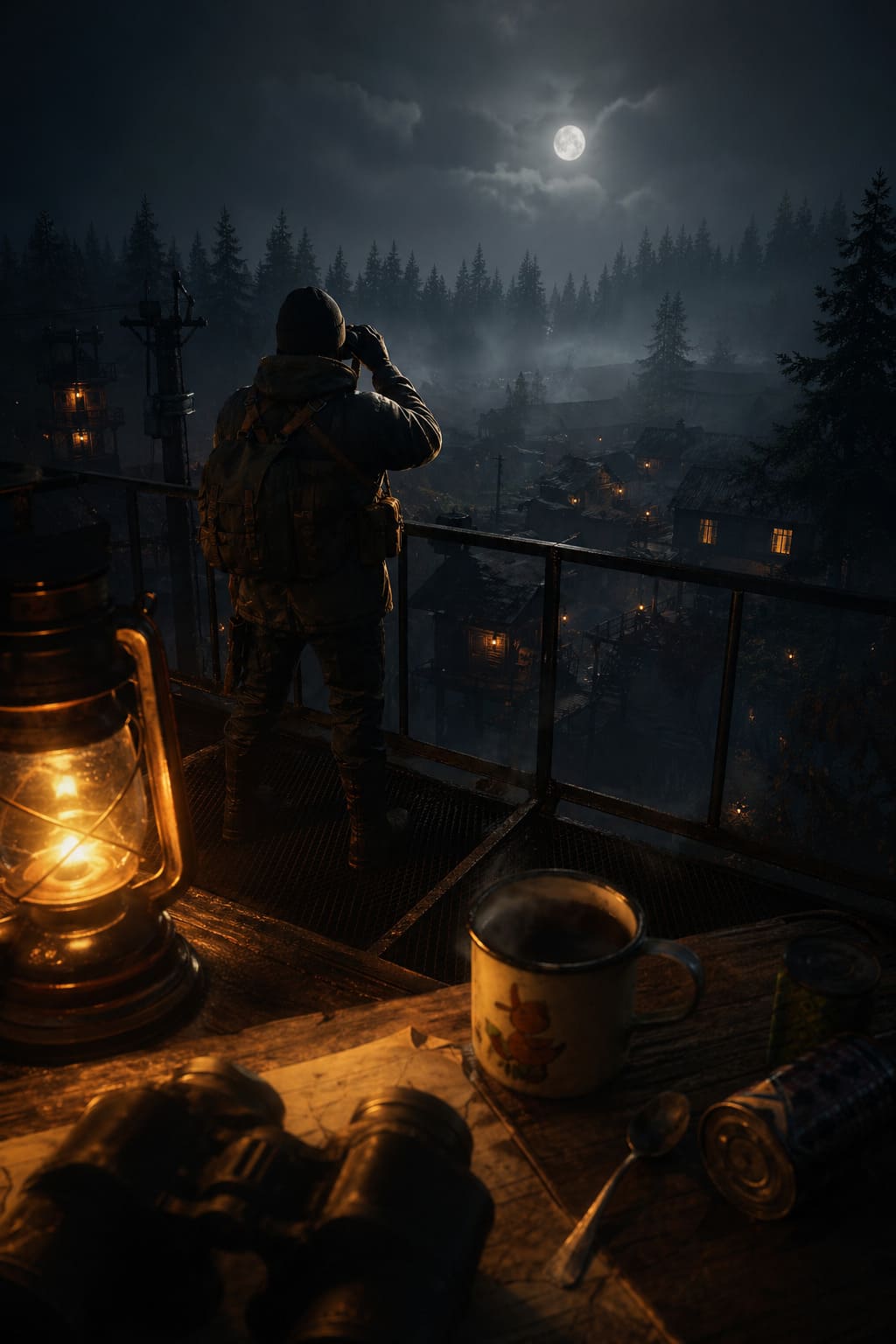
This guide is a structured breakdown of early-game scavenging priorities based on common survival logic and community-driven approaches, but also shaped by practical gameplay thinking.
The goal is to help you survive your first week without wasting time on inefficient looting habits.
The Dark Philosophy of Kurak: How the Outer Dark Theory Shapes Conan Exiles’ Future
Understanding the Core Survival Loop
The gameplay loop in Midnight Watcher: Village is built around a simple but punishing structure: daytime is for preparation and scavenging, while nighttime is for defense and survival. What makes this system challenging is that mistakes made during the day are not immediately punished but instead surface later when it is harder to recover.
Because of this structure, the game rewards planning over reaction. Players who treat daytime as a strategic phase rather than a casual looting phase consistently perform better. Every item collected should serve a function within a larger survival chain.
Tier 1 Priority: Power Infrastructure (Non-Negotiable)
Electrical systems are the foundation of survival in Midnight Watcher: Village. Without them, most defensive tools lose effectiveness, and the base becomes extremely vulnerable during night cycles.
Key items to prioritize:
- Fuses
- Copper wiring
- Circuit boards
The importance of these components lies in their direct connection to base defense systems. Floodlights, electric fences, alarm triggers, and sensor-based tools all depend on stable electricity. If the power system fails during the night, recovery is often difficult or impossible under pressure.
Best early locations to search: Utility sheds near entry points, maintenance rooms in central structures, and watchtower basement areas are typically the most reliable sources of electrical components.
From a survival perspective, electricity is not just a utility but a multiplier for every other defensive system. Losing it early significantly reduces your margin for error.
Tier 2 Priority: Medical Survival (Run-Saving Resources)
Medical supplies often feel secondary in the first hours of gameplay, but they become critical very quickly once encounters begin. The game’s injury and infection systems are designed to punish neglect over time rather than immediately.
Essential medical items:
- Antibiotics
- Bandages
- Disinfectant
- Sterile cloth
Infection is one of the most common causes of failed runs because it often starts from minor damage that players underestimate. Even small injuries can escalate into major survival problems if untreated.
The Old Infirmary or equivalent medical buildings should be prioritized early in a run. These locations tend to be contested or partially looted, making timing important. Securing even a small medical stockpile early significantly increases long-term survival stability.
Tier 3 Priority: High-Calorie Food (Efficiency Over Exploration)
Food in Midnight Watcher: Village is less about survival in the immediate sense and more about sustaining efficiency. The key factor is how food affects stamina, movement, and carry capacity.
Best food sources:
- Canned meat
- Tactical ration packs
- High-calorie preserved meals
While natural food sources like berries exist, they are inefficient due to time consumption and low energy return. In a game where daylight is limited, spending time on low-value food gathering is usually a mistake.
High-quality food directly supports exploration efficiency. It allows longer sprint durations, extended scavenging routes, and safer returns to base without exhaustion penalties.
Tier 4 Priority: Fuel (The Hidden Dependency)
Fuel is one of the most underestimated resources in early gameplay, but it becomes essential once base systems begin scaling up. Without fuel, generators and power-dependent systems cannot function, which creates cascading failures in defense setups.
Main fuel sources include:
- Gasoline cans
- Abandoned vehicles (siphonable fuel)
- Storage containers in industrial areas
The most effective strategy is to treat fuel as a late-day priority item. It is heavy, often awkward to carry, and should only be collected once higher-value lightweight items have been secured.
Fuel represents stability rather than immediate survival. Its importance increases as base complexity grows, making it a long-term critical resource rather than an early-game comfort item.
Tier 5 Priority: Scrap and Crafting Materials
Scrap materials are important but often misunderstood by new players. While they are necessary for upgrades and repairs, their value depends heavily on timing and inventory management.
Material breakdown:
| Material Type | Priority Level | Weight Impact | Early Game Value |
|---|---|---|---|
| Fasteners (nails, screws) | High | Low | Very useful |
| Iron scrap | Medium | Medium | Situational |
| Sheet metal | Low (early game) | Heavy | Late game focus |
One of the most common mistakes is over-collecting heavy scrap early, which reduces mobility and limits access to higher-value loot. Fasteners are disproportionately important because they are used in a wide range of small repairs and crafting recipes.
Efficient players prioritize lightweight, high-frequency materials first and defer heavy construction resources until inventory capacity improves.
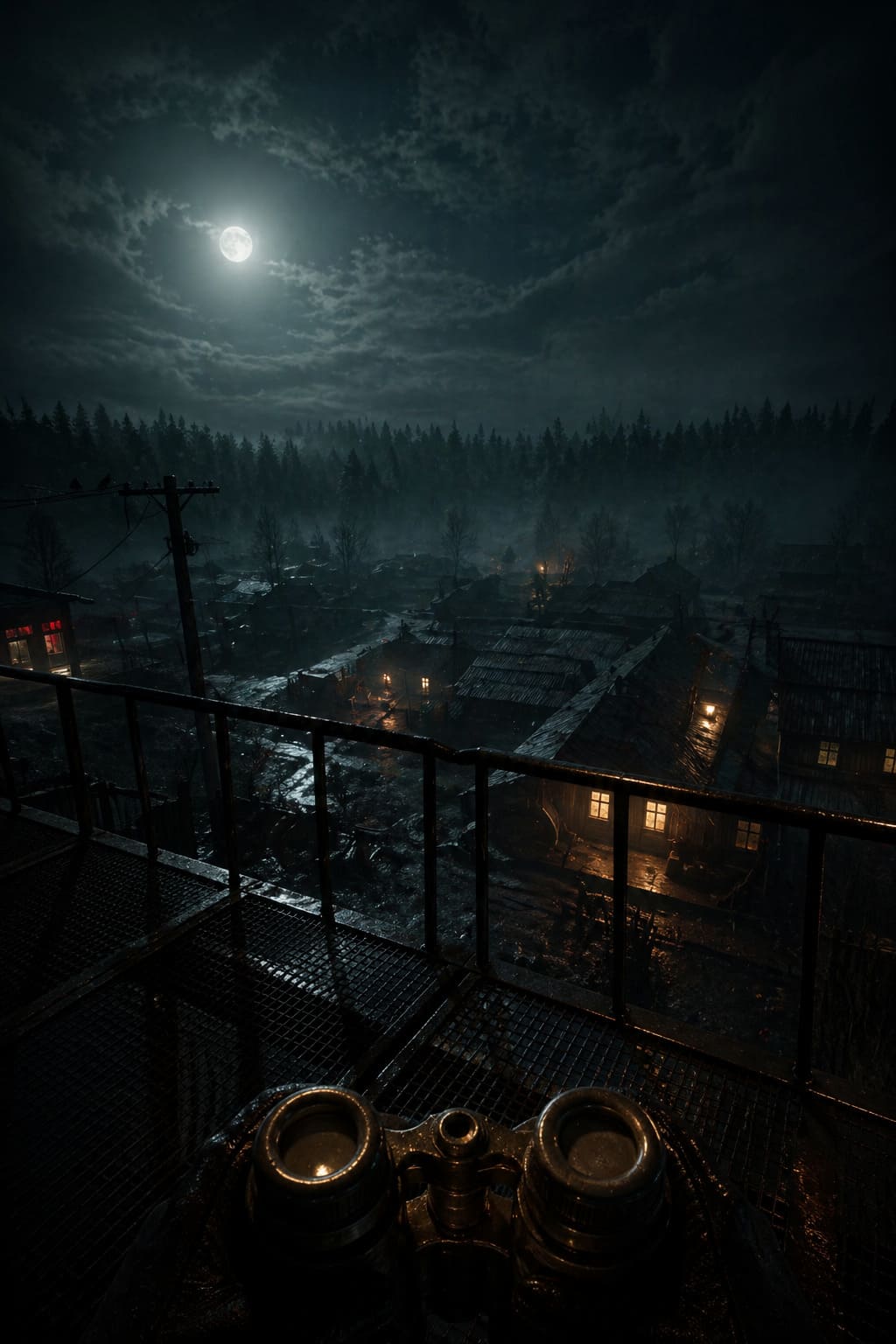
Efficient Scavenging Strategy (What Actually Works)
Successful scavenging in Midnight Watcher: Village follows a predictable but disciplined pattern. Instead of random exploration, experienced players typically follow a structured route logic.
Core approach:
- Start with utility and infrastructure zones
- Move quickly through medical and food locations
- Prioritize lightweight high-value items
- Collect fuel and scrap only when inventory allows
Vertical movement is also an important survival tool. Many buildings allow safer navigation through stairs or upper floors, reducing exposure to ground-level threats. Rooftops and upper rooms can provide temporary safety when danger increases.
Inventory management is equally important. Leaving base without at least two free slots is risky because unexpected high-value items can appear at any time. Overloading early often leads to inefficient runs and forced early returns.
The Noon Rule: A Simple Survival Benchmark
One of the most practical guidelines for consistent survival is the so-called Noon Rule. The concept is simple: if you are not at least halfway back to your safe zone by midday, your run is already at risk.
This rule exists because nighttime escalation in the game is not gradual but increasingly dangerous. Being caught outside during late hours significantly reduces survival probability, especially when carrying heavy loot or low stamina.
Surviving the Eternal Winter: A Hardcore Player’s Guide to Midnight Watcher: Village Expansion
I’ve played my fair share of survival games—everything from punishing roguelikes to open-world “freeze or starve” simulators—but Midnight Watcher: Village – Eternal Winter Expansion hits differently. It’s not just harder.
It feels personal, like the game is actively watching how you react to suffering and then tightening the screws one more turn.
After several failed Hardcore runs (and one particularly humiliating death where I froze while trying to carry “just one more log”), I started to understand what this expansion is really about. It’s not monsters. It’s not loot. It’s heat management disguised as survival horror.
Let me walk you through how I approach it now—not as a guidebook voice, but as someone who has actually bled, frozen, and restarted more times than I’d like to admit.
The Real Enemy Isn’t What You Think
At first glance, you assume the Frost-Watchers are the threat. They look terrifying, they move fast, and they absolutely ruin your day if you misstep in a whiteout.
But after a while, you realize something uncomfortable: the true boss of the Eternal Winter expansion is the environment itself.
The Thermal Meter becomes your entire life. Every decision—where you go, what you carry, how long you stay outside—funnels through that one mechanic. When it hits zero, stamina regeneration stops completely, frostbite begins to spread, and your survival becomes a countdown, not a fight.
And frostbite isn’t just damage. It shrinks your maximum health. That detail alone changes how you play. It’s not about healing anymore—it’s about not losing the ability to survive in the first place.
Heat Core: Your Village, Your Lifeline
If the base game taught you to think of your base as a safe zone, this expansion destroys that idea. Your village is now a thermal organism, and the Heat Core is its heart.
Early priorities are simple but strict: insulate before you arm yourself, secure fuel routes before exploring far, and never leave the Heat Core unattended during early nights.
Coal becomes the turning point. Wood is everywhere but burns too fast. Coal changes everything, especially once you learn where to find it and how to risk early expeditions safely.
The biggest lesson here is simple: survival is logistics, not combat.
Clothing System: Armor is Dead
One of the smartest design shifts in this expansion is how it completely redefines gear. Armor stats feel almost irrelevant now. Instead, everything is about thermal layering.
You can be “protected” and still freeze to death in minutes.
Key items I never skip now include Arctic Parka, Boot Liners, and Thermal Gloves. Each one solves a different part of the survival puzzle, and missing even one creates a noticeable disadvantage.
The system forces trade-offs: you can’t be warm, fast, and heavily stocked at the same time. Something always gives.
Frost-Watchers: Smarter, Not Just Scarier
At first, Frost-Watchers seem like just another enemy type. Fast, aggressive, dangerous. But they are actually built around heat detection and environmental awareness.
They don’t just chase you—they track you. Heat sources, movement patterns, and even flare usage can draw them in.
My most reliable defensive approach includes flare traps placed away from base, silent movement routes, and seismic detection upgrades for early warning systems.
The biggest shift is learning that survival is about misdirection, not confrontation.
Food Isn’t Just Food Anymore
Food in Eternal Winter serves a dual purpose: hunger and thermoregulation.
Hot meals like Hearty Stew provide temporary internal heat buffs, allowing dangerous travel during extreme conditions. Cold rations, meanwhile, are emergency-only items that can actually hurt your thermal stability.
Planning food is now part of planning survival routes. That alone changes the pacing of the entire game.
Early Game Survival Path
After multiple failed Hardcore runs, I’ve settled into a consistent early-game path that gives the best chance of survival.
Step one is immediate scavenging without hesitation. Step two is securing basic tools. Step three is prioritizing heat over exploration.
Night survival rule: if you are not near heat, you are already losing.
Day two focuses on frostbite treatment supplies, fuel consolidation, and safe route mapping. Exploration comes last, not first.
Ice Fishing: Risk vs Reward
One of the more controversial community discoveries is ice fishing using a power drill. It provides a renewable food source that outperforms canned goods.
However, it comes with significant risks: exposure, increased enemy activity, and the danger of open ice zones.
It’s efficient, but it never feels safe. And that tension is exactly why it works.
Final Thoughts: Discipline Over Courage
What makes Midnight Watcher: Village – Eternal Winter stand out isn’t difficulty—it’s discipline.
The game constantly tempts you into risk-taking behavior: one more run, one more trip, one more resource. And every time I ignored the cold logic of survival, the game punished me immediately.
Survival here isn’t about beating the cold. It’s about never letting it start winning in the first place.
And that’s exactly why I keep coming back after every failed run.